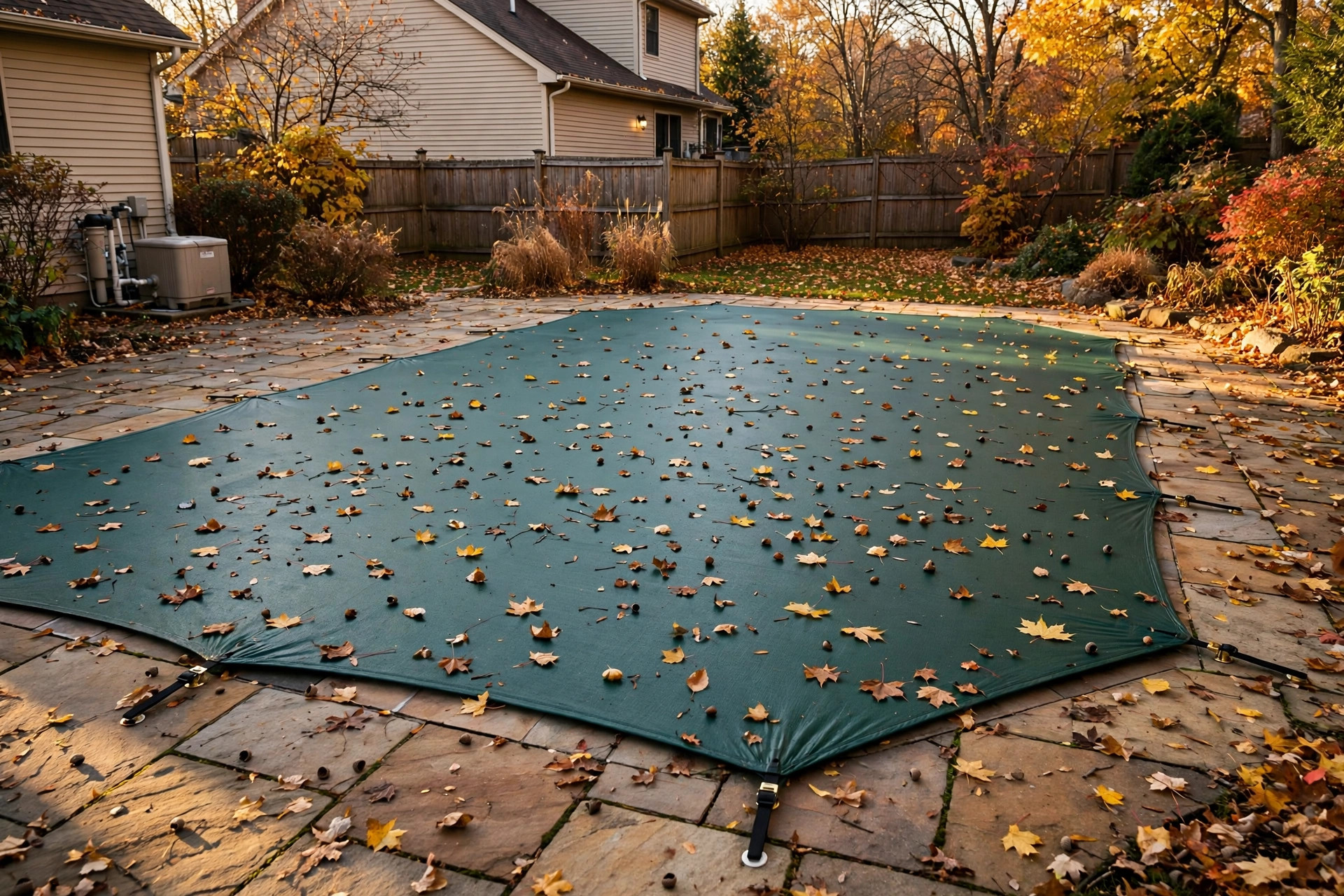
Every inground pool owner faces the same question at the end of summer. What will the inground pool cover installation cost be? The answer is not one number. It depends on the type of cover, the size of the pool, and the labor needed to fit it. A simple tarp cover may cost only a few hundred dollars. A custom safety cover can cost several thousand.
A cover is one of the most useful tools a pool owner can buy. It keeps leaves and dirt out of the water. It cuts heat loss at night. It can stop a child or a pet from falling in. The upfront cost may seem high, but a good cover pays for itself over time. It lowers cleaning bills and chemical use. It protects the pool surface from winter damage.
This guide walks through the main types of covers. It explains how to choose one. It breaks down what drives the price. It gives typical price ranges for both the cover and the labor to install it.
Why a Pool Cover Matters
A pool without a cover is open to everything. Wind blows leaves and dust into the water. Rain can change the water chemistry. Sunlight eats away at chlorine. The owner then spends more time and money on cleaning and chemicals.
A cover slows all of that down. It blocks sunlight, so algae grow more slowly. It keeps debris out, so the filter runs less. In warm months, it holds heat in the water at night. That can cut heating costs by a large amount. In cold months, it shields the pool from ice, snow, and freeze damage.
Safety is another strong reason. Federal safety guidance urges pool owners to use barriers and covers as layers of protection. A strong safety cover can hold the weight of a child or a large pet. It is not a fence, but it adds a real layer of defense. You can read more about pool safety rules before you buy.
Types of Inground Pool Covers: Inground Pool Cover Installation Cost
Not all covers are built the same. Each type has its own cost, its own look, and its own job. The four main kinds are solid safety covers, mesh safety covers, winter tarp covers, and automatic covers.
Solid Safety Covers
A solid safety cover is a heavy sheet that sits tight over the pool. It is held down by springs and anchors set into the pool deck. The fabric blocks all sunlight. Water cannot pass through, so rain collects on top and must be pumped off with a good cover pump for winter.
Solid covers are among the strongest options. They meet strict standards for weight support. They also keep the water cleaner, since dirt and fine dust cannot wash through. The trade-off is price. Solid covers cost more than mesh, and the custom fit adds to the labor bill.
Mesh Safety Covers
A mesh safety cover looks much like a solid cover. It is also anchored with springs into the deck. The difference is the fabric. Mesh lets rain and melted snow drain through into the pool. That means no pump is needed on top.
Mesh covers cost less than solid ones. They are also lighter, so they are easier to handle. The trade-off is water quality. Fine dirt can pass through the mesh over winter. The pool may need more cleaning and chemicals when it opens in spring.
Winter Tarp Covers
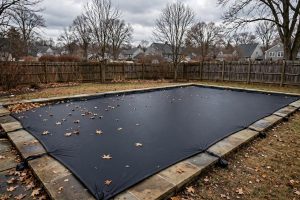
A winter tarp is the simplest and cheapest option. It is a large sheet of woven plastic with grommets around the edge. It is held down by water bags or cables. Tarps do not meet safety standards for weight support. They are covers for debris and weather, not for safety.
Many owners choose tarps to save money. The cover itself is cheap, and installation is fast. The trade-off is a shorter life and more work. Tarps can tear in strong wind. They collect heavy water and leaves on top. They need regular care through the winter.
Automatic Covers
An automatic cover rolls out from a housing at one end of the pool with the turn of a key or the push of a button. It moves on tracks set into the deck or under the coping. It takes only a minute to open or close.
Automatic covers are the most costly option by far. The cover, the tracks, the motor, and the housing must all be installed. This is skilled work that often takes several days. The reward is ease of use. Owners use the cover every day, which keeps the pool cleaner and warmer all season.
For more background on cover styles, see reviews of winter covers for pools and pool guides at pool supply retailers.
How to Choose the Right Cover
Start with your main goal. If safety is first, choose a solid or mesh safety cover. If budget is first, a winter tarp will do the job. If you want daily use with little effort, look at an automatic cover.
Next, measure your pool with care. Safety covers are made to order. The maker needs the exact shape and size of the pool, plus the space around it for anchors. A wrong measurement means a bad fit and wasted money. Many installers will measure for you as part of the job.
Check the deck material. Anchors set into concrete need different hardware than anchors in pavers or stone. A good installer will ask about this before giving a price. If your deck is thin or cracked, extra work may be needed. That raises the inground pool cover installation cost.
Also think about your climate. In snowy regions, a mesh cover that drains water is often best. In rainy regions, a solid cover with a pump keeps the pool cleaner. Home improvement retailers and pool care stores both carry options for each climate.
Finally, read the warranty. A solid safety cover may carry a warranty of ten years or more. A tarp may last only two or three seasons. A longer warranty can make a higher price the better deal over time.
What Drives the Cost of Installation
Several factors move the price up or down. The biggest is the type of cover. A simple tarp takes one worker an hour or two. A custom safety cover needs careful measuring, drilling anchors, and fitting springs. That can take a full day. An automatic cover needs electrical work and track installation over several days.
Pool size and shape matter too. A small rectangular pool is the cheapest to cover. A large free-form pool with curves needs more fabric and more anchors. Steps, raised walls, and diving boards add work. Each feature needs a cut or a panel in the cover.
Labor rates vary by region. In large cities, installers charge more per hour than in small towns. Some companies charge a flat fee for the whole job. Others charge by the hour plus materials. Always ask what the quote includes. A low quote may leave out the anchors, the pump, or the storage bag.
Timing can also change the price. Many owners call installers in the fall when everyone wants a cover at once. Booking early, in late summer, can sometimes earn a discount. It also means the cover is in place before the leaves fall.
Extra items add to the bill. Anchor sets, spring kits, water bags, cable kits, and cover pumps are often sold apart from the cover. Some quotes include them. Others do not. Ask for a full list in writing. Consumer product reviews can help you judge which extras are worth the money.
Typical Cost and Price Ranges
Prices change from year to year, and they differ by region. The ranges below are rough guides for the United States. They include both the cover and the labor to install it.
A winter tarp cover with water bags often costs between 150 and 500 dollars for the cover itself. Professional installation adds about 100 to 300 dollars. Many owners install tarps themselves and pay nothing for labor.
A mesh safety cover for a standard pool often costs between 1,200 and 2,500 dollars for the cover. Professional installation adds about 400 to 900 dollars. Larger or oddly shaped pools cost more.
A solid safety cover often costs between 1,500 and 3,200 dollars for the cover. Installation adds about 400 to 1,000 dollars. A cover pump adds another 60 to 150 dollars.
An automatic cover is a major project. The cover and track system often costs between 8,000 and 15,000 dollars. Installation adds about 1,500 to 4,000 dollars. Total bills of 10,000 to 20,000 dollars are common.
To put these numbers in context, learn the steps for winterizing your pool so you can see where cover installation fits in the full job.
Care and Upkeep
A cover lasts longer when it is cared for. Keep the top clear of heavy leaves and branches. Do not let sharp objects rest on it. Check the springs and anchors each spring and fall. Tighten anything that has worked loose.
For solid covers, pump off standing water after heavy rain. Do not let water sit for weeks. It can stretch the fabric and breed insects. For mesh covers, hose off the top in fall so dirt does not grind into the weave.
When you remove the cover in spring, clean it before storage. Wash it with mild soap and water. Let it dry fully in the sun. Fold it loosely and store it in a dry place, off the ground. Rodents can chew fabric in a damp shed, so a sealed bag or bin is best.
Check winter closing guides and home project guides for step-by-step care routines.
Safety
A safety cover is a strong tool, but it is not a fence. It should never be the only barrier around a pool. Young children need constant watch near water, with or without a cover.
Inspect the cover each season for wear. Look for torn straps, weak springs, and pulled anchors. A damaged cover can give a false sense of safety. Fix problems before the pool sits unused for months.
Teach every person in the house that the cover is not a floor. No one should walk on it or play on it. Keep the area around the pool locked when the pool is closed. Pool safety rules stress layers of protection, and a cover is only one layer.
Frequently Asked Questions
How long does installation take?
A tarp cover takes one to two hours. A mesh or solid safety cover takes a half day to a full day for a standard pool. An automatic cover takes several days because of the track and motor work.
Can I install the cover myself?
A winter tarp is a fair do-it-yourself job for most owners. Safety covers need precise measuring and drilling into the deck. Most makers honor the warranty only when a trained installer does the work. Automatic covers always need a professional.
Does the cover price include the anchors?
Sometimes yes, sometimes no. Always ask. Some quotes list the cover, anchors, springs, and storage bag as one price. Others list them apart. Get the full list in writing before you agree.
How long will a safety cover last?
A well-made mesh or solid safety cover often lasts eight to twelve years with proper care. Sunlight and harsh winters shorten that span. A tarp often lasts two to four seasons.
Will a cover lower my chemical costs?
Yes. By blocking sunlight and debris, a cover slows algae growth and cuts chlorine loss. Many owners report lower chemical bills in both summer and winter.
Is a safety cover worth the higher price?
For homes with children or pets, most experts say yes. The added safety is hard to put a price on. For homes without those concerns, a mesh or tarp cover may be enough.
A Final Word
The inground pool cover installation cost is really three costs in one: the cover, the hardware, and the labor. Know which type suits your needs. Measure with care. Get written quotes that list every item. Then enjoy the quiet season knowing your pool is safe under its cover.
See DIY repair guides and hardware stores for tools that make cover care easier, and browse pool care articles for seasonal checklists.
References
Consumer Reports. (n.d.). Product reviews and ratings. https://www.consumerreports.org Family Handyman. (n.d.). DIY home repair and maintenance. https://www.familyhandyman.com Leslie’s Pool Supplies. (n.d.). Pool supplies and equipment. https://www.lesliespool.com Lowe’s. (n.d.). Home improvement products. https://www.lowes.com Pool Warehouse. (n.d.). Pool equipment and supplies. https://www.poolwarehouse.com Swim University. (n.d.). Pool and hot tub care guides. https://www.swimuniversity.com The Home Depot. (n.d.). Home improvement products. https://www.homedepot.com The Spruce. (n.d.). Home and garden advice. https://www.thespruce.com This Old House. (n.d.). Home renovation guidance. https://www.thisoldhouse.com U.S. Consumer Product Safety Commission. (n.d.). Product safety information. https://www.cpsc.gov
Was this guide helpful?

About Sarah Mitchell
The My Garden US editorial team writes practical, in-depth home and garden guides for American homeowners — tested advice, no fluff.