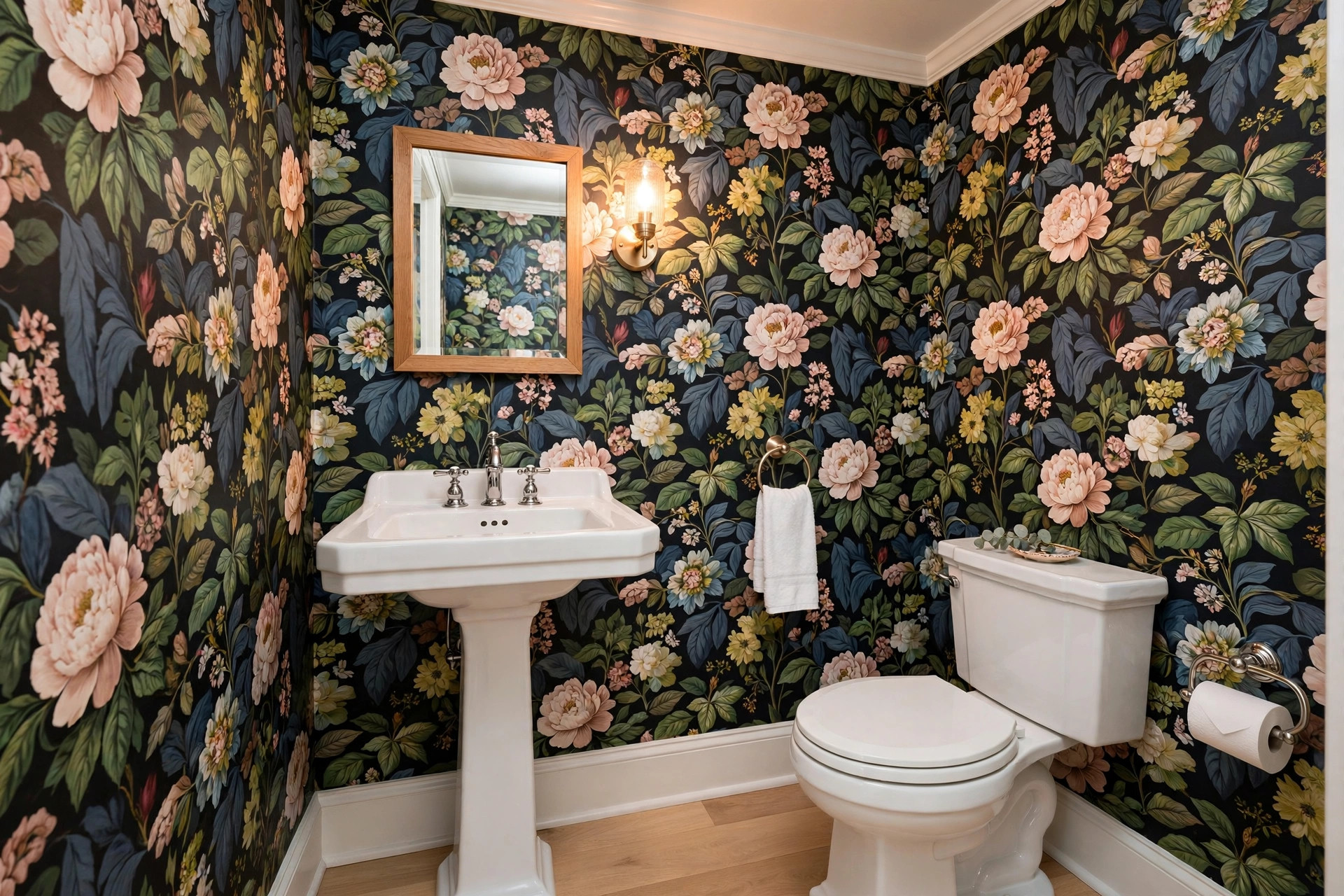
The powder room is the smallest room in most American homes, yet guests notice it more than almost any other space. When visitors come to dinner, they almost always see the half bath. A plain white powder room fades from memory. A powder room with rich, well-chosen wallpaper stays in the mind. That is why wallpaper for powder room ideas usa has become one of the most searched home topics in the country. Homeowners want a room that feels finished, personal, and inviting, and wallpaper delivers that result faster than almost any other change.
This guide walks through the subject in plain terms: why wallpaper suits powder rooms, how to choose a pattern for a tight space, which materials hold up near sinks, what the project should cost, and how to keep the finished walls looking good for years.
Why Wallpaper Works So Well in a Powder Room
A powder room has no shower or tub. That single fact makes it the best room in the house for wallpaper. The air stays drier than in a full bath, so the paper faces less steam and less daily wear. At the same time, the room is small, which keeps cost and work time low.
There is also a design reason. Small rooms respond well to strong gestures. Paint in a flat color can make a tiny room feel flat. Wallpaper adds depth, texture, and movement. A botanical print can make the walls seem to recede. A mural can turn one wall into a view. A metallic print can bounce light from a sconce and make the whole space glow. In short, the powder room is the one place where you can be brave with pattern and still keep the rest of the house calm.
A high-end paper that would cost a fortune in a bedroom becomes affordable when you need only two or three rolls.
How to Choose the Right Wallpaper: Wallpaper for Powder Room Ideas Usa
Choice matters more than budget here. A small room shows every mistake. The right paper makes the space feel larger and more polished. The wrong paper can make it feel crowded or damp. Three factors should guide the decision: moisture, light, and pattern scale.
Moisture and Humidity
Powder rooms have sinks but no showers. Still, hot water from the tap creates steam, and guests splash. Choose a paper rated for bathroom or high-humidity use when possible. Vinyl and vinyl-coated papers handle this best because their surfaces resist water and wipe clean. Natural fibers like grasscloth look beautiful but absorb moisture, so they suit only well-ventilated powder rooms.
Ventilation matters as much as the paper itself. A small exhaust fan or even a cracked window during use helps the walls dry out. Builders in many states now place a fan in every bath as standard practice. If your powder room lacks one, an installer can add it, and the cost is modest compared with the life of the walls.
Light and Space
Most powder rooms have one small window or none at all. Light is usually artificial, from a sconce or an overhead fixture. Before you order, take samples home and look at them in the room at night under the actual light. Colors shift under warm bulbs. A pattern that looked fresh in a store can look muddy in a windowless room.
Light papers with open, airy patterns can make a small room feel larger. Dark papers with dense patterns can make it feel smaller but also more dramatic. Neither choice is wrong. The question is what you want the room to feel like.
Pattern Scale
Scale is the most common error. Tiny patterns in a tiny room can look busy. Very large patterns can get cut off awkwardly on short walls. A medium-scale pattern usually works best. Aim for a repeat between four and twelve inches. Stripes can add height if they run vertical, which is a classic trick for rooms with low ceilings. Murals need one clear wall, so they suit rooms where the door and fixtures leave one unbroken surface.
Types of Wallpaper for Powder Rooms
Four families of wallpaper cover nearly every powder room project in the United States. Each has strengths and limits. The best choice depends on your budget, your skill level, and how much moisture the room sees.
Peel-and-Stick Wallpaper
Peel-and-stick paper has changed the market. It comes with a removable adhesive back, so you position it like a large sticker. Renters love it because it removes without damage. Beginners love it because a crooked panel can be peeled off and reset. Quality has improved a great deal in recent years, and many designs now look close to traditional paper.
The limits are real, though. Peel-and-stick suits smooth, clean walls. It grips poorly on textured walls or old paint with a heavy orange-peel finish. It also handles humidity less well than vinyl, so it works best in powder rooms that stay dry and ventilated. For a first project, it is still the friendliest option, and it pairs naturally with other easy upgrades such as peel and stick wallpaper for bedrooms.
Vinyl and Vinyl-Coated Wallpaper
Vinyl is the workhorse of the bathroom world. Solid vinyl paper has a plastic surface that sheds water and scrubs clean. Vinyl-coated paper has a paper face with a vinyl seal. Both resist the splashes and steam that a powder room produces. They also hide small wall flaws better than thin papers.
Vinyl installs with traditional paste, either pre-pasted or paste-the-wall. It is heavier than paper and harder to reposition, so many homeowners hire a professional for this type. A well-hung vinyl paper in a dry powder room can look good for ten years or more.
Grasscloth and Natural Fiber Wallpaper
Grasscloth brings texture that no printed paper can match. It is woven from grasses, jute, or similar fibers, and the seams show as part of the design. Designers favor it for the warmth it adds. In a powder room, it can turn a cold, tiled space into something that feels handcrafted.
The trade-off is moisture. Natural fibers absorb water and can stain or loosen in damp air. Reserve grasscloth for powder rooms with good ventilation and light sink use. If you love the look, many installers suggest it as an accent on one wall rather than all four. Professional guidance on natural fiber installation is available from specialists in grasscloth work.
Murals and Large-Scale Prints
A mural turns one wall into a scene: a forest, a city skyline, a field of oversized flowers. Because the powder room is small, a mural does not need to be large, and prices stay reasonable. Many murals now come as peel-and-stick panels, which makes the project manageable for a careful homeowner.
Plan the mural around the fixtures. The vanity, mirror, and toilet will cover parts of the wall, so the best part of the image should sit where eyes land: above the sink and across from the door. A mural wallpaper for a living room follows the same principle on a larger scale, and the lessons transfer directly.
Cost and Price
Wallpaper projects in powder rooms are among the cheapest full-room makeovers in the house. A typical powder room has about 150 to 250 square feet of wall, and fixtures cover a good share of that. Most projects need two to four single rolls, depending on the pattern repeat and ceiling height.
Material prices vary widely. Budget peel-and-stick rolls run about twenty to fifty dollars each. Mid-range designer papers run sixty to one hundred fifty dollars per roll. High-end papers, including hand-printed and natural fiber types, can reach several hundred dollars per roll. For a small room, even the expensive end stays within reach of most budgets.
Labor is the second cost. Professional hanging in the United States typically runs three to seven dollars per square foot, with a minimum charge that often covers a small room in full. A powder room might cost three hundred to eight hundred dollars to hang, depending on the market and the paper type. Grasscloth and murals cost more because the work is slower. Doing the job yourself saves the labor cost but demands patience; allow a full weekend for a first attempt.
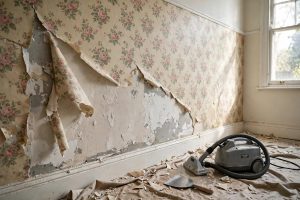
Do not forget the extras. Wall preparation matters. Old paint may need a light sanding. Bare drywall needs primer. A gallon of wallpaper primer costs little and prevents the paste from soaking into the wall. Tools for a DIY job, including a smoothing brush, seam roller, and utility knife, cost well under fifty dollars as a set. Retailers such as Lowe’s and Home Depot stock both the paper and the tools in one trip.
Care and Upkeep
Wallpaper in a powder room needs regular but simple care. Wipe vinyl and vinyl-coated papers with a damp cloth, keeping the seams dry. Dust paper-based and natural fiber papers with a dry cloth, since water can stain them.
Watch the seams. They are the weak point of any installation. If an edge begins to lift, a small tube of seam adhesive will fix it in minutes. Catching it early keeps the repair invisible. Check behind the faucet and around the mirror, where splashes concentrate.
Humidity control is the long-term key. Run the exhaust fan when the room is in use and for a few minutes after. In older homes without a fan, opening the door after use helps. These small habits add years to the life of the paper. General maintenance guidance from This Old House covers fan upkeep and moisture checks in plain language.
Repainting trim and touching up caulk around the sink once a year keeps the whole room looking finished. The paper itself, if chosen well and hung well, should need no more attention than that.
Safety
Safety in a powder room wallpaper project starts before the first roll goes up. Older homes may have walls painted with lead paint. If your house was built before 1978, test the paint or the old paper layers before you scrape or sand. Lead-safe work practices are not optional; they protect everyone in the home. Information on safe handling is available from Bob Vila and from federal resources.
Adhesives and primers contain chemicals. Choose low-VOC products when you can, and ventilate the room while you work. Keep the door open and, if possible, run the fan. Read the label on every product and follow the drying times it gives. Rushing the job traps moisture behind the paper, which can lead to mold.
Electrical fixtures deserve respect. Turn off the power at the breaker before you remove outlet covers or sconce plates. Paper around boxes should be trimmed neatly, never tucked behind live parts. If a fixture must be moved to hang the paper, call an electrician rather than guessing.
Finally, think about the guests who will use the room. Keep the floor dry and the path clear. A beautiful room should also be a safe one. Fire-safety guidance for small rooms, including clearances around fixtures, appears in the home sections of HGTV and The Spruce.
Frequently Asked Questions
Can I put wallpaper in a powder room with no window?
Yes. Most powder rooms have little or no natural light, and wallpaper performs fine in those conditions. Choose a paper rated for interior use, keep the room ventilated, and check the pattern under the room’s actual lighting before you commit. Light, reflective papers can brighten a windowless room noticeably.
Is peel-and-stick wallpaper good enough for a powder room?
For many powder rooms, yes. It installs easily, removes cleanly, and costs little. It works best on smooth walls in rooms with good ventilation. If the room sees heavy use or steam, traditional vinyl paper will last longer. Match the product to the room, not the other way around.
How long does wallpaper last in a powder room?
A well-chosen and well-hung paper typically lasts eight to twelve years in a powder room. Vinyl papers last longest. Peel-and-stick lasts less long, often five to seven years, but it is easy to replace. Ventilation and gentle cleaning extend the life of every type.
Should I wallpaper all four walls or just one?
Both approaches work. All four walls give the jewel-box effect: a small room wrapped in pattern. One accent wall behind the vanity gives drama at lower cost and lets the other walls stay calm. In very small rooms, all four walls in a medium-scale pattern often look more finished than a single accent wall.
Do I need a professional to hang wallpaper?
Not always. Peel-and-stick and simple prints are fair DIY projects for a careful beginner. Vinyl, grasscloth, and murals reward professional skill, especially in a tight room where every seam shows. Get two or three quotes if you hire out; prices vary more than most homeowners expect. Brand and color planning tools from Benjamin Moore and Behr can help you settle the palette before you call.
What is the cheapest way to get the look?
Peel-and-stick paper on smooth, primed walls is the lowest-cost path. Watch for sales at large retailers and check Sherwin-Williams for coordinated paint colors for the trim. Doing the work yourself on a weekend keeps the total under a few hundred dollars for most powder rooms.
A Final Word
The powder room is small, but it carries weight. Guests judge a home by it, and homeowners live with it every day. Wallpaper is the fastest way to give that small room character. Choose a material that suits the moisture level, a pattern that suits the light, and a scale that suits the walls. Take your time with preparation, and the result will look like far more work than it was. For a few hundred dollars and a weekend of effort, you can turn the most overlooked room in the house into the one people remember.
References
Behr. (n.d.). Paints, primers, and stains. https://www.behr.com Benjamin Moore. (n.d.). Paints and stains. https://www.benjaminmoore.com Bob Vila. (n.d.). Home improvement advice. https://www.bobvila.com HGTV. (n.d.). Home and garden ideas. https://www.hgtv.com Lowe’s. (n.d.). Home improvement products. https://www.lowes.com Sherwin-Williams. (n.d.). Paints and coatings. https://www.sherwin-williams.com The Home Depot. (n.d.). Home improvement products. https://www.homedepot.com The Spruce. (n.d.). Home and garden advice. https://www.thespruce.com This Old House. (n.d.). Home renovation guidance. https://www.thisoldhouse.com
Was this guide helpful?

About Robert Taylor
The My Garden US editorial team writes practical, in-depth home and garden guides for American homeowners — tested advice, no fluff.