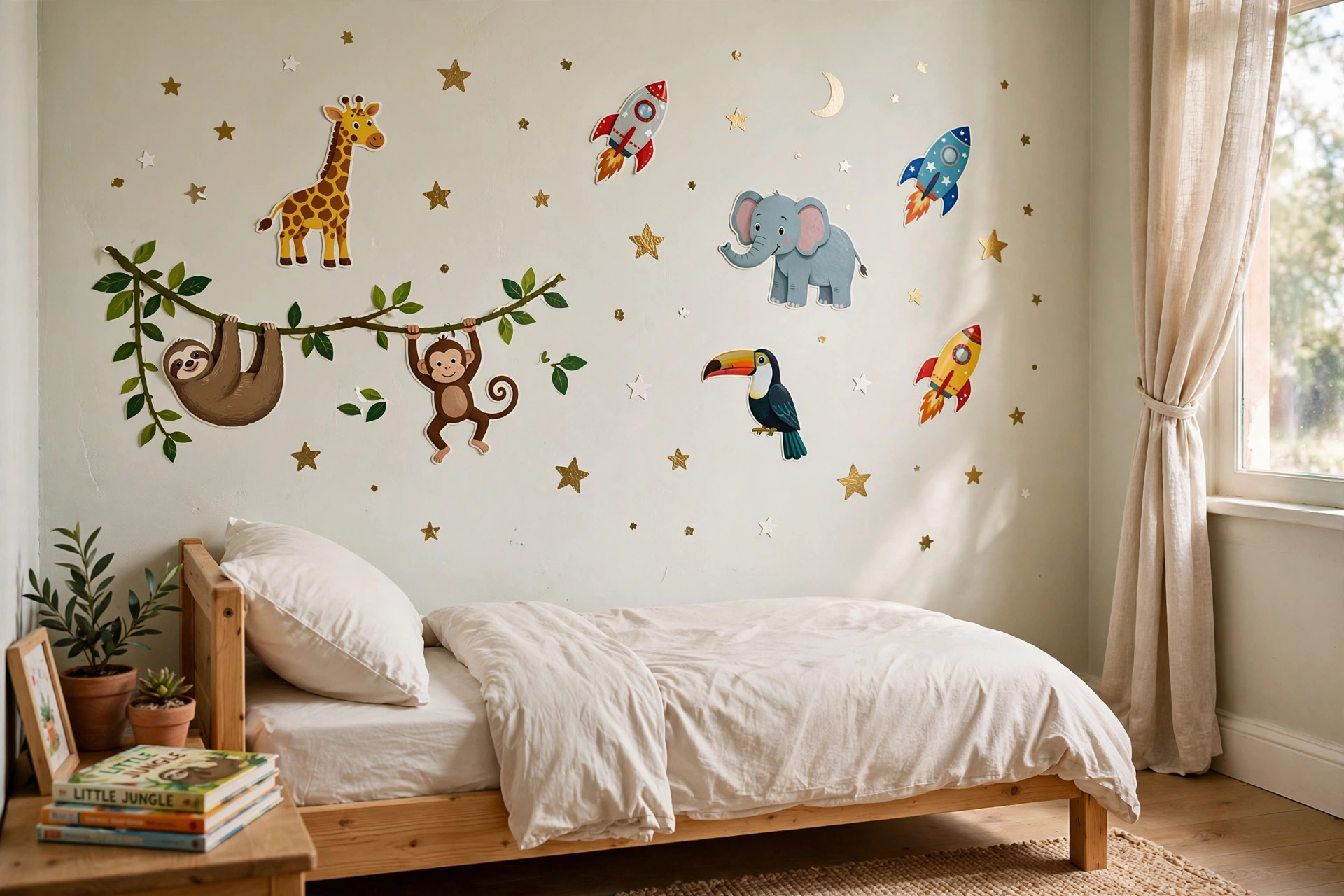

Why Wall Decals Suit Children’s Rooms
Parents across the country face the same question when a child outgrows a nursery or asks for a room that feels like their own. Paint is a strong choice, but paint takes time, money, and a steady hand. Wall decals for kids rooms give a faster path. They stick to the wall, lift off without much fuss, and change the look of a room in a single afternoon. American buyers who write reviews often mention this point first: decals make a plain wall lively without the long work of a full paint job.
A second reason is choice. Shops and online stores now carry hundreds of designs. There are jungle animals, space ships, castles, sports scenes, maps, and simple shapes. A child can pick a theme that matches a hobby or a favorite story. When the child grows older, the decals come down and new ones go up. The wall stays in good shape for the next stage.
Cost matters too. A set of wall decals often costs less than a gallon of paint and the tools that go with it. There is no need for brushes, drop cloths, or a weekend of work. For renters, decals are a kind way to decorate. Most peel off clean, which keeps the deposit safe when the lease ends.
Reviews from buyers in the USA also point to a plain truth: kids change their minds. A five-year-old who loves dinosaurs may want a racing theme at age eight. With decals, the room can change with the child. The wall beneath is still the same wall, ready for the next idea.
How to Choose: What to Look For: Wall Decals for Kids Rooms Reviews Usa
Reading reviews helps, but a buyer still needs a plan. The best way to use wall decals for kids rooms reviews USA is to check what real buyers say about four points: material, size, design, and how the decal sticks and peels.
Material and Adhesive
Most decals are made from vinyl or woven fabric. Vinyl decals are thin, smooth, and print sharp colors. They cost less and suit flat walls. Fabric decals are thicker and soft to the touch. They peel off and stick back on many times, which helps when a child wants to move a rocket from one wall to another.
The adhesive is the glue that holds it all. Removable adhesive is the standard for kids rooms. It grips well enough to stay put for years, yet it lifts off with heat from a hair dryer and leaves little or no mark. Permanent adhesive is harder to remove and can pull paint off the wall. Reviews warn against it for rented homes and for walls painted with flat paint, which can lift more easily.
Size and Scale
Measure the wall before you buy. A small decal set may look lost on a wide empty wall, while a large mural can crowd a small room. Reviews often include photos, and these photos help a buyer judge scale. A good rule is to mark the size on the wall with painter’s tape. Step back and look. This simple test keeps surprises away.
Design and Theme
Pick a design the child likes now, not one the parent hopes the child will like. Buyers who write reviews say the happiest results come from letting the child choose. Simple designs with soft colors suit sleep areas. Bright, busy scenes suit play corners. Many brands sell mix-and-match sets, so a buyer can start with a few pieces and add more later.
Reading Reviews the Smart Way
Look for reviews that mention the same points over and over. If many buyers say the decal peels at the corners, believe them. If many say the colors match the photos, that is a good sign. Reviews from the last year matter most, since brands change their stock. Watch for reviews that show the decal on the wall after several months. That tells the truth about staying power.
Wall color also plays a part. Dark decals show up best on light walls. Guides from paint makers like Sherwin-Williams can help a parent pick a wall shade that works with the decal theme. A fresh coat of a calm color, such as a soft white or a light warm tone, gives decals a clean stage. For help with choosing between paint finishes, buyers can compare sheen levels before they paint.
Types of Wall Decals
Peel-and-Stick Vinyl Decals
These are the most common kind. They arrive as printed sheets with a backing paper. The buyer peels the backing, presses the decal to the wall, and smooths out bubbles with a cloth or a plastic card. Vinyl prints show bright, clear color and fine detail. They work best on smooth walls with eggshell, satin, or semi-gloss paint. Flat paint can be a weak match, since vinyl grips it less well and may lift paint when removed. Home store guides at Home Depot note that smooth wall surfaces give the best bond.
Fabric Wall Decals
Fabric decals use a woven material with a low-tack adhesive. They feel like thick cloth and can be lifted and placed again many times. This is a real help when a child wants to rearrange the scene. They cost more than vinyl, but buyers who plan to reuse them find the price fair. They also hide small wall flaws better than thin vinyl.
Static-Cling Decals
These stick by static charge, not glue. They work on glass, mirrors, and very smooth walls. They are easy to move but can slip down in dry winter air. They suit small accents on windows and doors rather than large wall scenes.
Chalkboard and Dry-Erase Decals
These turn part of a wall into a drawing board. A child can draw with chalk or dry-erase markers and wipe the surface clean. Reviews praise them for play value, but buyers should test markers on a corner first. Some cheap markers stain if left on for weeks. For walls that will carry these decals, project guides from This Old House offer tips on wall preparation and smooth surfaces.
Cost and Price
Wall decals for kids rooms range widely in price. Small accent sets with a few dozen pieces often cost between ten and twenty-five dollars. Mid-size theme sets with larger pieces run from twenty-five to sixty dollars. Full wall murals and large custom scenes can cost from sixty to well over one hundred and fifty dollars.
Price is not always a mark of quality. Reviews show that mid-priced sets often rate just as well as costly ones. What matters more is print quality, cut accuracy, and a true removable adhesive. Buyers should read the product page with care. A set that claims hundreds of pieces may be mostly tiny dots and stars.
Custom decals cost the most. A buyer can order a decal made from a child’s name or a family photo. These are one-of-a-kind, but they cannot return to the shelf if the child tires of them. Reviews suggest trying a standard set first, then buying custom pieces only when the theme is sure.
There are ways to spend less. Many sellers offer two-packs and bundle deals. Buying during holiday sales helps. A parent who plans to redo the room can also look at related low-cost updates, such as warm neutral wall colors for family spaces, which pair well with many decal themes.
Care and Upkeep
Wall decals need little care, but a few habits keep them looking fresh for years.
Dust is the main enemy. Wipe decals now and then with a dry soft cloth or a feather duster. Do not use sprays or wet cleaners on vinyl decals, since water can work under the edges and loosen the grip. Fabric decals can take a light damp wipe, but the buyer should test a small edge first.
Keep the room at normal heat and humidity. Very hot rooms, such as walls near heating vents, can soften the adhesive over time. Damp rooms, such as a basement bedroom with poor air flow, can cause edges to curl. A steady room climate helps decals last.
Teach small children not to pick at the edges. A lifted corner grows quickly once little fingers find it. If an edge does lift, press it back down with a warm cloth. A short pass with a hair dryer on low heat often restores the grip.
When it is time to remove the decals, work slowly. Warm each piece with a hair dryer for about thirty seconds, then peel it back at a sharp angle. Go slow near corners. If a bit of glue stays on the wall, rub it off with a soft cloth and warm soapy water. Most reviews report that walls look clean after removal, though very old decals may leave a faint shadow where the paint aged around them.
Safety
Safety comes first in any child’s room. Choose decals made for indoor home use. Look for products that state they are free of lead and phthalates. US-based sellers often list this on the package or the product page. Reviews sometimes mention a strong chemical smell when a pack is first opened. A new set should air out in another room for a day before it goes on the child’s wall.
Place decals with care. Do not cover smoke detectors, vents, light switches, or outlets. Keep decals out of reach above cribs, since loose pieces could fall. Small decals that peel off easily can be a choking risk for babies and toddlers, so use larger pieces in rooms for the very young.
Check the wall paint, too. If the home was built before 1978, the paint may hold lead. Peeling any adhesive off old paint can release chips or dust. In such homes, it is wise to test the paint or talk to a local health office before placing decals. Safety guidance from federal sources covers these older-home risks in plain terms.
Fire safety matters as well. Keep paper-thin vinyl decals away from lamps, heaters, and candles. Vinyl can melt or catch fire near high heat. A safe gap of a few feet around heat sources is a good rule.
Frequently Asked Questions
Will wall decals damage painted walls?
Most peel-and-stick decals made for kids rooms use removable adhesive and come off clean from sound, cured paint. Satin and semi-gloss paints hold up best. Flat paint is softer and may lift. Always wait at least three weeks after painting before you apply decals, so the paint can cure fully. Test one small piece in a hidden spot first.
How long do wall decals last?
On indoor walls in normal rooms, a good set lasts three to five years. Direct sun can fade colors faster, and damp rooms can loosen edges sooner. Reviews from buyers who kept decals for years note that fabric types often outlast thin vinyl.
Can decals go on textured walls?
Light texture is fine for most decals. Heavy orange-peel or knockdown texture weakens the bond, and decals may peel at the edges within weeks. For rough walls, fabric decals or a smooth painted accent wall work better. Some buyers paint one smooth board and mount the decals on the board instead.
Are wall decals safe for nurseries?
Yes, when they are made for indoor use and carry non-toxic claims. Air out new decals before hanging them. Use large pieces placed high on the wall, out of a baby’s reach. Small loose pieces are not safe near infants who mouth objects.
Can I reuse wall decals after removing them?
Fabric decals can be removed and reused many times. Vinyl decals stretch when peeled and rarely stick well a second time. If reuse matters, buy fabric types and keep the original backing sheets for storage.
Do wall decals work on brick or concrete walls?
Rough masonry is a poor surface for standard decals. The bumps keep the adhesive from gripping. Special high-tack decals exist for brick, but they are harder to remove. For basement or garage play spaces, consider mounting a smooth painted panel and placing decals on that instead.
A Final Word
Wall decals give parents a simple way to make a child’s room feel special. Read the reviews, measure the wall, pick a safe material, and let the child help choose. For shoppers comparing finishes before a room refresh, notes on where to find specialty wall paints can help plan the wall beneath the decals. With a little care, a set of decals can brighten a room for years and come down clean when the next chapter begins. Advice from home editors at The Spruce and project ideas from HGTV can round out the room design, while color tools from Benjamin Moore and paint aisle guides at Lowe’s help match walls to themes.
References
Behr. (n.d.). Paints, primers, and stains. https://www.behr.com Benjamin Moore. (n.d.). Paints and stains. https://www.benjaminmoore.com Bob Vila. (n.d.). Home improvement advice. https://www.bobvila.com HGTV. (n.d.). Home and garden ideas. https://www.hgtv.com Lowe’s. (n.d.). Home improvement products. https://www.lowes.com Sherwin-Williams. (n.d.). Paints and coatings. https://www.sherwin-williams.com The Home Depot. (n.d.). Home improvement products. https://www.homedepot.com The Spruce. (n.d.). Home and garden advice. https://www.thespruce.com This Old House. (n.d.). Home renovation guidance. https://www.thisoldhouse.com
Was this guide helpful?

About Robert Taylor
The My Garden US editorial team writes practical, in-depth home and garden guides for American homeowners — tested advice, no fluff.
You May Also Like

Best Paint for Basement Ceiling Exposed: A Complete USA Guide
June 13, 2026 0 views
Oversized Canvas Art Above Sofa: A USA Buyer’s Guide
January 9, 2026 0 views
Floral Wallpaper for Bedroom for Sale USA: A Buyer’s Guide
September 10, 2026 0 views