
Introduction
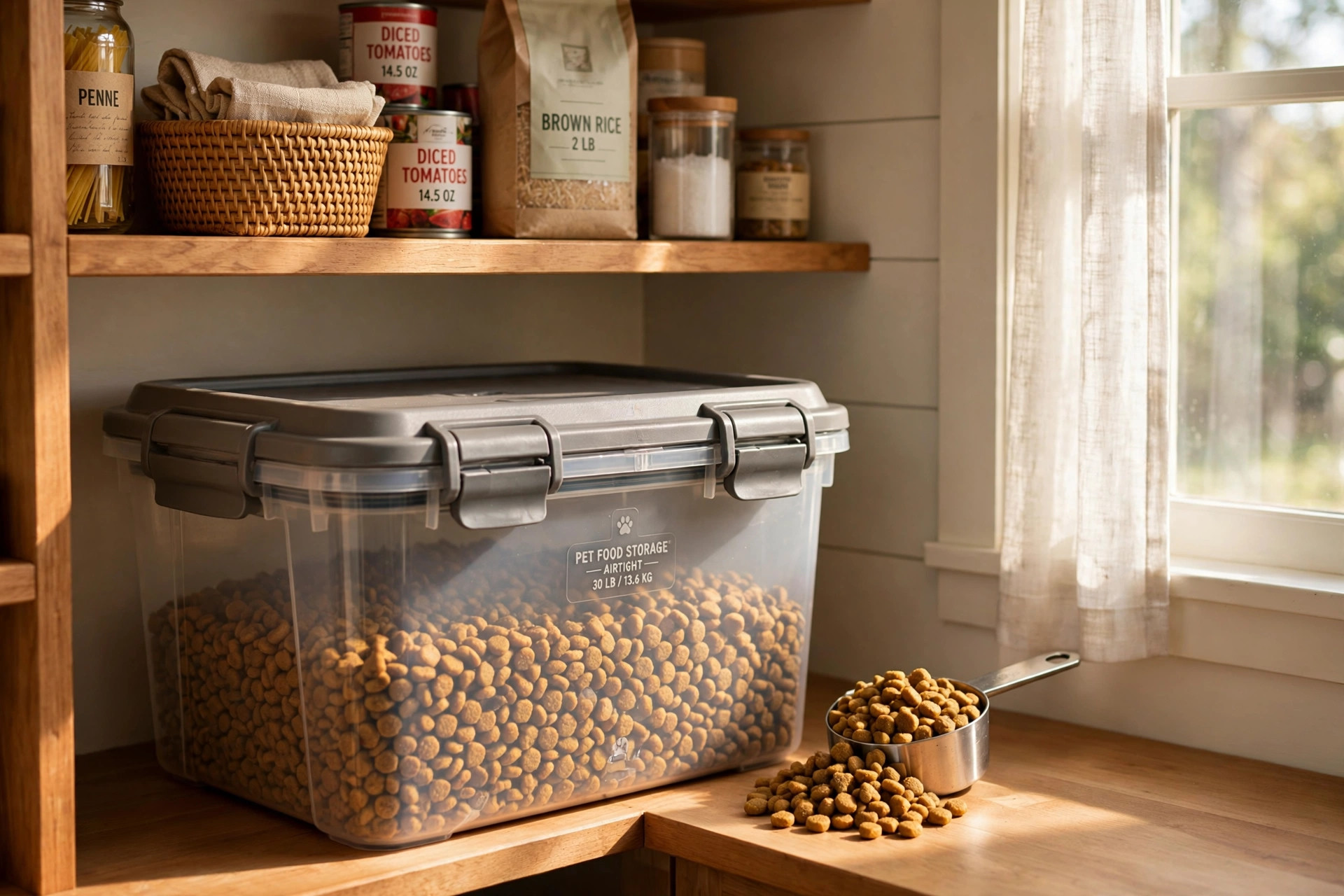
A pet food storage container airtight large enough for a full bag of kibble is one of the smartest purchases a dog or cat owner can make. Dry pet food goes stale when it sits in an open bag. Air, moisture, and heat strip away flavor and nutrients. An airtight seal locks out the dampness and keeps the crunch that pets love. For families that buy large bags to save money, the right container pays for itself. It keeps food fresh from the first bowl to the last. This guide walks through why size and seal matter, what materials to trust, how much to pay, and how to keep the container clean.
Why an Airtight Seal Matters: Pet Food Storage Container Airtight Large
Dry pet food starts to lose its freshness the moment the bag is opened. Oxygen breaks down fats in the food. Moisture softens the kibble and invites mold. Once a bag is open, the clock starts. A sealed bag with a simple clip slows the loss. A large airtight container stops it almost entirely.
Veterinary groups such as the American Veterinary Medical Association advise pet owners to store dry food in a cool, dry place away from heat and light. An airtight container does the same work as the factory seal, only better. It keeps out pantry pests like weevils and ants. It stops strong odors from drifting through the kitchen. It also keeps curious pets from tearing into the bag.
The seal itself is usually a rubber or silicone gasket that presses tight when the lid closes. Some lids twist and lock. Others snap down with side latches. Either style works well if the gasket is thick and the lid fits true. A weak lid that rocks from side to side lets air creep in, and that defeats the purpose of the whole purchase.
Pet food safety also falls under the watch of the U.S. Food and Drug Administration, which notes that proper storage helps prevent spoilage and contamination. Keeping kibble sealed and cool is a simple step that protects both pets and people in the home.
Choosing the Right Size
A large container should hold a standard bag of dry food with room to spare. The most common bag sizes in the United States are 15, 24, 35, and 50 pounds. A 15-pound bag needs about 35 quarts of storage. A 35-pound bag needs about 65 to 70 quarts. A 50-pound bag needs 90 to 100 quarts.
Measure Before You Buy
Check the bag size you buy most often. Then look for a container rated a little larger than you need. Extra headroom makes scooping easy and keeps the lid from pressing down on the food. Write down the space where the container will sit. Large bins take real room, and a 100-quart tub may not fit under a counter or inside a pantry door.
Shape and Footprint
Tall square containers use floor space well. They slide into pantry corners and stand neatly in a garage. Wide low containers fit under tables but take more floor area. Wheels help. Many large models include casters so a full bin rolls instead of being lifted. A full 50-pound container is heavy, and casters save backs.
Some owners store the original bag inside the container instead of pouring the kibble in loose. The Association of American Feed Control Officials notes that the bag carries the batch code, best-by date, and feeding guide. Rolling the bag top shut inside a sealed bin gives freshness and keeps the label handy. Retailers such as Chewy sell containers sized to fit whole bags for this reason.
Materials and Build Quality
Food-Grade Plastic
Most large containers are made of high-density polyethylene or polypropylene. These plastics are light, tough, and safe for food contact. Look for the words food grade on the label. Thin flimsy walls can crack under the weight of 50 pounds of kibble. Thick walls with ribbed sides hold their shape for years.
BPA-Free and Non-Toxic
Quality brands use BPA-free plastic. Chemicals from low-grade plastic can leach into food over time, especially in warm rooms. A food-grade, BPA-free bin removes that worry. If the product page or package does not say food grade, choose another one.
Lids and Gaskets
The lid is the heart of the container. Snap-lock lids with four side latches press the gasket down evenly. Twist-lock lids form a seal with a quarter turn. Either design works if the gasket is removable for washing. A glued-in gasket traps crumbs and can grow mold in hidden corners.
Metal Options
Stainless steel and galvanized metal bins appeal to owners who worry about rodents. Mice can chew through thin plastic. A metal bin with a tight lid stops them cold. Metal costs more and weighs more, but it lasts a long time. Check that the inside is smooth and free of sharp seams.
Types of Large Airtight Containers
Several styles serve different homes and budgets.
Vault-style stackers. Tall square bins with twist lids. They stack neatly and hold 50 to 80 pounds. Their lids spin on with a gasket seal and spin off easily.
Latch bins. Rectangular tubs with snap latches on each side. They open fast with one hand. Many come with a free measuring scoop.
Rolling dispenser bins. The container stands upright and dispenses food through a spout or drawer at the bottom. These suit owners who scoop several times a day.
Metal pantry cans. Round or square steel cans with friction lids. Classic farm and ranch storage. Heavy and nearly chew-proof.
Multi-pet organizers. Wide bins with two chambers, one for dog food and one for cat food, each with its own lid. Handy in multi-pet homes.
Guides from The Spruce Pets compare these styles and note that the best choice depends on how much food you buy at once and where the bin will live. Stores like Petco stock the full range in their pet supply aisles.
Cost and Price Range
Large airtight containers run from about 25 dollars for a basic plastic tub to 90 dollars or more for heavy-duty or metal models. A mid-range 60-quart bin from a known brand usually costs between 40 and 60 dollars. Sets with two sizes cost a little less per unit than buying two bins separately.
What Drives the Price
Size is the main factor. Bigger bins use more plastic and cost more to ship. Brand name adds to the price. Thick food-grade walls, heavy latches, casters, and a measuring scoop each raise the cost a few dollars. Metal bins cost the most.
Saving Money Without Losing Quality
Buy once and buy well. A cheap bin with a warped lid wastes the money saved on bulk food. Watch for seasonal sales at big retailers such as Home Depot, where pet storage often drops in price during spring and holiday sales. For households with more than one pet, pair the food bin with other supplies bought together, from feeders to kennels like the best outdoor dog kennel for large breeds usa.
Warranties and Brand Trust
Known pet brands back their storage bins with one- or two-year warranties. A warranty shows the maker trusts the seal and the latches. Keep the receipt until you are sure the lid seals well. Big-box stores make returns easy, and a quick return is better than months of stale food from a bad bin.
Care and Upkeep
A clean container keeps food safe. Empty the bin fully every four to six weeks. Wash it with warm water and a mild dish soap. Rinse well and let it dry completely before refilling. Any dampness left inside can spoil fresh kibble.
Cleaning the Gasket
Pull the gasket out and wash it by hand. Crumbs and fat collect under the seal. A sour smell from the lid means the gasket needs a wash. Replace gaskets that are cracked or stretched. Many brands sell replacement gaskets cheaply.
Where to Store the Bin
Keep the container in a cool, dry spot. A pantry or climate-controlled garage works well. Heat speeds up spoilage and softens plastic seals. The Environmental Protection Agency notes that cool dry storage also discourages mold growth in homes. Avoid placing the bin next to the oven, the water heater, or a sunny window.
Safety Tips
Dry food can carry germs even when it looks and smells fine. Wash hands after scooping. Wash the scoop often. Never pour fresh food on top of stale food at the bottom of the bin. Finish the old food first, then clean the bin, then add the new bag.
Keep the container closed between meals. An open lid invites dust, insects, and small hands. If the home has toddlers, choose a bin with latches that lock or store it where little ones cannot reach.
Watch the best-by date on the bag. Even sealed food has a limit. The feeding guides from PetMD remind owners that rancid fats in old food can upset a pet’s stomach and refuse nutrients. When in doubt, throw out food that smells sour or looks dusty.
For households with anxious chewers, safe storage pairs well with secure housing such as the best dog crate for anxious dogs escape proof. Owners who travel often may also look at an automatic pet feeder for dogs with camera so meals stay on schedule.
Animal welfare sources such as the American Society for the Prevention of Cruelty to Animals support routines that keep feeding consistent and food fresh, which a good storage bin helps deliver.
Frequently Asked Questions
How long does dry pet food stay fresh in an airtight container?
Most dry foods stay fresh for about six to eight weeks after the bag is opened when stored sealed in a cool, dry place. Check the best-by date on the bag and never store food past it.
Can I pour the kibble straight into the container?
Yes. Make sure the bin is food grade and fully dry first. Some owners prefer to place the whole bag inside the bin to keep the batch code and best-by date. Both methods work.
What size container fits a 50-pound bag of dog food?
A 50-pound bag needs roughly 90 to 100 quarts of space. Look for bins rated for 50 pounds or 100 quarts, and measure your storage spot before ordering.
Is plastic or metal better for pet food storage?
Food-grade plastic is lighter, cheaper, and fine for most homes. Metal is tougher and resists rodent chewing. Pick metal if mice or rats are a problem in your storage area.
How do I know the seal is truly airtight?
Close the lid on a thin strip of paper and try to pull it out. If the paper slides out easily, the seal is weak. Also check that the lid sits flat with no rocking.
Should I wash the container between bags?
Yes. Wash and fully dry the bin every time it is emptied, or at least every month or two. Old fat and crumbs left inside can turn rancid and spoil fresh food.
Do large containers work for cat food too?
Yes. Many owners buy one large bin for dog food and a smaller one for cat food. The same rules apply: airtight seal, food-grade walls, cool dry storage. Multi-chamber bins split the space for homes with both pets.
Can I store treats in the same container?
Small treats keep well in a separate sealed jar. Mixing treats with kibble lets treat oils soak into the dry food. A small airtight canister for treats costs little and keeps both foods fresh.
Final Word
A pet food storage container airtight large enough for your biggest bag is a small purchase that protects a large one. It keeps bulk food fresh, cuts waste, and keeps the kitchen tidy. Measure your bag, choose a food-grade bin with a true gasket seal, keep it clean, and store it cool. Your pet will taste the difference at every meal.
References
American Veterinary Medical Association. (n.d.). Pet care resources. https://www.avma.org ASPCA. (n.d.). Pet care and animal welfare resources. https://www.aspca.org Association of American Feed Control Officials. (n.d.). Pet food labeling and regulation. https://www.aafco.org Chewy. (n.d.). Pet supplies. https://www.chewy.com Petco. (n.d.). Pet supplies and services. https://www.petco.com PetMD. (n.d.). Pet health information. https://www.petmd.com The Home Depot. (n.d.). Home improvement products. https://www.homedepot.com The Spruce Pets. (n.d.). Pet care guides and product reviews. https://www.thesprucepets.com U.S. Environmental Protection Agency. (n.d.). Protecting human health and the environment. https://www.epa.gov U.S. Food and Drug Administration. (n.d.). Antibacterial product information. https://www.fda.gov
Was this guide helpful?

About Lisa Anderson
The My Garden US editorial team writes practical, in-depth home and garden guides for American homeowners — tested advice, no fluff.
You May Also Like

The Best Dog Collar with Nameplate Engraved in the USA
July 14, 2026 0 views
The Best Outdoor Dog House Insulated for Winter: A Warm Home for Your Dog
April 7, 2026 0 views
Best Slow Feeder Insert for Dog Bowl: A Guide for Fast Eaters
May 4, 2026 0 views