
Introduction
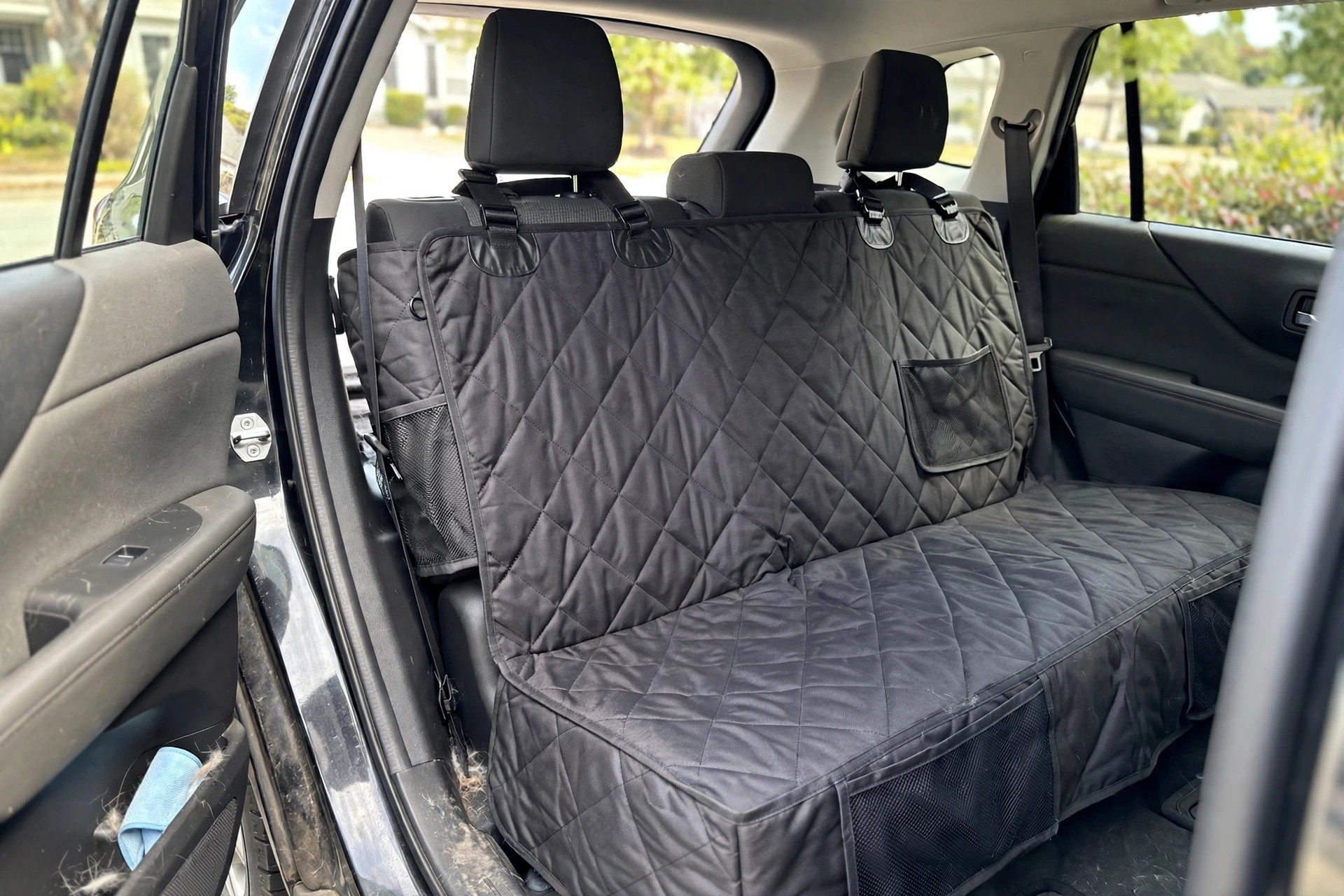
A dog car seat cover for back seat protection is a simple product that solves a common problem. Dogs love car rides. They jump in with muddy paws after a walk. They shed hair on every surface. Their claws scratch leather and cloth alike. After a few trips, the back seat of a clean car can look worn out. A well made seat cover stops that damage before it starts. It lays over the back bench, hooks into place, and takes the dirt instead of your seats. This guide explains what to look for, what the main types are, what they cost, how to keep them clean, and how to use them safely. By the end, you will know how to pick the right cover for your dog, your car, and your budget.
Why Back Seat Protection Matters: Dog Car Seat Cover for Back Seat Protection
Dogs are hard on car seats. Mud from paws soaks into cloth. Wet coats leave damp spots that smell. Loose hair works into the weave of fabric and resists every brush. Claws snag leather and vinyl, and one deep scratch can never be repaired. On any car, it makes the cabin feel old and dirty. Repairing or replacing a torn seat can cost several hundred dollars. A cover costs a small part of that.
There is a comfort reason too. Many dogs slip on smooth seats. A cover with a firm, grippy surface gives the dog footing. The dog feels steadier on turns and stops. A calm dog is a safer passenger. A cover also creates a clear zone for the dog. Dogs learn that the covered area is their place. That habit can help keep them in the back seat, where they belong. Groups such as the ASPCA publish guidance on pet travel, and much of it stresses keeping pets secure and settled in the car.
Protection also matters for health. Some dogs have skin trouble. A clean cover gives them a fresh surface on every trip. If you travel with more than one dog, a cover keeps them on a surface you can wash. That simple step lowers the spread of dirt and germs between trips.
What to Look for When You Choose
Start with size. Measure the back seat of your car. Bench seats in sedans, SUVs, and trucks all differ. Many covers come in sizes such as regular, large, and extra large. Check the maker’s size chart before you buy. A cover that is too small leaves seat edges open to claws and dirt. A cover that is too large bunches up, and bunched fabric slides around.
Next, look at the material. The top layer should be thick and hard to tear. Woven polyester and quilted cotton blends are common. A waterproof layer under the top stops wet from reaching the seat. Some covers use a rubber or vinyl backing. That backing keeps liquid from soaking through. Avoid thin covers with no backing. They look fine in the shop and fail on the first rainy day.
Check how the cover stays in place. Good covers use several straps. Seat anchors, which are soft tubes that wedge into the seat gap, stop the front edge from sliding. Straps around the headrests hold the back edge. Nonslip mesh on the underside adds grip. Velcro strips on the seat belt openings help too. The more points of contact, the less the cover moves when the dog shifts its weight.
Look at the seat belt openings. Most covers have slits or flaps so the seat belts and child seat anchors can pass through. This matters if you ever carry people in the back. It also matters for dog safety gear. Many owners clip the dog to a harness tether that plugs into the seat belt buckle. The cover must allow that connection. Sites like Chewy and PetSmart list covers with clear notes about seat belt access, which makes this easier to check.
Think about cleaning. Dogs get covers dirty fast. Pick a cover you can wash in a machine. Check the washing instructions. Some covers wash well but cannot go in a hot dryer. Others must be hosed down by hand. If your dog swims or walks in mud often, a machine-washable cover will save you time each week.
Consider zippers and flaps. Some covers have side flaps that drop down to protect the doors. Others have a middle zipper that splits the cover so one side can fold down for a passenger. These extras add weight and cost, but they can be worth it in a family car.
Types of Dog Car Seat Covers
Not all covers are built the same. Here are the four main types. Each suits a different dog and a different car.
Bench Seat Covers
The bench cover is the most common type. It hangs over the back bench like a blanket with straps. It covers the seat cushion and the seat back. Most bench covers are plain and light. They suit small and medium dogs that sit still. They are also the cheapest option. The weak point is the footwell. A standard bench cover leaves the gap between the front and back seats open. Some models add a front flap that fills that gap.
Hammock Style Covers
A hammock cover hooks to the front headrests and the back headrests. It spans the seat like a sling. This closes the footwell gap completely. Dogs cannot slip off the seat into the footwell. Owners like this style for large dogs and for dogs that move around. Many owners pair a hammock with a best elevated dog bed for outdoor patio use mindset: firm support under the dog reduces strain on joints during long rides. Hammock covers often come with side flaps for the doors. The trade is that they use the front headrests, so they fit best in cars where the front seats sit well back.
Bucket or Split Covers
Some cars have split or contoured back seats. Bucket style covers wrap each section alone. They also suit cars where one back seat folds down. These covers are shaped to fit the seat and they tend to stay put better than plain blankets. They cost more. They are a good pick when you often fold part of the back seat for cargo.
Trunk and Cargo Covers
SUV and hatchback owners often keep the dog in the cargo area. Cargo covers line the trunk floor and the back of the folded seats. They protect a larger zone than a bench cover. They often have bumper flaps that unfold when the tailgate opens, so the dog does not scratch the bumper paint when jumping out. If your dog rides in the back of an SUV, a cargo cover may suit you better than a back seat model.
Cost and Price
Prices run wide. A basic bench cover costs about fifteen to thirty dollars. It will be thin, with few straps and weak water proofing. It suits a small calm dog in a dry climate. Mid range covers cost about thirty to sixty dollars. This is the sweet spot for most owners. Covers in this range are quilted, water resistant, and have seat anchors and headrest straps. They last a few years of weekly use.
Premium covers cost sixty to one hundred twenty dollars or more. They use heavy fabric, real waterproof layers, and full strap systems. Some carry brand names known in outdoor gear. Retailers like Tractor Supply Co., Walmart, and Target carry covers across this whole price range, while pet focused shops such as PetSmart and Orvis tend to stock the middle and upper end.
Do not judge by price alone. Read the size chart and the strap list. A thirty dollar cover that fits well beats a ninety dollar cover that slides around. Watch for shipping costs on online orders. A cheap cover with high shipping may cost more than a local buy at Home Depot, which also stocks auto and pet travel gear.
Care and Upkeep
Shake the cover out after each trip. This takes one minute and keeps hair and dirt from building up. Brush it with a pet hair brush once a week. For deep cleaning, follow the maker’s label. Most covers can go in a washing machine on a gentle cycle with cold water. Use a mild detergent. Skip fabric softener. It can coat the waterproof layer and weaken it.
Dry the cover on low heat or on a line. High heat can melt the nonslip backing and shrink the fabric. Check the straps and anchors each month. Straps stretch over time. Anchors wear flat. Replace worn parts before they fail on a trip. If the cover has a musty smell, wash it with a cup of baking soda added to the rinse. Let it dry fully in the sun. Sunlight kills odor and dries the padding through.
Keep a spare towel in the car. On muddy days, wipe the dog’s paws before it climbs in.
Safety Notes
A seat cover is not a safety device. It protects the seat. It does not protect the dog in a crash. For real safety, use a crash tested dog harness or a secured crate. Clip the harness to the seat belt system through the cover’s seat belt openings. Never let a dog ride loose in the front seat. An airbag can kill a dog in the front seat just as it can harm a child.
Check that the cover does not block airbags built into the seats. Some cars have side airbags in the seat sides. A cover strapped tight over those zones could change how the airbag opens. Check your car’s manual. If in doubt, use a cover that leaves the seat sides clear.
Keep the driver’s area clear. A hammock cover should not sag into the front seats or touch the gear shift. Straps should lie flat and out of the way. A loose strap can tangle around a dog’s leg.
Heat is a real danger. A car heats up fast in the sun, even with windows cracked. The American Kennel Club and PetMD both warn that dogs can suffer heatstroke in minutes inside a parked car. Never leave a dog alone in a parked car on a warm day. A seat cover does nothing to change that.
During winter, a cover can help in a small way. It adds a layer between the cold seat and the dog. But it is not a blanket. If you drive far in cold weather with the dog, the same care you give an best outdoor dog house insulated for winter applies: keep the animal warm, dry, and out of long exposure. For grooming trips, when the dog may be clipped short, plan ahead like you would for a best dog muzzle for vet visits and grooming visit: short travel, calm handling, and a warm car.
Frequently Asked Questions
Will a seat cover fit my truck’s back seat? Most likely, yes. Truck back seats are wide and flat, and many covers are made for them. Measure the seat width and depth. Compare those numbers to the cover’s size chart. Extra large covers suit full size trucks.
Can I wash the cover in my home washing machine? Most covers can be machine washed on gentle with cold water. Check the label first. Very large covers may be too bulky for a small machine. In that case, wash them at a laundromat with a large capacity washer. Air dry or tumble on low.
Do seat covers work with leather seats? Yes, and leather seats are a good reason to use one. Claws scratch leather fast. A padded cover takes the scratches instead. Use a cover with a soft underside so the cover itself does not scuff the leather. Straps should not rub the seat sides.
How do I stop the cover from sliding? Use every anchor and strap the cover comes with. Push the seat anchors deep into the gap between the seat cushion and the seat back. Tighten the headrest straps. If the cover still moves, add a nonslip rug pad under it. Heavy dogs move covers more than light dogs, so large breeds need the full strap system.
Can one cover protect against a wet, muddy dog? A cover with a true waterproof layer can. Look for words like waterproof rather than water resistant. Water resistant sheds light rain. Waterproof blocks soaking. After a muddy walk, let the mud dry on the cover, then shake it off outside before washing.
How long does a seat cover last? A mid range cover lasts about two to four years with weekly use. Heavy dogs and frequent washing wear it out faster. When the waterproof layer cracks, the straps fray, or the padding goes flat, replace the cover. A worn cover gives false confidence and leaks onto the seat.
A Short Final Word
A dog car seat cover for back seat protection is one of the cheapest ways to keep a car clean and keep a dog comfortable. Measure your seat. Pick a cover with a waterproof layer and a full strap system. Wash it often. Pair it with a real harness for safety. Review sites such as The Spruce Pets can help you compare models, and large retailers give you room to check prices before you buy. Your seats will stay clean, your dog will ride steady, and every trip will start from a fresh surface.
References
American Kennel Club. (n.d.). Dog care and training resources. https://www.akc.org ASPCA. (n.d.). Pet care and animal welfare resources. https://www.aspca.org Chewy. (n.d.). Pet supplies. https://www.chewy.com Orvis. (n.d.). Outdoor gear and dog supplies. https://www.orvis.com Petco. (n.d.). Pet supplies and services. https://www.petco.com PetMD. (n.d.). Pet health information. https://www.petmd.com PetSmart. (n.d.). Pet supplies and services. https://www.petsmart.com Target. (n.d.). Retail store. https://www.target.com The Home Depot. (n.d.). Home improvement products. https://www.homedepot.com The Spruce Pets. (n.d.). Pet care guides and product reviews. https://www.thesprucepets.com Tractor Supply Co. (n.d.). Farm and ranch supplies. https://www.tractorsupply.com Walmart. (n.d.). Everyday low prices. https://www.walmart.com
Was this guide helpful?

About Lisa Anderson
The My Garden US editorial team writes practical, in-depth home and garden guides for American homeowners — tested advice, no fluff.
You May Also Like
Best Pet Gate for Stairs with Banister Kit: A Full Guide for Pet Owners
March 4, 2026 0 views
Best Automatic Ball Launcher for Energetic Dogs
July 18, 2026 0 views
Dog Cooling Mat for Hot Summer Patios USA: A Simple Guide to Keeping Your Dog Cool
January 17, 2026 0 views