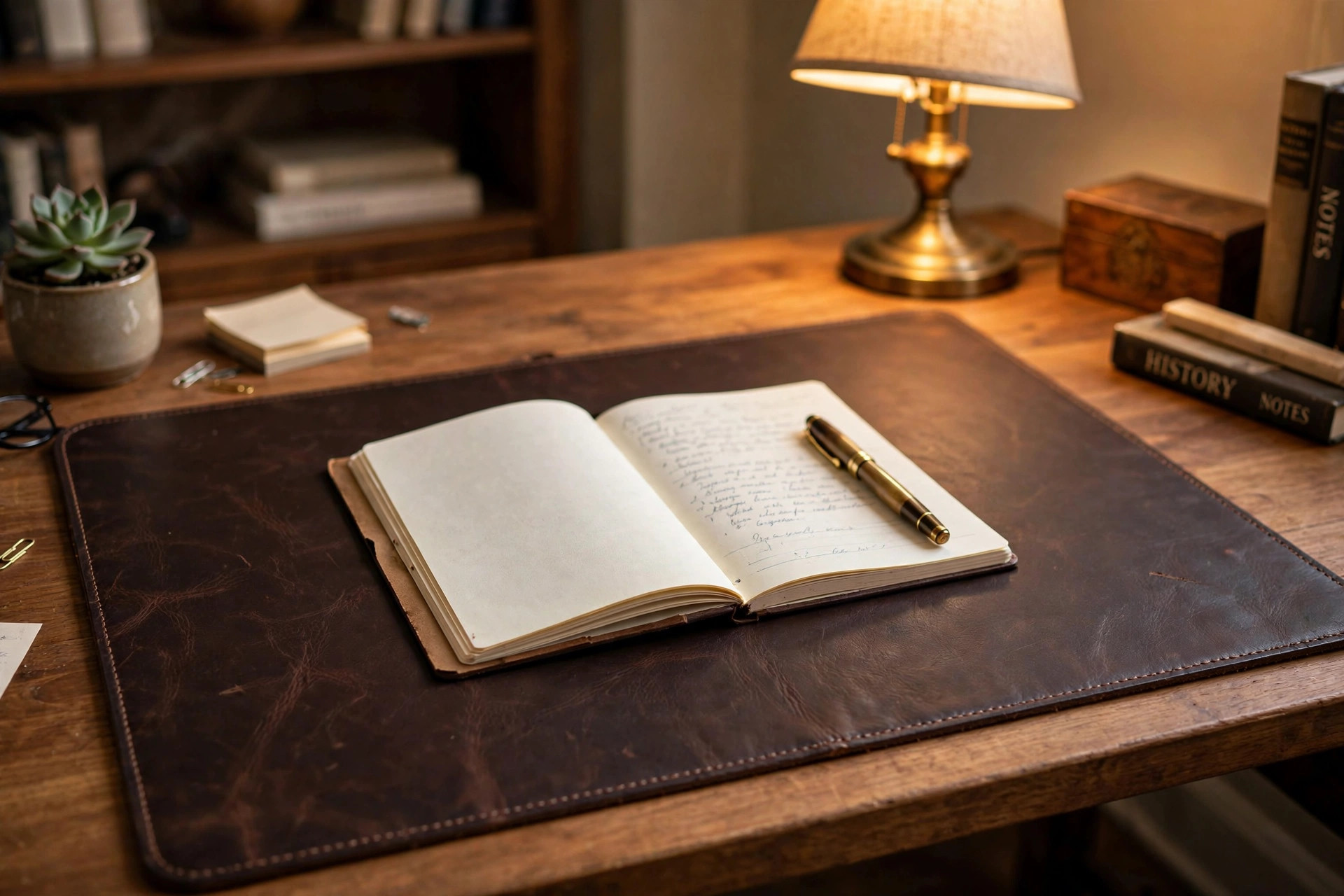

A home office desk mat leather for writing is a simple tool with a long history. Writers have laid a cover over the working face of a desk for hundreds of years. The cover caught ink, stopped scratches, and gave the hand a firm surface under the page. The modern version does the same work. It lies on top of the desk, often under the keyboard and notebook, and it takes the wear that the bare desk would take. A leather one adds a look and feel that cloth and plastic mats do not give. It is smooth, heavy, and quiet. For people who write by hand at a home desk, whether letters, notes, a diary, or the draft of a book, a leather desk mat earns its place each day.
Why a Leather Desk Mat Matters for Writing
The desk is the tool a writer uses most. It holds the paper, the lamp, the pens, and the arms of the writer. A bare wood or veneer desk wears fast under daily writing. Ink leaves stains. Pens cut small grooves into the grain. A coffee cup leaves rings. Over a year of steady work, the best spot on the desk becomes a worn patch. A desk mat takes that wear instead. When the mat is worn, it is replaced. The desk under it stays new.
Leather does this work well for several reasons. First, it is heavy enough to lie flat and stay in place without glue or tape. A thin cloth mat slides. A leather mat, which often weighs one or two pounds, holds its ground. Second, leather gives a firm but kind surface for writing. Paper on bare glass is too hard. Paper on bare wood gives an uneven line because the grain presses through. Leather sits between these two. The pen moves with slight give, and the letters come out even.
Third, leather is quiet. A keyboard on a wood desk clicks and thuds. On a thick leather mat the sound softens. This matters to people who share a home with others who work or sleep nearby. Fourth, leather looks serious. A home office that is also a corner of a living room or a spare bedroom gains a finished look from a good leather mat. Visitors notice it. The writer notices it each morning, and a neat desk makes a neat start.
What to Look for When You Choose One: Home Office Desk Mat Leather for Writing
Size
Size is the first choice. A desk mat for writing should be wider than the paper or the open notebook, with room for the hands. A common size is about 24 by 14 inches. That fits a sheet of letter paper with space on each side. A larger mat, about 31 by 15 inches, holds a notebook and a keyboard side by side. Measure the desk before buying. Leave at least two inches of bare desk on the left and right so the mat looks placed, not crowded.
Thickness
Thickness matters more than most buyers expect. A mat of 2 to 3 millimeters is thin and firm. It protects the desk and feels close to the wood. A mat of 4 to 5 millimeters is thick and soft. It cushions the wrist but can feel spongy under a sharp pencil. For writing by hand, 2.5 to 3.5 millimeters is the common middle ground. The pen feels the desk through the mat but the paper is held steady.
Color
Color is a matter of taste and light. Black is the classic choice and hides stains. Dark brown reads warm and suits wood desks. Tan and cognac show wear faster but age into a rich color that many owners prize. Green and navy are quiet colors that suit a study. Light colors such as cream show every mark and are best avoided unless the desk is used only for clean work with no coffee nearby.
Edges and Backing
Look at the edges of the mat. Good leather mats have finished edges that are burnished or stitched. Raw cut edges can curl over time. Stitching, often a saddle stitch in a matching thread, adds years to the life of the mat. The back of the mat should not scratch the desk. Many makers line the back with a soft suede or felt layer. Others leave the grain side out, which is smooth enough. Avoid any mat with a plastic backing that could melt or stick to a polished desk in heat.
Types and Options
Not all leather is the same. The name on the label tells how the mat was made and how long it will last.
Full-Grain Leather
Full-grain leather is the top layer of the hide with the grain left whole. It is the strongest and the most costly. It shows natural marks, scars, and lines from the animal. It darkens and softens with use, and writers often speak of the way a full-grain mat grows more beautiful over five or ten years. A home office desk mat leather for writing made of full grain is the premium choice and the one most likely to be handed down.
Top-Grain Leather
Top-grain leather is the top layer with the surface sanded and refinished. It is smooth and even, with fewer marks. It costs less than full grain and wears almost as long for desk use. Most good desk mats sold in stores are top grain. For a writer who wants a clean, even surface, top grain is a sound pick.
Genuine Leather and Bonded Leather
Labels can confuse buyers here. “Genuine leather” is a grade below top grain, made from the lower layers of the hide. It is real leather but weaker, and it cracks sooner. “Bonded leather” is made from leather dust and fibers glued to a cloth base. It looks like leather when new but peels and flakes within a year or two of daily use. Neither is a good value for a desk mat that will see daily writing. A better plan is to buy a smaller top-grain mat than a large bonded one for the same money.
Vegan and Faux Leather
Some buyers choose a leather look without animal leather. Modern polyurethane faux leathers can look close to the real thing at a distance and cost far less. They do not age like real leather. They wear smooth and then crack. For a desk mat that serves writing, they are a fair short-term choice. They are also easy to wipe clean. A writer who wants the real patina of age should stay with real hide.
Cost and Price
Prices follow the grades described above. A bonded leather mat of standard size may cost 15 to 25 dollars. A genuine leather mat of the same size runs 25 to 45 dollars. A top-grain leather desk mat for writing, 24 by 14 inches, costs 50 to 100 dollars from most makers. A full-grain mat of large size can cost 100 to 200 dollars or more, especially if it is handmade with stitched edges.
Custom sizes cost more. A mat cut for a full writing desk, 36 by 18 inches, in full grain can pass 200 dollars. Shipping and gift boxing add to the price. Is the extra money well spent? For a writer who writes every day, the cost per day over ten years is only a few cents. The cheapest mat that must be replaced every year ends up costing more over a decade than one good mat bought once.
Watch for hidden costs. Some mats need a leather conditioner within the first year. A small bottle of conditioner costs about 10 dollars and lasts for years. Mats shipped rolled may need a day or two to lie flat, which costs nothing but patience.
Care and Upkeep
Leather asks for little but punishes neglect. Keep the mat out of direct sun. Sunlight dries leather and bleaches the color in patches. A desk near a window should have the mat turned now and then, or the desk should have a shade. Keep the mat away from heat vents. Hot dry air cracks leather fast.
Dust the mat once a week with a dry soft cloth. Wipe spills at once. Water left standing on leather leaves a spot. Coffee and ink should be blotted, never rubbed, then wiped with a cloth that is only slightly damp. Let the mat dry at room temperature, never with a hair dryer or in the sun.
Two or three times a year, feed the leather with a conditioner made for the grade. A small amount rubbed in with a soft cloth keeps the fibers soft and stops cracks. Test the conditioner on a back corner first. Some conditioners darken light leather by a shade. This is normal and often seen as a gain, not a fault.
Rotate the mat once in a while if one spot takes all the wear. A quarter turn evens the use. Store a spare mat flat, never folded, and never under heavy books that press a crease into it.
Safety
A leather desk mat is a safe product, but a few cautions apply. Some cheap mats carry a strong smell from the dyes and glues used in making them. Air the mat in an open room for a day before use if the smell is strong. People with allergies to leather dust or to certain dyes should choose a mat with a plain, undyed finish or ask the maker about the tanning method. Vegetable-tanned leather uses tree bark and plant oils instead of chromium salts, and it suits sensitive users better.
Keep loose mat corners flat. A curled corner can catch a sleeve or send a pen sliding. If a corner curls, lay a heavy book on it overnight. Small leather scraps and stitching threads should be kept away from young children and pets, who may chew them. This is a small point but a real one in a home office that doubles as a family room.
Frequently Asked Questions
Does a leather desk mat work for left-handed writers? Yes. The mat is flat and even across its whole face, so it favors neither hand. Left-handed writers often rest the side of the hand on the page and find the smooth leather kinder to the skin than bare wood.
Will the mat damage my wood desk? A good mat protects the desk. The risk comes only from a damp mat or one with a rough backing. Keep the mat dry and check the back before first use. A felt or suede lining is the safest choice for polished wood.
Can I use a mouse on a leather desk mat? Most optical mice track fine on smooth leather. Laser mice track even better. Very glossy leather can confuse a few older optical sensors. If the mouse skips, a small cloth mouse pad on top of the mat solves the problem at once.
How long does a real leather desk mat last? A top-grain or full-grain mat used daily for writing commonly lasts five to ten years, and often longer with care. Bonded leather mats often fail within one to two years. The edge stitching usually fails before the leather face does.
Is a leather desk mat hard to clean? No. Daily care is a dry wipe. Spills are blotted at once. Deeper cleaning needs only a damp cloth and, a few times a year, a leather conditioner. Avoid soap, bleach, and household sprays, which strip the oils from the hide.
Should the mat go under the keyboard or only under the writing area? Many writers place a large mat under both keyboard and paper so the whole work zone is covered. The keyboard is quieter on leather, and the wrist rest area is kinder. If the mat is small, give the writing area first place and let the keyboard sit on the desk.
A Final Word
A home office desk mat leather for writing is one of those purchases that seems small and proves large. It guards the desk, steadies the hand, quiets the room, and lifts the look of the whole workspace. Choose real top-grain or full-grain leather, size it to the desk, and give it the small care it asks. The mat will pay the owner back every morning, in straight lines and clean pages, for years to come. Pair it with a well-planned best home office setup for software developers if the desk also serves a computer, keep a home office desk chair mat for carpet under the chair for a complete floor-to-desk plan, and hide the wires with a home office cable raceway for wall mounted tv so the writing space stays calm and clear.
For more background, see Wayfair, Herman Miller, and Steelcase. For more background, see UPLIFT Desk, The Spruce, and Wirecutter. Buying guides are also published by PCMag and IKEA.
References
Herman Miller. (n.d.). Office furniture and ergonomic seating. https://www.hermanmiller.com IKEA. (n.d.). Home furnishings. https://www.ikea.com PCMag. (n.d.). Technology product reviews. https://www.pcmag.com Steelcase. (n.d.). Office furniture and workplace research. https://www.steelcase.com The Spruce. (n.d.). Home and garden advice. https://www.thespruce.com UPLIFT Desk. (n.d.). Standing desks and ergonomic office furniture. https://www.uplift-desk.com Wayfair. (n.d.). Furniture and home goods. https://www.wayfair.com Wirecutter. (n.d.). Product reviews from The New York Times. https://www.nytimes.com/wirecutter
Was this guide helpful?

About James Carter
The My Garden US editorial team writes practical, in-depth home and garden guides for American homeowners — tested advice, no fluff.
You May Also Like

Small Rolling Desk for Laptop in Living Room: A Practical Buying Guide
January 7, 2026 0 views
Home Office Desk With Built in Power Outlets: A Complete Buyer’s Guide
September 21, 2026 0 views
Best Web Camera for Home Office Zoom Meetings: A Simple Buying Guide
April 10, 2026 0 views