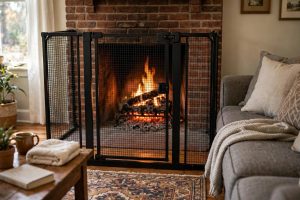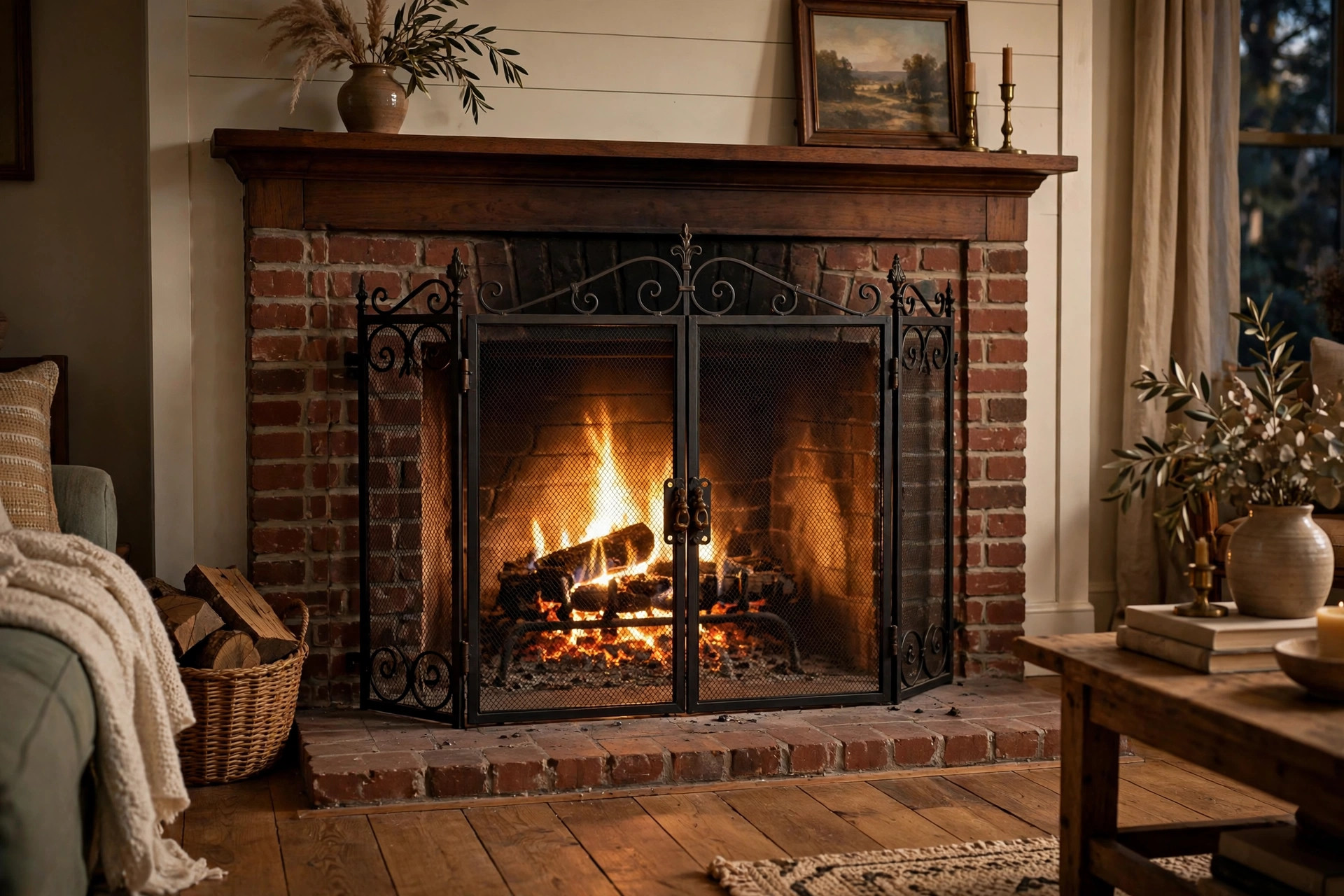

A wood fire is one of the great pleasures of home life. It warms a room. It draws people near. It makes a cold evening feel calm and rich. But an open fire also sends out sparks and embers. It can toss hot bits of wood onto the floor. A good screen keeps all of that inside the firebox where it belongs. This premium fireplace screens with doors buying guide will help you choose a screen that is safe, strong, and good to look at.
Why It Matters
Every open fireplace needs a barrier between the fire and the room. A flat mesh panel will do in a pinch, but a premium screen with doors does far more. The doors let you add wood and tend the fire without lifting the whole screen away. That means the front of the fire stays covered even when you are working with it. Fewer sparks escape. Less heat is lost in the room. The house stays safer.
There is also the matter of heat control. An open fire pulls warm air out of the room and up the flue. Doors on the screen help slow that draft when the fire burns low. The room keeps more of its heat. Your furnace runs less. Over a long winter, that can save real money.
Then there is the look of the thing. A fireplace is often the heart of a living room. A cheap, flimsy screen can drag the whole room down. A well made screen with solid doors frames the fire like a piece of art. It can be modern or old world, simple or rich with detail. People notice it the moment they walk in.
Safety agencies take hearth protection seriously, and so should you. The federal safety rules for home heating set standards for how fireplaces and stoves should be built and used. A premium screen is not a legal must in most homes, but it is one of the simplest safety steps you can take.
What to Look For When You Shop: Premium Fireplace Screens with Doors Buying Guide
Fit and Size
The first rule is simple: measure before you buy. You need the width and the height of your fireplace opening. Measure twice, at the widest and tallest points. A premium screen should be wider than the opening by at least a few inches on each side, and taller than the opening by a few inches as well. The screen must stand steady in front of the firebox and cover every bit of the open face.
Screens come in one panel, three panel, and four panel styles. A one panel screen sits flat across the front. Three panel screens fold at the sides and stand on their own. Four panel screens work for wide or corner openings. If you have an arched or round top opening, look for a screen made for that shape. A bad fit leaves gaps, and gaps let sparks through.
Frame Material and Mesh
Premium screens are built from heavy metal. Wrought iron is the most common choice. It is strong, it holds heat well, and it can be shaped into fine designs. Steel is lighter and often less costly, but it can warp over time if the fire burns very hot. Brass and bronze add warmth and shine, though they cost more and need care to keep their finish.
The mesh is what stops the sparks. Look for a tight weave that you cannot see through easily. Fine mesh blocks small embers that coarse mesh would let pass. Cheap screens use thin mesh that burns through after a season or two. Premium screens use heavy gauge mesh that lasts for years. Run your finger across it. It should feel firm and even.
Doors and Hardware
Doors are the heart of this kind of screen. They should swing open and shut with ease and latch with a firm click. Cheap hinges rust and bind. Good hinges are welded or bolted into the frame and move like a fine cabinet door. The latch should be easy to work with a poker or a fire tool, since the handle will be hot after the fire burns a while.
Handles matter more than people think. Look for long, curved handles that keep your hand clear of the hot metal. Some handles are wrapped in leather or set with a wood knob. These stay cooler and feel better in the hand. Magnetic latches hold doors shut with no moving parts to wear out. They are a nice touch on a premium screen.
The doors should also close flush with the frame. If they bow or leave gaps at the corners, sparks can slip out. Stand back and look at the closed doors from across the room. The lines should be straight and even.
Finish and Style
A premium screen should look as good in July as it does in December. Powder coat finishes hold up to heat far better than paint. Black is the most common color, and it fits most rooms. Antique bronze, rubbed gold, and dark iron finishes work well with old world and country styles. Polished brass fits a formal room, though it shows every fingerprint and needs more care.
Style is a personal call. Some screens are simple, with clean lines and a single mesh panel per door. Others carry scrollwork, cast handles, and feet shaped like paws or leaves. Match the screen to the room. A sleek flat black screen suits a modern room. An ornate iron screen suits a brick hearth in a farmhouse. Trust your eye, but remember that the finish must also survive heat. Read product guides like those at Napoleon or Heatilator to see how makers match screens to firebox types.
Types and Options
Premium screens with doors come in a few main forms. Knowing the types helps you narrow your search fast.
Flat single panel screens with doors are the simplest. A single frame spans the front of the fireplace, with two doors in the center. They work well on raised hearths and sit close to the face of the firebox. They take up little floor space.
Three panel folding screens have a wide center section and two side panels that fold back. They stand on their own feet and need no fixing to the hearth. They suit most standard openings and are easy to move for cleaning.
Cabinet style screens are built like a small cabinet with doors that open wide. They often have tempered glass panels behind the mesh. The glass lets you watch the fire while cutting down drafts. They are heavier and cost more, but they look like fine furniture.
Freestanding gate screens are tall and open like a gate. They work well in homes with small children or pets because they keep little hands farther from the heat. Some buyers compare them with high efficiency childproof fireplace screens for American homes when safety for children is the main goal.
Screens with glass doors are a step up from mesh doors alone. Tempered glass blocks drafts almost fully. It also keeps heat from rushing up the chimney when the fire is low. If you want the full picture, our fireplace glass doors reviews and buying guide covers that choice in depth.
Some screens also ship with matching fire tools. A set with tongs, a poker, a brush, and a shovel keeps everything close at hand. For a look at matched sets, see our guide to EPA certified fireplace tool sets for sale.
Cost and Price
Premium does not have to mean wild in price, but it does cost more than the basic screens sold at hardware stores. Expect to pay from about one hundred fifty dollars at the low end of premium, up to five hundred dollars or more for large, hand forged, or glass front models.
What moves the price? Size first. A wide screen uses more metal and costs more to ship. Material next. Wrought iron and bronze cost more than steel. Finish matters too. A hand applied antique finish adds labor cost. Glass panels add weight and cost. Ornate cast work is done by hand and priced for it.
Where you shop also matters. Independent testers such as Consumer Reports often stress that build quality matters more than brand name in hearth goods, and buying guides at The Spruce and This Old House walk through price bands and styles in more detail. Large home stores like Lowe’s and Home Depot carry a wide range of screens at fair prices, and you can see them in person. Specialty hearth shops cost more but offer expert help and custom sizes. Online sellers offer the widest choice, but read the return rules before you order a heavy iron screen by mail.
Do not forget shipping. A large iron screen can weigh forty pounds or more. Freight charges can add a real amount to the price. Many sellers offer free shipping, so compare the total cost, not just the ticket price.
Care and Upkeep
A premium screen is built to last, but it still needs care. After the fire dies down and the screen is cool, brush off ash and soot with a soft brush. Wipe the frame with a damp cloth. Do not use harsh cleaners on a powder coat finish. They can dull it over time.
Check the hinges and latches once a month during the burning season. A drop of high heat oil keeps them moving free. Tighten any loose screws or bolts. Look at the mesh for thin spots or holes. A small hole lets out a surprising amount of sparks, and mesh is much harder to patch than to replace.
At the end of winter, give the screen a full clean. Take it outside and brush it down well. Touch up any chips in the finish with high heat paint made for stoves and fireplaces. Store it upright in a dry place if you take it off the hearth for summer. The how to guides at Family Handyman have good step by step advice for hearth upkeep.
Brass and bronze screens need a bit more love. Polish them with a metal cleaner made for the finish, and never use steel wool. It scratches the metal and opens the way for tarnish.
Safety
Fire safety is the whole point of a screen, so treat it with care. Never leave a fire burning with the screen doors open and no one in the room. Never stack wood so high that it leans against the mesh. Hot coals can press through and damage it.
Keep the area in front of the screen clear. Rugs, papers, and kindling should sit at least three feet away. The floor in front of a fireplace is where most stray spark fires start. A good screen stops the sparks, but care stops the rest.
Make sure your screen is the right size for your firebox. A screen that is too small leaves gaps at the sides. A screen that is too short leaves a gap at the top. Measure as this guide shows, and do not guess.
Have your chimney swept and checked every year by a qualified sweep. A screen cannot fix a blocked flue or a cracked liner. Fire safety is a system, and the screen is only one part of it.
Frequently Asked Questions
Do I need a fireplace screen if my fireplace has glass doors already? Glass doors do a fine job of stopping sparks and drafts. If your doors close fully and seal well, a screen is not a must. Some owners still keep a screen for looks, or for use when the glass doors are open on a mild night.
How do I measure my fireplace for a screen? Measure the width of the opening at its widest point and the height at its tallest point. Add at least six inches to the width and at least four inches to the height. That extra size gives you full coverage with room to spare.
Can a fireplace screen with doors fit a gas fireplace? Most gas fireplaces are built with their own glass fronts and do not need a separate screen. But some gas log sets sit in open fireboxes, and a screen works fine there. Check with the maker of your gas unit first.
Will the mesh on a premium screen rust? Heavy mesh with a good powder coat finish resists rust for many years. Bare steel mesh can rust if it gets wet or sits in a damp house. Keep the screen dry, and touch up chips in the finish as soon as you see them.
How hot do the handles get? The handles sit close to the fire, so they get warm. Long curved handles with leather or wood grips stay cooler than plain metal loops. Use a fire tool or a heavy glove to work the doors if the fire has been burning hot.
Is a heavier screen always better? Not always, but weight is a fair sign of quality. A heavy screen means thick metal and strong welds. A very light screen often means thin mesh and a frame that can warp. Pick the screen up. If it feels solid, it likely is.
A Short Final Word
A premium fireplace screen with doors is a small thing that does a large job. It stops sparks. It slows drafts. It gives you easy access to the fire. And it makes the hearth look finished and cared for. Measure your opening with care. Choose heavy mesh and strong hardware. Pick a finish that fits your room. Do these things, and your screen will serve you well for many winters to come.
References
Consumer Reports. (n.d.). Product reviews and ratings. https://www.consumerreports.org Family Handyman. (n.d.). DIY home repair and maintenance. https://www.familyhandyman.com Heatilator. (n.d.). Fireplaces and fireplace products. https://www.heatilator.com Lowe’s. (n.d.). Home improvement products. https://www.lowes.com Napoleon. (n.d.). Fireplaces, grills, and heating products. https://www.napoleon.com The Home Depot. (n.d.). Home improvement products. https://www.homedepot.com The Spruce. (n.d.). Home and garden advice. https://www.thespruce.com This Old House. (n.d.). Home renovation guidance. https://www.thisoldhouse.com U.S. Environmental Protection Agency. (n.d.). Protecting human health and the environment. https://www.epa.gov
Was this guide helpful?

About Sarah Mitchell
The My Garden US editorial team writes practical, in-depth home and garden guides for American homeowners — tested advice, no fluff.
You May Also Like
Top Rated Freestanding Electric Stoves for Midwest Homes
August 8, 2026 0 views
High Efficiency Fireplace Blowers and Fans for Sale: A Buyer’s Guide
February 26, 2026 0 views
Energy Efficient Stone Fireplace Surrounds for Sale
July 31, 2026 0 views