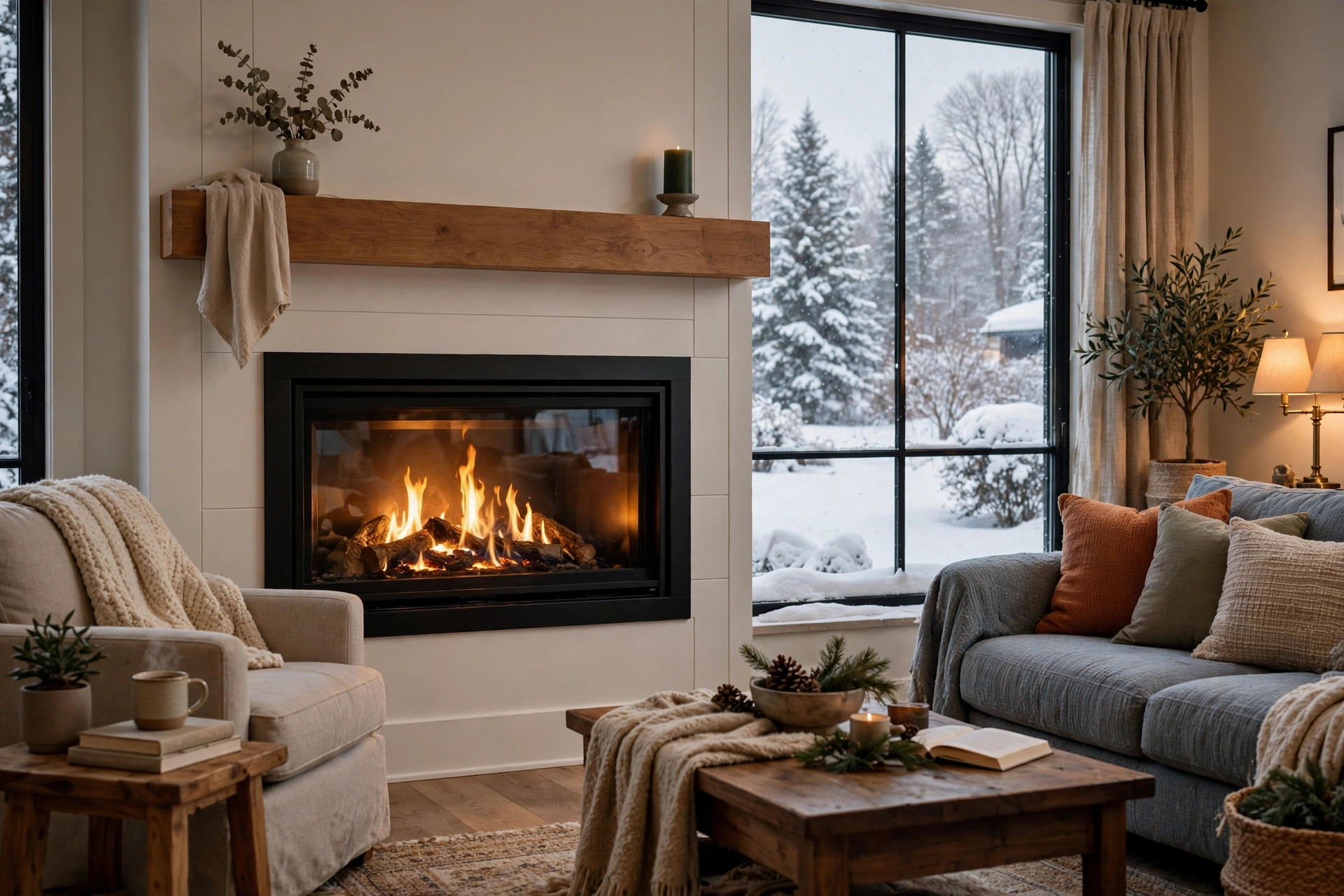

When winter settles in and the cold lasts for months, a home needs heat that can be trusted. The best direct vent gas fireplaces for cold climates give steady warmth without the trouble of wood. They light at the touch of a switch. They keep the air inside clean. And they send their exhaust straight outside through a sealed pipe.
This guide explains what these fireplaces are, how they work, and what to look for before you buy. It is written for homeowners in cold regions who want real heat, not just a pretty flame.
Why a Direct Vent Gas Fireplace Suits Cold Weather
Cold climates ask a lot of a fireplace. Temperatures drop below zero. Winds push against the walls. The heating system runs for months. In these places, a fireplace is not decoration. It is part of the plan to keep the house warm.
A direct vent gas fireplace fits this role well. It burns natural gas or propane inside a sealed firebox. It pulls the air it needs for the flame from outside the house. It sends all exhaust outside through a vent that passes through the wall or roof. The indoor air stays separate from the flame at all times.
This matters in winter. An open wood fireplace pulls warm air from the room and sends it up the chimney. The house loses heat while the fire burns. A direct vent unit does not do this. Because the firebox is sealed, room air stays in the room. More of the heat goes into the home.
Many owners in northern states report that these units cut down their furnace run time. The fireplace warms the room where the family spends most evenings. The furnace then has less work to do. Energy costs drop.
How a Direct Vent Fireplace Works: Best Direct Vent Gas Fireplaces for Cold Climates
The design is simple to describe. A metal box holds a gas burner. Glass seals the front of the box. A double-walled pipe connects the box to the outside. The outer part of the pipe brings in fresh air. The inner part carries out exhaust. The two flows never mix.
Sealed Combustion
Sealed combustion is the key term. The flame burns in a closed space. It never touches the air in your living room. This is different from an older gas log set that burns in an open fireplace. Those open sets take room air and send it up the flue.
Because the unit is sealed, the home stays warmer. Dust and fumes from the flame do not enter the room. The glass front gets hot, but the room air stays clean. Homeowners with allergies often notice the difference.
Efficiency Ratings
Most direct vent gas fireplaces reach steady-state efficiency ratings between 70 and 85 percent. That means most of the fuel becomes heat for the room. Compare this to an open wood fireplace, which may be only 10 to 15 percent efficient. A large share of wood heat escapes up the chimney.
Look for the efficiency number on the product label. Higher numbers mean lower fuel bills. In a cold climate, where the unit may run for hundreds of hours each winter, the difference adds up. Guidance on efficient home heating is available from the U.S. Department of Energy at energy.gov, which covers hearth products alongside furnaces.
What to Look for When You Choose
A fireplace is a long-term purchase. The unit will sit in your wall for twenty years or more. Choose with care.
Heat output. Fireplaces are rated in British thermal units, or BTUs. A small room may need only 15,000 BTU. A large open living area may need 40,000 BTU or more. Match the unit to the space. An oversized unit cycles on and off and wastes fuel. An undersized one runs constantly and still leaves the room cold.
Size of the firebox. The viewing area sets how the fireplace looks. Larger glass fronts show more flame. But a larger box also takes more wall space. Measure the wall before you shop.
Venting options. Direct vent pipe can run through an exterior wall or straight up through the roof. Through-the-wall venting is common in new installs because it is simpler. Roof venting works when the fireplace sits on an interior wall. Check the vent length limits in the manual. Cold-climate installs must follow the clearances shown.
Ignition type. Most modern units use electronic ignition. A small spark lights the gas when you turn the unit on. There is no standing pilot light burning all winter. This saves fuel. Some models also include a battery backup, so the fireplace still lights during a power outage. In cold country, that backup is worth its weight.
Thermostat control. A wall thermostat or remote thermostat lets the fireplace act like a small furnace. Set the temperature you want. The unit fires when the room cools and rests when it is warm. This is one of the best features for cold climates. If you want more on this, see our page on smart thermostat controlled gas fireplaces for sale.
Fan or blower. A built-in fan moves warm air into the room. Without a fan, the heat rises mostly by natural flow. With a fan, the heat spreads farther and faster. Most cold-climate owners choose the fan.
Types and Options
Direct vent gas fireplaces come in several forms. Each fits a different kind of home.
Fireplace Inserts
An insert slides into an existing masonry fireplace. It seals the old open firebox with a new efficient unit. This is the cheapest way to upgrade an old wood fireplace. The vent usually runs up the old chimney. Many insert buyers first considered wood burning fireplace inserts for texas homes and their cousins before choosing gas for convenience.
Freestanding Stoves
A freestanding gas stove looks like the classic wood stove. It stands on legs or a pedestal in the room. It vents through the wall behind it. Stoves suit homes with no fireplace at all. They throw heat well because the whole body radiates.
Built-In Wall Units
These are the most common new installs. The unit sits flush in the wall with a finished surround. They look clean and modern. They work well in family rooms and bedrooms.
Corner and Bay Models
Some homes need a fireplace in a corner. Corner units have glass on two sides. They are priced higher than single-glass models. They also vent a little differently, so check the manual.
Fuel Type
Most units burn natural gas. If your home has no gas line, propane works with a conversion kit or a propane-specific model. Propane costs more per BTU than natural gas in most markets. Factor this into your winter fuel budget.
Heat Output and Room Sizing
Getting the size right is the most common question dealers hear. A rough rule helps. A well-insulated room needs about 30 to 40 BTU per square foot in a cold climate. A 400 square foot room might need 12,000 to 16,000 BTU. An 800 square foot open area might need 25,000 to 32,000 BTU.
Drafty older homes need more. Vaulted ceilings need more. Homes in places where winter hits minus twenty need more. A dealer can run the numbers for your exact room. Bring your room dimensions when you visit the showroom.
Do not size by flame looks alone. A tall flame does not always mean more heat. Trust the BTU rating on the label.
Cost and Price
Prices vary by size, brand, and features. A basic direct vent insert may start around $2,000 before installation. A mid-range built-in unit often runs $3,000 to $5,000. Large premium models with big glass can pass $7,000.
Installation adds more. A simple through-the-wall vent on an exterior wall may cost $1,500 to $3,000 for labor. A complex run with a new gas line costs more. Running a gas line across the house is the biggest variable. Get quotes from two or three licensed installers.
Fuel cost matters most in cold climates. Natural gas is usually the cheapest option. Propane costs more. The electronic ignition and thermostat control keep fuel use down. Run the fireplace only in the rooms you use most, and the savings show up on the bill.
Retailers such as The Home Depot and Lowe’s list a wide range of direct vent models online, which helps with price comparison before you visit a local dealer.
Care and Upkeep
Gas fireplaces need less care than wood fireplaces, but they still need attention.
Yearly service. Have a technician service the unit once a year, ideally in early fall. The tech cleans the burner, checks the glass seal, tests the ignition, and inspects the vent. Yearly service keeps the warranty valid.
Glass cleaning. The glass front collects a light film over the season. Clean it with a fireplace glass cleaner, never with oven cleaner or abrasive pads. Let the glass cool fully before you touch it.
Vent inspection. Walk outside and look at the vent cap once in a while. Snow, ice, and leaves can block it. In heavy snow country, the vent must stay above the snow line. A blocked vent is a safety risk, so clear it promptly.
Log and ember care. The ceramic logs and ember material inside the firebox last for years. If a log cracks or crumbles, replace the set. Do not rearrange the logs from the factory layout. The layout was tested for clean burning.
Battery backup. If your unit has a battery backup for the ignition, change the batteries each fall. Test the fireplace before the first cold snap. This Old House offers solid seasonal maintenance guidance for all kinds of hearth appliances at thisoldhouse.com.
Safety in the Home
A direct vent gas fireplace is one of the safest hearth options, but rules still apply.
Keep furniture and curtains at least three feet from the glass front. The glass gets very hot when the unit runs. Small children and pets should not touch it. Many makers sell safety screens or gates that attach to the front.
Install a carbon monoxide detector in the same room and on each floor of the house. Test the detectors twice a year. This is standard advice from the U.S. Consumer Product Safety Commission, and their home safety guidance is posted at cpsc.gov.
Never hang anything on the vent pipe outside. Never store firewood or boxes against the unit. If you smell gas, turn off the unit, leave the house, and call your gas company from outside.
Use only a licensed gas fitter for installation. The gas line, the vent run, and the clearances must meet local code. A proper install is the foundation of safe operation. If you are comparing heating options more broadly, our guide to pellet stoves for heating covers another sealed-combustion choice.
Frequently Asked Questions
Can a direct vent gas fireplace heat a whole house? It can heat a large zone, but it is not a whole-house furnace. Most units heat 500 to 1,500 square feet depending on BTU output. In cold climates, it works best as zone heat for the rooms you use most, with the furnace handling the rest.
Does it work when the power goes out? Many models do. Units with a standing pilot or a battery backup ignition light without house power. The blower will not run without power, but the unit still gives off radiant heat. This is a real advantage in winter storms.
Is a direct vent fireplace safe for a bedroom? Yes, in most codes. Because the firebox is sealed, these units are approved for bedrooms in many areas. Always check your local building code before you install.
How much does it cost to run each winter? It depends on fuel price and hours of use. A 30,000 BTU unit running four hours a day on natural gas might cost roughly $1 to $2 per day in fuel. Propane runs higher. The thermostat keeps run time in check.
How long does a direct vent gas fireplace last? With yearly service, most units last 15 to 25 years. The burner and heat exchanger are built for long service. The glass and gaskets may need replacement along the way.
Do I need a chimney? No. That is one of the main selling points. The direct vent pipe goes through the wall or roof. There is no masonry chimney to build or maintain. Makers such as Napoleon and Heatilator publish venting diagrams that show how simple the runs can be.
A Final Word
The best direct vent gas fireplaces for cold climates earn their place by doing simple things well. They start at a touch. They burn clean. They keep the warmth in the room instead of sending it outside. For a homeowner facing a long winter, that is exactly what matters.
Take your time with the choice. Measure the room. Compare BTU ratings. Ask the dealer about thermostat control and battery backup. Get the install done by a licensed pro. Then, when the first cold night arrives, you will be ready. Practical buying advice and model comparisons are also covered by reviewers at The Spruce and the how-to library at Family Handyman.
References
Family Handyman. (n.d.). DIY home repair and maintenance. https://www.familyhandyman.com Heatilator. (n.d.). Fireplaces and fireplace products. https://www.heatilator.com Lowe’s. (n.d.). Home improvement products. https://www.lowes.com Napoleon. (n.d.). Fireplaces, grills, and heating products. https://www.napoleon.com The Home Depot. (n.d.). Home improvement products. https://www.homedepot.com The Spruce. (n.d.). Home and garden advice. https://www.thespruce.com This Old House. (n.d.). Home renovation guidance. https://www.thisoldhouse.com U.S. Consumer Product Safety Commission. (n.d.). Product safety information. https://www.cpsc.gov U.S. Department of Energy. (n.d.). Energy efficiency and renewable energy. https://www.energy.gov
Was this guide helpful?

About David Wilson
The My Garden US editorial team writes practical, in-depth home and garden guides for American homeowners — tested advice, no fluff.
You May Also Like
Ventless Chimineas for Patios for Sale: A Complete Buyer’s Guide
May 9, 2026 0 views
The Best Chimney Caps and Covers Buying Guide
September 28, 2026 0 views
Best Wood Burning Fireplace Inserts for Texas Homes
August 22, 2026 0 views