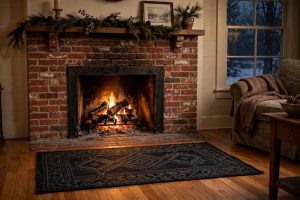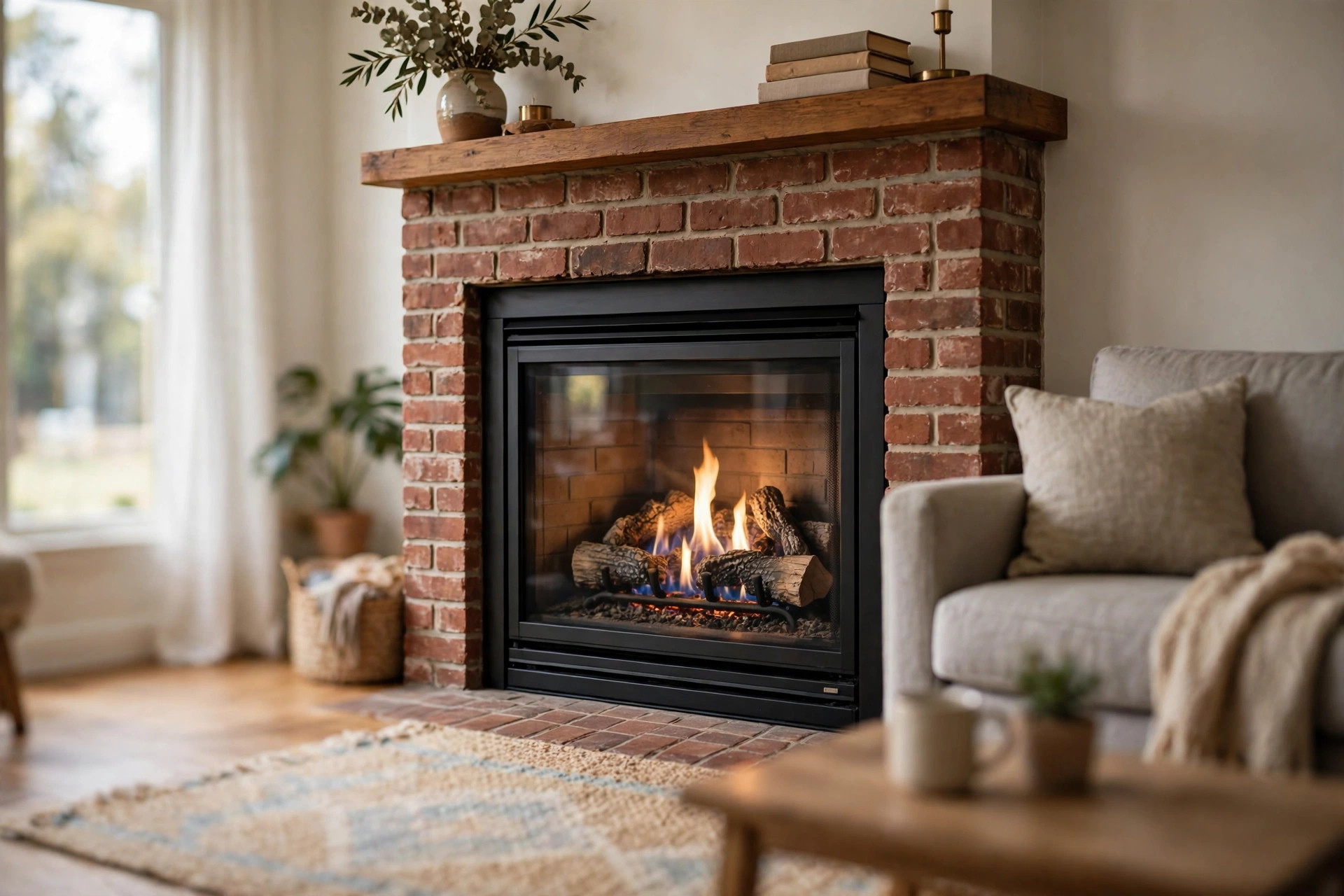

Many home owners want the warmth of a fire without the work of a wood stove. Our direct vent gas fireplaces reviews and buying guide looks at one of the most popular choices on the market today. A direct vent gas fireplace burns natural gas or propane inside a sealed firebox. It pulls the air it needs from outside the home. It sends the exhaust back outside through the same vent. This sealed system keeps room air safe and clean. It also keeps heat where it belongs.
Why It Matters
A direct vent unit solves two old problems at once. A wood fire sends much of its heat up the chimney. An open gas log loses heat too. A direct vent model holds the fire behind a sealed sheet of glass. The glass stops room air from rushing into the fire and up the flue. Heat rolls out into the room instead of out the roof.
These units also run with the flip of a switch or a hand-held remote. There is no hauling wood. There is no ash to clean. There is no wait while the fire builds. Many owners use their fireplace as zone heat. They warm the living room in the evening and turn down the main furnace. Over a winter, that can trim a fuel bill. The Consumer Reports test labs rate heating gear for safety and performance, and their buying advice is a good cross-check before you shop.
People also read reviews for a plain reason. A fireplace is a fixed part of the home. It costs real money. A good direct vent gas fireplaces reviews and buying guide should help you sort hype from fact.
What to Look For: Direct Vent Gas Fireplaces Reviews and Buying Guide
Sealed Combustion
The key word is sealed. The firebox is closed off from the room by a fixed glass panel. A double-walled pipe runs from the unit to the outside. Fresh air comes in through the outer wall of the pipe. Exhaust leaves through the inner wall. The fire never touches your room air. This design also lets you place the unit on an outside wall and vent straight out. No tall chimney is needed.
Heat Output
Check the BTU rating. Small units give about 10,000 to 20,000 BTU per hour. Medium units give 20,000 to 35,000 BTU. Large units give more than 35,000 BTU. A rule of thumb says one needs about 20 BTU per square foot of room space in a cold climate. Measure your room. Do not buy a unit that is far too large for the space. It will short-cycle and waste fuel.
Efficiency
Direct vent models often list steady-state efficiency between 70 and 85 percent. Some top models claim more. Efficiency tells you how much of the fuel becomes useful heat. Look for the EnerGuide or ENERGY STAR style ratings when they exist. This Old House explains heating efficiency in plain terms for home owners.
Glass Safety
The glass on a working gas fireplace gets very hot. It can reach 400 degrees or more. Safety screens are now the norm. Builders must fit a barrier screen that keeps small hands from touching the hot glass. Make sure the unit you buy has this screen in the box. If you have toddlers or pets, ask about extra guards.
Controls
Basic units have a wall switch or knob. Better units add a thermostat remote. You set a room temperature. The fire turns itself up or down to hold it. Some add timers and phone apps. Fancy controls add cost. Weigh what you will truly use.
Types of Direct Vent Gas Fireplaces
Built-In Fireboxes
These fit into a wall or a framed chase. They look like a classic wood fireplace. Sizes range from 30 to 50 inches wide. Builders place them in new homes and in great-room additions. They need a framed cavity and a vent run to the outside.
Inserts
An insert slides into an old masonry fireplace. The vent goes up the old flue. This is the best path for a home that already has a dead wood fireplace. The insert turns a drafty hole in the wall into a true heat source. Family Handyman runs step-by-step pieces on how fireplace inserts fit into old masonry openings.
Freestanding Stoves
These look like old cast-iron wood stoves. They sit on the floor and vent through the wall behind them. They suit cabins, basements, and rooms with no chimney at all. Many come with legs, enamel finishes, and classic styling.
Corner and Bay Units
Some homes need heat in an odd corner. Corner models turn the glass to face the room on a diagonal. Bay units have glass on three sides. Both cost more than flat-front models. They reward you with a fire you can see from more seats.
Cost and Price
A direct vent gas fireplace unit itself often costs 1,500 to 4,000 dollars in the United States. Small stoves cost less. Wide built-in units with fancy faces cost more. Labor adds 1,000 to 3,000 dollars. Gas line work, venting, and framing drive the labor price. A simple through-wall vent on a first-floor room is the cheapest job. A tall roof vent costs more.
Gas type matters too. Natural gas is the cheapest fuel in most towns. Propane costs more per unit of heat. A propane unit may need a larger tank or a new line. Get two or three written quotes from licensed installers. Prices swing widely by region. The Home Depot and Lowe’s project guides give rough national ranges to sanity-check a bid.
Running costs are modest. A 30,000 BTU unit at full fire burns about one therm of natural gas every three hours. At typical gas rates, that is roughly 30 to 50 cents an hour. Owners rarely run full fire all night. Thermostat remotes sip fuel by cycling the flame.
Care and Upkeep
Gas fireplaces ask little of their owners. Still, they are gas appliances. Treat them with respect.
– Run the unit monthly for ten minutes, even in summer. This keeps parts moving. – Vacuum dust from the glass and the louvers each fall. Use a soft cloth on the glass. – Look at the flames. They should be mostly blue at the base with yellow tips. Lazy, all-yellow flames can mean a problem. – Have a licensed tech service the unit once a year. The tech checks the gas valve, the pilot, the vent, and the seals. – Change remote batteries each season. Keep the manual near the unit.
Never try to fix a gas valve yourself. Smell gas? Leave the house. Call your gas company from outside. This is the same rule the EPA and safety agencies repeat for all fuel-burning gear.
Safety
Direct vent units are among the safest fireplaces made. The sealed firebox blocks carbon monoxide from the room. The coaxial vent cannot backdraft the way a chimney can. Still, a few rules hold.
Install a carbon monoxide detector on each floor. Test it twice a year. Keep the area in front of the glass clear. Do not hang stockings on the glass or the mantel shelf above it. Let the unit cool before you touch it. Keep the safety screen in place at all times. Children learn fast, so teach them that the glass is hot even when the flames look small.
Local code may require a permit for the gas line work. Your town may also limit where the vent can end on the outside wall. A licensed installer knows these rules. Bob Vila has plain-language guides on fireplace permits and code basics.
Reading Reviews the Smart Way
Reviews help, but not all reviews are equal. Our direct vent gas fireplaces reviews and buying guide suggests this method. Start with long-term owner reviews. A unit that runs well in year one may still fail in year three. Look for comments about pilot lights, remotes, and glass seals. These parts cause most service calls.
Next, check professional testers. Magazine labs test ignition, heat spread, and noise. Owner reviews tell you about real life. Labs tell you about measured facts. Use both. HGTV and The Spruce publish tested roundups of fireplace models with clear pros and cons.
Watch out for reviews that praise looks alone. A pretty fireplace that will not light in January is a bad buy. Also watch for fake-sounding praise. If ten reviews use the same phrases, treat them with doubt.
Brands Worth Knowing
A few names show up again and again. Napoleon makes a wide range of direct vent models, from small stoves to wide linear units. Heatilator has sold gas fireplaces for decades and backs them with dealer networks. Heat & Glo, Majestic, and Regency also earn steady praise. Big-box stores stock their own lines too. Compare warranty length. Five years on the firebox is a fair minimum.
How It Compares to Other Options
A vent-free gas fireplace costs less to install. It needs no vent at all. But it dumps moisture and trace exhaust into the room. Many owners ban them from bedrooms. Some states limit them. A direct vent unit costs more up front. It gives cleaner air and better efficiency in return.
An electric fireplace is the cheapest to install. It needs only a plug. It gives weak heat and a flat-looking flame. Direct vent gas beats it on warmth and looks. Wood stoves give the strongest heat and the most work. Direct vent gas sits in the sweet spot for many families: real flame, real heat, small effort.
If your home is in a mild region, you may also like one of the top rated smart electric fireplaces for midwest homes as a low-hassle second unit. Pair the hearth with a classic surround like an EPA certified reclaimed wood mantel for sale for a finished look. Keep a premium fireplace tool set for first time homeowners nearby even for gas units, since a poker and brush help with glass cleaning and vent checks.
FAQ
How long do direct vent gas fireplaces last?
Most last 15 to 20 years with yearly service. The sealed firebox and steel shell hold up well. Remotes, valves, and igniters wear first. These parts are replaceable. Units from big brands keep parts in stock for years.
Can I install one myself?
No. Gas line work needs a licensed pro in almost every state. The vent must also meet code. A bad vent can send exhaust back into the house. Hire a licensed installer. Get the permit. The job is not a do-it-yourself project.
Do they work during a power outage?
Many do. The fire itself needs no power. A standing pilot lights without house current. Battery-backed ignition also works. Blower fans stop without power, but heat still rises from the glass. Ask the dealer about the ignition type before you buy.
Natural gas or propane?
Pick the fuel your home already uses. Natural gas is cheaper where pipes reach the house. Propane works where they do not. Propane units need the right orifice and regulator. The dealer sets this at install. Never swap fuels on your own.
How hot does the glass get?
Very hot. Expect 300 to 500 degrees during a long burn. The safety screen cuts the burn risk. It does not make the glass safe to touch. Keep children and pets away from the front.
Do I still need a chimney sweep?
No chimney sweep, but yes to yearly service. Soot is rare in a well-tuned gas unit. The tech still checks seals, vents, and the pilot. This visit costs far less than a chimney cleaning and takes about an hour.
A Short Final Word
A direct vent gas fireplace gives the best of both worlds. You get a real flame and strong heat. You skip the wood, the ash, and the draft. Buy for your room size. Check the safety screen. Hire a licensed installer. Read owner reviews with care, and use this direct vent gas fireplaces reviews and buying guide as your starting map. The right unit will warm your home for many winters with little more work than pressing a button.
References
Bob Vila. (n.d.). Home improvement advice. https://www.bobvila.com Consumer Reports. (n.d.). Product reviews and ratings. https://www.consumerreports.org Family Handyman. (n.d.). DIY home repair and maintenance. https://www.familyhandyman.com Heatilator. (n.d.). Fireplaces and fireplace products. https://www.heatilator.com HGTV. (n.d.). Home and garden ideas. https://www.hgtv.com Lowe’s. (n.d.). Home improvement products. https://www.lowes.com Napoleon. (n.d.). Fireplaces, grills, and heating products. https://www.napoleon.com The Home Depot. (n.d.). Home improvement products. https://www.homedepot.com The Spruce. (n.d.). Home and garden advice. https://www.thespruce.com This Old House. (n.d.). Home renovation guidance. https://www.thisoldhouse.com U.S. Environmental Protection Agency. (n.d.). Protecting human health and the environment. https://www.epa.gov
Was this guide helpful?

About Sarah Mitchell
The My Garden US editorial team writes practical, in-depth home and garden guides for American homeowners — tested advice, no fluff.
You May Also Like
The Best Direct Vent Gas Fireplaces for Cold Climates
April 27, 2026 0 views
Buy Gel Fuel Fireplaces Online in Arizona: A Plain Guide Before You Order
April 7, 2026 0 views
Top Rated Fire Pit Tables for Texas Homes
March 20, 2026 0 views