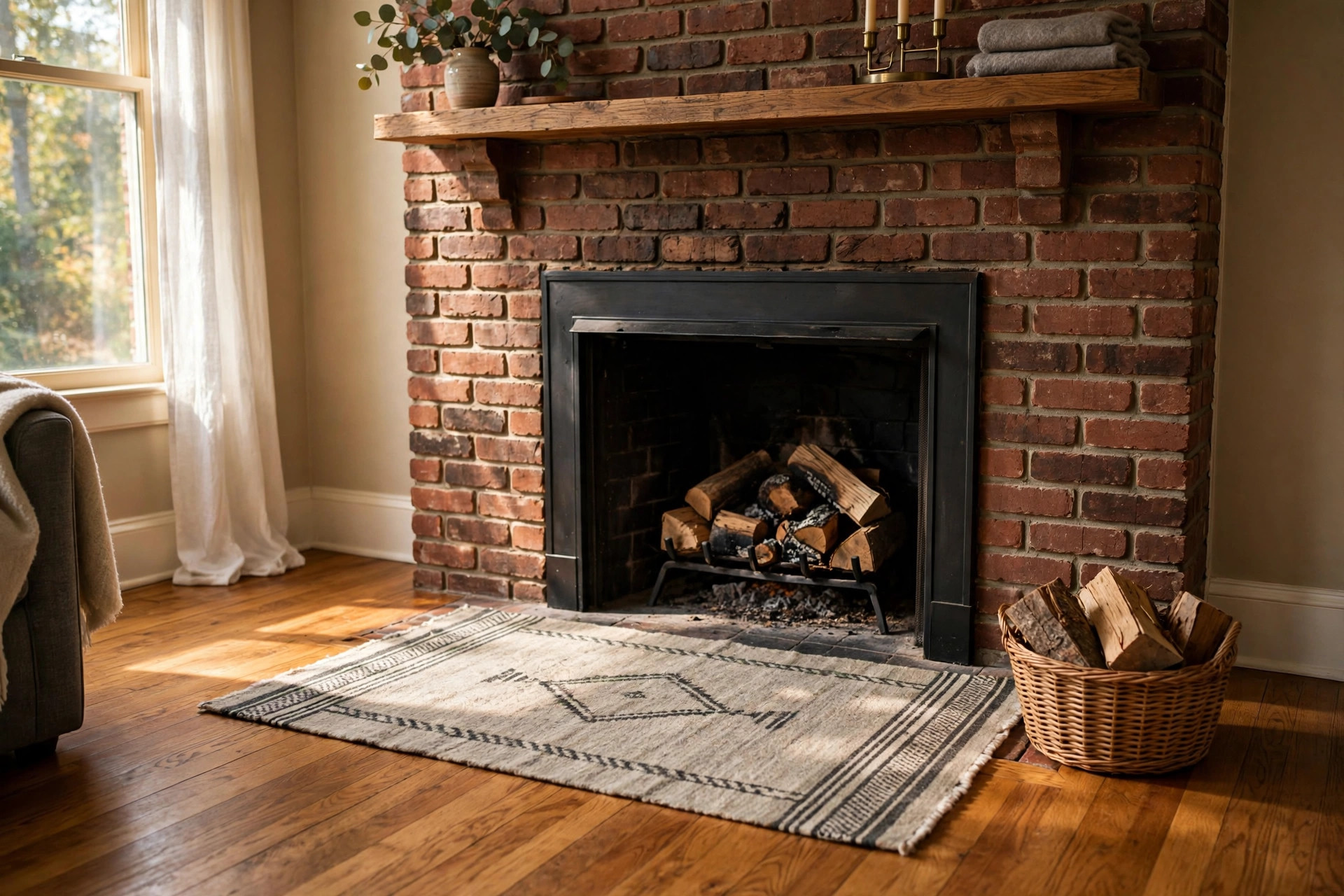

A good fireplace hearth rugs price comparison USA shoppers can trust starts with the facts. A hearth rug sits on the floor in front of a fireplace. It catches sparks and embers that pop out of the fire. It also protects the floor from soot, ash, and scratches from the firewood basket. Prices in the United States run from under twenty dollars to more than three hundred dollars. The wide range confuses many buyers. This guide lays out the numbers in plain order. It also covers materials, sizes, safety, and care. By the end you will know exactly what to pay for the rug you need.
Why It Matters
A fireplace adds warmth to a home. It also adds risk. A single hot ember can land on hardwood, carpet, or tile and leave a permanent mark. A hearth rug gives you a shield right where the danger lands. Most fire safety experts agree that the floor in front of the firebox deserves special care. The U.S. Environmental Protection Agency offers wood-burning guidance that covers safe stove and fireplace habits for American homes.
A rug also does everyday work. It keeps ash dust from spreading across the room. It gives you a soft place to kneel when you add logs. And it finishes the look of the fireplace. A well-chosen rug can tie the room together. For that reason, many homeowners treat the hearth rug as both a safety tool and a piece of decor.
Price matters because the market is crowded. Big box stores, specialty shops, and online sellers all carry hearth rugs. The same size of rug can cost twice as much from one seller to the next. A careful comparison saves real money. It also keeps you from buying a rug that cannot handle real heat.
What to Look For When You Compare: Fireplace Hearth Rugs Price Comparison Usa
Start with the rating. A true hearth rug must be flame resistant. Look for a stated fire rating or a listing that says the rug meets accepted safety standards. A plain wool rug may feel thick, but if it has no fire rating, it is not a hearth rug. It is only a rug near a fire. The rating is the single most important detail.
Next, check the material. Fiberglass-based rugs carry the highest heat ratings. Wool rugs are a classic choice. Wool resists flame by nature and looks warm in a living room. Treated cotton rugs cost less but rate lower for heat. Vinyl or plastic-backed rugs have no place near an open flame. Avoid them.
Then measure your hearth. Standard hearth rugs come in shapes and sizes such as 18 by 48 inches, 24 by 60 inches, and half-round or oval shapes. A rectangle that runs wide across the fireplace opening works best for most wood fireplaces. A half-round rug fits gas fireplaces and corner stoves. Measure the width of your fireplace opening first. Then add at least six inches on each side.
Weight and backing matter too. A heavier rug stays flat. A light rug may curl at the edges, and a curled edge can trip you. Look for a rug with a firm weave and no slippery backing. Some rugs come with a non-slip pad. That is a good extra to have on hardwood or tile.
Finally, compare the seller’s return policy. Sizes and colors are hard to judge on a screen. A store that takes returns gives you room to try. Lowe’s and The Home Depot both stock hearth rugs in stores and online, which makes returns simple.
Types of Hearth Rugs and What They Cost
A fireplace hearth rugs price comparison USA buyers can use should break down by type. Each type serves a different need.
Wool Hearth Rugs
Wool is the most popular material. It chars instead of melting. It feels soft underfoot. It comes in many colors and patterns. A plain wool hearth rug in a common size costs about thirty to eighty dollars. A hand-tufted or patterned wool rug costs eighty to one hundred and sixty dollars. High-end wool rugs with rich dyes can reach two hundred dollars.
Fiberglass Hearth Rugs
Fiberglass rugs carry the highest heat ratings. They can handle much hotter embers than wool. They feel stiffer and look plainer. A basic fiberglass hearth rug costs about twenty to fifty dollars. A large or custom-cut fiberglass rug costs fifty to one hundred dollars. Many buyers choose fiberglass for wood stoves and open fireplaces that throw sparks.
Treated Cotton Hearth Rugs
Cotton rugs get a chemical treatment to resist flame. They are soft and easy to wash. Their heat rating is lower than wool or fiberglass. Prices run about twenty-five to sixty dollars. These rugs suit gas fireplaces and decorative hearths more than hard-working wood fires.
Half-Round and Specialty Rugs
Some fireplaces need a half-round rug that hugs the curve of the firebox. Others need an extra-long runner for a wide stone hearth. Specialty shapes cost more. A half-round wool rug runs forty to one hundred dollars. Custom sizes can pass one hundred and fifty dollars. If your fireplace has an odd shape, measure twice before you order.
Fireplace makers such as Napoleon and Heatilator also sell hearth accessories through dealers. Their rugs and pads often carry higher prices, but they match their own fireplace lines in size and style.
Cost and Price Comparison
Here is the plain price picture across the United States.
– Budget range, twenty to forty dollars: treated cotton or basic fiberglass rugs in standard sizes. Good for gas fireplaces and light use. – Mid range, forty to one hundred dollars: wool rugs in standard shapes and sizes. This is the sweet spot for most wood fireplaces. – Premium range, one hundred to two hundred dollars: hand-finished wool rugs, larger sizes, and specialty shapes. – Custom range, above two hundred dollars: custom cuts, designer patterns, and oversized rugs for large stone hearths.
Online marketplaces sometimes beat store prices by ten to twenty dollars. But stores let you feel the rug before you buy. Home project sites like This Old House and Family Handyman publish buying guides that can help you judge quality before you spend.
Shipping costs matter for heavy rugs. A rug that weighs eight pounds can cost fifteen dollars to ship. Some online sellers offer free shipping, which makes their prices look lower. Compare the total cost with shipping, not just the tag price.
Seasonal sales also move prices. Hearth rugs often go on sale in late fall, before the heating season starts, and again in early spring when stores clear stock. If you can wait a few weeks, you may save twenty percent or more.
Care and Upkeep
A hearth rug needs simple, steady care. Shake it out or vacuum it once a week during the burning season. Ash dust will dull the fibers if left in place. Use a vacuum without a beater bar if the rug has a delicate pattern.
Spot-clean stains right away. Blot, do not rub. Rubbing pushes soot deeper into the weave. A mild soap and warm water work for most wool rugs. Check the maker’s label first. Some rugs need dry cleaning only.
Rotate the rug once or twice a season. The center of the rug takes the most heat and wear. Turning it end to end spreads the wear and makes the rug last longer. A good wool hearth rug can last five to ten years with this simple care.
Store the rug flat if you remove it for the summer. Do not fold it tight. Folds can set creases that never come out. Roll it with the face inward and keep it in a dry place.
Safety
No rug removes all risk. Keep these safety rules in mind.
First, use the rug with a screen. A fireplace screen stops most sparks before they ever reach the rug. The rug is the second line of defense, not the first. Never leave a fire burning without a screen in place.
Second, do not place the rug too close. The rug should start at the edge of the hearth, not under the firebox grate. Keep at least a small gap between the hottest area and the rug’s edge.
Third, check the rug for damage each season. A rug with thin spots or burn holes should be replaced. A damaged rug gives less protection. Do not patch a hearth rug with plain fabric. The patch may not be fire rated.
Fourth, keep the area clear. Do not pile firewood on the rug. Do not let the rug bunch up against the fireplace. A flat, clear rug does its job. A bunched rug can feed a fire instead of stopping it.
For more home safety ideas, The Spruce covers fireplace maintenance in plain terms. And if you want to pair your rug with other hearth gear, you might look at best fireplace log holders for Texas homes or EPA certified reclaimed wood mantels for sale. Regular chimney care matters too; see our guide to high efficiency chimney inspection services near me.
Frequently Asked Questions
How much should I pay for a fireplace hearth rug in the USA? Most buyers pay between forty and one hundred dollars for a good wool hearth rug in a standard size. Budget fiberglass and cotton rugs cost twenty to forty dollars. Custom or designer rugs can pass two hundred dollars.
What size hearth rug do I need? Measure the width of your fireplace opening. Add at least six inches on each side. Common sizes are 18 by 48 inches and 24 by 60 inches. Half-round rugs fit gas fireplaces and corner stoves.
Is wool or fiberglass better for a hearth rug? Wool looks better and feels softer. Fiberglass handles higher heat. For a wood fireplace that throws sparks, fiberglass gives the most protection. For looks plus solid protection, wool is the favorite.
Can I use a regular rug in front of the fireplace? No. A regular rug is not fire rated. It can catch fire or melt when a hot ember lands on it. Always use a rug made and rated for hearth use.
How often should I replace my hearth rug? Inspect it each burning season. Replace it when you see thin spots, holes, or heavy scorching. With good care, a wool rug lasts five to ten years.
Do hearth rugs work on carpet? Yes, but use a flat-weave rug without a slick backing. On carpet, the rug adds a fire-rated layer over the wall-to-wall carpet. Make sure it lies flat and does not slide.
A Short Final Word
A fireplace hearth rugs price comparison USA shoppers can trust comes down to three facts. Buy a rug with a real fire rating. Pay forty to one hundred dollars for the best value. Care for the rug and it will guard your floor for years. Take your time, compare two or three sellers, and choose the rug that fits your fireplace and your budget.
References
Family Handyman. (n.d.). DIY home repair and maintenance. https://www.familyhandyman.com Heatilator. (n.d.). Fireplaces and fireplace products. https://www.heatilator.com Lowe’s. (n.d.). Home improvement products. https://www.lowes.com Napoleon. (n.d.). Fireplaces, grills, and heating products. https://www.napoleon.com The Home Depot. (n.d.). Home improvement products. https://www.homedepot.com The Spruce. (n.d.). Home and garden advice. https://www.thespruce.com This Old House. (n.d.). Home renovation guidance. https://www.thisoldhouse.com U.S. Environmental Protection Agency. (n.d.). Protecting human health and the environment. https://www.epa.gov
Was this guide helpful?

About Michael Thompson
The My Garden US editorial team writes practical, in-depth home and garden guides for American homeowners — tested advice, no fluff.
You May Also Like
The Best Fireplace Grates for Southern States: A Buyer’s Guide
August 21, 2026 0 views
Ethanol Wall Fireplaces Price Comparison USA: What Buyers Should Know
January 22, 2026 0 views
Fireplace Mantel Shelves Reviews and Buying Guide
July 11, 2026 0 views