
A roof is the hat of a house. It keeps out rain, snow, wind, and sun. Many homeowners in America now ask about a metal roofing installation cost guide usa to plan their budget. Metal roofs have grown in popularity over the past twenty years. They last longer than shingles. They stand up well to storms. But they cost more at the start. This guide walks through the real costs, the choices you face, and how to keep the final bill under control.
Why It Matters
A roof is one of the largest single expenses a homeowner ever faces. A poor choice can mean leaks, high repair bills, and a second replacement far too soon. The National Association of Home Builders has long noted that the type of roofing material affects both the life of a roof and the resale value of a home. Metal roofing can last forty to seventy years. That is two to three times the life of a basic asphalt shingle roof.
Cost is only part of the picture. A metal roof can also cut cooling costs in hot states. Light-colored metal reflects sun. That means the attic stays cooler and the air conditioner runs less. In storm country, metal roofs resist wind lift better than many shingles. In fire country, metal is non-combustible. These facts explain why the metal roofing installation cost guide usa has become one of the most searched home topics in recent years.
Planning matters because the price spread is wide. Two homes on the same street can get quotes thousands of dollars apart. Knowing what drives the cost lets you ask sharp questions and spot a bad quote early.
What to Look for When Choosing a Metal Roof: Metal Roofing Installation Cost Guide Usa
Gauge and Thickness
Metal roofing is sold by gauge. A lower gauge number means thicker metal. Twenty-four gauge steel is thicker and stronger than twenty-nine gauge. Thicker panels resist hail dents and wind damage better. They also cost more. For most homes, twenty-six to twenty-four gauge steel is a sound middle ground.
Coating and Finish
Bare metal rusts. Good panels carry a coating, often galvalume or galvanized zinc, plus a paint system. The standard paint system in America is Kynar 500, also called PVDF. It holds color for decades. Cheaper polyester paint fades faster. Ask the contractor which paint system is on the quote. This one detail can change the price per square by a wide margin.
Fastener Style
Standing-seam roofs use hidden fasteners. Exposed-fastener panels use screws with rubber washers through the face of the panel. Hidden fasteners last longer and need less upkeep. Exposed fasteners cost less but the washers may need work after ten to fifteen years. The fastener style is one of the biggest drivers of the metal roofing installation cost guide usa figures you see online.
Contractor Experience
Metal roofing is a skill trade. A crew that lays shingles every day may not know how to seam metal panels. Look for a contractor who installs metal roofs weekly. Ask for addresses of past jobs and photos of their seam work. A neat, straight seam is the mark of a good metal roofer.
Types of Metal Roofs and Their Costs
Standing Seam
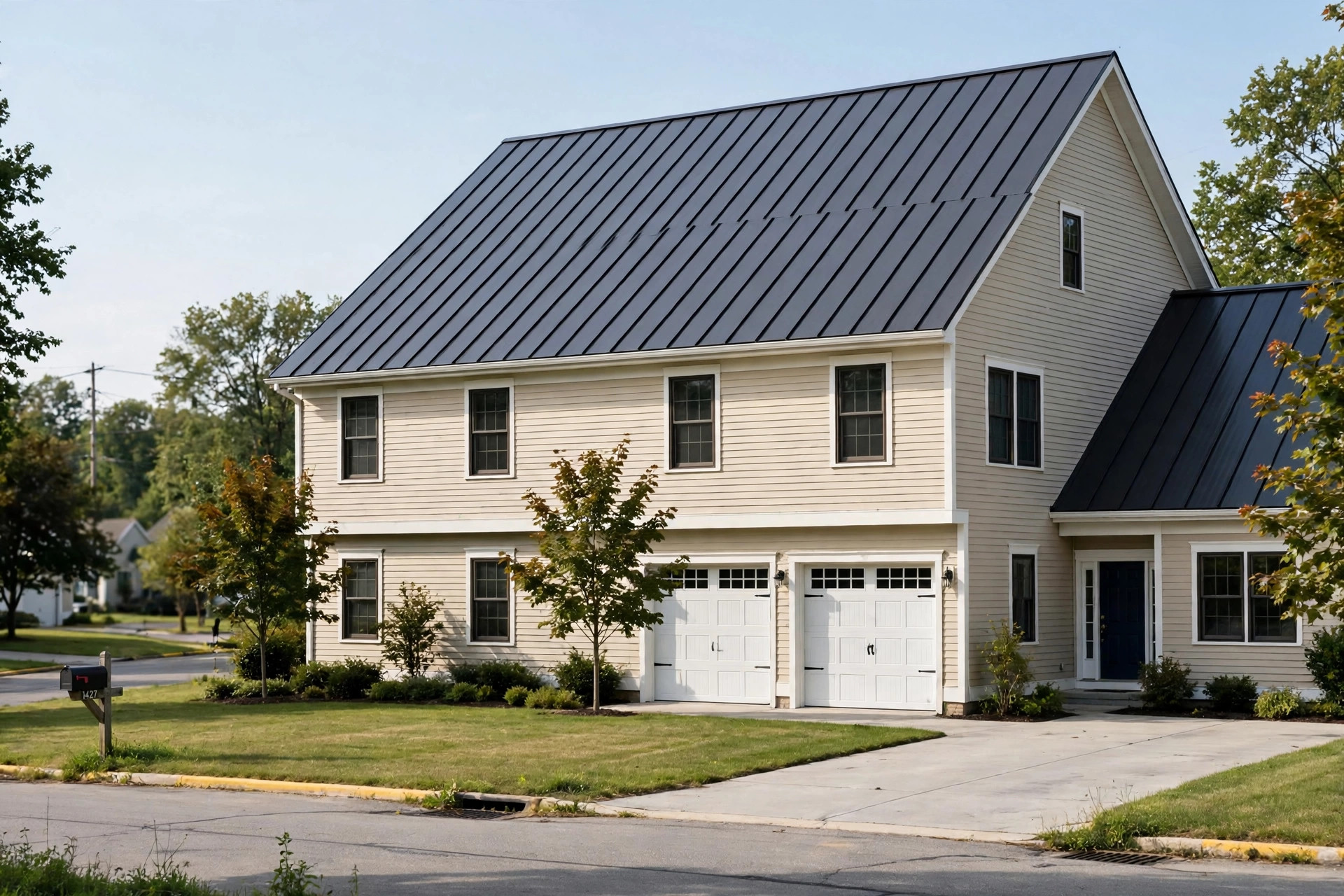
Standing-seam roofs have tall vertical ribs and hidden fasteners. They are the top choice for homes. They shed water fast and need little care. They cost the most per square foot but give the longest service life.
Corrugated Panels
Corrugated metal has a wavy pattern. It is common on barns and sheds but is used on homes too. It uses exposed fasteners. It costs far less than standing seam. It does not last as long on a house, but it still beats cheap shingles.
Metal Shingles and Tiles
Some makers press steel or aluminum into shapes that look like shingles, slate, or clay tile. These products give a classic look with metal strength. They cost more than panels. They suit historic homes and neighborhoods with strict rules.
Aluminum, Steel, and Copper
Galvanized steel is the most common and the least costly. Aluminum costs more but will not rust, which matters near salt water. Copper is the luxury choice. It can last a century and gains a green patina. Copper costs several times more than steel. Zinc is another long-life option found on high-end custom homes.
If you are comparing this work with other exterior projects, you may also find it useful to read our vinyl siding installation cost guide usa. Many homeowners plan siding and roofing in the same year.
Cost and Price: The Full Breakdown
Typical Price Range
In 2026, most American homeowners pay between $12,000 and $30,000 for a metal roof on an average single-family home. The price is often quoted per roofing square, which is one hundred square feet. A standing-seam steel roof typically runs $900 to $1,600 per square installed. Exposed-fastener panels run $450 to $800 per square installed. Copper can run $1,800 to $3,000 per square.
For a simple 2,000-square-foot roof, a standing-seam job often lands between $18,000 and $32,000. A basic exposed-fastener job on the same house may land between $9,000 and $16,000. Prices run higher in cities with high labor costs, such as New York, San Francisco, and Seattle. Prices run lower in rural parts of the South and Midwest.
What Drives the Price Up
Roof pitch is a big driver. Steep roofs need more safety gear and slower work, so labor costs rise. Complex roofs with many valleys, dormers, and chimneys cost more than simple gable roofs. Each valley means extra flashing and extra hours.
Old roof removal adds cost too. Tearing off two layers of shingles takes time and dump fees. Some metal roofs can be installed over one layer of shingles, which saves money. But your local code may not allow it, and it adds weight. Ask the contractor to show the code section.
Material choice, gauge, and paint system round out the list. Moving from twenty-nine gauge to twenty-four gauge can add ten to twenty percent to the material bill. Upgrading to a Kynar 500 finish adds more.
Labor vs. Materials
Roughly half of the total cost is labor on a metal roof job. The rest is panels, trim, underlayment, fasteners, and flashing. Metal roofing labor runs higher than shingle labor because the work is slower and more skilled. A typical crew installs shingles fast. Metal panels must be measured, cut, and seamed with care. Rushing the job shows in crooked seams and leaks.
How to Get a Fair Quote
Get at least three written quotes. Each quote should list the panel maker, the gauge, the paint system, the underlayment type, and the warranty terms. If one quote is far lower than the others, ask why. It may leave out tear-off, drip edge, or ice shield. The Home Depot and Lowe’s project guides both stress the value of itemized written estimates before any roofing contract is signed.
Never pay the full amount up front. A common schedule is one third at signing, one third at material delivery, and the rest at completion. Keep the final payment until the job passes inspection.
You can also compare this project with the top rated asphalt shingle roofing for usa homes if you want to weigh metal against the most common American roofing material.
Care and Upkeep
Metal roofs ask little of the owner, but they are not carefree. Walk the roof twice a year if you can do so safely, or use binoculars from the ground. Look for loose screws on exposed-fastener panels. Check that no branches rub against the surface. Clear leaves from valleys so water flows free.
Wash the roof once a year with a garden hose and a soft brush if dirt builds up. Do not use a pressure washer at close range. It can drive water under the seams and strip the paint. Trim tree limbs that hang over the roof. Falling branches dent panels and drop leaves that hold moisture.
Repainting is rarely needed with a good Kynar 500 finish. With cheaper paint, chalking and fading can appear after fifteen years. A fresh coat of metal-roof paint can then buy many more years. Keep gutters clean. A clogged gutter sends water back under the eave trim.
Safety During and After Installation
Roofing is dangerous work. Falls are the leading cause of injury in home projects. Do not climb onto a steep metal roof without training and gear. Metal panels are slick when wet or frosty. Leave the walking to the crew.
During installation, keep children and pets clear of the work zone. Falling metal scraps have sharp edges. Ask the contractor how they stage materials and whether they use fall protection. A serious crew will have harnesses and anchors on a steep job.
After the job, check that the contractor installed snow guards if you live in snow country. Snow can slide off a metal roof in a heavy sheet. Snow guards break it into safe pieces. This one item protects people and gutters below.
The Consumer Product Safety Commission publishes general guidance on home project safety, and family handyman resources cover ladder and fall safety for do-it-yourself inspections around the house.
Frequently Asked Questions
How much does a metal roof cost per square foot installed? For standing-seam steel, expect roughly $9 to $16 per square foot installed in most American markets in 2026. Exposed-fastener panels run roughly $4.50 to $8 per square foot. Simple roofs in low-cost regions can land below these ranges. Complex steep roofs in big cities can land above them.
Is a metal roof worth the extra cost over shingles? For many homeowners, yes. A metal roof can last two to three times longer than shingles. It needs fewer repairs. It can lower cooling bills and may cut insurance premiums in hail and wind zones. The break-even point often falls between ten and twenty years. If you plan to stay in the home, metal usually wins on total cost.
Can a metal roof be installed over existing shingles? Often yes, if local code allows it and the deck is sound. It saves tear-off and disposal costs. But it adds weight and can trap heat and moisture if done poorly. A full tear-off lets the contractor inspect the deck and fix rot. Many roofers prefer a tear-off for a job they will warranty.
Does a metal roof make the house louder in rain? A metal roof with solid decking and good underlayment sounds about the same as shingles to most people inside the home. The attic and insulation absorb much of the noise. Barns sound loud because they have no ceiling or insulation. Homes are different.
How long does metal roof installation take? A simple home roof takes three to seven days. A large or complex roof can take two weeks or more. Weather delays are common. Metal panels cannot be seamed well in high wind, and crews stop work in lightning.
Will a metal roof rust? Modern coated metal resists rust well. Galvalume and galvanized coatings protect the steel, and the paint layer adds more protection. Scratches should be touched up with matching paint. Aluminum and copper do not rust at all. Problems come mostly from cut edges left unsealed or from contact with dissimilar metals, so a good installer isolates those points.
A Short Final Word
The metal roofing installation cost guide usa tells one clear story: you pay more today and save for decades. The wide price range is not a trick. It reflects real choices in material, gauge, finish, roof shape, and crew skill. Take time to learn those choices. Get three itemized quotes. Check the gauge, the paint system, and the fastener style in writing. Pick the crew with the best seam work, not the lowest number.
A roof bought on price alone is the most expensive roof of all. A well-chosen metal roof is bought once and enjoyed for a generation. Before you sign, you may also want to review our guide on weather resistant soffit and fascia repair for homeowners, since fascia and soffit work is often done while the roof is open.
For further reading on roofing products and project planning, trusted home-improvement resources include the home guides at The Home Depot, the project advice at Lowe’s, the exterior product information from James Hardie, the roofing product details at CertainTeed, the how-to library at This Old House, the project guides at Bob Vila, the repair tutorials at Family Handyman, and the home advice articles at The Spruce.
References
Bob Vila. (n.d.). Home improvement advice. https://www.bobvila.com CertainTeed. (n.d.). Building materials and exterior products. https://www.certainteed.com Family Handyman. (n.d.). DIY home repair and maintenance. https://www.familyhandyman.com James Hardie. (n.d.). Fiber cement siding and exterior products. https://www.jameshardie.com Lowe’s. (n.d.). Home improvement products. https://www.lowes.com The Home Depot. (n.d.). Home improvement products. https://www.homedepot.com The Spruce. (n.d.). Home and garden advice. https://www.thespruce.com This Old House. (n.d.). Home renovation guidance. https://www.thisoldhouse.com
Was this guide helpful?

About Jennifer Lee
The My Garden US editorial team writes practical, in-depth home and garden guides for American homeowners — tested advice, no fluff.
You May Also Like
Best Home Exterior Design Services Near Me: A Plain Guide to a Better-Looking House
June 7, 2026 0 views
Best Cedar Shake Siding for Southern States
May 18, 2026 0 views
Energy Efficient Home Exterior Design Services for Homeowners: A Complete Guide
August 3, 2026 0 views