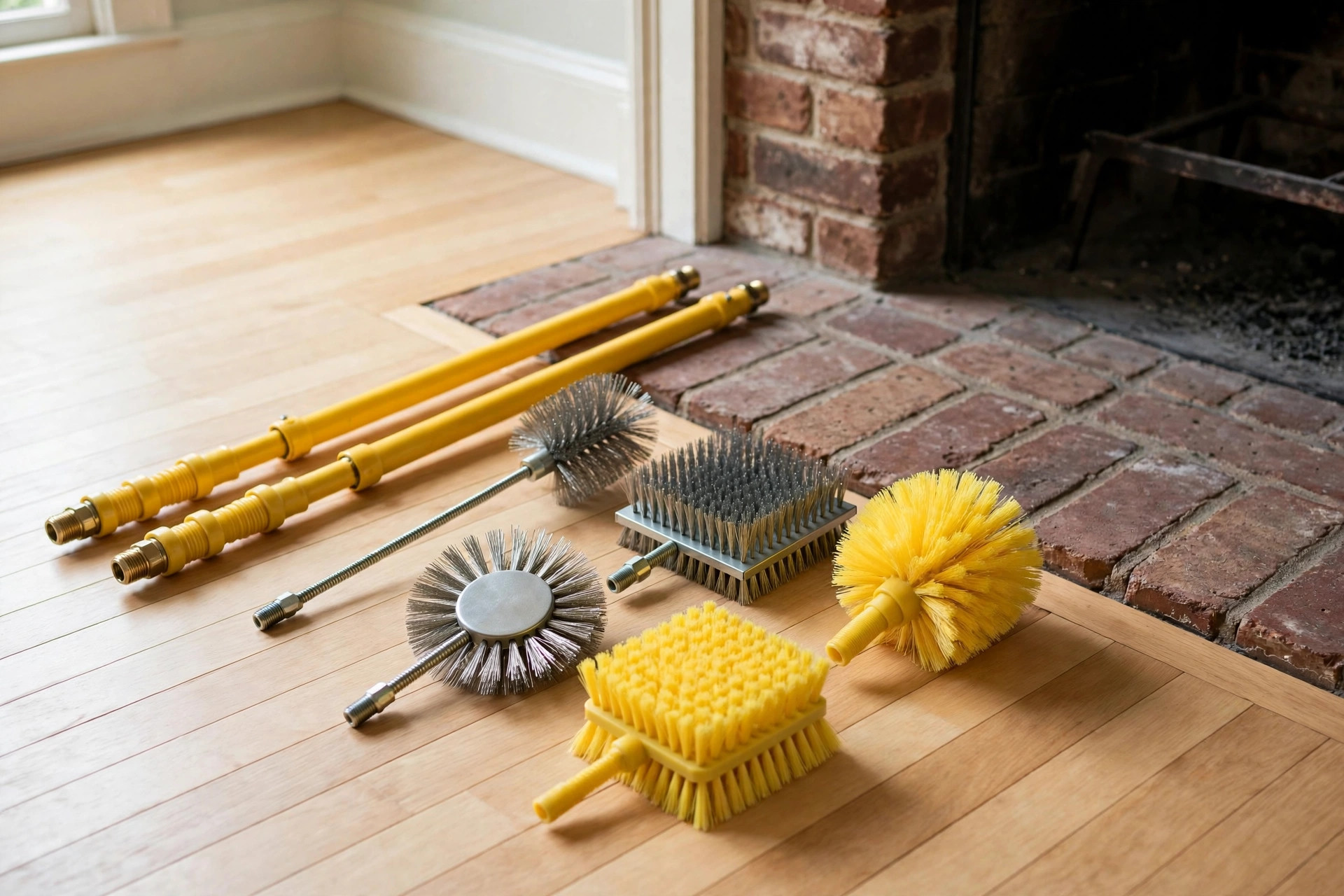

This commercial grade chimney cleaning brushes buying guide is for home owners who burn wood and want a safe, clean flue. A chimney full of soot and creosote is a fire risk. The right brush makes the job easier and safer. The wrong brush makes a mess and can even harm the flue. This guide explains sizes, bristle types, rods, and prices in plain words, so you can buy with confidence and clean the right way.
Why Chimney Cleaning Matters
A wood fire sends smoke, ash, and tar up the flue. The tar, called creosote, sticks to the flue walls. It builds up inch by inch over a burning season. Creosote burns. A thick layer can catch fire and cause a chimney fire. That kind of fire can crack the flue and spread to the walls of the house. Regular brushing keeps the layer thin. Fire experts say a chimney should be cleaned when creosote is one-eighth of an inch thick, or at least once each burning season. You can find fire safety basics on the National Fire Protection Association site.
A clean chimney also draws better. Smoke goes up instead of drifting into the room. The fire burns hotter and cleaner. You use less wood for the same heat. Many home owners also pair their cleaning with a solid wet dry shop vacuums reviews and buying guide to keep ash out of the living room, though a good shop vacuum is only part of the plan.
Commercial grade brushes are made for this kind of heavy work. They use stiff, dense bristles and strong twisted wire cores. They fit standard rods. They last through many cleanings. Lighter brushes from the discount shelf wear out fast and shed bristles. With a chimney brush, quality shows.
What to Look For in a Chimney Brush: Commercial Grade Chimney Cleaning Brushes Buying Guide
The first thing to know is the size and shape of your flue. Measure the inside of the flue. Round flues need round brushes. Square and rectangular flues need square or rectangular brushes. The brush should be a little larger than the flue opening so the bristles press against the walls. A brush that is too small will miss the creosote. A brush that is much too large will be hard to push and may bend the rods. When in doubt, take a photo and measure twice. Advice from This Old House can help you size tools for home projects of this kind.
Next, look at the bristles. Two main types exist. Polypropylene bristles are plastic and firm. They work well on metal flues and stainless steel liners. They will not scratch metal. Flat wire bristles are metal and tougher. They cut through heavy creosote on masonry flues. Do not use metal wire brushes on stainless steel liners, because they can scratch and harm the liner. Many brushes sold today carry labels that state which flue type they suit.
Check the core and the connector. A commercial grade brush has a twisted steel wire core that holds the bristles tight. The connector, often a threaded fitting, must match your rods. Most rods and brushes in the United States use a common thread size, but check before you buy. A brush that will not fit your rods is money wasted.
Also look at bristle density. A brush with more bristles per inch cleans faster. Dense bristles hold their shape through a long flue. Thin brushes bend and skip spots. Pick up the brush in the store if you can. Bend the bristles with your thumb. They should spring back.
Types of Commercial Grade Chimney Brushes
Round Brushes
Round brushes suit round flues and round metal liners. They come in many diameters, from small stove pipes to large flues. They are the most common type for factory-built chimneys and wood stove pipes. A round brush moves in circles and scrubs the full wall as you work it up and down.
Square and Rectangular Brushes
Square and rectangular brushes suit masonry chimneys. Older brick chimneys often have square or rectangular flues. The flat sides of the brush reach into the corners where creosote hides. Some rectangular brushes are sized to fit clay tile liners. Measure the tile inside, not the brick outside.
Specialty Brushes
Some brushes are made for tight spots. Slim brushes fit narrow stove pipes. Long flexible brushes reach bends. Creosote log tools and scrapers are not brushes, but some buyers add them to cut thick glaze before brushing. For heavy glazed creosote, a scraper first and a brush second is the common order. More hands-on project guidance appears at Family Handyman.
Rods and Extensions
A brush alone will not reach far. Fiberglass rods are the standard choice. They screw together in four or five foot lengths. They are stiff enough to push and light enough to hold. Rods must match the brush thread. Buy enough rods to cover the full flue height, plus a few extra. A rope and weight method also exists for cleaning from the top down, but rods give more control for most home owners. Keep spare connectors in your kit, because small parts go missing at the worst time.
How to Choose the Right Size
Start with a flashlight and a tape measure. Look up the flue from the firebox. Note the shape and the width. Measure twice. Then pick a brush one size larger than the measured opening. For example, a seven inch square flue takes an eight inch square brush. The spring of the bristles makes up the gap and keeps full contact with the walls.
Long flues need many rods. Count the length from the firebox to the top of the chimney. Add ten feet for working room. Buying rods one at a time costs more than buying a kit. Many kits bundle a brush, rods, and a rod bag. Kits also tend to match threads, which removes one worry. If your chimney is very tall, ask the seller about rod flex, because long rod chains bend more.
If you burn a wood stove, check the stove pipe too. Stove pipes are often six inches round and need a round brush. Some home owners buy two brushes, one for the pipe and one for the flue, so they never have to force the wrong shape into the wrong space.
Cost and Price
Prices for commercial grade chimney cleaning brushes are modest. A single round or square brush often costs between fifteen and forty dollars. Larger sizes and metal bristle types cost more. Fiberglass rods usually cost ten to twenty dollars per four or five foot section. A full kit with a brush and six to ten rods often runs between sixty and one hundred fifty dollars.
Shop the kit against buying parts alone. Kits are usually the better deal for first-time buyers. Replacement brushes are cheap once you own the rods. Retailers such as Lowe’s carry common sizes, and larger specialty sizes are easy to find online. Before you pay more for a name, check the bristle density and core strength. Those two things decide how the brush works, not the label.
A professional chimney sweep charges one hundred fifty to three hundred dollars or more per cleaning in many parts of the country. A good brush kit can pay for itself in one or two seasons if you clean your own flue. Many home owners still call a professional once a year for an inspection, even when they brush the flue themselves. The EPA offers guidance on wood burning and clean air that pairs well with regular flue care.
Care and Upkeep of Your Brushes
A brush lasts longer when it is cleaned and stored well. After each use, knock off the loose soot. Wash the brush in warm water with a mild soap if the maker allows it. Dry it fully before storage. Bristles left damp can rust at the core, and a rusted core sheds bristles. Store the brush hung up or in its bag, not crushed under other tools.
Check the bristles before each cleaning season. Look for bent wires, flat spots, and loose tufts. A brush with worn bristles will not clean well and may drop bristles inside the flue. Bristles left in a flue can block the draft and are hard to fish out. Replace the brush when it shows clear wear. Many buyers keep a spare brush on hand so a worn tool never stops the job.
Rods need care too. Wipe them down after use. Check the threads for wear and for soot packed into the threads. A drop of light oil on the threads keeps them turning easy. Store rods in their bag or tied in a bundle. A rod left leaning in a damp garage can warp over time. Readers planning wider tool care may also enjoy a related commercial grade drain clog remover tools for sale guide, since drain tools and chimney tools share the same care habits: clean, dry, and hang them up.
Safety When Cleaning a Chimney
Chimney cleaning is dusty, dirty work, and soot is not good to breathe. Wear a dust mask or respirator, safety glasses, gloves, and old clothes. Cover furniture and floors near the fireplace with drop cloths. Close the doors to other rooms. A helper at the bottom can watch for soot falling into the room while you work from the top.
If you work on the roof, safety comes first. Use a sound ladder and wear shoes with good grip. Do not work on a wet or icy roof. Do not work alone. Many home owners clean from the bottom up through the firebox instead, which avoids the roof entirely. This method works well when the flue is straight and the rods are long enough.
Creosote dust and ash belong in a metal bucket with a lid, not a paper bag. Let the ash cool fully. Store the bucket away from the house until trash day. Carbon monoxide is another risk. A blocked or dirty flue can push carbon monoxide back into the room. Keep a working carbon monoxide detector near the fireplace. If you see cracked flue tiles, missing mortar, or smoke stains on the chimney breast, stop and call a professional. Reviews and test results at Consumer Reports can help when you compare safety gear and detectors.
Seasoned wood also matters. Burn dry, seasoned hardwood. Wet wood burns cool and makes far more creosote. Split wood should dry for at least six months, and a year is better. Knock two pieces together: dry wood sounds hollow, wet wood thuds. Less creosote means easier brushing and fewer cleanings. Tips on greener home habits run through Good Housekeeping as well.
Frequently Asked Questions
How often should I brush my chimney?
Most experts say to clean when creosote reaches one-eighth of an inch, or at least once per burning season. If you burn every day through winter, check mid-season. A quick look with a flashlight tells you how fast buildup is forming. Heavy users sometimes clean twice a year.
Can I use a chimney brush on a stainless steel liner?
Yes, but use a polypropylene brush, not a metal wire brush. Metal wire can scratch stainless steel and shorten the life of the liner. Check the brush label. Most makers mark which flue types their brushes suit.
Do I need to clean from the top or the bottom?
Both methods work. Cleaning from the top down lets soot fall into the firebox, where you collect it. Cleaning from the bottom up keeps you off the roof. Pick the method that fits your chimney shape and your comfort. Many home owners start at the bottom and move up.
What size brush do I need for a six inch stove pipe?
A six inch round brush is the common choice for a six inch pipe, and some buyers step up to a slightly larger brush so the bristles press the walls. Check the label for the exact diameter range. If you also have a larger flue above, you may need a second brush.
Are chimney cleaning logs a replacement for brushing?
No. Cleaning logs can loosen some deposits, but they do not replace a brush. Think of them as a helper, not a substitute. A brush scrapes the walls. A log cannot. Many makers of these logs say this plainly on the box. General home care advice, including fireplaces, appears at The Spruce.
When should I call a professional sweep?
Call a professional if you see cracked tiles, heavy glazed creosote, smoke coming into the room, or a chimney fire has already happened. Also call one for a yearly inspection even if you brush the flue yourself. A trained eye catches damage that a brush cannot. Project planners at Bob Vila often note where do-it-yourself work ends and expert work begins.
A Short Final Word
Buying the right chimney brush is a small job with a big payoff. Measure the flue, pick the right shape and bristle type, and get enough rods to reach the top. Clean the brush, store it dry, and check it each season. Burn dry wood and clean on time. For readers keeping the whole house in shape, a look at the window cleaning robots reviews and buying guide covers another chore that benefits from the right tool. A clean chimney draws well, burns hot, and keeps your family safer through every cold night.
References
Bob Vila. (n.d.). Home improvement advice. https://www.bobvila.com Consumer Reports. (n.d.). Product reviews and ratings. https://www.consumerreports.org Family Handyman. (n.d.). DIY home repair and maintenance. https://www.familyhandyman.com Good Housekeeping. (n.d.). Product reviews and home advice. https://www.goodhousekeeping.com Lowe’s. (n.d.). Home improvement products. https://www.lowes.com National Fire Protection Association. (n.d.). Fire safety information and codes. https://www.nfpa.org The Spruce. (n.d.). Home and garden advice. https://www.thespruce.com This Old House. (n.d.). Home renovation guidance. https://www.thisoldhouse.com U.S. Environmental Protection Agency. (n.d.). Protecting human health and the environment. https://www.epa.gov
Was this guide helpful?

About Lisa Anderson
The My Garden US editorial team writes practical, in-depth home and garden guides for American homeowners — tested advice, no fluff.
You May Also Like

How to Buy Whole House Water Filters Online in California
January 23, 2026 0 views
Powerful Grill Cleaning Brushes for Sale: What to Know Before You Buy
April 28, 2026 0 views
Buy Air Purifiers for Allergies Online in Colorado
April 25, 2026 0 views