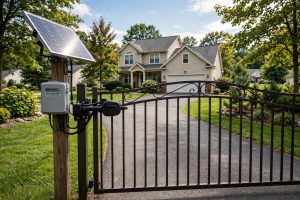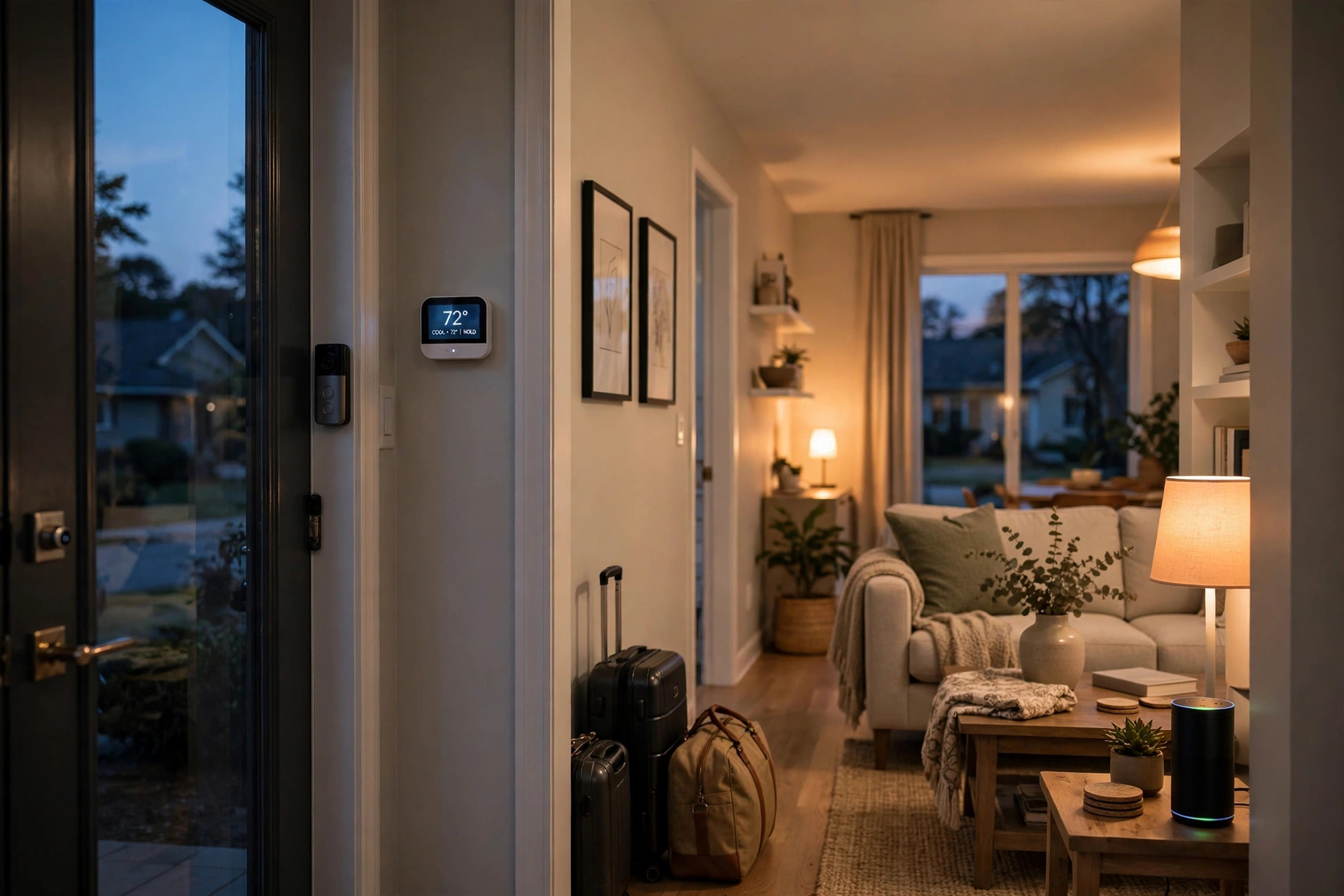

Every year, thousands of American homes sit empty while their owners travel. A house that looks empty is a house that draws attention. An empty home also wastes heat in winter and invites frozen pipes. This is where smart home routines for vacation mode USA families rely on earn their keep. A routine is simply a set of rules your smart devices follow on their own. You write the rules once, and your home plays its part each day you are gone. Lights turn on at dusk. The thermostat holds a safe low temperature. The doorbell camera records every visitor. This article walks you through why vacation routines matter, how to choose them, what kinds exist, what they cost, how to keep them running, and how to use them safely.
Why Vacation Mode Matters
A dark, still house tells a story. Mail piles up. No car moves in the driveway. Blinds never shift. A burglar only needs to watch for a day or two to read those signs. Police records across the country show that break-ins rise during holiday travel weeks. A smart home routine changes the story the house tells. Lights come on in the evening in a pattern that looks lived in. A television speaker plays soft sound at night. Porch lights fire when the doorbell camera sees motion. To a stranger passing by, the house looks occupied.
Vacation mode also guards against weather. In the northern states, a power of cold can burst pipes in an empty house in one night. A smart thermostat with a routine holds the house above 55 degrees and alerts your phone if the temperature drops fast. In the summer heat of the South and West, a routine keeps the air conditioner at a level that stops mold but does not waste money. These quiet actions can save thousands of dollars in repairs.
There is a third gain: peace of mind. A traveler who can open a phone and see the front door, the living room light, and the lock status sleeps better. You cannot enjoy a trip if you keep worrying about the house. Vacation routines turn worry into a quick glance at a screen.
What to Look For When Choosing Vacation Routines: Smart Home Routines for Vacation Mode Usa
Start with your home, not with the store. Walk through your rooms and note what you wish could move on its own. Most homes need the same five things covered.
First, lights. You want indoor lights that turn on and off at times that look natural. Look for smart bulbs or smart switches that allow random times, not just fixed times. Random times are harder to spot as fake.
Second, a video doorbell or camera. When you are away, the door is the face of your home. A best video doorbell without subscription usa lets you answer visitors from anywhere and records motion events without a monthly bill. If you are comparing brands, a ring vs nest doorbell comparison 2026 usa article can help you weigh picture quality, storage, and price before you buy.
Third, smart locks. A deadbolt you can lock and check from your phone means you never wonder if you locked up. Many locks also give one-time codes to a neighbor or a house sitter.
Fourth, a smart thermostat. Look for one that works during internet outages and that sends low-temperature alerts to your phone.
Fifth, motion and leak sensors. A small water sensor under the sink or by the water heater is cheap and can alert you to a leak on day one instead of day ten.
When you shop, pick devices that work with one platform. A house where the lights speak to Alexa, the lock speaks to HomeKit, and the camera speaks to Google is a house where routines break. Choose one main platform and check each device for its logo before you buy.
Types of Vacation Routines
Most smart home platforms let you build routines in a few common forms. You can use them alone or mix them.
Time-Based Routines
These run at set times. The living room lamp turns on at 7 p.m. and off at 11 p.m. The porch light turns on at sunset. Time routines are simple and steady. Their weakness is that fixed times can look staged. Many apps now offer a “vary by up to 30 minutes” option. Turn that option on.
Sensor-Based Routines
These run when something happens. A motion sensor in the driveway triggers the porch floodlight and starts the doorbell camera recording. A leak sensor texts you the moment it finds water. Sensor routines cost more to set up but they react to real events, which makes them the strongest guard when you are away.
Geofenced Routines
These run based on where your phone is. When every family phone leaves the home zone, the system arms itself: doors lock, thermostat drops, cameras turn on. When the first phone comes back, the house wakes up. Geofencing is excellent for short trips and weekend getaways because there is nothing to remember.
Away and Sleep Scenes
A scene is a group of settings fired by one tap or one voice command. You tap “Vacation” as you leave and the whole house shifts at once. Scenes pair well with voice assistants from store.google.com and smart speakers you may already own.
Simulated Occupancy
This is the prize feature for long trips. The app plays a scripted day: lights in different rooms, a radio sound in the den, the television glowing in the evening, shades opening in the morning. Good simulation draws on several rooms at once. It is the closest thing to hiring a house sitter for the look of the place.
Cost and Price
Smart home routines for vacation mode USA buyers can assemble span a wide price range. The routine itself is free. The devices are what you pay for.
A starter setup runs about 150 to 300 dollars. That buys two or three smart bulbs, a smart plug, and a simple video doorbell. For many apartments and small homes, this is enough to fake occupancy and watch the door.
A midrange setup runs about 400 to 800 dollars. Add a smart thermostat, a smart lock, and one or two more cameras. This is the level most single-family homeowners choose. Reviews on cnet.com and pcmag.com often point to this tier as the best balance of price and coverage.
A full setup runs 1,000 dollars and up. That includes a monitored security system from a name like simplisafe.com or adt.com, many sensors, and professional monitoring that calls the police if an alarm fires while you are on a beach.
Watch the ongoing costs. Some cameras need a subscription to save video clips. The best wireless doorbell camera reviews usa roundups are a good place to compare which models store clips free and which charge monthly. A device that seems cheap can cost more over two years than a dearer one with no fees.
If your budget is tight, build in stages. Start with lights and the doorbell this year. Add the lock and thermostat next year. Each piece works alone, and the routine grows with it.
Care and Upkeep
Smart devices are like any home tool. They need small, steady care to work when you count on them.
Batteries come first. Smart locks, sensors, and wireless cameras run on batteries that die at the worst time. Check every battery before a trip. Most apps show battery levels on one screen. Swap any battery under 30 percent.
Wi-Fi comes second. Cameras and routines need a steady signal. Before a long trip, restart your router once and confirm each camera shows as online. A camera that drops off the network on day two is worse than no camera, because it gives false comfort. For doorbell and camera brands, ring.com publishes signal-strength guides worth a look.
Third, test every routine before you leave. Run a “vacation test night.” Arm everything on a normal evening while you are home and watch what happens. Do the lights fire at the right times? Does the lock report its status? Fix what fails while you are there to fix it.
Fourth, update firmware. Open each device app and install pending updates a week before you travel, not the night before. Updates fix security holes but they can also reset settings. A week gives you time to rebuild a routine that an update cleared.
Fifth, keep one trusted person informed. Give a neighbor or a family member your alarm code and a house key. Technology fails. A human backup who can walk through the house once mid-trip closes the gap.
Safety
Vacation routines are a safety tool, and like all tools they must be used with care.
Do not announce your trip on social media. A routine can make the house look lived in, but a public post that says you are in another state for two weeks undoes the work. Share trip photos after you return.
Lock down your accounts. Every smart home app should have a strong, unique password and two-step verification turned on. A hacker who gets into your camera account can watch your home and learn your habits. The federal guidance at cpsc.gov on connected-device safety is a solid starting read.
Mind cameras and privacy laws. Most states allow you to record your own front step, but audio recording rules differ by state. Point cameras at your own property, not into a neighbor’s windows. If you rent, check your lease before adding cameras or locks.
Watch for overconfidence. No routine stops a determined break-in. Routines lower the odds and shorten the damage. Pair them with strong physical basics: deadbolts, window locks, trimmed shrubs, and no spare key under the mat.
Heat and fire deserve a note. Never run a smart plug on a space heater or a high-wattage appliance while you are away. Space heaters cause many winter house fires. Keep fire alarms powered and test them before the trip.
FAQ
How long before a trip should I set up vacation routines? Give yourself two weeks. Buy and install devices in week one. Build and test routines in week two. Rushing the night before travel is the main cause of failed setups.
Can I run vacation mode without internet at home? Partly. Many hubs run simple time routines without internet, but you will lose remote viewing, alerts, and voice control until the connection returns. A battery backup for the router helps short outages.
Will vacation routines work if the power goes out? Battery devices like locks and sensors keep working, but Wi-Fi cameras and smart bulbs stop until power returns. Smart plugs do not restart on their own in some cases. After an outage, check the app to confirm everything came back online.
Do I need a hub or just Wi-Fi devices? Wi-Fi devices are fine for a small setup. A hub helps when you own many devices or use battery sensors, because the hub speaks to them on a low-power radio and keeps routines running smoothly.
Are smart home routines hard for older family members to use? They are easier than the devices they replace. Once a routine is built, it runs itself. A single “Vacation” button or one voice command arms the whole house. Guides at theverge.com and consumerreports.org rate ease of use for popular platforms.
Can routines lower my home insurance cost? Sometimes. Several insurers give small discounts for monitored alarms and water-leak sensors. Ask your agent before you buy, and keep receipts. Savings vary by state and carrier.
A Short Final Word
A vacation should restore you, not haunt you. Smart home routines for vacation mode USA travelers set up with care do the watching while you rest. Start small, test everything, and grow the system trip by trip. The house stays lit, locked, and warm, and you come home to find it just as you left it. For device ideas beyond the doorbell, marketplaces like amazon.com carry wide smart-home ranges to browse.
References
ADT. (n.d.). Home security and automation. https://www.adt.com Amazon. (n.d.). Online shopping. https://www.amazon.com CNET. (n.d.). Technology news and reviews. https://www.cnet.com Consumer Reports. (n.d.). Product reviews and ratings. https://www.consumerreports.org Google Store. (n.d.). Smart home devices. https://store.google.com PCMag. (n.d.). Technology product reviews. https://www.pcmag.com Ring. (n.d.). Smart home security devices. https://www.ring.com SimpliSafe. (n.d.). Home security systems. https://www.simplisafe.com The Verge. (n.d.). Technology news and reviews. https://www.theverge.com U.S. Consumer Product Safety Commission. (n.d.). Product safety information. https://www.cpsc.gov
Was this guide helpful?

About Lisa Anderson
The My Garden US editorial team writes practical, in-depth home and garden guides for American homeowners — tested advice, no fluff.
You May Also Like

Basement Window Security Bars Reviews USA: A Plain Buyer’s Guide
January 14, 2026 0 views
Whole Home Automation Cost Calculator USA: A Plain Guide to Smart Home Prices
September 21, 2026 0 views
Vivint vs ADT Reviews for Homeowners USA
January 6, 2026 0 views