
Introduction
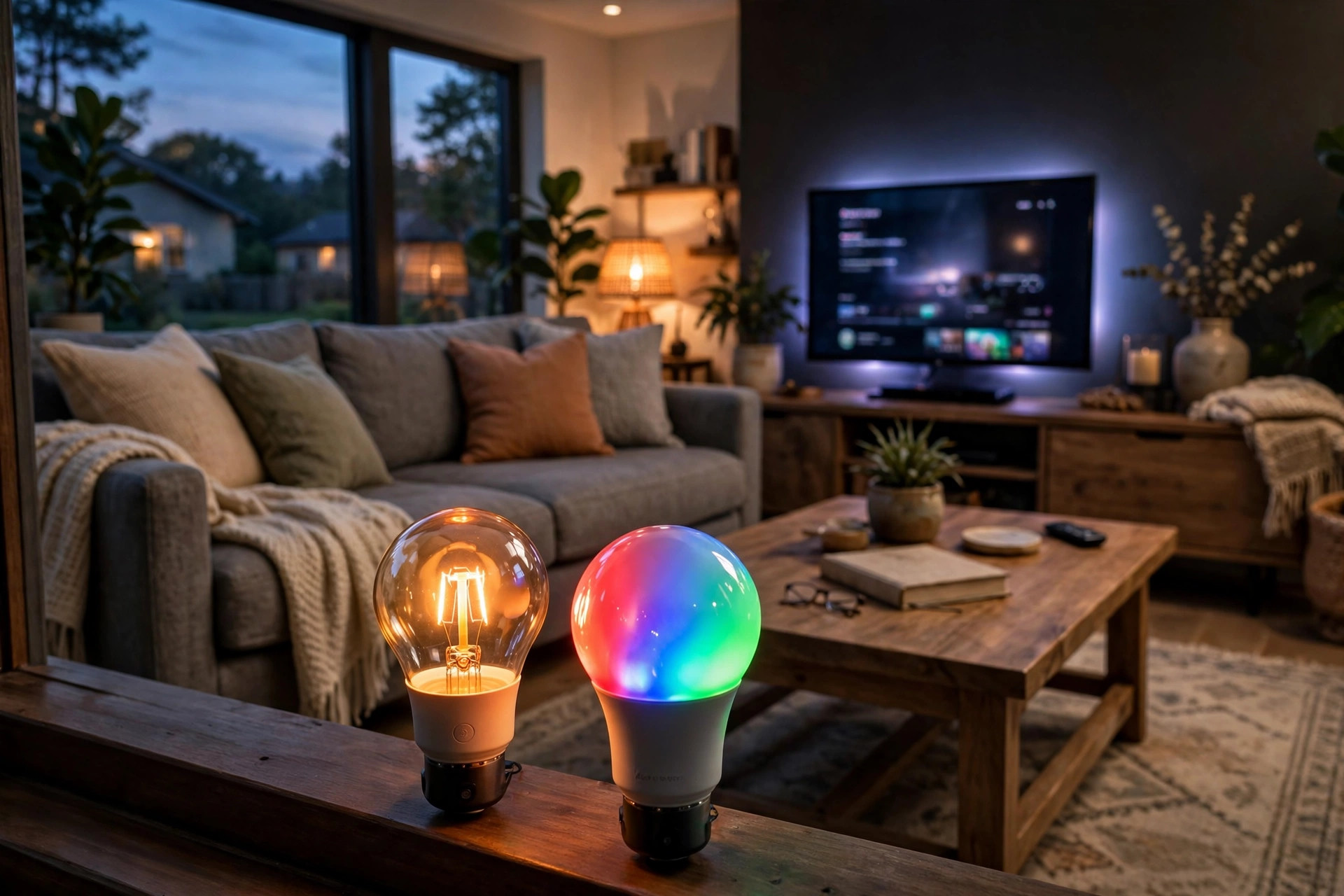
This Philips Hue vs LIFX comparison 2026 USA guide helps American homeowners choose between the two biggest names in smart lighting. Both brands sell color changing LED bulbs that work with a phone app, voice control, and home automation. Yet they differ in how they connect, what they cost, and how bright they shine. Philips Hue uses a bridge hub that talks to the bulbs over a low power wireless signal. LIFX bulbs connect straight to your home WiFi and need no hub at all. That one design choice shapes almost every difference you will see below. By the end of this guide, you will know which system fits your home, your budget, and your plans for the future.
Why This Comparison Matters: Philips Hue vs Lifx Comparison 2026 Usa
Smart bulbs are not a small purchase. A single color bulb can cost as much as a whole box of old style bulbs. When you outfit a living room or a whole house, the total adds up fast. Picking the wrong brand means you may end up replacing everything later, since the two systems use different apps and rules. Both brands have changed over the years. Hue has widened its range to include outdoor lights, strips, and security cameras. LIFX has stayed focused on bulbs and strips with very strong color output.
The State of Smart Lighting in American Homes
Lighting is often the first smart device people buy. A smart bulb sets the mood for a movie night, turns off every light with one voice command, or brings the porch light on at dusk without a timer. Hue is the safer pick for large homes and big plans. LIFX is the simpler pick for a few rooms where color quality matters most.
What to Look for in a Smart Bulb System
Before you compare brands, know what features matter.
– Connection method. Does the bulb need a hub, or does it use WiFi direct? – Brightness. Measured in lumens. A standard room bulb gives about 800 lumens. – Color quality. Some bulbs make deeper reds and blues than others. – App quality. You will use the app every day. It must be simple and steady. – Voice control. Check support for Amazon Alexa, Google Assistant, and Apple HomeKit. – Range of products. Bulbs alone are fine, but strips, lamps, and outdoor lights matter if you plan to grow. – Price. Count the full cost of bulbs plus any hub you must buy.
Philips Hue: The Hub Based Leader
Philips Hue is the oldest and largest smart lighting brand in the United States. It is made by Signify, a company that has worked in lighting for over a century. Hue bulbs use a standard called Zigbee to talk to a small box called the Hue Bridge. The Bridge plugs into your router. The app on your phone talks to the Bridge, and the Bridge talks to the bulbs. This setup has one big benefit: it keeps your WiFi network clear. Your bulbs do not count against your router at all.
The Hue product line is huge. You can buy standard A19 bulbs, small candelabra bulbs, downlight bulbs for recessed cans, light strips, lamps, and a full line of outdoor lights. If you later want a smart switch or a motion sensor, Hue sells those too.
Hue Strengths
– The Zigbee mesh means bulbs repeat the signal to each other, so coverage is strong even in large homes. – Response time is fast and steady, because the bulbs are not fighting your phones and laptops for WiFi space. – Works with all major voice helpers and Apple HomeKit. – The widest product family of any smart lighting brand in the United States.
Hue Weaknesses
– You must buy the Hue Bridge, usually around 60 dollars, before anything works. If you only want two bulbs, this hurts. – Color output is good but not the deepest in the class. LIFX wins on pure color punch. – Some cheaper Hue models lack the richest greens and cyans.
LIFX: The WiFi Direct Challenger
LIFX bulbs connect directly to your home WiFi. There is no bridge, no extra box, and no extra cost at the start. You screw in the bulb, open the LIFX app, and pair it to your network. This makes LIFX the fastest way to get started. Buy two bulbs on a Friday, and your living room is smart by Friday night.
LIFX has always put color first. Its bulbs use more color zones and stronger color diodes than most rivals. The result is light that looks richer: reds that glow like embers, blues that feel like deep water, and greens that pop on a movie night. The company also sells light strips, downlight bulbs, and outdoor models, though the range is smaller than Hue.
LIFX Strengths
– No hub needed. The first bulb you buy is the last box you buy. – Best in class color depth and brightness for many models. – Simple setup that most people finish in under ten minutes.
LIFX Weaknesses
– Every bulb joins your WiFi network. In a home with twenty or more bulbs, some routers slow down. – The product line is narrower. There are fewer lamp styles and fewer outdoor options. – The company has changed owners over the years, which has made some buyers worry about long term support.
Head to Head: The Full Philips Hue vs LIFX Comparison 2026 USA
Setup and Installation
LIFX wins on simple setup. There is no hub to place and no cable to run. If your WiFi is strong in the room, setup takes minutes. Hue takes longer because you must set up the Bridge first. But once the Bridge is running, adding more Hue bulbs is very fast. For one or two bulbs, LIFX is easier. For ten or more, Hue is easier, because the Bridge handles them all without touching your WiFi.
Brightness and Color
Both brands meet the needs of a normal room. Standard color bulbs from both give about 800 to 1100 lumens. Where they differ is color. In side by side tests, LIFX colors look deeper and more vivid, especially in reds, cyans, and magentas. Hue colors look softer and more natural, which some people prefer for everyday living. If your goal is party lighting or movie backlighting, LIFX has the edge.
Reliability and Response
Hue wins on reliability in large setups. The Zigbee mesh network is built for this job. Lights respond quickly even when the internet goes down, as long as the Bridge and your router have power. LIFX depends on your WiFi. If your router is old or crowded, LIFX bulbs can drop out or respond slowly. A good modern router fixes most of this, but it is a point worth knowing. Homeowners planning best smart light strips for tv reviews usa for a full home theater may favor the steadier link.
App and Controls
Both apps let you set scenes, schedules, timers, and routines. The Hue app is more polished and has more ready made scenes. The LIFX app is simpler and has a strong music sync mode that pulses the lights with sound. Both support dimming, color wheels, and white temperature control. Hue feels more grown up. LIFX feels more playful.
Voice and Smart Home Partners
Both brands work with Amazon Alexa and Google Assistant, so you can say “turn the living room blue” and it happens. Both also work with Apple Home. Hue has a slight lead here because its Bridge speaks to more third party systems, including popular home automation platforms. If you use a voice helper in every room, either brand will do. Reviews of voice setups like alexa vs google home 2026 comparison usa often pair Hue with whole home control.
Product Range
Hue wins by a wide margin. Beyond bulbs, Hue sells outdoor path lights, wall lights, security cameras, light strips in many lengths, gradient tubes, and even smart plugs. LIFX sells bulbs, strips, and a few outdoor models. If you think you will add outdoor lights next year, Hue lets you stay in one app. If you only care about indoor bulbs, the gap does not matter.
Types and Options Available in 2026
Standard A19 Color Bulbs
The workhorse of both lines. These replace a normal screw in bulb and give full color plus white light. Prices range from about 45 to 60 dollars per Hue bulb and about 40 to 50 dollars per LIFX bulb, before any hub cost.
Downlight and Recessed Bulbs
Both brands sell bulbs that fit recessed ceiling cans. These are popular in kitchens and hallways. For more on matching bulbs to cans, see best smart bulbs for recessed lighting usa.
Light Strips
Light strips go behind a TV, under a cabinet, or along a stair rail. Hue offers more lengths and a gradient model that shows many colors at once. LIFX strips are bright and simple to install.
Specialty Bulbs
Both sell small candelabra bulbs for chandeliers and filament style bulbs that look like old Edison bulbs but can change white tone. Hue has more of these.
Cost and Price Comparison
Cost is where many buyers make up their minds. Let us count a typical starter set of four color bulbs for a living room.
– LIFX: Four bulbs at about 45 dollars each: about 180 dollars. No hub. Total: about 180 dollars. – Philips Hue: Four bulbs at about 50 dollars each plus a Bridge at about 60 dollars: about 260 dollars.
For a small start, LIFX is cheaper. But the math changes as you grow. The Bridge is a one time cost. At twenty bulbs, Hue costs about 1,060 dollars and LIFX costs about 900 dollars. At forty bulbs, the gap narrows further, and Hue may need extra bulbs for the mesh while LIFX may need a better router. Check current store prices before you buy, since sales change the numbers often. Price guides at Consumer Reports and shopping reviews at CNET can help you track deals.
Hidden Costs to Watch
– The Hue Bridge is required. Do not forget it in your budget. – LIFX may force a router upgrade in a crowded smart home. A good mesh router costs 150 dollars or more. – Older homes without a neutral wire in the switch box may need a different kind of smart switch. See best smart light switch no neutral usa for options.
Care and Upkeep
Smart bulbs need little care, but a few habits keep them working well.
– Keep the bulbs screwed into sockets that stay powered. If you flip a wall switch off, the bulb loses its smart features until you flip it back on. – Update the firmware through the app when asked. Updates fix bugs and add features. – Keep the Hue Bridge plugged into the router with a cable for the steadiest link. – For LIFX, keep your router firmware current and place the router near the center of your home. – Clean dusty bulbs with a dry cloth when the power is off. Dust cuts brightness. – Both brands rate their bulbs for about 25,000 hours, which is roughly 22 years at three hours a day.
Safety
Smart bulbs are safe when used as the maker directs. Use the correct socket size and do not put indoor bulbs in wet outdoor fixtures. Both brands meet United States safety rules, and the CPSC tracks product recalls if any arise. Do not open a bulb or try to repair it. If a bulb flickers, gets very hot, or smells odd, turn off the switch and replace it. When you automate lights to turn on while you are away, make sure a real timer or sensor still covers the porch and entry, since a lost network link could leave them dark. Security minded buyers often pair smart lights with a camera from Ring or a full system from SimpliSafe for real protection.
FAQ
Do LIFX bulbs really need no hub?
Yes. LIFX bulbs join your home WiFi directly. You need only the bulb and the free LIFX app. This is the main reason LIFX is cheaper and faster to start with.
Is the Philips Hue Bridge worth the cost?
For most homes with more than a few bulbs, yes. The Bridge keeps traffic off your WiFi, builds a strong mesh, and opens the door to the full Hue product line. For a single bulb in a dorm room, it is harder to justify.
Which brand is brighter?
Top models from both brands are close, around 1100 lumens for the brightest color bulbs. Check the box before you buy, since brightness varies by model year. Independent tests at PCMag and The Verge often measure real output.
Can I mix Hue and LIFX in one home?
Yes, you can run both apps side by side. Voice helpers like Alexa and Google Home can control both at once through routines. The Google Home app at the Google Store shows both brands in one place. But scenes will not cross between the two apps, so plan your rooms with one brand per room.
Which works better with Alexa and Google?
Both work well. You can dim, change color, and set routines with either. Setup guides from ADT smart home pages and voice assistant help centers cover both brands.
Will smart bulbs raise my electric bill?
No. A smart LED bulb uses about 9 to 11 watts, far less than the 60 watt bulb it replaces.
Final Word
The philips hue vs lifx comparison 2026 usa comes down to how you plan to live with smart light. Choose LIFX if you want the richest colors, the fastest setup, and no hub on day one. Choose Philips Hue if you want the steadiest large home network, the widest product family, and one app that can grow from a single lamp to a full yard. Both are good buys. Match the brand to your home size, your router, and your future plans, and you will be happy with either.
References
ADT. (n.d.). Home security and automation. https://www.adt.com CNET. (n.d.). Technology news and reviews. https://www.cnet.com Consumer Reports. (n.d.). Product reviews and ratings. https://www.consumerreports.org Google Store. (n.d.). Smart home devices. https://store.google.com PCMag. (n.d.). Technology product reviews. https://www.pcmag.com Ring. (n.d.). Smart home security devices. https://www.ring.com SimpliSafe. (n.d.). Home security systems. https://www.simplisafe.com The Verge. (n.d.). Technology news and reviews. https://www.theverge.com U.S. Consumer Product Safety Commission. (n.d.). Product safety information. https://www.cpsc.gov
Was this guide helpful?

About David Wilson
The My Garden US editorial team writes practical, in-depth home and garden guides for American homeowners — tested advice, no fluff.
You May Also Like
Best Smart Smoke and CO Combo Reviews USA
September 2, 2026 0 views
Schlage vs Kwikset Smart Lock Comparison USA: Which Front Door Lock Is Right for You
January 23, 2026 0 views
Smart Vent for Room Balancing Reviews USA: A Plain Guide to Even Heat and Cool Air
April 7, 2026 0 views