
A wet basement can ruin stored goods, rot wooden frames, and make a home hard to sell. Many owners ask about the interior french drain system cost basement work requires before they call a contractor. The answer is not one fixed number. It depends on the size of the basement, the shape of the floor plan, the depth of the footing, and the choice of pump. This guide walks through each part in plain words. You will learn what the system does, what to look for, which types exist, what it costs, how it is installed, and how to keep it working for years.
Why Interior Drainage Matters
Water moves toward the lowest point of a house. In most homes that point is the basement floor. Rain can fall on the roof, run down the gutters, and settle in the soil next to the foundation. From there it can seep through small cracks in the wall or rise up through the joint where the wall meets the floor. The U.S. Environmental Protection Agency notes that damp homes can breed mold and harm indoor air. A finished basement makes the stakes higher. Drywall, carpet, and furniture can be lost in one bad storm.
An interior french drain stops the water before it spreads across the floor. The system sits under the edge of the slab. It catches water as it enters and sends it to a sump pit. A pump then lifts the water out of the house. When sized and installed well, it can keep a basement dry for decades. That is why many buyers ask about drainage before they make an offer. A dry basement protects the value of the whole home.
What an Interior French Drain Is: Interior French Drain System Cost Basement
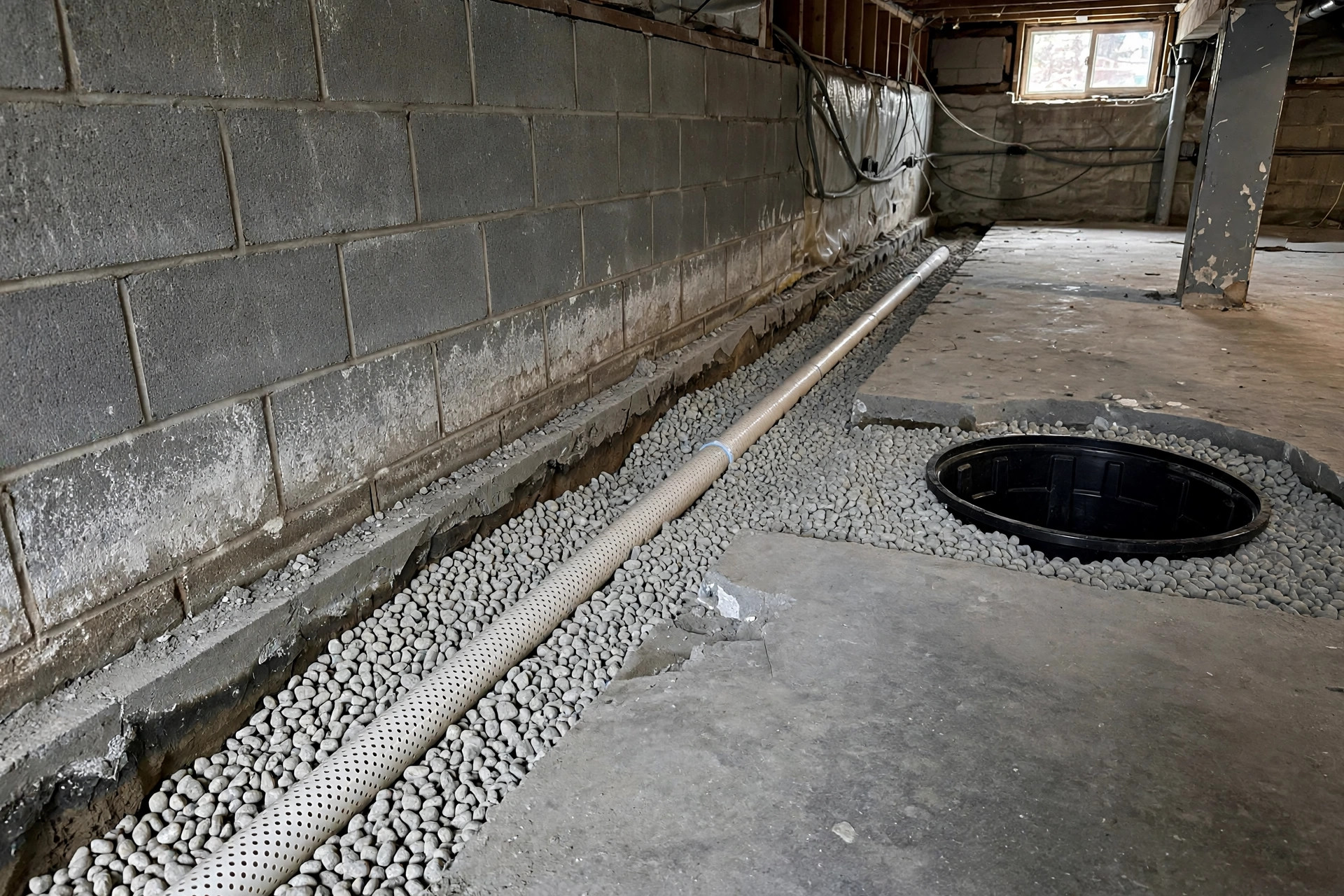
A french drain is a trench filled with gravel that holds a pipe with holes. The name is old, but the idea is simple. Water finds the holes and flows downhill through the pipe. An interior french drain puts that trench inside the house, under the basement slab, next to the footing. It works on the joint where wall and floor meet. This joint is called the cove joint. Water often enters here first.
The system has a few parts. A trench runs around the inside edge of the floor. Perforated pipe lies in the trench on a bed of washed stone. More stone covers the pipe. Concrete goes back over the trench to restore the floor. At the low point of the run, a sump pit holds a pump. The pump moves water up and out through a discharge line. A check valve keeps water from sliding back into the pit. The Family Handyman site explains that the gravel bed is key because it gives water a clear path to the pipe.
How It Differs From an Exterior Drain
An exterior drain sits outside the foundation wall, below the soil line. To reach it, a crew must dig down along the wall, often by hand or with a small machine. That work can tear up the lawn, the deck, and the walkway. An interior drain avoids all of that digging outside. The crew works inside the basement. The floor is cut with a saw or a jackhammer, and the trench is dug below the slab. The mess stays inside the work zone.
Exterior drains protect the wall from outside pressure. Interior drains manage water after it enters. Many experts suggest an interior system when the main problem is the cove joint or a high water table under the floor. In some homes both systems are used. A contractor who knows your soil can say which plan fits. Guides at This Old House show how both systems connect to a sump pump.
What to Look for When You Choose
Not every damp basement needs a full perimeter system. Start with the signs. Water stains on the lower wall, a white powder on the concrete, and a musty smell all point to entry at the cove joint. If water rises through the middle of the floor, the water table may sit below the slab. A full ring of pipe serves both cases. If only one wall leaks, a partial run may be enough.
Look at the slope of the yard. Soil should fall away from the house for at least six feet. Gutters should carry water ten feet from the wall. Fix these first if they are wrong. A Lowe’s buying guide lists extension parts and grading tools that help with this step. Some basements dry out once the surface water is moved away. If dampness returns after heavy rain, an interior french drain is a sound next step.
Ask a contractor to check the sump setup. A pit that is too small will make the pump run in short bursts, and that wears the pump out. A pit that is too shallow can leave water standing in the pipe. The discharge line should leave the house and end far from the foundation. If it ends at the wall, the same water comes right back.
Types and Options
Most interior french drains use one of three layouts.
Full perimeter run. The trench follows every wall of the basement. This is the most common choice for homes with leaks on more than one side. It collects water from the whole cove joint. It costs more because it covers more feet of pipe.
Partial run. The trench covers one or two walls only. It fits basements where the problem is known to one corner. It costs less, but it may need to be extended later if leaks spread.
Baseboard channel. A shallow channel sits on top of the floor against the wall. It does not need the slab to be cut. It catches water that runs down the wall. It cannot catch water that rises under the floor. It is the least costly option, and it suits light seepage only.
Pipe choice matters too. Rigid PVC pipe with drilled holes resists crushing and is easy to clean. Flexible corrugated pipe is cheaper and faster to lay, but it can clog and flatten under pressure. Most pros favor rigid pipe for long runs. The stone around the pipe should be washed gravel, free of dust. Dust packs down and slows the flow.
Cost and Price
The interior french drain system cost basement owners face usually falls between $5,000 and $15,000 for a full perimeter job in an average-size home. Per foot, many contractors charge $50 to $120. A basement with 100 feet of trench may land near $7,000. A large basement with 150 feet may reach $12,000 or more. These are 2026 ranges for professional work, and local prices vary.
Several factors move the number up or down.
Basement size and shape. More feet of wall means more trench, pipe, stone, and concrete. A simple square plan costs less than a plan with many corners and jogs.
Slab thickness and footing depth. A thick slab takes longer to cut. A deep footing may need a deeper trench. Both add labor hours.
Sump pump choice. A basic pedestal pump may add $300 to $500. A strong submersible pump with a battery backup may add $1,000 to $1,800. Battery backup is wise in areas with frequent power loss, since storms that bring rain also cut power.
Discharge work. If the line must cross the yard to a storm drain or a dry well, expect added cost. Frost-proof discharge setups in cold states cost more than simple lines in warm states.
Concrete and floor repair. The trench must be closed with new concrete. If the floor is finished, the cost of cutting and patching adds up. Unfinished basements are cheaper to work in.
Permits and soil tests. Some towns ask for a permit. A few ask for a soil check before approval. These fees are small next to the job, but they should be in the budget.
A partial run may cost $3,000 to $7,000. A baseboard channel system may cost $2,000 to $4,000 for the same area. Do-it-yourself kits exist at Home Depot, and a handy owner may save on labor. But a DIY job still needs careful slope, correct stone, and a sound pump. A wrong slope leaves water standing in the pipe.
Related home water projects often get priced at the same visit. Some owners ask about a whole house water filtration cost installed while the crew is on site. Others pair the drain with a water softener installation cost near me quote, or check the best water softener for well water usa before they schedule the work. Bundling jobs can cut the total bill.
How Installation Works
A professional job follows a clear order. It usually takes three to five days for a full perimeter system.
Step 1: Layout and protection. The crew marks the trench line, usually 12 to 18 inches from the wall. Furniture is moved. Plastic sheeting guards the rest of the basement from dust.
Step 2: Floor cutting. A concrete saw or jackhammer cuts the slab along the line. The cut strips are removed. Dust control matters here. A good crew seals the work area and runs a fan.
Step 3: Trench digging. The crew digs down beside the footing, usually 12 to 24 inches deep. The bottom of the trench must slope toward the sump pit. The rule of thumb is a drop of about one inch for every eight feet of run.
Step 4: Sump pit and pipe. A hole is dug for the sump basin at the low point. Washed stone goes into the trench. Perforated pipe is laid with the holes facing down. This lets water rise into the pipe from below. The pipe connects to the basin.
Step 5: Stone cover and concrete. More stone covers the pipe. A vapor barrier may go over the stone. New concrete is poured to close the trench. The crew floats it smooth with the old floor.
Step 6: Pump and discharge. The pump is set in the basin. A check valve goes on the riser pipe. The discharge line is run out of the house. The system is tested with water poured into the pit.
Moen and Delta Faucet sell plumbing parts that some contractors use for discharge connections, and Kohler offers sump-related fixtures in its pro lines. The key is that every joint is sealed and every slope is checked before the concrete closes.
Care and Upkeep
An interior french drain is low care, but it is not no care. Plan a check twice a year, once in spring and once in fall.
Test the pump. Pour a bucket of water into the sump pit. The pump should start, lift the water, and shut off. Listen for odd sounds. A pump that runs nonstop may have a stuck float switch.
Clear the discharge. Walk the outside line. Make sure the outlet is not buried in mulch or blocked by ice in winter. A blocked line makes the pump work against a closed pipe.
Watch the basin. Lift the lid and look inside. Sediment should not fill more than a quarter of the basin. Scoop out silt with a small cup. If silt keeps coming, the stone bed may need a flush.
Check the backup. If you have a battery backup, test it by unplugging the main pump. Replace the battery every three to five years. Keep the alarm working so you hear trouble early.
Inspect the floor. New cracks near the trench may mean the concrete patch settled. Small hairline cracks are normal. Wide cracks deserve a call to the installer.
Many owners also improve the water they drink while they fix the water under the house. An Aquasana whole-home filter, for example, is a separate project from drainage, but both fall under good home water care.
Safety
Cutting concrete is loud and dusty. The dust contains fine silica, which harms the lungs. Workers should wear respirators and seal the work zone. Homeowners should stay out of the basement during cutting.
Electrical safety matters too. The sump pump plugs into a grounded outlet on its own circuit. Never run a pump on an extension cord as a long-term fix. Water and power do not mix. If the basement floods during the job, stop work and wait for the water to leave.
Radon is a real concern in many states. Cutting the slab can open new paths for soil gas. A radon test before and after the job is smart. If levels rise, a radon fan can be tied into the same sump basin with a sealed lid.
FAQ
How long does an interior french drain last? A well-built system can last 30 to 50 years. Rigid PVC pipe and washed stone do not break down quickly. The pump is the weak link. Most pumps last 7 to 10 years, so plan on replacing the pump more than once over the life of the drain.
Will an interior french drain fix wall cracks? It manages the water, but it does not close cracks. Large wall cracks should be sealed with epoxy or polyurethane injection before or during the drain job. The drain then catches any water that still finds a path.
Can I install one myself? A skilled DIY owner can install a partial run. The hard parts are keeping the slope right, choosing the right stone, and setting the sump basin low enough. Mistakes in slope are common and costly to fix after the concrete is poured. Most owners hire a pro for full perimeter work.
Does the system help with a finished basement? Yes, and it is often the reason owners finish a basement with confidence. A dry floor protects drywall, flooring, and furniture. Leave an access panel over the sump basin so the pump can be serviced without tearing out the finish work.
How noisy is the pump? A submersible pump is quieter than a pedestal pump because it sits under water in the basin. A sealed lid cuts the sound more. Most owners hear only a soft hum when it runs. If the pump bangs, the check valve may be failing.
Will it raise my home value? A dry basement with a working drainage system is a strong selling point. Buyers fear water damage. A transferable warranty from the installer adds even more value. Keep all receipts and the warranty papers with your home records.
A Short Final Word
An interior french drain is one of the most reliable ways to keep a basement dry. The cost is real, but so is the damage that standing water can do. Get two or three written quotes. Ask each bidder how they slope the pipe, what stone they use, and what pump they install. Check that the discharge ends well away from the house. With a sound design and simple twice-a-year care, the system will guard your basement for decades.
References
Aquasana. (n.d.). Water filtration systems. https://www.aquasana.com Delta Faucet. (n.d.). Kitchen and bathroom faucets. https://www.deltafaucet.com Family Handyman. (n.d.). DIY home repair and maintenance. https://www.familyhandyman.com Kohler. (n.d.). Bathroom and kitchen fixtures. https://www.kohler.com Lowe’s. (n.d.). Home improvement products. https://www.lowes.com Moen. (n.d.). Faucets and plumbing fixtures. https://www.moen.com The Home Depot. (n.d.). Home improvement products. https://www.homedepot.com This Old House. (n.d.). Home renovation guidance. https://www.thisoldhouse.com U.S. Environmental Protection Agency. (n.d.). Protecting human health and the environment. https://www.epa.gov
Was this guide helpful?

About Robert Taylor
The My Garden US editorial team writes practical, in-depth home and garden guides for American homeowners — tested advice, no fluff.
You May Also Like

Best Shower Filter for Hard Water USA: A Buyer’s Guide
October 2, 2026 0 views
How Much Does a Walk In Tub Cost Installed Near Me?
May 21, 2026 0 views
Water Heater Expansion Tank Installation Cost: A Plain Guide
June 5, 2026 0 views