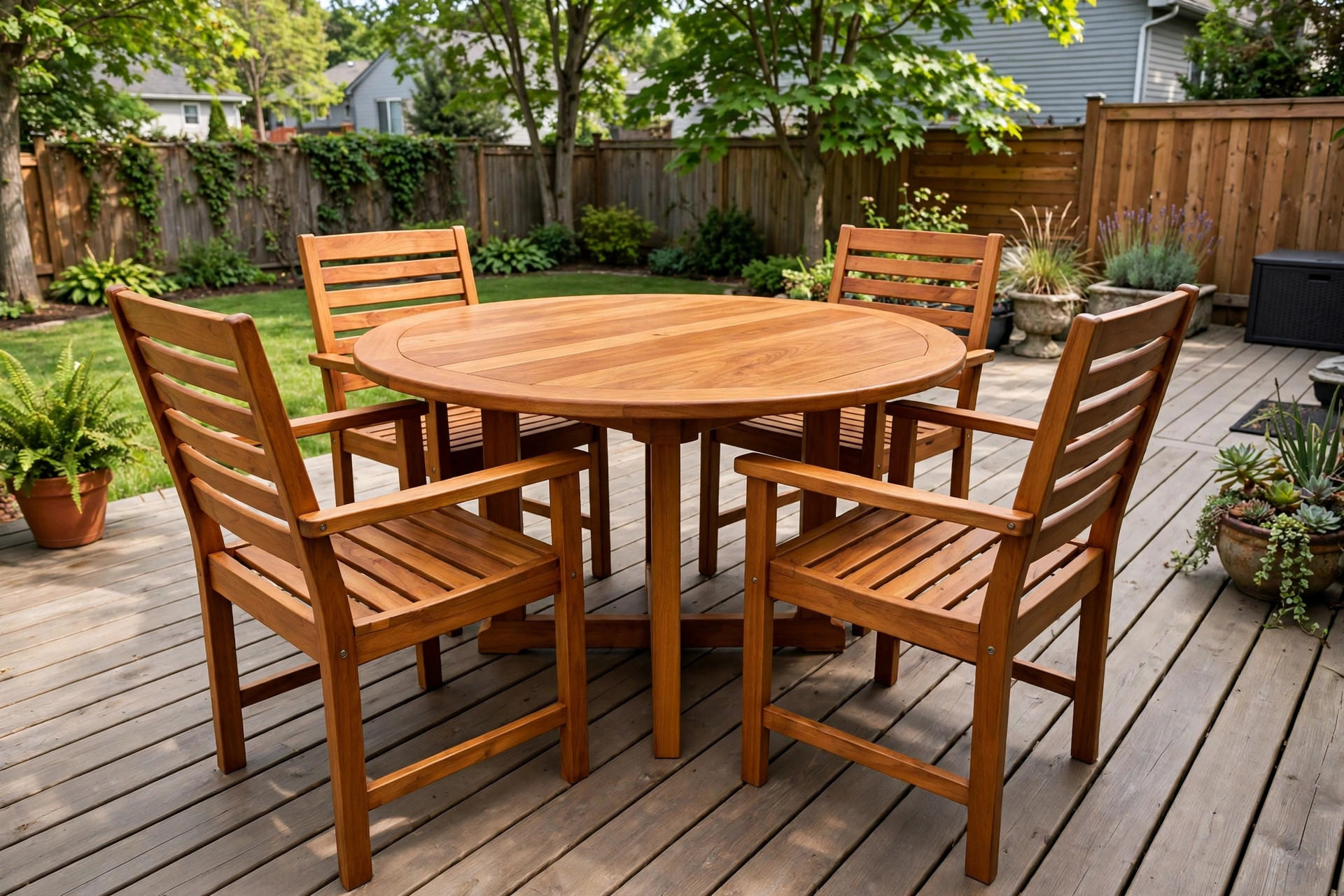

Teak patio furniture is built to last for decades. But weather does not leave it alone. Sun, rain, and snow turn rich brown teak into pale gray wood. When people ask about the refinishing outdoor teak furniture cost USA homeowners face, they want a simple answer. This guide gives one. You will learn what refinishing costs, what drives the price, how DIY compares to hiring a pro, and how to keep your teak looking good for years.
Why Refinishing Teak Matters
Teak is one of the toughest woods for outdoor use. Its natural oils fight rot and insects. Yet the surface still changes. Ultraviolet light breaks down the top layer of the wood. Rain washes away the oils. Over time the honey-brown color fades to a weathered gray.
Refinishing brings back the warm color. It also protects the wood. A fresh sand and a new coat of oil or sealer slow down the damage from the next season. The result is furniture that lasts longer and looks far better on the patio.
There is also money on the line. A quality teak set can cost thousands of dollars. Refinishing costs only a fraction of replacement. Many owners find that a refinish every one to three years keeps the set in fine shape for twenty years or more. A set that costs $3,000 new can serve for two decades with basic care. Without care it still lasts, but it looks tired. The small yearly cost of oil and sandpaper keeps the piece looking like new.
What to Look For When Choosing a Refinisher or a DIY Plan: Refinishing Outdoor Teak Furniture Cost Usa
Start with the condition of the wood. Light gray surface wear is easy to fix. Deep cracks, split joints, and loose screws are harder jobs. If the frame is loose or warped, plan on repairs before any sanding begins.
Decide on DIY or professional help. DIY works well for small sets that are still solid. A pro makes sense for large dining sets, pieces with carved details, or wood that has been gray for many years.
Ask what finish the piece will get. Teak oil, teak sealer, and natural-weathered finishes are the main options. Each one changes how the wood looks and how often you must repeat the job. A clear plan up front keeps costs from growing.
Check the timeline. DIY refinishing takes a full weekend or two. A pro shop may keep the piece for one to three weeks. If you need the furniture for a party, start early.
Types of Teak Refinish Options
Sand and Oil
This is the classic method. The wood is sanded smooth, then fed with teak oil. The oil soaks into the grain and brings back the rich brown color. It is the most common choice for American homeowners, and many helpful guides explain each step in plain terms (This Old House, Bob Vila, The Spruce).
Teak Sealer
A sealer forms a thin shield on the wood surface. It holds the natural brown color longer than oil does. Many sealers also block UV light. They cost more than oil, but the finish can last a full year or longer before it needs new care.
Teak Cleaner and Restorer
A two-step cleaner kit is the light option. The cleaner lifts gray fibers and dirt. The brightener returns the fresh wood tone. This method uses little sanding. It works best on pieces that are still in fair shape.
Professional Full Refinish
A pro shop does it all. They disassemble loose parts, repair joints, sand every surface, and apply an even coat of oil or sealer. Some shops also repair hardware and check the frame for weak spots. The finish looks even, and the work often carries a short warranty.
Leaving Teak to Weather Naturally
Some owners skip oil and sealer on purpose. Left alone, teak fades to a soft silver gray. This look suits modern and coastal patios. The wood stays strong because the natural oils inside still fight rot. The trade is looks only. A weathered piece needs cleaning but no finish coats. If you later want the brown back, a good sanding and oiling will do it. This path costs the least over time, but only choose it if you like the gray tone.
Cost and Price
So what is the refinishing outdoor teak furniture cost USA homeowners actually pay? The numbers depend on the size of the set, its condition, and whether you hire help.
For DIY work, expect to spend between $40 and $120 on supplies for a small set. A quart of teak oil costs $15 to $30 at Home Depot or Lowe’s. Sandpaper, brushes, and cleaning products add another $25 to $60. Wood care lines from Sherwin-Williams, Behr, and Benjamin Moore also sell sealers and prep products at similar prices.
Professional refinishing costs more. A single teak chair usually runs $75 to $150. A standard six-seat dining set often lands between $400 and $900. Large loungers and benches fall in the same range. If the piece needs repairs, add $50 to $200 more.
Location matters. Prices run higher in large cities on the East and West Coasts. The South and Midwest tend to cost less. Pick-up and delivery fees can add $50 to $150 when the shop moves the furniture for you.
Condition also moves the price. Wood that turned gray last season needs light work. Wood that has sat gray for five years needs deep sanding, and the labor rises with it. Mold and mildew removal can add to the bill as well.
For a plain answer to the teak furniture restoration cost question, use this rule of thumb. DIY runs $40 to $200 per project. Pro work runs $150 to $900 for most home sets. Larger or damaged pieces can pass $1,000.
When comparing paint and stain work around the house, many owners also check related cost guides. A house painting estimate free near me search helps set a budget for exterior projects, and a lead paint removal service cost usa guide covers older homes with lead concerns. Small trim jobs are simpler, as any shoe molding vs quarter round guide usa will show.
How to Refinish Teak Step by Step
Clean first. Wash the piece with mild soap and water. A soft brush lifts dirt from the grain. Rinse and let the wood dry fully, at least a day.
Sand with the grain. Start with 80-grit paper to remove gray fibers. Move to 120-grit for a smooth feel. Always sand in the direction of the wood grain. Sanding across the grain leaves marks that show through the oil.
Remove all dust. A damp cloth or tack cloth pulls the fine dust from the grain. Let the surface dry again. Dust left behind ruins an even finish.
Apply oil or sealer. Brush it on thin and even. Work it into the grain with the brush. Let it soak for 20 to 30 minutes, then wipe off the extra with a clean rag. Too much oil leaves a sticky film that draws dirt.
Let it cure. Most teak oils need 24 hours between coats. Two thin coats beat one thick coat every time. Read the label on the product you buy, since cure times differ.
Plan the weather. Do this work on dry days between 50 and 85 degrees. Keep the piece out of rain for at least two days after the final coat.
Care and Upkeep
Refinishing is not a one-time job. Teak oil fades in about six to twelve months in full sun. Sealers last closer to a year. Plan on a light re-coat each spring to keep the color rich.
Cover the furniture when it is not in use. Breathable covers keep rain off the wood. They also cut the UV light that fades the color. Cheap plastic tarps trap moisture and cause mildew, so skip them.
Clean the set twice a year. A gentle wash with soap and water removes pollen, dust, and sap. Do not use a high-pressure washer. The strong spray gouges the soft grain and roughens the surface.
Watch the hardware. Brass and stainless screws last, but plain steel bolts rust and stain the wood. Swap rusted fasteners for marine-grade stainless parts when you see them.
Check joints each spring. Loose joints wobble and crack the wood. Tighten screws and add wood glue to weak joints before the damage grows.
In snowy regions, store the set indoors or under a roof for winter. Repeated freeze and thaw opens small cracks in any wood, even teak. If indoor storage is not possible, stand chairs upside down so water runs off instead of pooling on the seats.
Safety
Wear a dust mask when sanding. Wood dust irritates the lungs, and fine dust builds up fast indoors. Work outside or in a ventilated garage.
Wear gloves and eye protection. Teak oil stains skin and can irritate eyes. Cleaners with bleach or acid need the same care. Keep children and pets away from wet finishes.
Handle rags with care. Oil-soaked rags can catch fire by themselves if bunched up. Spread used rags flat outside to dry, then throw them away. Never leave them piled in a trash can while damp.
Follow the product label. Outdoor finishes are safe when used as directed. Store them sealed, away from heat, and out of reach of kids. Design ideas and safety advice appear in many home guides (HGTV).
Frequently Asked Questions
How often should I refinish my outdoor teak furniture?
Most owners refinish once a year. Pieces in full sun may need it every six months. Pieces under a covered porch can go two years between coats. Watch the color. When the wood turns dull and dry, it is time.
Is teak oil or teak sealer better?
Teak oil gives the warm, natural look most people want. It is easy to apply and easy to refresh. A sealer holds the color longer and adds UV protection. Many owners start with oil and switch to sealer when they want less upkeep.
Can I skip sanding and just apply oil?
Not if the wood is gray. Oil on gray wood traps the dull color under the finish. A quick sand removes the dead surface fibers and lets the oil soak into fresh wood. Cleaner kits cut the sanding down but do not remove it fully on badly grayed pieces.
How much does it cost to hire someone to refinish teak furniture?
Expect $75 to $150 per chair and $400 to $900 for a full dining set. Repairs, pick-up, and delivery add more. Always get two or three written quotes before you agree to the work.
Can badly weathered teak be saved?
Yes, in most cases. Deep sanding brings back the color even after years of gray. Wood with deep cracks or rot in the joints may need repair or replacement parts. A pro shop can tell you if the piece is worth saving.
Does refinishing teak increase its value?
It protects value more than it adds it. A well-kept set sells faster on the used market and holds a higher price. Buyers pay for wood that looks cared for.
A Final Word
The refinishing outdoor teak furniture cost USA owners pay is small next to the price of new teak. A weekend of work or a modest shop bill returns the rich color and adds years of life to the set. Clean it, sand it, oil it, and cover it. Your teak will thank you every summer.
References
Behr. (n.d.). Paints, primers, and stains. https://www.behr.com Benjamin Moore. (n.d.). Paints and stains. https://www.benjaminmoore.com Bob Vila. (n.d.). Home improvement advice. https://www.bobvila.com HGTV. (n.d.). Home and garden ideas. https://www.hgtv.com Lowe’s. (n.d.). Home improvement products. https://www.lowes.com Sherwin-Williams. (n.d.). Paints and coatings. https://www.sherwin-williams.com The Home Depot. (n.d.). Home improvement products. https://www.homedepot.com The Spruce. (n.d.). Home and garden advice. https://www.thespruce.com This Old House. (n.d.). Home renovation guidance. https://www.thisoldhouse.com
Was this guide helpful?

About Lisa Anderson
The My Garden US editorial team writes practical, in-depth home and garden guides for American homeowners — tested advice, no fluff.
You May Also Like

Porch and Patio Paint: A Buying Guide for American Homes
June 7, 2026 0 views
Skim Coat Drywall Cost Per Square Foot: A Plain Guide for Homeowners
January 10, 2026 0 views
What Is the Beadboard Installation Cost Per Square Foot?
April 16, 2026 0 views