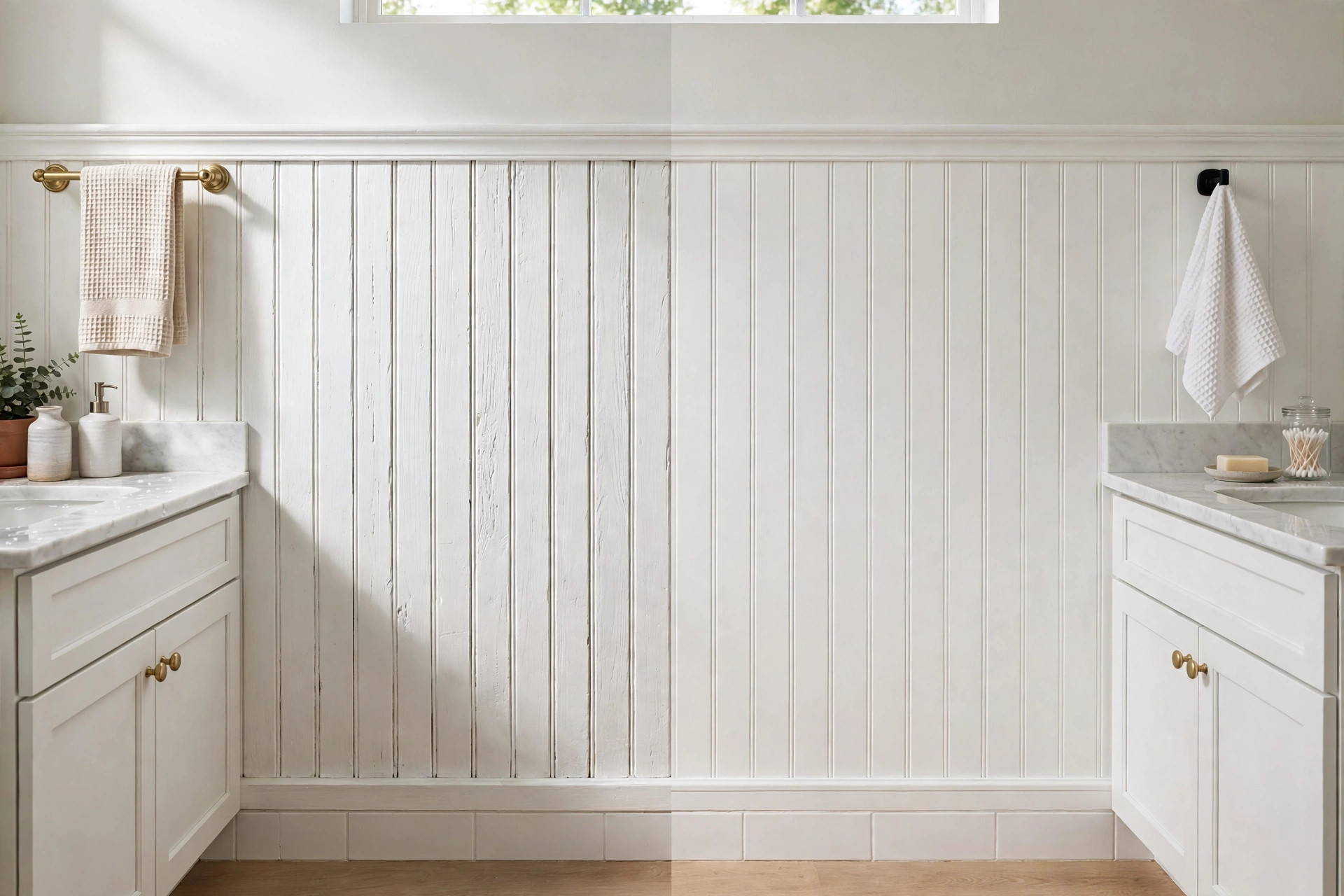

Beadboard has been part of American homes for more than a century. It once lined the walls of farmhouses, beach cottages, and front porches. Today it shows up in bathrooms, kitchens, and living rooms across the country. Homeowners love it for its simple, classic look. When you plan a beadboard project, you face one big choice: beadboard wallpaper vs real beadboard. This guide explains the real difference between the two so you can choose with care.
Why Beadboard Still Matters in American Homes
Beadboard is a type of wall covering with narrow vertical grooves. Each board has a small bead, or round ridge, between the flat panels. The result is a clean pattern of light and shadow. It brings order to a plain wall. It adds charm without shouting.
Real beadboard was first made from tongue-and-groove wood boards. Builders used it in homes where plaster was costly. It protected walls in high-traffic rooms. It also covered cracks and uneven surfaces. In the 1980s and 1990s, it came back as a design choice, not just a budget fix. Rooms with beadboard felt warm and finished.
Beadboard wallpaper is a newer idea. It is a flat sheet printed with a photo-like image of beadboard. From across a room, it can look much like the real thing. It costs far less and goes up in an afternoon. Renters use it because it comes in removable peel-and-stick forms. You can read more about modern wall options in our guide to peel and stick wallpaper for bedrooms reviews.
What Real Beadboard Is: Beadboard Wallpaper vs Real Beadboard Usa
Real beadboard means solid boards or panels made of wood or a wood product. True wood beadboard comes in narrow strips, often about two to three inches wide. Each strip fits into the next with a tongue-and-groove joint. MDF, or medium-density fiberboard, is a common modern choice. It is smooth, cheap, and takes paint well. PVC beadboard is used in damp rooms like bathrooms because it will not rot.
Real beadboard has true depth. The grooves are cut into the material. Light falls into each groove and makes a soft shadow. Your eye reads that depth at once. A hand run across the wall feels the ridges. No print can copy that feeling up close.
Installation takes work. Wood boards go up one at a time with nails or adhesive. Panels cover more area at once but still need cutting, nailing, and caulk at the seams. Corners and outlets need trim. A skilled homeowner can do a small room in a weekend. Larger rooms may need a carpenter. For similar trim work, see our notes on board and batten installation cost usa and wainscoting installation service near me reviews.
Paint makers like Sherwin-Williams and Behr sell paints made to coat wood beadboard with a smooth finish. Many homeowners paint real beadboard white, but soft gray, navy, and sage green are popular too.
What Beadboard Wallpaper Is
Beadboard wallpaper is printed paper or vinyl that imitates the beadboard pattern. High-end versions use real photos of painted wood. The shading in the print fakes the grooves. Some types add a slight raised texture with embossing. Most peel-and-stick forms are smooth.
The appeal is clear. A roll of beadboard wallpaper costs a fraction of real boards. One person can hang it with scissors, a smoothing tool, and a level. There is no sawing, no nailing, and no caulk. When you move out or change your mind, removable versions peel off the wall. It suits renters, dorm rooms, and quick makeovers.
But it is flat. Stand close and the illusion breaks. The grooves are ink, not shadow. A camera may love it. A guest who touches the wall will not be fooled. The Spruce notes that printed wallpapers work best in rooms where people view the wall from a few feet away.
How They Compare in Look
At a distance of six feet, good beadboard wallpaper can pass for real. Many modern prints are sharp and well shaded. In a hallway or on a wall behind a sofa, guests may never notice.
Up close, the difference is plain. Real beadboard casts true shadows that move with the light. The grooves catch dust and need care, but they look alive. Wallpaper shows the same flat image in morning light and lamp light. Corners and seams can betray it. Where two wallpaper strips meet, the pattern may not line up exactly. Painted real beadboard hides its seams in caulk and paint.
Paint changes the story. Real beadboard takes a fresh coat of paint and looks new again. Old wallpaper cannot be painted with the same ease. Heavy paint fills the printed pattern and makes it look blurry. If you want the freedom to repaint every few years, real beadboard wins.
Style experts at HGTV often suggest real wood trim for rooms meant to last, and wallpaper for quick style updates. Both can look good. They simply serve different goals.
How They Compare to Install
Beadboard wallpaper is the easy win. Clean the wall, cut the strips, and stick or paste them up. A small accent wall takes two to three hours. Tools cost little. A first-timer can get a good result with patience. Rental-friendly peel-and-stick rolls add no damage when removed with care.
Real beadboard asks more. You need a saw, a nail gun or hammer, adhesive, caulk, and trim pieces. Each board must be level. Outlets and corners slow the work. A bathroom may take a full weekend for a careful DIYer. Hiring a carpenter adds labor cost but gives crisp results. Guides at This Old House and Bob Vila walk through real beadboard installation step by step.
Moisture is a key point. In a full bathroom with a shower, real wood can swell unless sealed well. PVC beadboard handles steam and water with ease. Wallpaper in a wet room is risky. Paste can fail in heat and steam, and vinyl seams may lift. The Family Handyman advises against pasted wallpaper in high-moisture rooms.
Cost and Price
Cost is where the two part ways the most.
Beadboard wallpaper is cheap. A standard roll that covers about 55 square feet often sells for 15 to 40 dollars. Peel-and-stick rolls cost a bit more, often 25 to 60 dollars for the same coverage. A single accent wall may need two rolls. Total material cost for a small wall can stay under 100 dollars. Big-box retailers such as Lowe’s stock many styles.
Real beadboard costs more. MDF beadboard panels, which cover a four-by-eight-foot area, often sell for 25 to 45 dollars each. Solid wood tongue-and-groove boards cost more, sometimes 60 to 120 dollars per four-by-eight-foot equivalent. PVC beadboard is the priciest, often 50 to 90 dollars per panel. Trim, nails, adhesive, caulk, primer, and paint add another 50 to 150 dollars per room. If you hire help, labor may run 200 to 500 dollars per room or more.
Look at it per square foot. Wallpaper often lands under one dollar per square foot. Installed MDF beadboard often lands at three to six dollars per square foot. Installed wood beadboard can reach eight to twelve dollars per square foot. PVC sits near the top as well.
Think long term. Real beadboard lasts decades and can be repainted many times. Wallpaper lasts five to ten years in a dry room, less in a busy one. The cheap start may cost more over time if you replace it often.
Paint colors matter for cost too. A gallon of quality paint from Benjamin Moore covers one room of beadboard. Design inspiration sites like Houzz show how paint choice changes the whole mood of a beadboard wall.
Care and Upkeep
Real beadboard needs honest care. Dust settles in the grooves. A soft brush or a vacuum with a brush head cleans it well. Painted beadboard wipes down with a damp cloth. When paint chips or yellows, you sand lightly and repaint. A well-painted wall looks fresh for five to ten years. In damp rooms, check caulk lines each year and re-caulk where gaps open.
Beadboard wallpaper needs less work but offers fewer second chances. Dust it with a dry cloth. Most vinyl types wipe clean with a damp sponge. Do not soak it. If a corner lifts, press it back with a little wallpaper paste. If a seam tears, the fix is a new strip. Sunlight can fade prints over time, so walls near bright windows may age faster.
One rule covers both: keep water away from seams and edges. Water is the enemy of both paste and wood.
Safety
Safety is simple but worth a line. When you nail beadboard, wear eye protection and a dust mask. Sawdust from cutting MDF can irritate the lungs. Work in a room with air flow. Keep blades sharp and hands clear.
For wallpaper, the main risk is the ladder and the smoothing blade. Work from a stable step stool. Take breaks to avoid neck strain when hanging long strips on a ceiling.
In homes with small children, note that both options are safe once installed. Real beadboard has no sharp edges after trim is in place. Wallpaper adds nothing a child can grab if seams are flat. If you paint real beadboard, use low-VOC paint and let the room air out for a day.
FAQ
Does beadboard wallpaper look fake? From a distance, good prints look real. Up close, they are flat. Guests who touch the wall will know. In a dim hallway or behind furniture, most people will not notice. In a bright bathroom at arm’s length, they will.
Can I paint over beadboard wallpaper? You can, but the result is often poor. Paint fills the printed shading and makes the pattern look soft and blurry. If you plan to repaint often, choose real beadboard. If the wallpaper is old or loose, it is better to remove it and start fresh.
Which lasts longer, beadboard wallpaper or real beadboard? Real beadboard lasts far longer. Painted wood or PVC beadboard can last twenty years or more. Wallpaper lasts five to ten years in a dry room. Steam, sun, and busy hands shorten its life.
Is real beadboard worth the extra cost? It is worth it when the room matters to you. A master bath, a dining room, or a front porch gains value from real depth. For a child’s room you will change in three years, or a rental, wallpaper is the smarter buy.
Can I install real beadboard over existing drywall? Yes. Most homeowners install beadboard right over drywall. Use construction adhesive and finish nails into the wall studs where you can. Caulk the top and bottom edges for a clean line. Remove old wallpaper first so the adhesive holds.
Which is better for a bathroom? PVC beadboard is the best pick for a full bathroom. It will not swell or rot. Painted wood beadboard works in a half bath with a fan. Wallpaper is the weakest choice in a wet room because steam can loosen the paste.
A Short Final Word
The choice between beadboard wallpaper and real beadboard comes down to three things: your budget, your timeline, and how close people will stand. Wallpaper is cheap, fast, and fine from across the room. Real beadboard is costly, slow, and true for decades. Pick wallpaper when the room is temporary or the budget is tight. Pick real beadboard when the room should feel finished for years. Either way, the classic look of beadboard will serve your home well.
References
Behr. (n.d.). Paints, primers, and stains. https://www.behr.com Benjamin Moore. (n.d.). Paints and stains. https://www.benjaminmoore.com Bob Vila. (n.d.). Home improvement advice. https://www.bobvila.com Family Handyman. (n.d.). DIY home repair and maintenance. https://www.familyhandyman.com HGTV. (n.d.). Home and garden ideas. https://www.hgtv.com Houzz. (n.d.). Home design and remodeling. https://www.houzz.com Lowe’s. (n.d.). Home improvement products. https://www.lowes.com Sherwin-Williams. (n.d.). Paints and coatings. https://www.sherwin-williams.com The Spruce. (n.d.). Home and garden advice. https://www.thespruce.com This Old House. (n.d.). Home renovation guidance. https://www.thisoldhouse.com
Was this guide helpful?

About Jennifer Lee
The My Garden US editorial team writes practical, in-depth home and garden guides for American homeowners — tested advice, no fluff.
You May Also Like
Painting Hollow Core Doors: Tips for USA Homes
January 11, 2026 0 views
Gel Stain for Kitchen Cabinets: Reviews and a Buying Guide for American Homes
July 3, 2026 0 views
What Professional Drywall Repair Cost Near Me Means for Homeowners in 2026
January 5, 2026 0 views