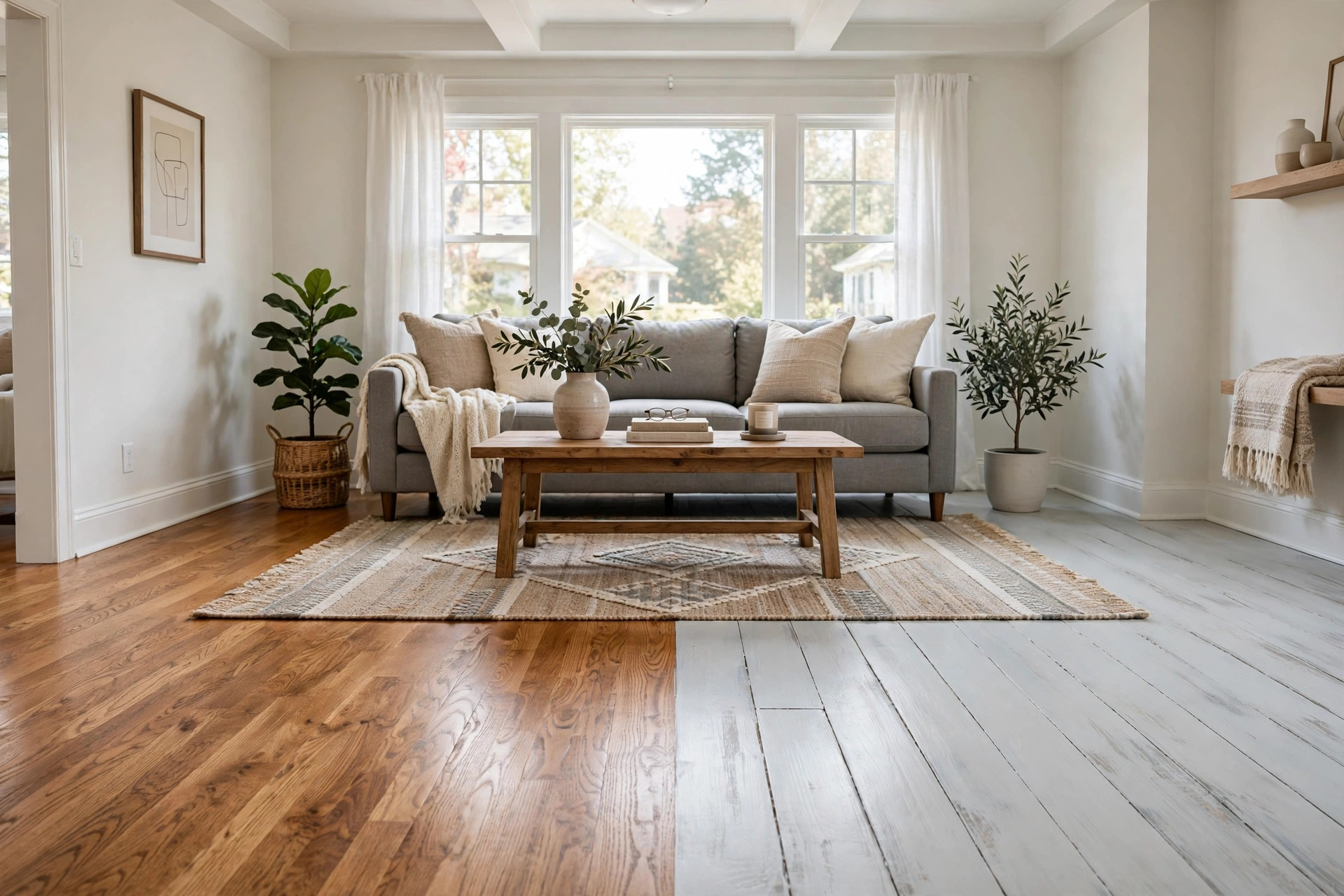

Old hardwood floors sit under the carpet in many American homes. They hide under layers of finish, paint, or years of wear. When you pull up the carpet, or when your floors just look tired, one question comes up fast: refinishing hardwood floors vs painting usa. Both paths can change a room. But they work in different ways, they cost different amounts, and they ask for different kinds of care after the job is done. This guide walks through both choices in plain terms. It covers cost, labor, how long the job takes, and how the finished floor will hold up in a busy home.
Why the Choice Matters
Your floor takes more punishment than any other surface in the house. Feet cross it all day. Chairs scrape it. Pets claw it. Sunlight fades it through the windows. A floor finish must be tough. It must also be easy to fix when it wears out.
Refinishing keeps the wood as wood. A sander strips the old finish. The bare wood is smoothed with finer paper. Then stain and a clear coat go on top. The grain stays on view. The floor looks warm and rich. It matches the age of an older home, and it pleases buyers if you sell one day.
Painting covers the wood. A good floor paint bonds to the surface and hides old stains, nail holes, and mismatched boards. It lets you pick any color you want. A painted floor can make a dark room feel bright. It can tie an old room to a new style without much cost.
The choice matters because each job changes what you can do later. A refinished floor can be screened and recoated many times over its life. A painted floor can be repainted in new colors, but going back to bare wood takes heavy work. Think about the long term before you start.
What to Look for When You Decide: Refinishing Hardwood Floors vs Painting Usa
Not every floor is a good fit for both choices. Look at the wood itself before you pick a path.
Check the Age and Wear of the Wood
Floors with deep scratches, dark stains from pet accidents, or boards that have been sanded many times may be thin. A floor with little wood left cannot take another full sanding. Painting may be kinder to a thin floor, since paint needs only light sanding to grip.
Wide plank floors and old heart pine carry their marks well. Small dents and shifts in color are part of their charm. If you like that honest, aged look, refinishing is the clear path.
Run your hand across the floor. If it feels smooth and solid with a sound tone under your feet, it is likely a good fit for sanding. If boards cup, crack, or sink when you step, fix the boards first. No finish can cover up a weak structure.
Test What Is Already on the Floor
Many old floors carry wax, oil, or shellac. Some were painted long ago. Put a few drops of water on the floor in a hidden spot. If the water beads, a surface finish is present. If it sinks in, the finish is worn through or the floor holds oil or wax. Paint will not stick well over wax. That layer must be stripped first.
A water test cannot tell you everything. In homes built before 1978, old paint may hold lead. A cheap test kit from a hardware store tells you in minutes. The floor repair guides at This Old House also explain how to spot old wax and lead paint before you begin.
Your Options: Refinishing, Painting, and the Middle Ground
There is no single right answer. Here is how the main paths compare.
Full Refinishing
Refinishing means sanding the floor down to bare wood. You work from coarse paper to fine paper. Dust fills the room, so doors get sealed and vents get covered. After sanding, you apply stain if you want color change. Then two or three coats of clear finish go on. Oil-based finishes dry slow but wear hard. Water-based finishes dry fast and stay clear over time.
The result keeps the natural grain. It is the classic look. It also keeps the value of the wood. Future owners can sand again or change the stain. The hard part is the labor. Sanding is loud, dusty, and slow. The room must sit empty for days while coats dry. Pets and children must stay out.
Painting the Floor
Painting means cleaning, light sanding, priming, and two coats of floor paint. Use a floor paint made for wood, not the same product you would pick as the best paint for kitchen cabinets. Floor paint needs a hard shell. The floor coatings from Behr and the floor paints from Sherwin-Williams are made for foot traffic and hold up far better than wall paint.
Painted floors dry fast. You can walk on them in a day or two. The color choice is wide open: soft white, deep gray, even bold blue. Scratches show more on dark colors. Light colors show dirt. A painted floor looks best with rugs in high-traffic paths.
A Middle Path: Screen and Recoat
If the wood looks good but the finish is dull, you may not need a full sand. A screen and recoat buffs the old finish and adds one new coat. It costs less. It takes one day. It will not fix deep scratches or stains, but it brings back shine. Some homeowners use a chalk paint look on small wood areas like stairs, though chalk paint needs a hard topcoat to survive on a floor.
Cost and Price Across the United States
Prices move with region, room size, and who does the work. These ranges hold true across most of the USA in 2026.
Full refinishing by a pro runs about $3 to $8 per square foot. A 500-square-foot living room and hall may cost $1,500 to $4,000. The sanding labor is the main cost. Doing it yourself cuts the bill to a few hundred dollars for sander rental and finish. Sander rental runs about $60 to $80 per day. You can rent a floor sander at The Home Depot or check floor tool rentals at Lowe’s.
Painting a wood floor costs less. A pro may charge $2 to $5 per square foot. A do-it-yourself job needs primer, paint, sandpaper, and brushes — often under $200 for one room. Screen and recoat sits between, often $1 to $2 per square foot by a pro.
Watch for add-ons. Stain removal, board repair, and moving furniture add to the bill. Homes with concrete floor paint projects in the basement should budget apart from the wood floor work, since concrete needs its own primer system. A hardwood floor refinishing cost per square foot quote should spell out the sanding passes, the stain, and the number of finish coats. Get it in writing.
Care and Upkeep After the Job
A refinished floor asks for gentle care. Sweep or vacuum with a soft head often. Clean with a damp mop and a floor cleaner made for wood. Skip steam mops and wet mopping. They push water into seams. Felt pads under chair legs stop scratches. Rugs near doors catch grit. The clear coat wears thin in busy paths after five to ten years. A screen and recoat at that point keeps the wood safe. The floor maintenance tips at The Spruce give a good seasonal checklist for wood floors.
A painted floor needs similar care, with one extra step. Watch the edges and high-traffic lanes for chips. A small brush and a can of the same paint fix chips fast. Do not wait. Bare spots let water in and make the paint peel. Repaint high-traffic rooms every three to five years. Hallways and entries wear fastest. Bedrooms can go much longer.
Both floors hate water. Wipe spills at once. Keep pet nails trimmed. Both floors love rugs in the spots where feet turn and stop.
Safety in a Floor Project
Sanding dust fills the air fast. Wear a real dust mask or respirator, not a paper nuisance mask. Seal the room with plastic sheeting. Turn off the heating and cooling so dust does not ride the ducts. Keep children and pets out until the dust is gone.
Finishes give off fumes. Oil-based products give off the most. Open windows and use fans to pull air out. Some people leave the house during the day while coats dry. Water-based finishes smell less but still need air flow. Read the can and follow the dry times. Walking on a soft coat leaves marks you cannot fix.
Paint dust is a real risk in old homes. If your house was built before 1978, test for lead paint before you sand or scrape. If the test is positive, call a certified lead-safe contractor. Do not sand lead paint yourself. The product safety ratings at Consumer Reports can help you compare low-VOC finishes and safer paints.
FAQ
Will painting ruin my hardwood floors?
Paint does not ruin the wood itself. It sits on top. But removing paint later takes deep sanding, and some paint soaks into soft grain. If you think you may want bare wood again one day, refinishing is the safer choice. If you are sure about the color, paint is fine.
How long does refinishing take compared to painting?
A pro crew refinishes an average room in three to five days. That includes sanding, staining, and drying time between coats. Painting takes two to three days: one day to prep and prime, one day to paint, and a day to cure. A do-it-yourself job takes longer in both cases.
Which lasts longer: a refinished floor or a painted floor?
A well-done refinish lasts longer. The clear coat is thick and made for traffic. A screen and recoat every five to ten years keeps it going for decades. Paint holds up well but chips in busy lanes. Expect to touch up paint every few years and repaint high-traffic rooms more often.
Can I refinish only part of a floor?
You can, but the fix often shows. New stain never matches old stain exactly. Feathering the repair into the old finish takes skill. Small rooms can be done alone with good results. For open floor plans, do the whole connected area at once for an even look.
Is water-based or oil-based finish better?
Water-based finish dries in hours, stays clear, and smells less. Oil-based finish dries in a day, adds a warm amber tone, and wears very hard. Many pros now use water-based products for homes where people need to move back in fast. Both last when applied right.
A Final Word
Refinishing hardwood floors vs painting comes down to what you want from the wood. If you love the grain and want a floor that lasts for decades, sand it and finish it. If you want a fast change, a bold color, or a cheap fix for beat-up boards, paint it well and touch it up as needed. Either way, good prep decides the result. Clean the floor, test the old finish, and use products made for floors. Your feet will tell you the difference for years, and guests will notice the change the moment they walk in. The floor paint lines from Benjamin Moore are worth a look if you choose paint, and the cost guides from the big home centers help you budget either path.
References
Behr. (n.d.). Paints, primers, and stains. https://www.behr.com Benjamin Moore. (n.d.). Paints and stains. https://www.benjaminmoore.com Consumer Reports. (n.d.). Product reviews and ratings. https://www.consumerreports.org Lowe’s. (n.d.). Home improvement products. https://www.lowes.com Sherwin-Williams. (n.d.). Paints and coatings. https://www.sherwin-williams.com The Home Depot. (n.d.). Home improvement products. https://www.homedepot.com The Spruce. (n.d.). Home and garden advice. https://www.thespruce.com This Old House. (n.d.). Home renovation guidance. https://www.thisoldhouse.com
Was this guide helpful?

About David Wilson
The My Garden US editorial team writes practical, in-depth home and garden guides for American homeowners — tested advice, no fluff.
You May Also Like

Best Paint for Closet Doors USA Reviews: What Homeowners Say Works
September 14, 2026 0 views
Painting Stucco House Cost in Arizona: A Full 2026 Guide
February 17, 2026 0 views
Driveway Sealer Buying Guide for USA Homes
May 18, 2026 0 views