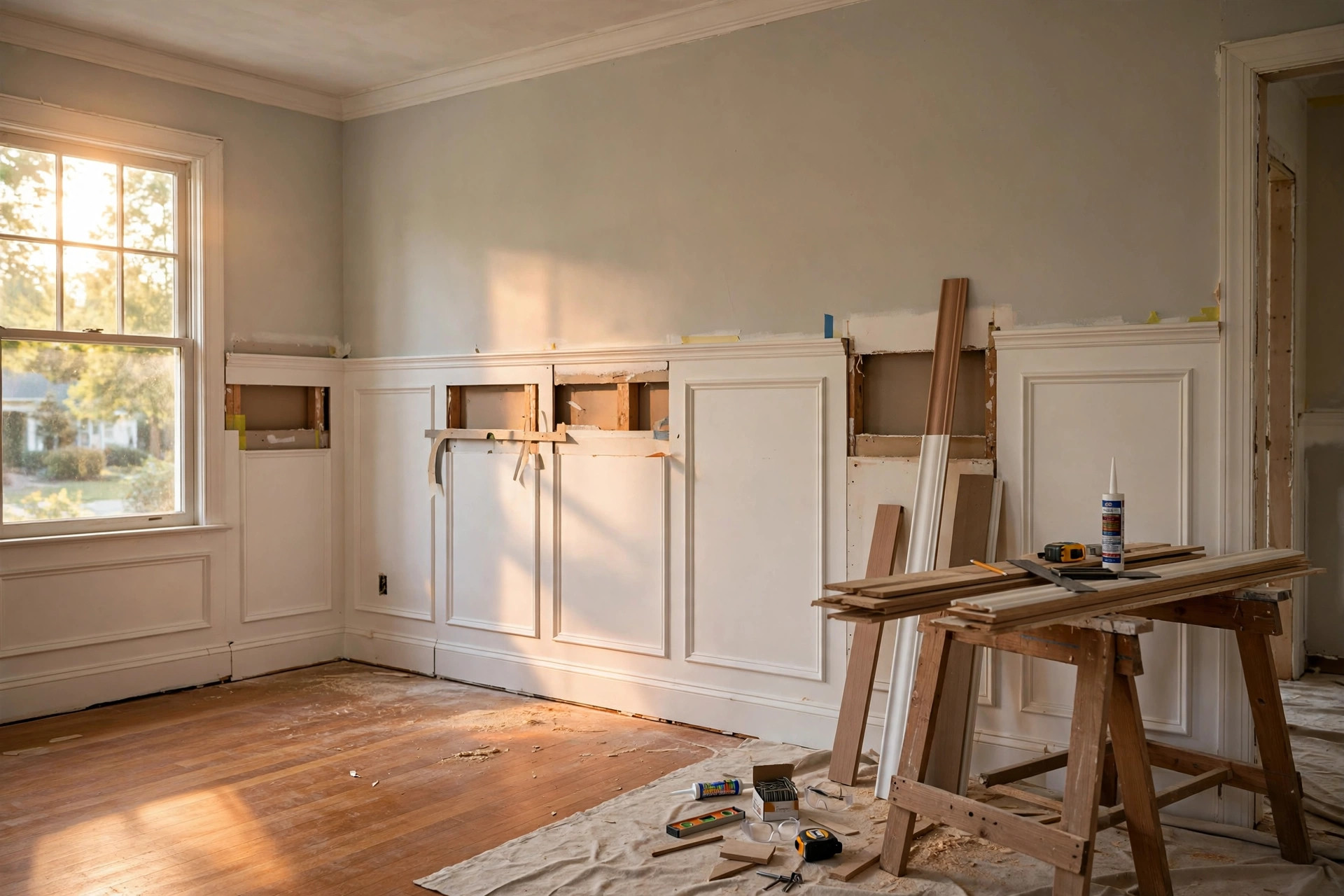

A search for wainscoting installation service near me reviews is the first step many homeowners take before they add wood paneling to their walls. Wainscoting gives a plain room a finished, classic look. It raises the value of a home. It hides dents and marks on the lower part of a wall. But the work is not simple. Clean joints, level lines, and tight corners take real skill. A bad job looks worse than no paneling at all. That is why reading reviews of local services matters so much. This guide explains what wainscoting is, what to look for in reviews, what types cost what, and how to keep the work in good shape for years.
Why Wainscoting Needs a Professional
Wainscoting is the wood or wood-like paneling that covers the lower part of an interior wall. It usually runs from the floor to about three feet high. A chair rail caps the top edge. In older homes it was made of solid wood. Today most installers use a mix of wood, MDF, and primed boards. The look stays the same.
The work looks simple from across the room. Up close it is not. Every cut must be square. Every seam must sit tight against the wall. Corners must meet at clean miters. The chair rail must run level across the whole wall, even when the floor is not level. Old houses rarely have true, straight walls. A good carpenter knows how to scribe boards to fit walls that bow and floors that slope. A poor one leaves gaps you will see every day.
Reading reviews helps you find that good carpenter. This Old House notes that trim and millwork separate a fine room from a cheap-looking one. Review sites let you see photos of real finished work, not just the best pictures from a company brochure. Look for comments about punctuality, dust control, and care with existing paint and floors. Those small details tell you how a crew treats a home.
How to Read Reviews of Local Services: Wainscoting Installation Service near Me Reviews
Not every five-star rating tells the full story. Learn to read reviews like a careful shopper.
Look for detail
Short reviews such as “Great job!” say little. The useful reviews name the room, the material, and the timeline. A review that says the installer “replaced baseboard in two bedrooms with poplar beadboard in three days” carries weight. It shows real work was done.
Check for recent work
A company can change over time. Give the most weight to reviews from the last twelve months. Crews change. Owners retire. A review from six years ago may describe a crew that no longer works there.
Read the bad reviews too
One-star reviews are often the most honest. Look for patterns. If three reviewers in a row mention late arrival or paint drips on carpet, believe them. If the single bad review is angry about a price the customer agreed to in writing, that says more about the customer than the company.
Count the photos
Review platforms let customers post photos. These are worth more than words. Zoom in on the corners and joints in the pictures. Look for gaps at the chair rail. Look for nail holes that were filled and sanded smooth. A company whose customers post close-up photos of clean work is one to call.
Ask for references
Reviews are a start, not the end. When you call a service, ask for two recent local references. A serious installer will give them. Drive past a finished house if the owner agrees. Seeing the work in person beats any online photo.
For wider painting and finish work, many homeowners also compare interior house painters near me reviews before they book wall paneling, since paint quality affects the final look of any trim.
Types of Wainscoting
Not all wainscoting is the same. The main styles differ in cost, labor, and look.
Beadboard
Beadboard is made of narrow boards with a small ridge, or bead, between each one. It fits country and cottage styles. It also works in bathrooms and mudrooms. Sheets of beadboard come ready to cut, which keeps labor cost lower. Solid wood beadboard costs more than MDF versions.
Raised panel
Raised-panel wainscoting has framed panels with a raised center. It is the most formal style. It suits dining rooms and studies. The panels are built from rails and stiles, then set into frames. This style takes the most labor. It also costs the most.
Flat panel
Flat-panel wainscoting uses flat panels inside simple frames. It reads as modern or Shaker style. It is a good middle choice. The look is clean without heavy detail. Labor is less than raised panel but more than beadboard.
Board and batten
Board and batten uses wide boards with thin strips, or battens, covering the seams. It has a farmhouse feel. Many homeowners pair it with shiplap walls in the same home. If you are weighing both options, check shiplap wall installation cost per square foot and board and batten installation cost usa to compare budgets before you commit.
Picture-frame molding
Some homes skip full panels and add only molding frames directly on drywall. Painted the same color as the wall, this gives a quiet panel look at the lowest cost. It is popular in bedrooms and hallways.
Material choice matters too. Solid hardwood resists dents best and takes stain well. MDF is smooth, stable, and paints perfectly, but it swells if it gets wet. PVC wainscoting handles moisture and suits bathrooms and laundry rooms. Ask your installer which material fits each room.
Cost and Price
Costs vary by region, material, and style. The table below shows typical 2026 United States ranges for a professional install, per linear foot of wall.
| Style | Typical range per linear foot | |—|—| | Beadboard (MDF) | $8 to $20 | | Flat panel | $15 to $35 | | Board and batten | $12 to $30 | | Raised panel | $30 to $60 | | Picture-frame molding | $5 to $12 |
A single dining room with 40 linear feet of raised-panel wainscoting can run $1,200 to $2,400 for labor and material. The same room in beadboard may cost $320 to $800. Painted finishes cost less than stained hardwood. Staining takes extra coats and finer sanding.
Get at least three written estimates. Each should list the material, the style, the linear footage, the paint or stain included, and the cleanup terms. A bid that is far below the others is a warning sign. It may mean thin materials, rushed work, or extra charges later.
Ask whether the price includes painting. Some carpenters install only and leave painting to you. Others prime and paint as part of the job. Paint makes up a large share of the final look. Behr and Sherwin-Williams both publish guides on the best paints for trim and paneling. A good installer will specify the paint brand and the number of coats in the contract. Before you talk to any contractor, check material prices at large retailers like The Home Depot and Lowe’s. Knowing the shelf cost of boards and molding helps you judge whether a bid is fair.
Also ask about removal of old baseboards. Some bids include it. Others add a fee. Old baseboard must come off before new wainscoting goes on, so make sure the number is in writing.
What to Ask Before You Hire
Keep this list handy when you call services from the reviews.
1. Are you licensed and insured in my state? 2. How many wainscoting jobs have you done in the last year? 3. Can I see photos of your two most recent jobs? 4. What material do you recommend for my room, and why? 5. Does your price include painting, caulking, and cleanup? 6. How long will the job take from start to finish? 7. How do you protect my floors and furniture? 8. What is your warranty on labor?
A clear, calm answer to each question is a good sign. Vague answers are not. The best installers welcome these questions. They know careful customers make the best jobs.
Payment terms matter too. Never pay the full price up front. A common pattern is one-third to start, one-third at the halfway point, and the rest when the work is done and you are satisfied. Put every change to the plan in writing. A short change order signed by both sides prevents fights later.
Care and Upkeep
Wainscoting is easy to keep if you treat it well from the start.
Dust the panels and chair rail every few weeks with a soft cloth or a brush attachment on a vacuum. Dust builds up on the top edge of the chair rail. A quick wipe keeps it clean.
Wipe marks with a damp cloth and mild soap. Do not soak the wood. Water can swell MDF and lift paint. Dry the area right away. In kitchens and bathrooms, where steam is common, this matters even more. Housekeeping guides at The Spruce give the same advice: gentle cleaning, done often, keeps painted trim looking new far longer than harsh scrubbing once a year.
Touch up scuffs once a year. Keep a small can of the exact paint the installer used. Note the brand, color name, and finish. Store it in a cool, dry place. A small brush and five minutes will erase most marks before they grow.
Check caulk lines each spring. Caulk shrinks over time. A fresh thin bead along the chair rail and baseboard keeps the seams tight and keeps out drafts. Benjamin Moore and other paint makers remind homeowners that painted trim needs fresh caulk to hold its finish.
Do not drag furniture against the panels. Use felt pads on chair legs in dining rooms. Chair backs hit wainscoting hard, which is why the chair rail got its name. Felt pads cost little and save the paint.
Safety
Wainscoting work brings tools and dust into your home. A few safety steps keep the job smooth.
Ask the installer to seal the work area with plastic sheeting. Cutting MDF and primed boards creates fine dust. The dust is not good to breathe. A good crew runs a shop vacuum at the saw and wears masks. They should also warn you to keep the room closed off while they work.
Check that the installer keeps blades sharp and tools grounded. Nails and screws must sit below the surface and be filled. Protruding nail heads can scratch skin and snag clothes.
If your home was built before 1978, test for lead paint before any trim is disturbed. Old baseboards and window trim often carry lead paint. Bob Vila and other home-improvement guides stress this test as a must-do step in older homes. A certified test is cheap and fast. If lead is found, hire a lead-safe certified firm. Your state health department can point you to one.
Keep children and pets out of the work area. Saws are loud and cords are a trip hazard. Plan for the crew to work while the family is out or in another part of the house.
FAQ
How long does wainscoting installation take?
A single room takes one to three days for most styles. Beadboard and picture-frame molding go fastest. Raised-panel work can take a full week for a large room. Drying time for paint adds a day or two. Ask your installer for a written schedule before work starts.
Can wainscoting go in a bathroom?
Yes, with the right material. Use PVC or solid wood sealed on all sides. Avoid MDF in wet areas. Make sure the paint is rated for moisture. Good ventilation, such as an exhaust fan, keeps the panels dry between showers.
Is wainscoting out of style?
No. Styles change, but paneled lower walls have been in American homes for over a century. Today’s popular looks are flat panel and board and batten in soft white or warm gray. The HGTV design pages show wainscoting in many new builds and remodels. Pick a simple style and a classic color, and the room will look good for decades.
DIY or hire a pro?
A skilled homeowner can install beadboard on straight walls. But rooms with many corners, windows, and outlets are hard. Mistakes in cutting waste expensive material. Most homeowners find that a pro finishes faster and the joints look cleaner. Read the reviews, compare bids, and let the quality of local work guide your choice.
How do I clean painted wainscoting without damage?
Use a soft damp cloth with a drop of mild dish soap. Wipe in the direction of the wood grain or the panel lines. Rinse with a clean damp cloth. Dry at once. Skip harsh cleaners and scrub pads. They dull the finish.
Will wainscoting raise my home’s value?
It often helps, mainly in dining rooms, entryways, and studies. Buyers see it as a sign of care and craft. Real estate agents report that well-done millwork photographs well in listings. Poorly done work can hurt value, which is one more reason to hire based on strong reviews.
A Short Final Word
A quick search for wainscoting installation service near me reviews opens the door. The real work is reading those reviews with care, comparing three written bids, and asking direct questions before anyone cuts a board. Wainscoting is a craft job. Done well, it will outlast trends and give your rooms a quiet, finished beauty for decades. Done poorly, it becomes a daily annoyance. Take the time to choose well. Your walls will thank you.
References
Behr. (n.d.). Paints, primers, and stains. https://www.behr.com Benjamin Moore. (n.d.). Paints and stains. https://www.benjaminmoore.com Bob Vila. (n.d.). Home improvement advice. https://www.bobvila.com HGTV. (n.d.). Home and garden ideas. https://www.hgtv.com Lowe’s. (n.d.). Home improvement products. https://www.lowes.com Sherwin-Williams. (n.d.). Paints and coatings. https://www.sherwin-williams.com The Home Depot. (n.d.). Home improvement products. https://www.homedepot.com The Spruce. (n.d.). Home and garden advice. https://www.thespruce.com This Old House. (n.d.). Home renovation guidance. https://www.thisoldhouse.com
Was this guide helpful?

About Robert Taylor
The My Garden US editorial team writes practical, in-depth home and garden guides for American homeowners — tested advice, no fluff.
You May Also Like
Painting Over Wallpaper Pros and Cons USA: Should You Paint or Strip?
May 21, 2026 0 views
What Professional Drywall Repair Cost Near Me Means for Homeowners in 2026
January 5, 2026 0 views
Low VOC Interior Paint Brands USA: Reviews of Healthier Paints for Your Home
September 1, 2026 0 views