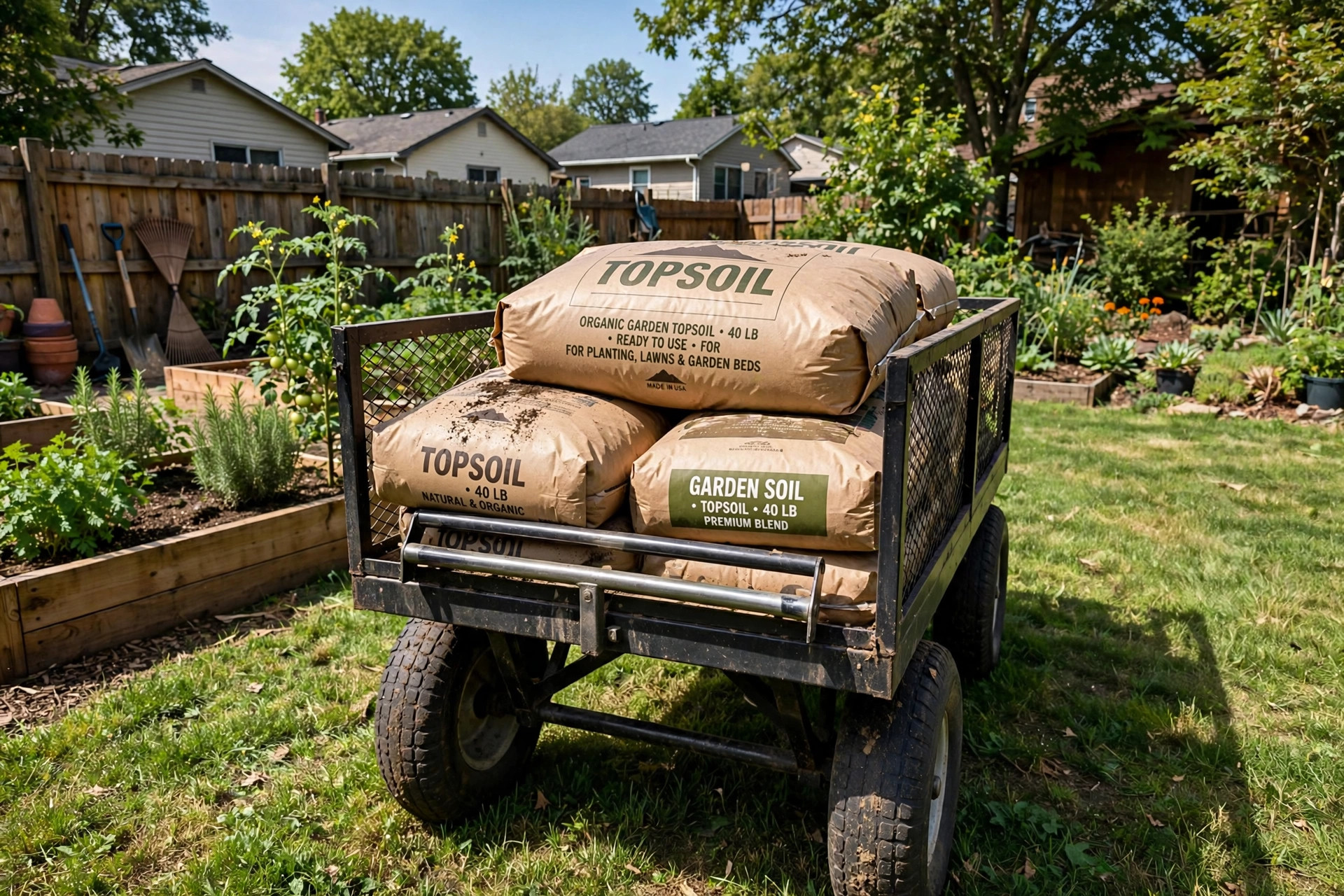

A bag of topsoil weighs about forty pounds. A raised bed needs twenty or thirty bags. Few jobs in the garden prove this more plainly: soil is heavy, and hauling it by hand is slow, tiring work. Finding the best garden wagon for hauling soil is therefore a practical matter, not a luxury. A good wagon carries several bags at once, rolls over grass and gravel without tipping, and saves your back for the planting that comes after. This guide walks through why a wagon matters, what features to judge, the main types on the market, what they cost, and how to keep one in working order for years.
Why a Wagon Matters More Than You Think
Gardeners often start with a wheelbarrow. A wheelbarrow is fine for small jobs, but it has real limits. It holds one bag of soil at a time. It has a single wheel, which makes it tip sideways on uneven ground. And it asks you to lift and balance the load with every step, which tires the arms and the lower back in short order.
A wagon changes the work. It has four wheels, so the load sits stable on its own. You pull rather than push and lift, which suits most bodies better over a long afternoon. A good wagon can carry four to six bags of soil in one trip, cutting a twenty-trip chore down to four or five. If you are filling raised garden beds at the far end of the yard, that difference is felt in the legs as much as in the clock.
Time is another point. Spreading soil is usually one step in a larger project: bed building, sod removal, or re-grading a low spot. When hauling eats the whole afternoon, the planting waits until tomorrow. A wagon keeps the project moving. For anyone who buys soil in bulk — by the yard from a landscape supplier rather than by the bag — a wagon becomes close to essential, because bulk deliveries land in a pile at the driveway and the beds are elsewhere.
What to Look for When You Choose: Best Garden Wagon for Hauling Soil
Not every wagon suits soil work. Some models are built for light yard waste or for carrying children at a parade. The best garden wagon for hauling soil must meet a few hard tests.
Load capacity. This is the first number to check. Soil is dense. A cubic foot of damp topsoil can weigh close to one hundred pounds. A wagon rated for 500 pounds sounds strong, but two full bags of wet soil plus the wagon’s own weight can approach half of that. Choose a wagon rated for at least 600 to 800 pounds for serious soil hauling. Ratings from the maker are usually based on the frame; pay attention to them and do not exceed them.
Bed size and walls. Soil must stay in the wagon. Low-sided carts spill their loads on slopes and over bumps. Look for a bed at least six inches deep, with solid sides or a mesh fine enough that soil does not fall through. Some wagons offer removable side panels, which are handy: keep the panels up for soil, take them down for hauling lumber or pots.
Wheels and tires. This is where cheap wagons fail. Small, hard plastic wheels dig into soft lawn and jam on gravel. Pneumatic tires — air-filled like a bicycle tire — roll far better over grass, mulch, and uneven ground. Four ten-inch pneumatic tires are a sound choice for soil work. Wide tires spread the weight and keep the wagon from sinking after rain.
Handle and steering. A long handle with a good grip lets you pull with your legs instead of your back. A padded grip is worth the small extra cost. Some wagons steer from the front axle like a child’s wagon; others have a fixed axle and simply follow where you pull them. Front steering turns tighter around garden beds.
Dumping. Some wagons tilt and dump their loads with a lever. This is a real comfort when you are spreading soil along a bed — you lift a handle instead of shoveling the whole load out. A dumping wagon costs more, but for repeated soil work it earns its price.
Before you buy, compare ratings and reviews from more than one place. Independent testing groups and garden tool reviews can show how models hold up under real loads, and independent product testing sources can help you weigh durability claims against price.
Types of Garden Wagons
Four main designs cover most of the market. Each has strengths for soil work.
Steel mesh utility wagons. These are the classic red or green wagons with a steel mesh bed and removable sides. They are strong, cheap, and widely sold. The mesh can let fine soil sift through, so many gardeners line the bed with a tarp or a sheet of landscape fabric. With that small fix, a mesh wagon is a fine budget choice for hauling soil.
Poly dump carts. These have a solid plastic bed that tilts to dump. The solid bed keeps every grain of soil inside. They roll on large pneumatic tires and often carry 800 to 1,200 pounds. For pure soil hauling, a poly dump cart is hard to beat. The trade-off is price and size: they cost more and need storage room.
Wood-sided wagons. Built like old farm wagons, with wooden slat sides on a steel frame. They look handsome and hold soil well if the slats are close together. They are heavier than steel mesh models and need the wood sealed against rot. Gardeners who value appearance in a visible yard often choose these.
Folding wagons. Made of fabric stretched over a folding frame, these fold flat for storage in a car trunk or shed corner. They are excellent for light loads and for gardeners short on space. They are not the best garden wagon for hauling soil in large amounts, because the fabric bed sags and the small wheels struggle on soft ground. For a few bags now and then, they do the job.
A related tool worth knowing is the garden cart for heavy loads, which is the two-wheeled cousin of the wagon. Carts are cheaper and store in less space, but they ask more of the user on hills and long hauls.
Cost and Price
Prices run from about forty dollars to well over three hundred. The range follows the features closely.
A basic steel mesh wagon with hard wheels sells for forty to eighty dollars. It will haul soil, but expect to replace the wheels or add a liner, and do not expect it to last a decade of hard use.
The middle of the market, roughly ninety to one hundred and eighty dollars, holds the best value for most gardeners. Here you find mesh wagons with pneumatic tires, solid-bed carts, and some smaller dump carts. A wagon in this range, used with care, can serve ten years or more.
Premium dump carts and heavy-duty steel wagons run from two hundred to three hundred and fifty dollars. These carry the heaviest loads, dump with a lever, and roll on the largest tires. If you haul soil every spring and fall, or if you move gravel and stone as well as soil, the premium tier pays for itself in saved labor.
Watch for seasonal sales at large garden retailers and your local home improvement store, where wagons often drop in price in early spring and late fall. A large garden retailer such as Home Depot also carries replacement tires and parts, which extends the life of a mid-range wagon. Buying a model with available spare parts is a quiet form of economy: a ten-dollar tire beats a new wagon.
Care and Upkeep
A garden wagon is a simple machine, and simple care keeps it rolling.
Wash the bed after hauling soil. Soil holds moisture against steel, and moisture breeds rust. A quick rinse with the hose and a few minutes in the sun does the work. If rust spots appear, sand them lightly and touch up with outdoor paint. Guidance on repair and upkeep guides for garden tools covers this kind of small maintenance well.
Check the tires before the spring season. Pneumatic tires lose air over winter. Inflate them to the pressure printed on the sidewall. Inspect for cracks and dry rot; a tire that fails under a full load of soil is no small annoyance. Keep a spare tube or a tire sealant on hand.
Oil the moving parts once a year. The axle bearings, the steering joint, and the dump latch all benefit from a few drops of oil or a spray of lubricant. Wipe away grit first so you do not grind dirt into the joints.
Store the wagon under cover. A shed or garage is ideal. If it must live outside, tip it on its side or cover it with a tarp so water does not pool in the bed. Folding wagons should be stored folded and dry to protect the fabric.
Handle and grip deserve a look too. A cracked plastic grip can be replaced cheaply, and a worn wooden handle can be sanded and oiled. Makers such as the well-known tool maker and the garden tool maker sell replacement handles and parts that fit many common wagons.
Safety
Soil is heavy, and heavy loads demand respect.
Load the wagon evenly. Pile soil in the center and keep the load low. A top-heavy wagon tips on slopes and when turning. Do not stack bags higher than the side walls.
Watch your footing. Pull the wagon; do not push it downhill. On a slope, keep the wagon below you so a runaway rolls away from your legs, not into them. Wet grass is slippery — wait for the ground to dry after heavy rain before hauling full loads.
Mind the total weight. Even a wagon rated for 800 pounds is hard to pull when fully loaded on soft ground. If you strain to move it, unload some soil and make two trips. Two easy trips beat one trip and a pulled muscle.
Keep children clear of the wagon when it is loaded. A tipping load of soil can injure a small child. Park the wagon on level ground, and set the brake or chock the wheels if your model has that feature.
Wear gloves. Soil bags have rough edges, and wagon beds can have sharp spots where paint has chipped. Gloves also protect against blisters on long hauling days. General home and garden advice sources often remind readers that the simplest safety gear is the gear you actually wear.
Frequently Asked Questions
How much soil can a garden wagon hold? It depends on the bed size and the weight rating. A typical utility wagon with a four-cubic-foot bed can carry about four to six bags of topsoil, or roughly 200 to 300 pounds of loose soil. Check the maker’s weight rating and stay under it. Damp soil weighs much more than dry soil, so load less after rain.
Is a wagon or a wheelbarrow better for soil? For most gardeners, a wagon is better for hauling soil across distance, and a wheelbarrow is better for precise dumping in tight spots. The wagon carries more per trip and stays stable on its four wheels. The wheelbarrow turns in a smaller space and dumps exactly where you tip it. Many serious gardeners own both.
Can I haul soil in a folding fabric wagon? You can, for small amounts. A folding wagon handles two or three bags of soil on firm paths. On soft lawn the small wheels sink, and the fabric bed sags under heavy loads. For regular soil work, choose a steel or poly wagon with pneumatic tires instead.
What size tires are best for hauling soil on grass? Ten-inch pneumatic tires are the sweet spot for most yards. They roll over grass and mulch without sinking, and they absorb bumps that would spill a load from hard wheels. Larger thirteen-inch tires are even better on rough ground but add cost and weight.
How do I keep soil from falling through a mesh wagon? Line the bed with a tarp, a sheet of heavy plastic, or landscape fabric before loading. Fold the liner over the top of the load for the trip. This simple trick makes an inexpensive mesh wagon work nearly as well as a solid-bed cart for soil.
Where can I buy soil in bulk to fill the wagon? Landscape supply yards sell topsoil, compost, and mulch by the cubic yard and will load it into a truck or trailer. For smaller projects, bagged soil from a garden center works well. If you are building beds, read up on the best soil for raised vegetable beds before you order, and check a seed and garden supplier for soil mixes suited to what you plan to grow.
A Short Final Word
The best garden wagon for hauling soil is the one that matches your ground, your loads, and your storage. For most gardeners, that means a steel mesh or solid-bed wagon with pneumatic tires, rated for at least 600 pounds, bought in the middle of the price range. Wash it, oil it, store it dry, and load it with sense, and it will carry soil for your beds for many seasons. The soil still has to be shoveled and spread — no wagon does that part — but the hauling, the heaviest and dullest part of the job, becomes a task you can finish before lunch.
References
Bob Vila. (n.d.). Home improvement advice. https://www.bobvila.com Burpee. (n.d.). Seeds, plants, and gardening supplies. https://www.burpee.com Consumer Reports. (n.d.). Product reviews and ratings. https://www.consumerreports.org Corona Tools. (n.d.). Garden and landscape tools. https://www.corona-tools.com Family Handyman. (n.d.). DIY home repair and maintenance. https://www.familyhandyman.com Fiskars. (n.d.). Garden and cutting tools. https://www.fiskars.com Lowe’s. (n.d.). Home improvement products. https://www.lowes.com The Home Depot. (n.d.). Home improvement products. https://www.homedepot.com The Spruce. (n.d.). Home and garden advice. https://www.thespruce.com
Was this guide helpful?

About Emily Rodriguez
The My Garden US editorial team writes practical, in-depth home and garden guides for American homeowners — tested advice, no fluff.
You May Also Like
Best Pruning Saw for Thick Branches: A Plain Guide
April 2, 2026 0 views
Best Garden Gloves for Cactus Handling: A Plain Guide
July 27, 2026 0 views
Best Garden Fork for Turning Compost: How to Pick the Right One
January 14, 2026 0 views