A lawn can look tired even when the weather is kind and the rain is steady. The blades turn a dull green. Water sits on the surface instead of sinking in. New seed refuses to take hold. Many owners blame the soil or the sun. Often the true cause lies just under the surface: a thick mat of dead stems and roots called thatch. Choosing the best garden rake for thatch removal is the first step to fixing the problem. This guide explains what thatch is, what a rake can do about it, and how to choose the right tool for your yard.
Why Thatch Matters
Thatch is the layer of dead and living plant matter that builds up between the grass blades and the soil. A thin layer is normal. In fact, a half-inch of thatch can help hold water and shield the roots from heat. Trouble starts when the layer grows past that half-inch mark.
Thick thatch acts like a roof. Rain hits the mat and runs off instead of soaking into the soil. Fertilizer stays on top and never reaches the roots. Air cannot pass through. Fungi and insects find a warm, damp home inside the mat. Grass roots then grow upward into the thatch instead of downward into the soil. Shallow roots make a weak lawn that browns at the first dry spell.
You can test your lawn with a simple check. Cut a small wedge of turf with a spade, about four inches deep. Look at the cross section. The brown, spongy layer between the green blades and the dark soil is thatch. If it measures more than half an inch, your lawn will thank you for raking it out.
Dethatching is not needed every year. Most lawns need it once every two or three years. A yearly test with the spade tells you when the time has come. For more on keeping your whole tool shed ready, a look at garden gloves for rose pruning shows how the right gear protects your hands through long workdays.
What a Thatch Rake Does: Best Garden Rake for Thatch Removal
A thatch rake is a special garden rake built to pull that mat apart. It looks like a leaf rake, but the head tells the difference. One side carries short, stiff, curved tines set close together. These teeth dig into the mat and lift the dead material out. The other side usually carries a set of longer blades that cut into the thatch layer. Many gardeners use the cutting side first, then turn the head over and rake out the loose waste with the tines.
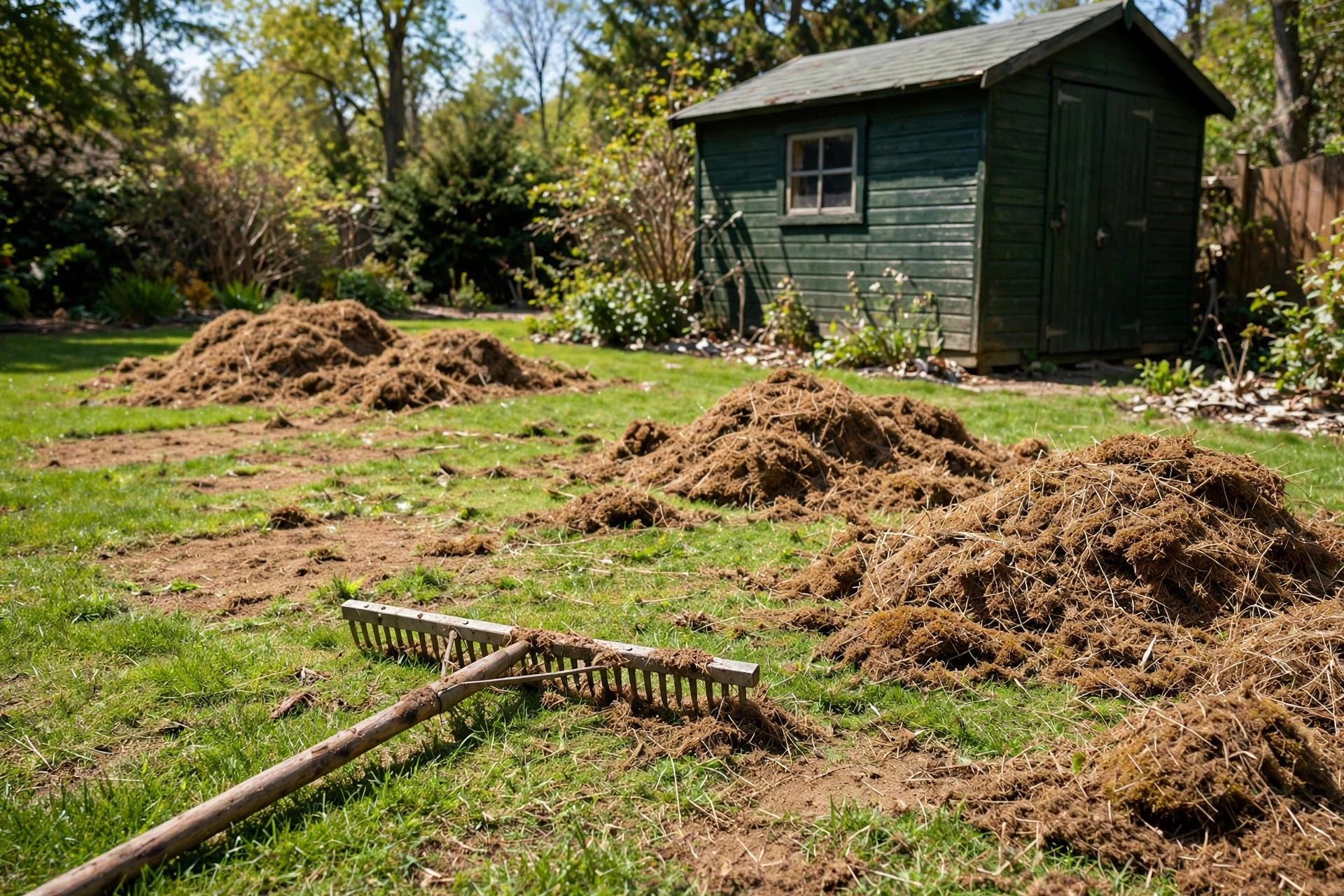
The work is plain and honest. You rake in rows, one pass at a time, and pull the brown waste into piles. It takes effort, but it costs nothing beyond the price of the rake. No machine to fuel. No rental fees. For small and medium lawns, a hand rake is the best choice.
How to Choose the Best Garden Rake for Thatch Removal
The Head
Head width matters more than most buyers think. A wide head, around fifteen inches, clears large open lawns quickly. A narrow head, around eleven inches, fits into tight spots near flower beds and walks. If your lawn is small with many curves, choose the narrower head. You will waste less time and strike fewer plants by accident.
Head material matters too. Steel heads last the longest. They hold their edge and do not bend under hard work. Aluminum heads are lighter and easier to swing for hours, but they wear faster. Plastic heads are cheap, but they bend and break in thick thatch. Steel is the best pick for real thatch work.
The Tines
Count the tines. A good thatch rake has twenty or more short tines on one side. More tines mean more contact with the mat, which means more thatch lifted with each pass. The tines should spring back after each stroke. If they stay bent, they are too soft for the job.
Look also at the cutting blades on the far side. They should be sharp and evenly set. Dull blades tear at the mat instead of slicing it, which leaves a ragged lawn. A well-made rake keeps both sides in good shape for years.
The Handle
The handle is where comfort lives. Hardwood handles feel warm in the hand and absorb shock well. They last for years if you oil them now and then. Fiberglass handles are lighter and will not rot or split. They are a fine choice for wet ground.
Length matters for your back. A handle between fifty-four and sixty inches lets most adults stand upright while they work. A short handle forces you to stoop, and your back will remind you of it the next day. Some rakes come with a cushioned grip. It helps on long jobs.
Weight and Balance
A heavy rake digs in well but tires your arms fast. A light rake is easy to swing but may skip over thick thatch. The best garden rake for thatch removal sits in the middle: heavy enough to bite, light enough to use for an hour without strain. If you can, pick one up in the store before you buy. Swing it a few times. Your arms will tell you more than any label can.
Types of Thatch Rakes
Gardeners can choose among a few common styles. Each has its place.
Fixed-head thatch rakes. These are the classic choice. The head is set at one angle and cannot change. They are simple, strong, and cheap. They suit open lawns where one raking angle works everywhere.
Adjustable-head rakes. The head pivots so you can change the angle of attack. This helps on uneven ground and around tight corners. Moving parts can wear out, so check the pivot for solid build before you buy.
Bow-style rakes. A bow rake has short, stiff steel teeth set in a straight row. It is built for leveling soil, but it can break up light thatch in a pinch.
Spring-tine rakes. These look like ordinary leaf rakes with long, flexible tines. The tines are too weak for thick thatch. Save them for leaves and light debris.
For true thatch work, the fixed-head thatch rake with a two-sided head remains the best tool. It costs little and does the exact job. If you also want a tool for fine bed work, see our notes on the garden hand rake for small beds.
Cost and Price
Prices stay kind for this kind of tool. A plain, sturdy thatch rake sells for fifteen to thirty dollars. This is the sweet spot for most homes. Rakes in this range use steel heads and wood or fiberglass handles. They last for many seasons.
Cheaper rakes, under twelve dollars, often have thin tines that bend on the first use. They may look the same on the shelf, but they do not last. At the other end, professional models can cost forty dollars or more. They offer wider heads and stronger steel. They are worth the money only for very large lawns or for crews that dethatch every week.
Think of the cost per use. A twenty-dollar rake used five times over five years costs four dollars per use. That is far less than renting a power dethatcher, which can run fifty dollars or more for a single day. For small yards, the hand rake wins on price every time.
Watch the sales at garden centers in late summer. Stores often mark down tools as the season ends. Independent reviews at Consumer Reports can help you compare brands before you spend.
When and How to Rake Thatch
Timing shapes the result. Rake when the grass is growing well, so the lawn can heal after the work. For cool-season lawns, early spring and early fall are the best times. For warm-season lawns, late spring through summer works well. Never dethatch a stressed lawn in the heat of midsummer. The grass needs strength to recover.
Follow these steps for a clean job.
1. Mow the lawn short. Cut it lower than usual. Short grass lets the tines reach the thatch layer. 2. Water the day before. Damp ground lets the tines bite in. Muddy ground makes a mess, so aim for moist, not wet. 3. Mark the hidden heads. Flag sprinkler heads and buried cables with small flags. A hard rake can crack a sprinkler head. 4. Cut first, rake second. Push the blade side through the mat in short rows. Work in one direction across the whole lawn. 5. Rake out the waste. Flip the head to the tine side and pull the loose thatch into piles. Bag it or add it to the compost heap. 6. Go over thin spots twice. Areas with thick thatch may need a second pass at a right angle to the first. 7. Seed and feed. Spread seed on the bare spots. Add a light layer of fertilizer and water it well.
A thousand square feet of lawn can take two to three hours with a hand rake. Plan your day around it. Start in the morning cool and rest in the shade as needed.
Care and Upkeep of Your Rake
A thatch rake lasts many years with simple care. After each use, knock the dirt off the head. Wash it with the garden hose if it is caked. Dry it with a rag. Steel left wet will rust, and rust eats strength.
Oil the wooden handle once a year with linseed oil. Rub it in with a rag and let it dry in the sun. This keeps the wood from drying out and splitting. Check the head bolts each spring. A loose head wobbles and works poorly. Tighten the bolt or replace it if the threads are worn.
Store the rake off the ground. Hang it on the wall of the shed or garage. A rake left on wet ground will rot its handle and rust its head in a single season. Keep it out of long sun as well, which fades grips and weakens fiberglass. Good storage is free insurance. Many gardeners keep a full kit for odd jobs, from garden hoses for RV use to pruners and trowels, and the same care rules apply to them all.
Safety First
Thatch raking is honest labor, but it still calls for care. Wear gloves to guard against blisters. The steady pull of a rake raises blisters fast on soft hands. Leather or heavy cotton gloves work best.
Wear eye protection when you work around dry, dusty thatch. Small bits of stem and dirt fly up with each stroke. Wear sturdy shoes, not sandals. A dropped rake lands teeth-down, and bare toes pay the price.
Take breaks. Dethatching uses the back, shoulders, and arms in a steady rhythm. Stop every thirty minutes. Drink water. Stretch your back. Heat and fatigue cause more garden injuries than any tool.
Keep children and pets off the lawn while you work. A rake left lying on the ground is easy to step on. The handle flies up fast and strikes hard. Lean the rake against a wall, teeth down, when you rest. Guides at Bob Vila and Family Handyman offer more yard safety habits worth a look.
Disposing of the Waste
A dethatched lawn can fill many bags. The good news is that thatch makes fine compost. The dead stems break down fast in a hot pile. Mix the thatch with green material, such as kitchen scraps and fresh grass clippings, to keep the pile balanced. In a few months you will have rich compost for the beds.
If you do not compost, check local rules before you bag it. Some towns collect yard waste on set days. Others ask owners to drop it at a yard waste site. Never burn thatch in town limits without a permit. Wet thatch smokes and angers the neighbors.
Frequently Asked Questions
How do I know if my lawn needs dethatching? Cut a wedge of turf with a spade and measure the brown spongy layer between the grass blades and the soil. If it is thicker than half an inch, dethatch. Also watch for water that pools on the surface and grass that feels soft and spongy underfoot.
Can a regular leaf rake remove thatch? Not well. Leaf rakes have long, flexible tines that glide over the mat instead of biting into it. A thatch rake has short, stiff tines and cutting blades made for the job. A leaf rake will tire you out without lifting much thatch.
Is a power dethatcher better than a hand rake? For large lawns over half an acre, a power dethatcher saves time. For small and medium lawns, a hand rake works as well and costs far less. The hand rake also gives you more control around beds and walks. Rental costs for a power unit run high for a one-day job.
When is the best time to dethatch? Work when the grass is growing strongly. Early spring or early fall suits cool-season grasses. Late spring suits warm-season grasses. Avoid hot, dry spells when the lawn is under stress. The grass needs energy to fill in after raking.
Will dethatching hurt my lawn? It roughs the lawn up, and the lawn may look thin for a week or two. That is normal. With seed, fertilizer, and water, the grass fills in thicker than before.
How often should I replace my thatch rake? A well-made steel rake lasts many years. Replace it when the tines stay bent, the blades will not hold an edge, or the handle cracks through. With basic care, most owners get five to ten years from one rake. Spring buying guides at The Spruce can point you to current models.
A Short Final Word
A good lawn is built from small, steady habits. Testing the thatch layer each year, raking it out when it grows thick, and feeding the soil after the work keeps grass deep-rooted and green. The best garden rake for thatch removal is not the most costly one. It is the one with a strong steel head, stiff tines, and a handle that fits your hands. Pick one with care, store it well, and it will serve your lawn for many seasons. For honest buying advice, browse the lawn and garden sections at Lowe’s, Home Depot, and Gardener’s Supply, or read seed and tool notes from Burpee.
References
Bob Vila. (n.d.). Home improvement advice. https://www.bobvila.com Burpee. (n.d.). Seeds, plants, and gardening supplies. https://www.burpee.com Consumer Reports. (n.d.). Product reviews and ratings. https://www.consumerreports.org Family Handyman. (n.d.). DIY home repair and maintenance. https://www.familyhandyman.com Gardener’s Supply Company. (n.d.). Gardening tools and supplies. https://www.gardeners.com Lowe’s. (n.d.). Home improvement products. https://www.lowes.com The Home Depot. (n.d.). Home improvement products. https://www.homedepot.com The Spruce. (n.d.). Home and garden advice. https://www.thespruce.com
Was this guide helpful?

About Sarah Mitchell
The My Garden US editorial team writes practical, in-depth home and garden guides for American homeowners — tested advice, no fluff.