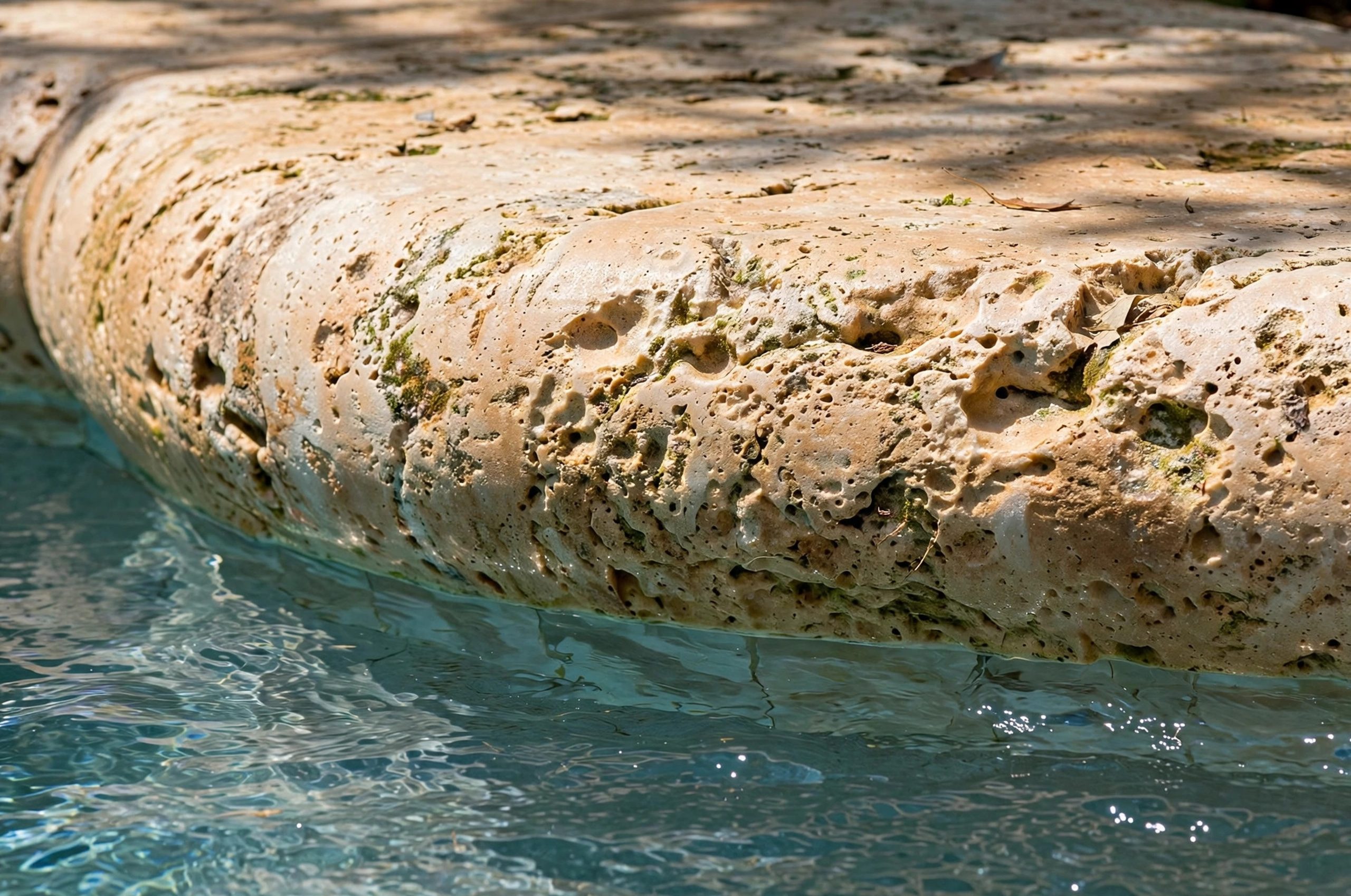
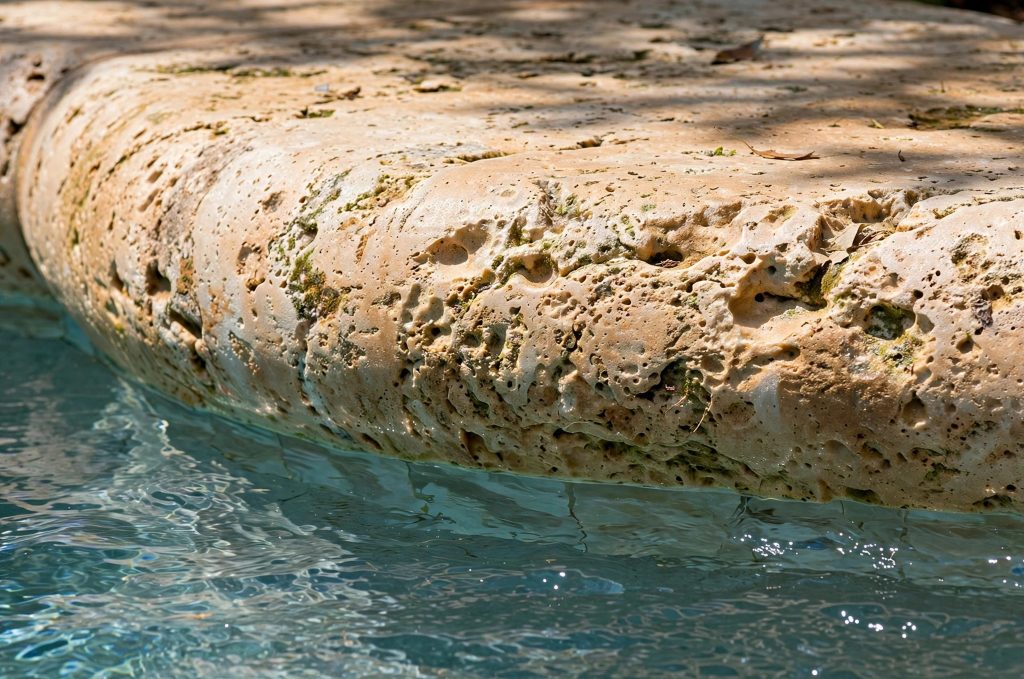
Pool coping is the cap that runs along the edge of your pool. It takes a beating: splashing chlorinated water, baking sun, freezing nights, sunscreen, and bare feet all day long. Natural stone coping, travertine, limestone, sandstone, and granite, looks beautiful, but it is porous. Unsealed stone drinks in water, chemicals, and stains. Over time it can flake, darken, or grow slippery algae in its pores. The steps below show how to seal natural stone pool deck coping in plain language.
Table of Contents
Table of Contents
- Seal Natural Stone Pool Deck Coping: Why Coping Needs Sealing
- Picking the Right Sealer
- What You Will Need
- Step 1: Clean the Coping Thoroughly
- Step 2: Protect the Surroundings
- Step 3: Apply the Sealer
- Step 4: Check Your Work
- When to Reseal
- Coping and the Rest of the Deck
- Common Mistakes
- Frequently Asked Questions
- The Bottom Line
- References
Sealing natural stone pool deck coping is one of the highest-value maintenance jobs you can do. A good penetrating sealer soaks into the stone, blocks water and stains from getting in, and leaves the surface looking natural. It does not make the stone shiny or slippery when the right product is used. This guide covers which sealer to pick, how to prepare the stone, how to apply it, and when to reseal.
Seal Natural Stone Pool Deck Coping: Why Coping Needs Sealing
When it comes to seal natural stone pool deck coping, getting the details right makes all the difference.
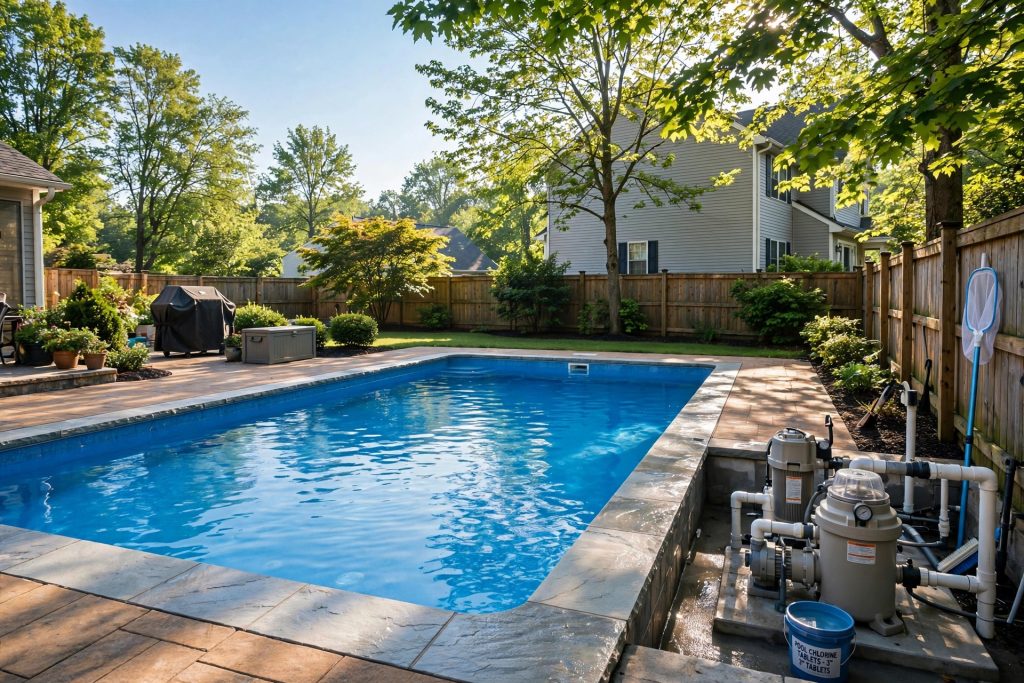
Many homeowners find that seal natural stone pool deck coping is easier than they expected once they know the basics.
Coping sits at the waterline, which is the harshest spot in the whole pool area. Here is what unsealed stone faces:
Chemical attack. Chlorinated water splashes onto the coping constantly. Chlorine and pool chemicals slowly wear at stone surfaces and grout joints.
Freeze damage. Stone absorbs water. When that water freezes, it expands inside the pores and can pop off flakes or crack the stone. This is the main killer of coping in cold climates.
Stains. Sunscreen, leaf tannins, rust from furniture, and mineral deposits all stain porous stone. Once a stain soaks deep into unsealed travertine, it is there for good.
Slippery biofilm. Algae and mildew love damp, porous stone. A sealed surface dries faster and gives growth less to grip.
Salt damage. Saltwater pools are especially hard on stone. Salt crystallizes in the pores as water evaporates, and the growing crystals pry the stone apart from inside. Sealing is close to mandatory for salt pool coping.
The Tile and Mosaic Depot guide for travertine coping recommends sealing before use and resealing every one to two years, or yearly in pool environments with constant chemical exposure.
Picking the Right Sealer
Many homeowners find that seal natural stone pool deck coping is easier than they expected once they know the basics.
The key to seal natural stone pool deck coping is choosing the right approach for your space and budget.
Not all sealers suit pool coping. The key choice is penetrating versus film-forming.
Penetrating sealers (the right choice). These soak into the stone and line the pores without forming a layer on top. Water and oils cannot get in, but water vapor can still get out. The stone keeps its natural look and its grip under wet feet. For pool coping, choose a penetrating sealer rated for exterior and wet applications. Solvent-based versions often penetrate deeper; water-based versions are easier to apply and clean up. The Glaze N Seal application guide describes how a penetrating impregnator gives a natural look with strong stain resistance.
Film-forming sealers (usually the wrong choice). These coat the surface like a varnish. They can look glossy, turn slippery when wet, peel under sun and chlorine, and trap moisture inside the stone. Around a pool, that combination is a safety and durability problem. Skip them for coping.
Enhancing sealers (optional). Some penetrating sealers also deepen the stone's color, giving it a rich wet look all the time. This is a style choice. Test it on a spare piece or a hidden spot first, since you cannot undo the darkened look easily.
Match the sealer to your stone type. Dense granite needs less sealer than open-pored travertine or limestone. If you are unsure what stone you have, ask the installer or test absorption: sprinkle water on the stone and watch. If it darkens and soaks in within minutes, the stone is porous and will drink sealer happily. The Stone and Tile Studio sealing guide recommends penetrating sealers for pavers exposed to grime and traffic, and always testing on a small hidden area first.
What You Will Need
The key to seal natural stone pool deck coping is choosing the right approach for your space and budget.
With a little planning, seal natural stone pool deck coping can fit even a busy schedule.
- Penetrating natural stone sealer rated for exterior wet use
- pH-neutral stone cleaner
- Stiff brush or pressure washer on a gentle setting
- Painter's tape and plastic sheeting
- Applicator: low-pressure pump sprayer, paint pad, roller, or lambswool applicator
- Clean white cotton rags or towels
- Rubber gloves and eye protection
Check the weather. You need dry conditions, no rain for at least 24 hours after application, and temperatures in the range the sealer label specifies. Do not seal in blazing midday sun; the sealer can dry on the surface before it penetrates. Morning or late afternoon is best.
Step 1: Clean the Coping Thoroughly
With a little planning, seal natural stone pool deck coping can fit even a busy schedule.
Before you start, it helps to understand how seal natural stone pool deck coping works in real homes.
Sealer locks in whatever is on the stone, so cleaning is the most important step. Dirt, algae, and old stains sealed under a fresh coat stay visible for years.
Sweep and rinse. Remove loose dirt, leaves, and debris.
Wash with pH-neutral stone cleaner. Scrub the coping with a cleaner made for natural stone. Avoid acidic cleaners like vinegar or lemon-based products on travertine, limestone, and marble: acid etches these stones. Avoid strong alkaline degreasers too. The MosaicBros travertine care notes warn against acidic and harsh alkaline cleaners for the same reason.
Treat stains and growth. For algae or mildew, a stone-safe algaecide or a diluted oxygen-bleach solution works. For rust or organic stains, use a poultice or a stone-specific stain remover. Do not reach for muriatic acid on the coping; it etches stone and can damage grout.
Rinse well and let dry fully. This is the step people rush. The stone must be completely dry before sealing, or the sealer cannot penetrate. After washing, give the coping at least 24 to 48 hours of dry weather. Cover it with a tarp if surprise rain threatens.
If your coping also needs physical repair, handle that before sealing. The guide to repairing pool coping stones covers fixing loose or cracked units, and the guide to cleaning pool coping tiles goes deeper on stain removal.
Step 2: Protect the Surroundings
Before you start, it helps to understand how seal natural stone pool deck coping works in real homes.
A good plan for seal natural stone pool deck coping saves time, money, and frustration.
Tape off the waterline tile below the coping and mask any nearby surfaces you do not want sealed, such as the pool water itself. Do not let sealer drip into the pool. Work in sections so you can manage drips. If sealer gets on the water, skim it off promptly.
Step 3: Apply the Sealer
A good plan for seal natural stone pool deck coping saves time, money, and frustration.
For most people, seal natural stone pool deck coping comes down to a few smart choices.
Test first. Apply sealer to a small hidden spot or a spare piece of stone. Check the look after it cures and confirm water beads on the surface. This test also tells you how many coats the stone needs.
Apply the first coat. Using your sprayer, pad, or roller, apply an even coat over the coping. Work it into the surface. On porous travertine, apply generously: the stone should look wet but not pooled. Two wet-on-wet coats are the standard recommendation for thirsty stone. The Prestige Surfaces travertine guide recommends two wet-on-wet coats for optimal coverage.
Keep a wet edge. Work in manageable sections and do not let the sealer dry in patches. Uneven drying causes uneven protection.
Wipe off excess. After the dwell time the label specifies (often around ten minutes), wipe the surface with clean white cotton rags to remove any sealer that has not soaked in. This is critical. Excess sealer left on the surface dries into a hazy film. That film is exactly what the Trouble Free Pool sealing discussion warns about: a proper penetrating sealer should not leave a visible layer.
Apply the second coat. On porous stone, follow the first coat while it is still tacky or per the label's recoat window. Dense stone may need only one coat.
Let it cure. Keep foot traffic off the coping for the time the label requires, often four hours to overnight, and keep water off it for a full day if you can. Full cure can take a few days; plan the job when the pool can sit quiet.
Step 4: Check Your Work
For most people, seal natural stone pool deck coping comes down to a few smart choices.
If you are new to seal natural stone pool deck coping, start with the simplest option and build from there.
After curing, sprinkle water on the coping. It should bead up and sit on the surface instead of soaking in and darkening the stone. Check a few spots around the pool, since sun and wear vary. If water still soaks in somewhere, that section needs another coat.
When to Reseal
If you are new to seal natural stone pool deck coping, start with the simplest option and build from there.
When it comes to seal natural stone pool deck coping, getting the details right makes all the difference.
Plan on resealing every one to two years. Pool coping lives harder than a patio, so lean toward the shorter end. Salt pools and pools in freeze-thaw climates should be checked yearly.
The water-drop test is your gauge. Once a season, sprinkle water on the coping. If it beads, the sealer is working. If it soaks in and darkens the stone, it is time to reseal. You do not need to strip old penetrating sealer before recoating; just clean the stone well and apply fresh coats.
Coping and the Rest of the Deck
When it comes to seal natural stone pool deck coping, getting the details right makes all the difference.
Many homeowners find that seal natural stone pool deck coping is easier than they expected once they know the basics.
Coping is the edge, but the deck around it faces the same enemies. If your deck is concrete or pavers rather than natural stone, the sealing approach differs: concrete wants a concrete-specific sealer, and wood decking wants stain or paint. The solid stain versus paint guide for decks covers wood deck finishes. Whatever the deck material, keep the expansion joint between the coping and the deck caulked and sealed so water cannot get behind the coping stones.
Common Mistakes
Many homeowners find that seal natural stone pool deck coping is easier than they expected once they know the basics.
Sealing dirty or damp stone. The sealer traps the dirt and cannot penetrate wet pores. Clean fully and dry fully.
Using a film-forming sealer. It looks good for a season, then peels, turns slippery, and traps moisture. Around a pool, that is the worst outcome.
Leaving excess on the surface. The haze and white film neighbors complain about comes from sealer that was never wiped off. Wipe within the label's window.
Sealing in direct hot sun. The sealer flashes off before it soaks in. Work in morning or evening shade.
Expecting sealer to fix structural problems. Sealer protects sound stone. It will not glue down loose coping, fill wide cracks, or stop a stone that is already spalling from salt damage. Repair first, seal second.
One coat on thirsty stone. Travertine and limestone often need two coats. The water-drop test after curing tells you the truth.
Frequently Asked Questions
The key to seal natural stone pool deck coping is choosing the right approach for your space and budget.
Will sealer make the coping slippery? A penetrating sealer should not change the slip resistance noticeably, since it does not form a surface film. That is the main reason to choose penetrating over film-forming around a pool.
Can I seal coping right after installation? Wait until the mortar and grout have cured, usually several days to a couple of weeks depending on the product. Sealing too early traps moisture in the setting bed.
Does sealing change the stone's color? Standard penetrating sealers keep the natural look. Enhancing sealers deepen the color. Test first so there are no surprises.
Is sealing worth it on older coping? Yes, if the stone is still sound. Clean it well, repair any loose units, and seal. It will not reverse existing damage, but it slows further wear considerably.
The Bottom Line
With a little planning, seal natural stone pool deck coping can fit even a busy schedule.
Sealing natural stone pool deck coping is a weekend job that pays off for years. Pick a penetrating sealer rated for wet exterior use, clean the stone like the job depends on it (it does), apply even coats, wipe off the excess, and let it cure. Test with water drops each season and recoat when the beading fades. Your coping will resist stains, shrug off freeze damage better, and keep its natural beauty instead of aging into a rough, darkened edge.
The second Glaze N Seal maintenance guide sums up the routine well: clean with pH-neutral products, seal on schedule, and the stone takes care of itself. Keep this guide handy the next time you seal natural stone pool deck coping.
References
Before you start, it helps to understand how seal natural stone pool deck coping works in real homes.
- Glaze N Seal Products. (n.d.). How to seal and maintain polished granite, marble, travertine and limestone. https://glaze-n-seal.com/how-to-seal-maintain-polished-granite-marble-travertine-limestone/
- Glaze N Seal Products. (n.d.). Seal and maintain polished granite, marble, travertine and limestone. https://glaze-n-seal.com/seal-maintain-polished-granite-marble-travertine-limestone/
- MosaicBros. (n.d.). Ivory travertine 12x24 5 cm tumbled pool coping. https://mosaicbros.com/collections/ivory-travertine-field-tiles-natural-stone-marble-stone-tiles/products/ivory-travertine-12x24-5-cm-tumbled-pool-coping
- Prestige Surfaces. (n.d.). How to clean and seal travertine pavers. https://prestigesurfaces.com.au/how-to-clean-and-seal-travertine/
- Stone and Tile Studio. (n.d.). Your ultimate guide to stone sealing. https://stoneandtilestudio.com.au/blog/the-ultimate-guide-to-stone-sealing/
- Tile and Mosaic Depot. (n.d.). Ivory travertine 12x24 5 cm tumbled eased edge pool coping. https://tileandmosaicdepot.com/products/ivory-travertine-12x24-5-cm-tumbled-eased-edge-pool-coping-clearance?view=quick_view
- Tile and Mosaic Depot. (n.d.). Noce travertine 16x24 tumbled 5 cm pool coping. https://tileandmosaicdepot.com/products/noce-travertine-16x24-tumbled-5-cm-pool-coping
- Trouble Free Pool. (n.d.). To seal or not to seal: Travertine. https://www.troublefreepool.com/threads/to-seal-or-not-to-seal-travertine.131794/
Was this guide helpful?

About My Garden US
The My Garden US editorial team writes practical, in-depth home and garden guides for American homeowners — tested advice, no fluff.
You May Also Like
Best Pool Light for Above Ground Pools: A Homeowner's Guide
March 22, 2026 20 views
The Best Pool Heater for Above Ground Pools: A Complete Guide
February 6, 2026 20 views
Best Pool Cover Reel for Solar: What to Look For
June 14, 2026 16 views