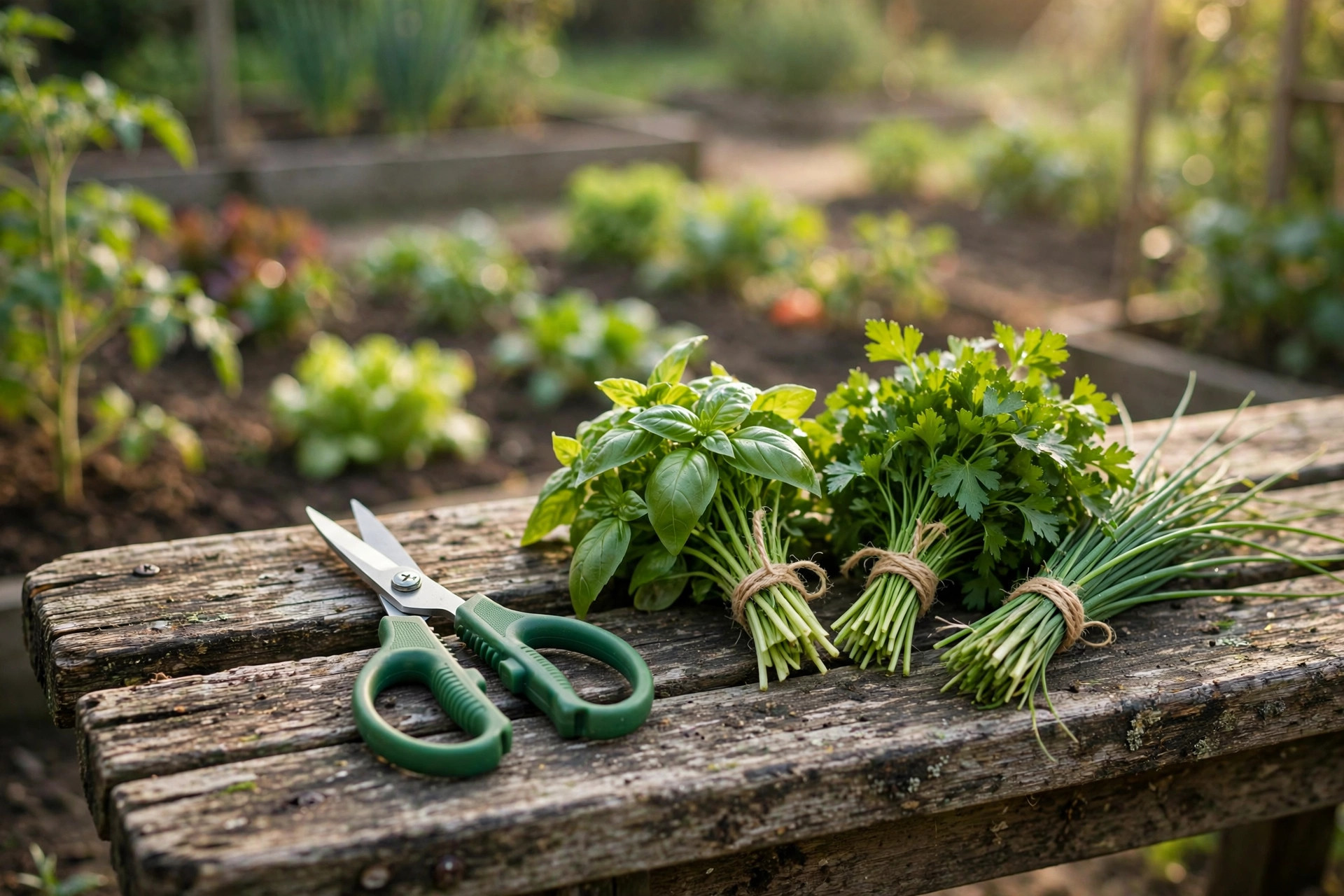

A pair of scissors made for herbs is one of the smallest tools in the garden shed. It is also one of the most useful. When you want to learn how to pick the best garden scissors for harvesting herbs, you begin with one simple idea: a clean cut helps the plant, and a crushed stem hurts it.
Basil, parsley, chives, mint, thyme, rosemary, and cilantro all grow from soft green stems. A sharp blade slides through the stem in one motion. A dull blade squeezes the stem first and cuts second. The crushed part of the stem turns brown. It heals slowly. It can let in disease. A good pair of herb scissors takes this worry away.
Kitchen scissors are common in most homes. They are not the best choice for the herb bed. Kitchen scissors are often too large. They are hard to move between small stems. Garden scissors made for herbs have short blades and a small size. They fit in one hand. They reach into a bunch of chives without harming the plants around them. If you grow herbs in pots on a step or a small balcony bed, this control matters even more.
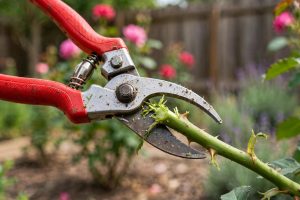
Many gardeners keep several cutting tools. You may already own tools like pruning shears for rose bushes, which handle thick woody stems. Herb scissors serve a different job. They cut soft growth only. Keeping a separate pair for herbs also keeps the blades cleaner and sharper for longer.
Why the Right Scissors Matter for Herbs
Herbs give their best flavor when you cut them often. Regular cutting tells the plant to grow more leaves. This is true for basil, mint, and chives above all. The snip itself should be quick and clean so the plant can heal fast and push out new growth.
Clean cuts also protect flavor. Crushed herbs lose some of their juices at the cut point. When you snip a leaf of basil and carry it to the kitchen, you want the leaf whole and bright. A pair of scissors with sharp, well-aligned blades gives you that result every time.
There is a food safety side to this as well. Dull blades tear the leaf. Torn edges turn dark and go soft faster in storage. If you cut herbs for a salad or a sauce, clean edges stay fresh longer in the basket. So the best garden scissors for harvesting herbs are not a luxury. They are a small tool that improves both the garden and the meal.
What to Look For When You Choose: Best Garden Scissors for Harvesting Herbs
Blade quality and edge
The blade is the heart of the tool. Look for blades made of stainless steel or carbon steel. Stainless steel resists rust when you rinse the scissors after use. Carbon steel can take a very fine edge but needs oiling after each use or it will stain and rust.
A micro-serrated edge is a good choice for herbs. The tiny teeth on one blade hold the slippery stem in place while the other blade cuts. Plain smooth edges also work well when they are truly sharp. What you want to avoid is a pair that feels dull out of the package or blades that do not meet along their full length.
Handle comfort
You may snip dozens of stems in one session. A handle that fits your hand makes this pleasant instead of painful. Look for soft grips with a gentle curve. Some gardeners prefer a simple two-finger loop. Others prefer a full grip with a spring that opens the blades for you.
If your hands are small or weak, pick a light pair with a soft spring. If you cut tougher stems like rosemary or lavender, a slightly larger handle gives you more power. The right handle feels steady in your hand and does not slip when it is damp.
Size and shape
Herb scissors usually measure five to eight inches long. Shorter scissors work best for tight work, such as thinning chives or snipping the tops of small basil plants. Longer blades cut more stems at once, which is handy when you cut a full bunch of parsley.
Some scissors have long straight blades. Others have short curved blades. Curved blades work well for cutting around the base of a plant. Straight blades work well for cutting across a bunch of chives in one motion. Either style can be the best garden scissors for harvesting herbs for your garden, so choose the shape that matches how you cut.
Safety catch and cleaning
A locking catch keeps the blades closed in storage. This protects the edge and keeps the tool safe in a drawer or apron pocket. A few models come apart at the hinge for cleaning. This is a fine feature, though simple models are easier to wipe clean and oil.
Types of Garden Scissors for Herbs
Snip-style herb scissors
Snips are small scissors with short blades and a spring handle. They are the most common choice for herbs. They cut stems up to about a quarter inch thick. They are light, easy to carry in a pocket, and simple to use. For daily cutting of basil, parsley, mint, and chives, snips are hard to beat.
Gardeners often keep snips close at hand for more than herbs. You may find them useful for deadheading soft flowers, in the same way garden snips for deadheading flowers keep a flower bed tidy. But it is best to keep your herb snips for herbs and food plants only. This keeps the blades clean for kitchen use.
Micro-tip scissors
Micro-tip scissors have narrow, pointed blades. They reach into dense growth to cut one stem without touching the rest. They are excellent for thyme, oregano, and the small stems of chervil. If you grow herbs in crowded pots, micro-tip scissors give you the most control.
Bypass pruners for tougher stems
Some herbs grow woody stems over time. Rosemary, lavender, and sage are examples. When the stem becomes hard and thick, scissors may no longer be enough. A small bypass pruner cuts woody stems cleanly. This is a different tool from herb scissors, and it deserves its own guide, much like a garden knife for harvesting suits certain crops and tasks.
Multi-blade herb shears
Multi-blade shears have several parallel blades. One cut makes many small pieces of chive or parsley at once. They are fun to use and quick in the kitchen. They are not a true garden tool, since they cannot reach single stems in the bed. Think of them as a kitchen helper rather than a harvesting tool.
Cost and Price
Good herb scissors do not cost much. Basic pairs sell for about five to ten dollars. They cut well when they are new, but the steel is often soft and they lose their edge quickly. Mid-range pairs cost ten to twenty dollars. This is the sweet spot for most gardeners. The steel is better, the edge lasts longer, and the handles are kinder to your hands.
Premium scissors cost twenty dollars and up. They use fine steel and careful assembly. The blades stay sharp through many seasons. A premium pair is worth the money if you harvest herbs nearly every day or grow herbs for sale.
Price does not always tell you the quality. Hold the scissors if you can. Open and close them. The action should feel smooth, not loose and not stiff. The blades should meet evenly when closed. Reviews from other gardeners can help you here, and buyer guides from sources such as Consumer Reports can help you compare models before you buy.
How to Harvest Herbs the Right Way
Pick the right time
Cut herbs in the morning after the dew has dried. This is when the oils in the leaves are strongest. The flavor is best at this hour. Avoid cutting in the heat of midday, when the leaves are stressed and dry.
Cut above a leaf joint
Most herbs grow in pairs of leaves along the stem. Cut just above a pair of leaves. The plant will grow two new stems from that point. This keeps basil bushy instead of tall and thin. For chives, cut the leaves near the base, leaving about an inch of green. They will grow back quickly.
Take only what you need
A good rule is to take no more than one third of the plant at one time. The plant needs its leaves to make food from sunlight. If you cut too much at once, the plant slows down or stops growing. For mint, which grows fast, you can cut more freely. For slow herbs like thyme, be gentle.
Keep the blades clean between plants
Wipe the blades with a cloth between plants. Herbs carry sap and bits of leaf that stick to steel. A quick wipe keeps the cut smooth. If you cut a plant that shows signs of disease, clean the blades with soap and water before moving to a healthy plant. This small habit protects your whole herb bed.
Store scissors dry
After each use, wipe the blades dry. Store the scissors with the catch locked. A dry shelf in the shed is better than a damp floor. If your blades are carbon steel, rub on a drop of light oil. Retailers such as Lowe’s and The Home Depot carry oil and sharpening tools made for garden blades.
Care and Upkeep
Sharpening
Even the best garden scissors for harvesting herbs grow dull with use. Sharpening keeps them working like new. A small whetstone or a sharpening rod made for pruning tools works well. Hold the blade at a low angle and draw it across the stone a few times. Sharpen both blades evenly.
Some gardeners use a ceramic rod or a diamond file. These tools are easy to find in garden centers and tool shops. Guides from Family Handyman and Bob Vila show simple methods you can follow at home. Sharpen your scissors when you feel the blades starting to crush instead of cut.
Cleaning off sap and rust
Sap builds up on blades over the season. Rub the blades with a cloth dipped in warm soapy water. For tough sap, a little rubbing alcohol on a cloth works well. Dry the blades right away.
If spots of rust appear, rub them with fine steel wool. Then wipe the blade dry and add a drop of oil. Store the scissors in a dry place. Stainless steel blades still need care, but they resist rust far better than carbon steel.
Oiling the hinge
Put one drop of light machine oil on the hinge every few weeks during the growing season. Open and close the scissors to work the oil in. This keeps the action smooth and stops the spring from squeaking. A smooth hinge means less hand strain when you cut.
Safety
Garden scissors are sharp tools, and herbs are often cut quickly. Keep a few safety habits in mind.
– Always close the blades and lock the catch before you put the scissors down or in a pocket. – Cut away from your body and keep your free hand clear of the blades. – Do not try to cut stems that are too thick for the tool. Forcing the blades can cause the scissors to slip. – Keep scissors out of the reach of small children. Store them high or in a locked drawer. – Wear gardening gloves when you work around thorny or rough plants nearby.
Safe habits protect both you and your plants. A tool that is sharp, clean, and stored with care is a safe tool.
FAQ
Can I use kitchen scissors to cut herbs in the garden?
You can, but garden scissors made for herbs work better. Kitchen scissors are larger and less precise. They are also not built for outdoor use and may rust. A small pair of herb scissors costs little and cuts far better.
How often should I sharpen my herb scissors?
It depends on how much you cut. A daily harvester may sharpen every few weeks. A weekend gardener may sharpen once or twice a season. When you see crushed stems or torn leaves, it is time to sharpen.
Should I buy stainless steel or carbon steel blades?
Stainless steel is easier to care for. It resists rust and needs little oiling. Carbon steel takes a sharper edge but must be cleaned, dried, and oiled after each use. Most herb gardeners do well with stainless steel.
What is the difference between herb scissors and pruning shears?
Herb scissors have short blades for soft green stems. Pruning shears have strong curved blades for woody branches. Each tool does its own job. Using shears on soft herbs is clumsy, and using herb scissors on thick branches can damage the blades.
Can I cut chives, basil, and parsley with the same scissors?
Yes. One good pair handles all soft herbs. Clean the blades between plants, and the same scissors will serve your whole herb bed through the season.
Where can I learn more about herb growing in general?
Seed and plant suppliers offer good growing guides. Burpee and Corona Tools both publish care and tool advice on their sites. General home sites such as The Spruce and the tool maker Fiskars also carry helpful articles on garden tools and care.
A Short Final Word
The best garden scissors for harvesting herbs are sharp, light, and easy to hold. They cut soft stems in one clean motion. They help your plants grow back stronger and keep your harvest fresh and full of flavor. Spend a little time choosing the right pair. Keep the blades sharp and clean. Then go out in the morning, snip what you need, and enjoy herbs that taste better because they were cut with care.
References
Bob Vila. (n.d.). Home improvement advice. https://www.bobvila.com Burpee. (n.d.). Seeds, plants, and gardening supplies. https://www.burpee.com Consumer Reports. (n.d.). Product reviews and ratings. https://www.consumerreports.org Corona Tools. (n.d.). Garden and landscape tools. https://www.corona-tools.com Family Handyman. (n.d.). DIY home repair and maintenance. https://www.familyhandyman.com Fiskars. (n.d.). Garden and cutting tools. https://www.fiskars.com Gardener’s Supply Company. (n.d.). Gardening tools and supplies. https://www.gardeners.com Lowe’s. (n.d.). Home improvement products. https://www.lowes.com The Home Depot. (n.d.). Home improvement products. https://www.homedepot.com The Spruce. (n.d.). Home and garden advice. https://www.thespruce.com
Was this guide helpful?

About Emily Rodriguez
The My Garden US editorial team writes practical, in-depth home and garden guides for American homeowners — tested advice, no fluff.
You May Also Like
Best Garden Fork for Turning Compost: How to Pick the Right One
January 14, 2026 0 views
Seed Starting Light Setup for Beginners: A Plain Guide to Strong Seedlings Indoors
August 30, 2026 0 views
How to Prune Lavender for Beginners
April 19, 2026 0 views