
The question of gravel driveway installation cost USA comes up in thousands of homes each year. A driveway is the first part of a house that guests see. It also carries the full weight of cars, trucks, and delivery vans day after day. Gravel remains one of the most common choices because it costs less than asphalt or concrete, it drains well, and it can be put down in a few days by a skilled crew. Still, prices vary widely from one state to another, and from one contractor to the next. This guide walks through the real numbers, the choices that shape them, and the upkeep that keeps a gravel drive sound for years.
Why a Gravel Driveway Still Makes Sense
Homeowners pick gravel for three plain reasons: price, drainage, and ease of repair. A concrete drive can cost two to three times as much for the same ground. Asphalt sits between the two but still asks for a heavy machine and a hot-mix plant. Gravel asks for little more than a level bed, a load of stone, and a roller or plate compactor. When a low spot forms or a rut appears, the fix is a fresh load of stone and an hour with a rake. With concrete or asphalt, the fix often means cutting out a section and calling a crew.
Drainage is the second reason. Rain runs through loose stone instead of pooling on top. In areas with heavy rain, this keeps the surface from washing out and keeps water from running toward the garage. In cold states, gravel moves with the freeze and thaw of the ground. A rigid slab can crack when the soil heaves; gravel simply shifts and settles back.
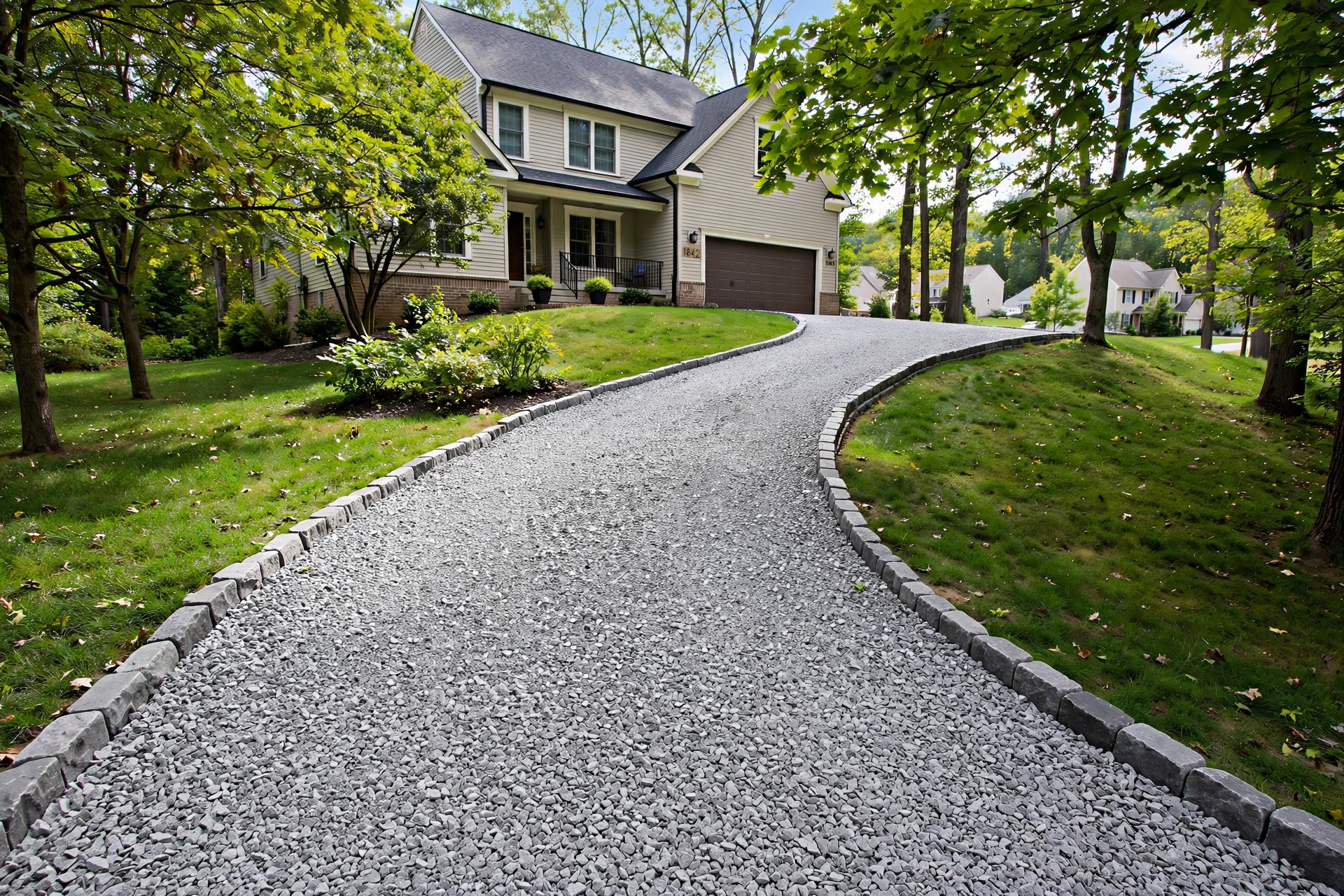
The look has improved over the years too. Modern crushed stone comes in clean colors and sharp edges that lock together. A well-edged drive with a firm border reads as neat and kept, not cheap. Many buyers in the countryside expect a gravel drive and take no offense at it.
How to Choose the Right Stone and Depth: Gravel Driveway Installation Cost Usa
Stone size matters more than color
Crushed stone sold as “three-quarter inch” is the workhorse for driveways. The angular edges grip one another, so the stones do not slide around under tires. Rounded pea gravel looks soft and friendly, but it moves too much for a drive. Cars push it aside, and deep ruts form. If you love the look of round stone, save it for paths and flower beds, where feet move slower and weight is light. The old debate of gravel vs mulch for landscaping beds shows the same point: each ground cover has a job, and mixing up the jobs leads to poor results.
For the top layer of a drive, ask for stone between half an inch and three quarters of an inch across. Anything smaller turns to dust under traffic. Anything much larger makes a rough ride and is hard on tires.
Build from the bottom up
A good drive is three layers deep. The bottom layer is large stone, two to four inches across, that sits on the bare earth and forms a firm base. The middle layer is smaller crushed stone that fills the gaps. The top layer is the fine, clean stone that you see and drive on. Total depth should run four to six inches for cars and light trucks, and up to eight inches if a heavy truck or boat trailer will use the drive often.
Skipping the base layer is the most common mistake. A thin skin of pretty stone over soft soil will sink within a season. The extra loads of base stone cost money up front, but they save the cost of a rebuild later.
Edging keeps the stone where it belongs
Without an edge, gravel spreads into the lawn a little more each year. Simple timber boards, steel edging, or stone borders hold the line. Some owners dress the edge with stone or plantings for a tidy look. For ideas on how to dress that border, see our page on driveway edging ideas for curb appeal.
Types of Gravel Drives
Not all gravel drives are built the same. The simple loose drive is the most common: three layers of stone, shaped and rolled, with a slight crown in the middle so rain runs off to the sides. It costs the least and is easy to top up.
A second type uses a grid system. Plastic or metal honeycomb panels sit on the prepared ground, and stone fills the cells. The grids hold the stone in place, so ruts rarely form and less topping is needed. The panels add to the material bill, but the surface stays level far longer, which suits sloped drives and heavy use.
A third type is the tar-and-chip drive, sometimes called chip seal. A layer of hot tar is sprayed over a base, and clean stone chips are pressed into it. It is not a loose drive at all, but it uses gravel and reads as one. It costs more than loose stone and less than full asphalt, and it gives a firm surface that never ruts.
Each type suits a different home. A short, flat drive in a mild climate does fine with loose stone. A long, steep drive with heavy winter use earns back the cost of a grid system. Talk with local contractors about what lasts in your soil and your weather.
What Shapes the Price: A Cost and Price Guide
When you look up gravel driveway installation cost USA figures, three forces move the price: the cost of stone near you, the cost of labor in your area, and the shape of your ground. Stone is heavy, and trucking it is a large part of the bill. A quarry ten miles away keeps the price down; stone hauled a hundred miles does not. Labor rates in the Northeast and on the West Coast run higher than in the South and Midwest. Ground that needs trees cleared, stumps pulled, or soft soil dug out adds days of work before the first stone arrives.
Cost by driveway size
For a plain one-car drive, about 10 feet wide and 40 feet long, most homeowners pay between $1,000 and $2,500 for a full build with three layers. A standard two-car drive, about 20 feet wide and 40 feet long, commonly runs $2,000 to $4,500. A long rural drive, a quarter mile or more, can run $8,000 to $20,000 or more, depending on width and how much grading the ground needs.
Cost per square foot usually falls between $1.25 and $1.80 for a simple loose-stone drive installed by a contractor. Stone alone, picked up or delivered, runs about $0.50 to $1.00 per square foot of coverage at proper depth. These numbers climb when the ground needs heavy grading or when stone must travel far.
Labor and equipment
A contractor’s crew brings an excavator or skid steer, a dump truck, and a compactor. Labor and machine time often make up half the total bill. The job itself moves fast: a simple drive takes one to two days, while a long or difficult one may take a week. Ask whether the quote includes clearing, grading, the base layer, the top layer, and rolling. A low bid that skips the base is not a bargain.
If you own a tractor with a box blade, you may handle the grading yourself and cut the bill. Firms such as John Deere sell compact tractors and grading tools sized for home use, and many owners rent them for a weekend. Doing your own grading can save several hundred dollars, but grading is a skill. A drive graded wrong will hold water, and standing water ruins stone drives.
The grid premium
Adding honeycomb grid panels raises the material cost by roughly $1 to $2 per square foot. For a standard two-car drive, that adds about $800 to $1,600. Many owners find the trade fair because the surface needs far less repair over the years.
Care and Upkeep Through the Years
A gravel drive asks for small, regular care rather than big repairs. Rake high spots into low spots each spring. Fill thin areas with a fresh load of stone before the base shows through. A metal rake and a stiff broom handle most of the work on a small drive; a box blade on a tractor handles a long one. Owners often compare notes on grading tools made by makers like Toro and Briggs and Stratton, whose small engines power the compactors and plate tampers many crews use.
Weeds are the main enemy. Grass and weeds root in the dust between stones and slowly break the surface apart. Pull them by hand when young, or use a weed treatment made for drives. Our guide to the best weed killer for gravel driveways compares the common options and how to apply them without harming nearby beds.
Plan to add a thin top layer every two to three years. Traffic grinds stone down and pushes it outward, and rain carries the fines away. A fresh load every few years keeps the surface deep and clean. This topping is the real long-term cost of a gravel drive, and it is far cheaper than resealing asphalt or repairing a cracked slab.
Snow removal needs care. Set a plow blade a half inch above the stone so it does not scrape the drive away. Many owners in snow states mark the edge of the drive with tall stakes each fall so the plow driver can see the line. Salt and sand are fine on stone, though sand can mix into the top layer and soften the look.
Safety Notes
A gravel drive is safe when it is firm and level, but a few points deserve care. Keep the crown gentle. A high crown can pull a car toward the edge, and a flat drive holds water. Aim for about two inches of rise from edge to center on a ten-foot drive.
Watch for loose stone on hard surfaces. Tires throw stones onto sidewalks, garage floors, and the street. Sweep these clear so walkers do not slip. Near the road, some towns ask for a paved apron where the drive meets the street so loose stone does not wash into the gutter. Check your local rules before you build.
Dust can be a bother in dry months. A calcium chloride treatment, sprayed once a year, binds the fines and cuts dust. It is cheap and widely used on rural drives. Keep children and pets off the drive until it dries, and follow the label directions.
If your drive slopes toward the house, fix the grade before laying stone. Water running toward the foundation is a serious problem that no driveway material can excuse. A contractor can cut a shallow swale or raise the edge near the house.
Frequently Asked Questions
How long does a gravel driveway last?
The stone itself lasts for decades. The drive as a whole lasts as long as you keep topping it up and grading it. Many drives laid in the 1980s are still in service today with regular care. The base layer, once set, rarely needs to be redone.
Can I install a gravel driveway myself?
Yes, on flat and simple ground. You will need to clear the path, grade it, lay the base, lay the top stone, and roll it all down. A rented skid steer and a plate compactor make the work far easier. On sloped or wet ground, call a contractor. Bad grading is hard to fix later.
How much stone do I need?
For a drive 12 feet wide and 50 feet long with four inches of depth, you need about 7 to 8 cubic yards of stone, which is roughly 10 to 12 tons. Most stone yards sell by the ton and will help you figure the order. Order a little extra for settling.
Is gravel cheaper than asphalt?
Yes, in most of the country. A gravel drive often costs one half to one third of an asphalt drive of the same size. Asphalt needs less yearly care, but it needs resealing every few years and full replacement after fifteen to twenty years. Over a long span, the gap narrows, but gravel still wins on price.
Will a gravel driveway hurt my home’s value?
In cities and suburbs with paved streets, buyers may expect pavement and price the home a little lower. In rural and semi-rural areas, gravel is normal and hurts nothing. A neat, well-edged gravel drive photographs well and shows care, which helps at sale time either way. If you are also planning hard-surface paths near the house, price those separately and add them to the same budget.
What is the cheapest way to build one?
Clear and grade the ground yourself, buy stone from the nearest quarry, and lay two solid layers instead of three on light-use drives. Skip the grid panels and the tar-and-chip finish. The savings come from your own labor and short hauling, not from skipping the base layer, which you should never skip.
A Final Word
A gravel driveway remains one of the soundest bargains in home improvement. The work is simple, the materials are plain, and the result serves for decades with modest care. Get three quotes, ask each bidder how deep the base will be, and walk a few of their past jobs if you can. A contractor who answers plainly about depth and drainage is the one to hire. The stone will outlast the memory of the price, and a level, quiet drive under your tires each morning is a small daily pleasure worth paying for.
References
Deere & Company. (n.d.). Lawn care and property maintenance equipment. https://www.deere.com Toro. (n.d.). Lawn and landscape equipment. https://www.toro.com Briggs & Stratton. (n.d.). Small engines and power equipment. https://www.briggsandstratton.com
Was this guide helpful?

About Emily Rodriguez
The My Garden US editorial team writes practical, in-depth home and garden guides for American homeowners — tested advice, no fluff.
You May Also Like
Riding Lawn Mower Financing Options USA: What Every Buyer Should Know
April 23, 2026 0 views
Cordless Chainsaw for Tree Limbs Reviews: How to Pick a Good Saw
March 7, 2026 0 views
Hydroseeding Cost Per Square Foot USA: A Plain Guide for Homeowners
July 10, 2026 0 views