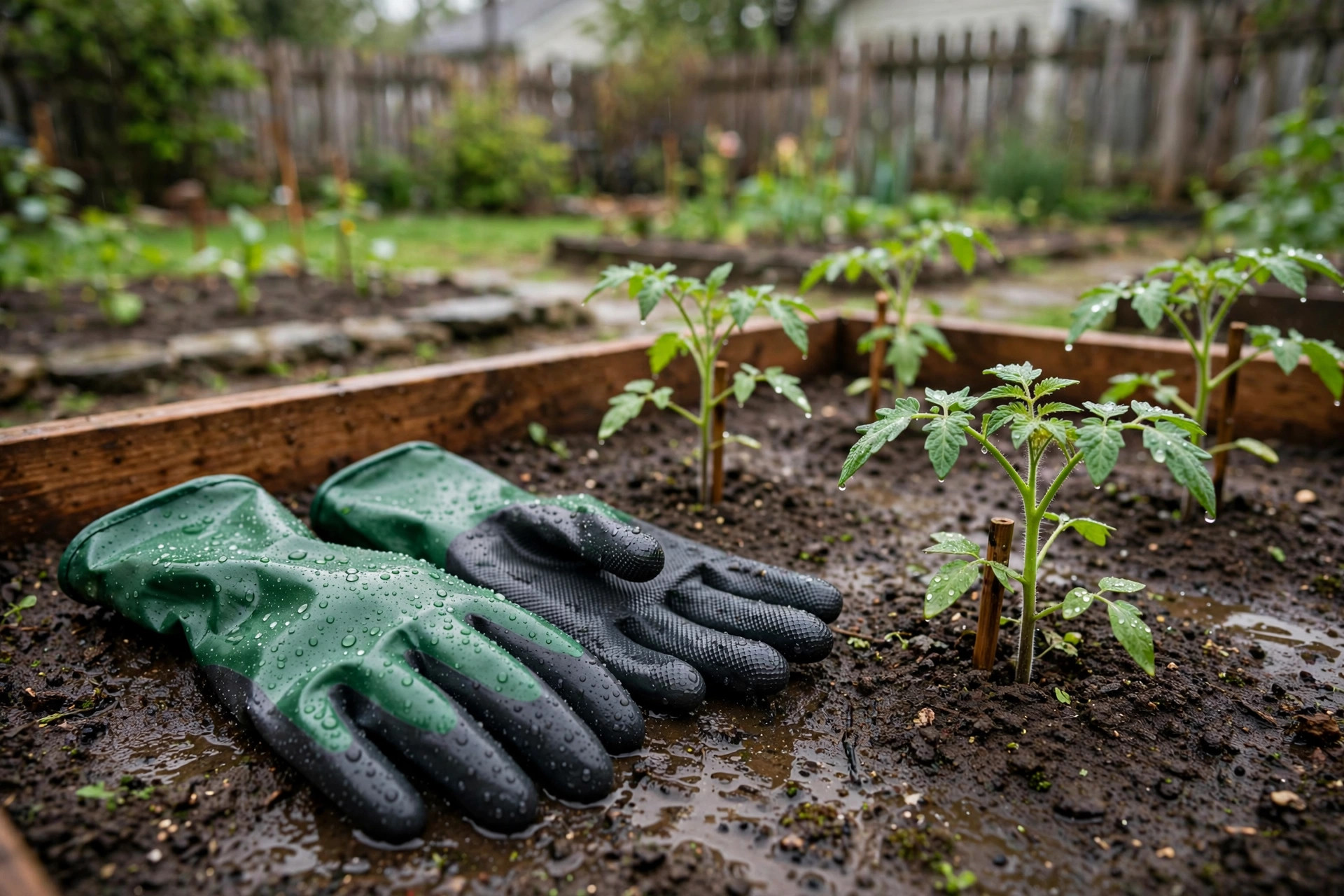

The search for the best garden gloves for wet conditions starts with a simple fact of garden life. Plants do not wait for dry days. Rain falls in the middle of the season. Morning dew soaks every leaf. Mud forms after each storm. A gardener who works only in dry weather gives up many good hours of the year. A good pair of wet-weather gloves brings those hours back.
Most plain cotton garden gloves fail fast in the wet. They soak up water in minutes. They grow heavy. The hands inside them turn cold. Cold hands lose grip. Lost grip leads to dropped tools and torn stems. The best garden gloves for wet conditions solve this with sealed coatings, raised grip patterns, and cuffs that keep water from running in at the wrist.
This guide walks through all of it in plain terms. It covers why wet-weather gloves matter, what features to look for, the main types on the market, what they cost, how to keep them in shape, how to use them safely, and answers to the questions gardeners ask most.
Why It Matters
Wet work is a big part of real gardening. Transplanting seedlings often follows a rain. Weeding soft soil is easiest right after a storm. Watering beds means standing in splashes. People who tend drip lines for container plants know that a damp morning is simply the norm.
Ordinary gloves have no answer for this. Cloth gloves act like sponges. Leather gloves stiffen and crack after repeated soaking. Bare hands are no better. Wet skin blisters faster. Cold numbs the fingers. Mud under the nails stays there for days.
Wet-weather gloves change the work. A sealed palm keeps the skin dry. A textured grip holds a wet trowel handle the same as a dry one. The hands stay warm, and warm hands work longer and with more care. For people who garden before work in the morning or in the wet months of spring and fall, the right pair is not a luxury. It is the tool that makes the schedule possible.
What to Look For When You Choose a Pair: Best Garden Gloves for Wet Conditions
Nine shopping checks separate good gloves from bad ones. None of them are hard to test in a store.
Waterproof Palm and Fingers
The palm must block water. Look for nitrile, latex, or polyurethane coatings over a knit base. These rubber-like layers keep water out but stay thin enough to bend. Independent product testers note that a fully coated glove keeps hands drier than a glove coated only on the palm. Decide how much wet work you do before you pick.
A Liner That Stays Warm
In cool rain, warmth matters as much as dryness. A soft fleece or acrylic liner inside the coating holds heat. Try the glove on and make a fist. If your knuckles feel pinched, the liner is too thin or the size is wrong. Many garden supply makers sell insulated versions made for spring and fall.
Grip Texture
Wet handles are slippery. A raised sandy or wrinkled finish on the palm adds bite. Run your thumb across the palm. You should feel fine bumps. Smooth shiny gloves slide on wet wood and metal.
Fit
A glove that fits poorly fails at everything. Too tight, and blood flow drops and hands chill. Too loose, and the fingertips bunch and grip suffers. Measure your dominant hand around the knuckles. Most brands print sizing charts, and major home centers stock several sizes to try on. The glove should fit snug with room to curl your fingers.
Cuff Design
Water runs down the forearm into the wrist. A knit wrist band holds the glove in place but leaves a small gap. A longer gauntlet cuff that reaches up the arm closes that gap. For digging and planting in mud, gauntlets are the safer pick.
Breathability
No glove is truly airtight if it keeps hands comfortable. Good gloves wick sweat away through the back of the hand, which often uses bare knit instead of coating. If the back is fully sealed too, hands will sweat from the inside. Balance matters.
Durability of Seams
Pull gently at the seams between the fingers. Cheap gloves pop stitches there. Gloves with welded or dipped seams last longer than stitched ones in wet work. Tool makers and glove brands often show the seam type on the label.
Touch and Feel
Wet-weather gloves are thicker than dry-season gloves. Even so, you should still feel a seed packet edge or a small weed stem through the fingertips. Press a coin through the glove onto a table. If you can feel its edges, the glove will serve for fine work.
Ease of Cleaning
Gloves that work in mud will be muddy. Choose pairs that rinse clean under a hose and dry fast. Some can go in a washing machine. Check the care label before you buy.
Types of Wet-Weather Garden Gloves
Nitrile-Coated Knit Gloves
These are the workhorses. A thin nitrile layer covers a stretchy knit shell. They are light, grippy, and cheap. Many gardeners buy them in multi-packs. They handle rain, dew, and light mud well. They are not warm, and the knit back lets heavy rain through.
Latex-Coated Gloves
Latex gloves grip better than any other type on wet surfaces. The natural rubber coating is tacky. It holds smooth stems and wet tools without slipping. The drawback is wear. Latex tears sooner than nitrile, and some people are allergic to it. Keep a spare pair in the shed if you rely on them.
Fully Waterproof Gauntlet Gloves
These reach past the wrist and seal at every seam. They are the choice for pond work, deep mud, and long days in steady rain. They run warmer and bulkier than coated knits. Gardeners who build keyhole garden beds and haul wet compost often prefer this type.
Insulated Winter Garden Gloves
When rain turns cold, plain coated gloves leave hands numb. Insulated gloves add fleece or foam liners. They stay dry and warm down near freezing. They trade away fine finger feel. Save them for pruning, hauling, and digging, not for sowing tiny seeds.
Leather and Synthetic Hybrid Gloves
Some gloves mix leather palms with waterproof backs. They give the tough feel of leather with water resistance on top. They need more care. Leather must dry slowly away from heat or it cracks. Treat them now and then with a leather balm.
Cost and Price
Prices run in clear bands. Basic nitrile-coated knit gloves sell for a few dollars a pair. Multi-packs cut the price per pair even lower. Latex-coated garden gloves sit in the same range. Most shoppers find plenty of choice at well-known home centers.
Fully waterproof gauntlet gloves cost more. Expect mid-range prices for named brands with sealed seams and fleece liners. Insulated winter models sit at the top of the range. Premium brands charge extra for reinforced palms and longer cuffs.
Price does not always mean long life. A cheap pair used gently can outlast a costly pair left out in the sun. Check the build instead of the price tag. Look at the coating thickness, the seam quality, and the cuff. Home improvement guides suggest buying one mid-priced pair to test before stocking up on more.
For gardeners who work wet soil every day, gloves are a consumable. Budget for a few pairs per season. Keep a dry spare in a sealed bag in the shed. Rotating pairs lets each one dry fully between uses, which doubles their life.
Care and Upkeep
Wet gloves need care after every use. The steps are short.
First, rinse off mud and soil under running water. Do not let mud cake and dry on the coating. It wears the surface each time it bends.
Second, wash as the label directs. Many coated gloves go in a washing machine on a gentle cycle. Use mild soap. Skip bleach and fabric softener. Both attack the coating.
Third, air dry. Turn the gloves cuff-side up so water drains out of the fingers. Keep them away from direct heat. A hot radiator or a clothes dryer can melt the coating and shrink the liner. Patience is the whole secret.
Fourth, inspect before the next season. Flex each finger. Look for thin spots and peeling coating. Small cracks in the palm spread fast in wet work. Retire gloves whose seams split. Worn gloves let water in at the worst moment.
Store gloves dry and flat or hung by the cuff. Do not fold them in tight rolls. Folds stress the coating. DIY experts remind gardeners to pair gloves with clean tools, since sharp edges stay sharper when you sharpen your garden tools properly. Smooth tool handles are kinder to glove coatings too.
Safety
Gloves protect, but they can also hide risk. Keep these rules in mind.
Chemical safety comes first. Many wet-weather gloves resist water but not strong garden chemicals. Pesticides and concentrated fertilizers can soak through thin coatings. Read both the glove label and the product label. Use proper chemical-resistant gloves for spraying.
Cut safety is next. Coated knit gloves do not stop blades. Pruning shears and saws cut through them like cloth. Wear cut-resistant gloves for sawing and heavy pruning, or keep blades away from the fingers.
Heat is a hidden danger. Dark coated gloves absorb sun. A pair left on a bench in full sun can grow hot enough to burn a hand on pickup. Let them cool or store them in shade.
Latex allergies deserve respect. If your hands itch or swell after wearing latex gloves, switch to nitrile. Reactions can grow worse with repeat exposure.
Finally, wash hands after glove use. Gloves trap sweat and fine soil against the skin. A quick wash with soap keeps skin healthy. Gardening guides also note that gloves used around diseased plants should be disinfected or thrown away, so illness does not spread from bed to bed.
FAQ
Can the best garden gloves for wet conditions handle freezing rain? Yes, if they are insulated. Plain coated gloves keep water out but lose heat fast. For freezing rain, choose gloves with a fleece or foam liner. Many garden glove brands sell insulated models made for cold-season work.
How long should a pair last? Light weekend use can stretch a good pair through a full season. Daily use in mud may wear a pair out in weeks. Watch the palm coating. When it thins or peels, grip drops and water gets in. That is the signal to replace them.
Are waterproof gloves also breathable? Mostly, not fully. Coated palms block sweat as well as rain. Many designs leave the back of the hand as bare knit so some moisture escapes. In hot weather, no waterproof glove stays comfortable all day. Take breaks and let your hands air out.
Can I use dish gloves for gardening? They keep water out, but they fail at real garden tasks. Dish gloves are thin, tear on thorns, and offer no grip texture. Garden gloves with coated palms cost about the same and last far longer in soil and brush.
What size should I buy? Measure around your knuckles with a tape. Match the number to the brand chart. Between sizes, pick the larger one for wet-weather gloves. Liners and coatings make them run small. A snug but not tight fit keeps blood flowing and hands warm.
Do wet-weather gloves work for planting seedlings? Yes, with the right type. Thin nitrile-coated knits give enough feel to handle small seedlings without crushing them. Heavy gauntlets are too clumsy for the job. Keep two types on hand: light gloves for fine work and heavy gloves for mud and rain.
A Final Word
The best garden gloves for wet conditions are the pair you will actually wear. They fit. They grip. They keep water out long enough for the job at hand. They cost little enough that you replace them without regret.
Start with one solid pair of nitrile-coated gloves. Add a waterproof gauntlet pair if you dig in mud or work around water. Keep both clean and dry between uses. With that simple setup, rain stops being a reason to stay inside. The garden keeps growing through the wet weeks, and now your hands can keep up with it.
References
Bob Vila. (n.d.). Home improvement advice. https://www.bobvila.com Consumer Reports. (n.d.). Product reviews and ratings. https://www.consumerreports.org Corona Tools. (n.d.). Garden and landscape tools. https://www.corona-tools.com Family Handyman. (n.d.). DIY home repair and maintenance. https://www.familyhandyman.com Fiskars. (n.d.). Garden and cutting tools. https://www.fiskars.com Gardener’s Supply Company. (n.d.). Gardening tools and supplies. https://www.gardeners.com Lowe’s. (n.d.). Home improvement products. https://www.lowes.com The Home Depot. (n.d.). Home improvement products. https://www.homedepot.com The Spruce. (n.d.). Home and garden advice. https://www.thespruce.com
Was this guide helpful?

About David Wilson
The My Garden US editorial team writes practical, in-depth home and garden guides for American homeowners — tested advice, no fluff.
You May Also Like
Seedling Heat Mat for Germination Reviews: What Works and What Does Not
April 4, 2026 0 views
Best Garden Hose Reel Cart Reviews: Which One Is Worth Your Money
January 11, 2026 0 views
How to Grow Thyme Indoors in Pots
September 22, 2026 0 views