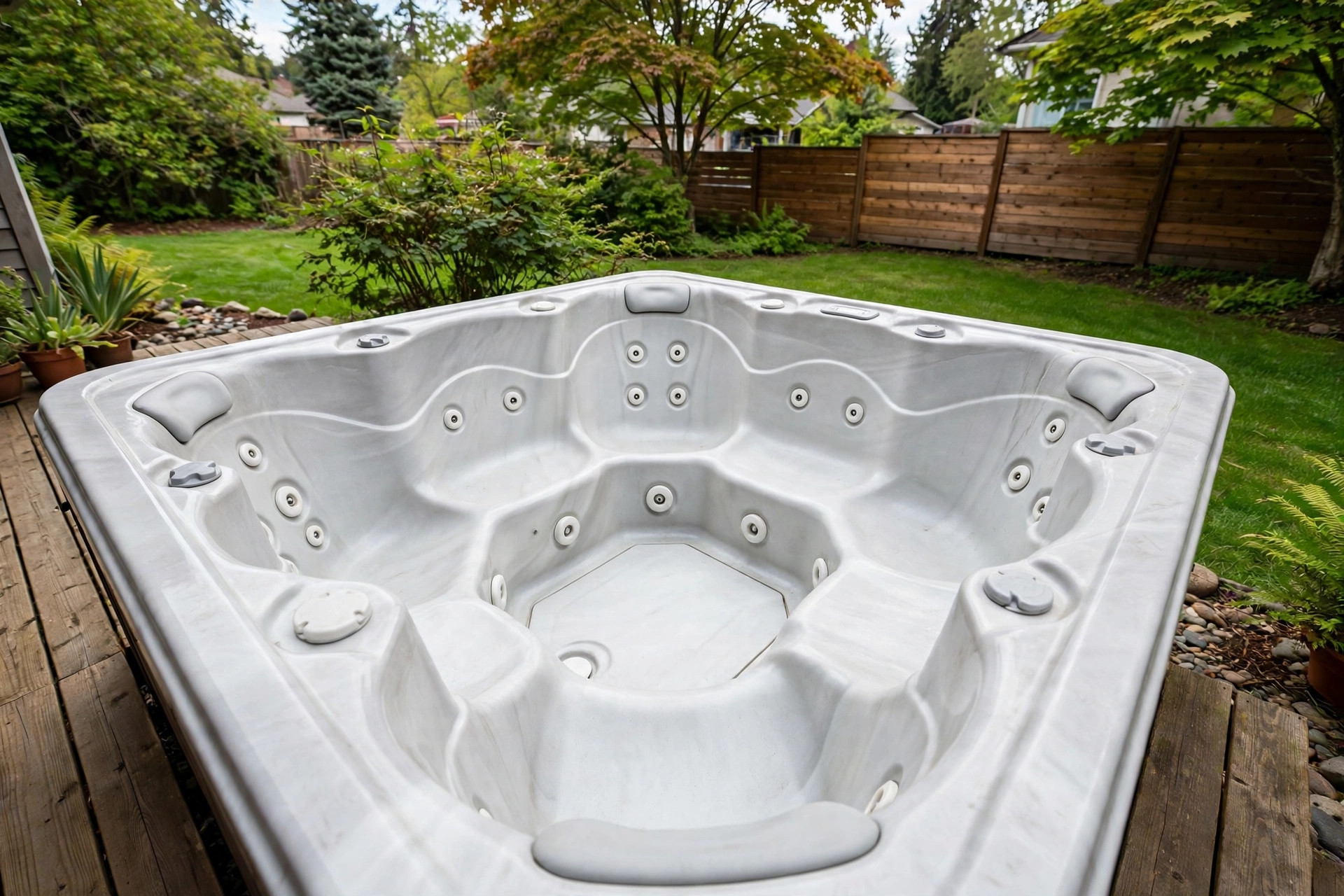

A hot tub is only as good as its jets. When the water stops pushing with real force, the whole soak feels flat. This hot tub jet replacement guide walks you through the full job: finding the right replacement jets, taking the old ones out, putting the new ones in, and testing the system. Most owners can finish the work in a single afternoon with simple tools and no special skill.
Why It Matters
Jets are the heart of a hot tub. They move the water, mix the chemicals, and give the massage feeling that makes a spa worth the money. A worn jet does none of this well. It spins weakly or stops turning at all. In many cases the rest of the tub is fine, so replacing the jets is the fix that brings the spa back to life.
Weak jets also waste energy. The pump works just as hard pushing water through a broken jet. Poor flow can let algae grow in quiet corners. That means more chemicals and more cleaning. A fresh set of jets protects your pump, your water, and your budget.
A hot tub jet replacement guide matters because jets fail often. Mineral scale, old plastic parts, and harsh chemicals wear them down. Many tubs need new jets every five to seven years. Knowing the steps saves you a service call that can cost hundreds of dollars.
What to Look For and How to Choose: Hot Tub Jet Replacement Guide
Not all jets are the same. They differ in size, thread type, and face diameter. Buy the wrong jet and it will not fit your shell. Start by reading the markings on the back of an old jet. Many brands stamp the part number and size there.
Know Your Jet Types
There are two main mounting styles. Threaded jets screw into the plumbing line behind the shell. Snap-in jets lock into a ring with a quarter turn. Look at how your old jet attaches before you order. A threaded jet needs the right thread size, often one and three-quarter inches or two and a half inches.
Faces come in sizes from about three inches to seven inches across. Measure the face of your old jet with a tape. Match that size so the jet covers the opening cleanly.
Match the Brand or Use a Universal Jet
Brand-name jets fit best when you own a popular make. Companies like Hot Spring and Bullfrog Spas sell parts made for their own models. If your tub is older or off-brand, universal jets can work. Just check the size and mounting style twice.
Check Flow and Spin
Jets come in fixed and rotating styles. Rotating jets give a wider massage. Fixed jets give a strong narrow stream. Many owners mix the two for variety. Check the flow rating if the seller lists one. A jet with a poor rating will feel weak even when new.
Buy a Few Extra
Jets are sold one at a time or in packs. A pack costs less per jet. Buy one extra of each size you use. If a jet breaks later, you will have the part on hand. This is one of the simplest tips in any hot tub jet replacement guide, and it saves a second order.
Types of Jets and Options
Directional Jets
These push a straight stream of water. You can point the nozzle by hand. They work well for back and shoulder massage. They are simple and last a long time.
Rotational Jets
These spin in a circle. The moving stream covers a wider area. They feel softer than directional jets. Many owners love them for leg and hip zones.
Massage Jets
Some jets have a ribbed face that pulses. Others mix air with water for a stronger feel. These are the premium option. They cost more but give a deeper massage.
Cluster and Neck Jets
Smaller jets sit high on the shell for the neck. They run on low flow. Make sure small jets match the small openings. Forcing a big jet into a small hole will crack the fitting.
You can read setup advice for hot tub systems at Hot Spring Spas and compare jet styles at Bullfrog Spas. General spa care guides at Swim University also cover jet upkeep.
Cost and Price
Jet prices range widely. A basic directional jet costs about fifteen to thirty dollars. A rotating or massage jet costs about thirty to sixty dollars. Premium brand-name jets can reach eighty dollars each.
A full set for a typical six-person tub may need eight to fourteen jets. Expect to spend between two hundred and five hundred dollars on parts. Packs of four or six lower the per-jet cost.
If you hire a technician, labor adds two hundred to four hundred dollars. The job takes them about two hours. Doing it yourself saves that labor charge. This hot tub jet replacement guide is built to make the do-it-yourself path clear.
Watch for hidden costs. If the plumbing line behind the shell is cracked, you may need a new jet body. A jet body costs twenty to forty dollars. Silicone sealant and a jet wrench add about twenty dollars more.
You can price parts at retailers like Leslie’s Pool Supplies or Pool Warehouse. Big-box stores such as Home Depot also carry common jet sizes.
The Replacement Steps
Work through these steps slowly. Rushing causes cross-threading and cracks.
Step 1: Turn Off the Power
Find the breaker for the hot tub and switch it off. Lock it if you can. Water and power do not mix. Test that the tub is dead by pressing the pump button.
Step 2: Lower the Water
You do not need to drain the tub fully. Lower the water below the lowest jet you plan to change. A garden hose works fine. Mark the water line with tape so you know when to stop refilling.
Step 3: Remove the Old Jet
Grip the jet face and turn it counter-clockwise. Threaded jets unscrew after a few turns. Snap-in jets turn about a quarter turn and pull free. If a jet is stuck, soak it with warm water to soften the scale. Never force it with pliers on the face. That can scratch the shell.
Step 4: Clean the Opening
Wipe the ring and opening with a soft cloth. Remove scale and grit. Check the rubber gasket or O-ring. A flat or cracked gasket should be replaced. Many new jets come with a fresh gasket in the box.
Step 5: Install the New Jet
Set the new jet straight into the opening. Turn it clockwise by hand. It should thread in smoothly. If it resists after half a turn, back it out and start again. Cross-threaded jets leak and strip the fitting.
Tighten snug by hand. Do not use a wrench on the face. A jet wrench fits the back of some jets, but most home jobs need only hand pressure.
Step 6: Refill and Test
Refill the tub to the normal level. Turn the power back on. Run the pumps on high and check each new jet. Look for leaks around the faces. Listen for odd sounds. A clicking jet may not be seated right. Remove it and refit.
Step 7: Balance the Water
Fresh water needs fresh chemicals. Test the pH, alkalinity, and sanitizer. Adjust to the maker’s range. Good water chemistry protects new jets from scale. Guides on how to maintain hot tub water chemistry explain the weekly routine in plain terms.
For a starter set of test strips and sanitizers, see our notes on the best hot tub chemicals starter kit. Balanced water also keeps the shell and heater in better shape.
Care and Upkeep
New jets last longer with simple care. Rinse the filter weekly. Dirty filters starve jets of flow. Soak jets in a vinegar solution once a year to clear scale. This takes ten minutes and keeps the moving parts free.
Do not run the pumps with the water too low. Air in the lines makes jets hammer and wear fast. Keep the water at the marked fill line.
Once a month, turn each rotating jet by hand. They should move with light pressure. A stiff jet is building scale. Pull it, clean it, and put it back.
Store spare jets indoors. Sun and heat crack plastic over time. A dry shelf in the garage is fine.
For more on spa structure and accessories, browse The Spruce and check safety rules from the U.S. Consumer Product Safety Commission.
Safety
Always kill the power at the breaker before you work. The pump switch alone is not enough. Keep tools out of the tub while you work. A dropped wrench can crack the acrylic shell.
Wear gloves when you handle old jets. Sharp scale edges can cut skin. If your tub uses strong chemicals, rinse the shell before you reach in.
Do not mix jet brands in one plumbing line unless the flow ratings match. A high-flow jet next to a low-flow jet can starve the small one. Check the maker’s chart when in doubt.
Children and pets should stay clear while the tub is open and drained. A half-drained tub is a slip risk.
Keep the area dry around the equipment pack. Water on live parts is the main danger in spa repair. When the job is done, close the equipment door and check that all panels are in place.
FAQ
How do I know my jets need replacing?
Weak flow is the first sign. Rotating jets that stop spinning are next. Cracks in the face, missing nozzles, and leaks around the ring all point to replacement. If cleaning does not fix the problem, new jets will.
Can I replace jets without draining the tub?
Yes, if you lower the water below the jet line. You only need the openings above water. Full drains waste water and time. This hot tub jet replacement guide uses the partial-lower method for that reason.
Do I need special tools?
No. Most jets come out by hand. A jet wrench helps with stubborn threaded jets. A soft cloth and silicone sealant cover the rest. Avoid metal tools on the shell.
How long do hot tub jets last?
Most last five to seven years. Hard water and heavy chemical use shorten that. Rotating jets wear faster than fixed ones because of the moving parts.
Will any jet fit my tub?
No. Size and mounting style must match. Measure the old jet and read its markings. When you are unsure, take the old jet to the store or match the part number online.
Should I replace all jets at once?
It is often smart. Jets age at the same rate. Replacing only the worst one leaves the rest close behind. A full set gives even flow and a better soak. It also costs less per jet in packs.
A Short Final Word
Replacing hot tub jets is one of the best value repairs a spa owner can do. The parts cost little, the tools are basic, and the payoff is instant. Strong flow, even massage, and cleaner water all come back with fresh jets.
Follow the steps in this hot tub jet replacement guide, match your sizes, and take your time with the threads. Keep the water balanced afterward, and your new jets will serve you for years. For related upkeep, you may also like our look at the best hot tub cover lifter reviews, which makes daily cover handling easier on your back.
References
Bullfrog Spas. (n.d.). Hot tubs and spas. https://www.bullfrogspas.com Hot Spring Spas. (n.d.). Hot tubs and spas. https://www.hotspring.com Leslie’s Pool Supplies. (n.d.). Pool supplies and equipment. https://www.lesliespool.com Pool Warehouse. (n.d.). Pool equipment and supplies. https://www.poolwarehouse.com Swim University. (n.d.). Pool and hot tub care guides. https://www.swimuniversity.com The Home Depot. (n.d.). Home improvement products. https://www.homedepot.com The Spruce. (n.d.). Home and garden advice. https://www.thespruce.com U.S. Consumer Product Safety Commission. (n.d.). Product safety information. https://www.cpsc.gov
Was this guide helpful?

About James Carter
The My Garden US editorial team writes practical, in-depth home and garden guides for American homeowners — tested advice, no fluff.
You May Also Like
Pool Coping Replacement Cost Estimate: A Plain Guide for Pool Owners
August 8, 2026 0 views
Salt Water Pool pH Keeps Rising: Causes and Fixes
March 23, 2026 0 views
Best Pool Cover for Inground Winter: How to Pick the Right One
August 7, 2026 0 views