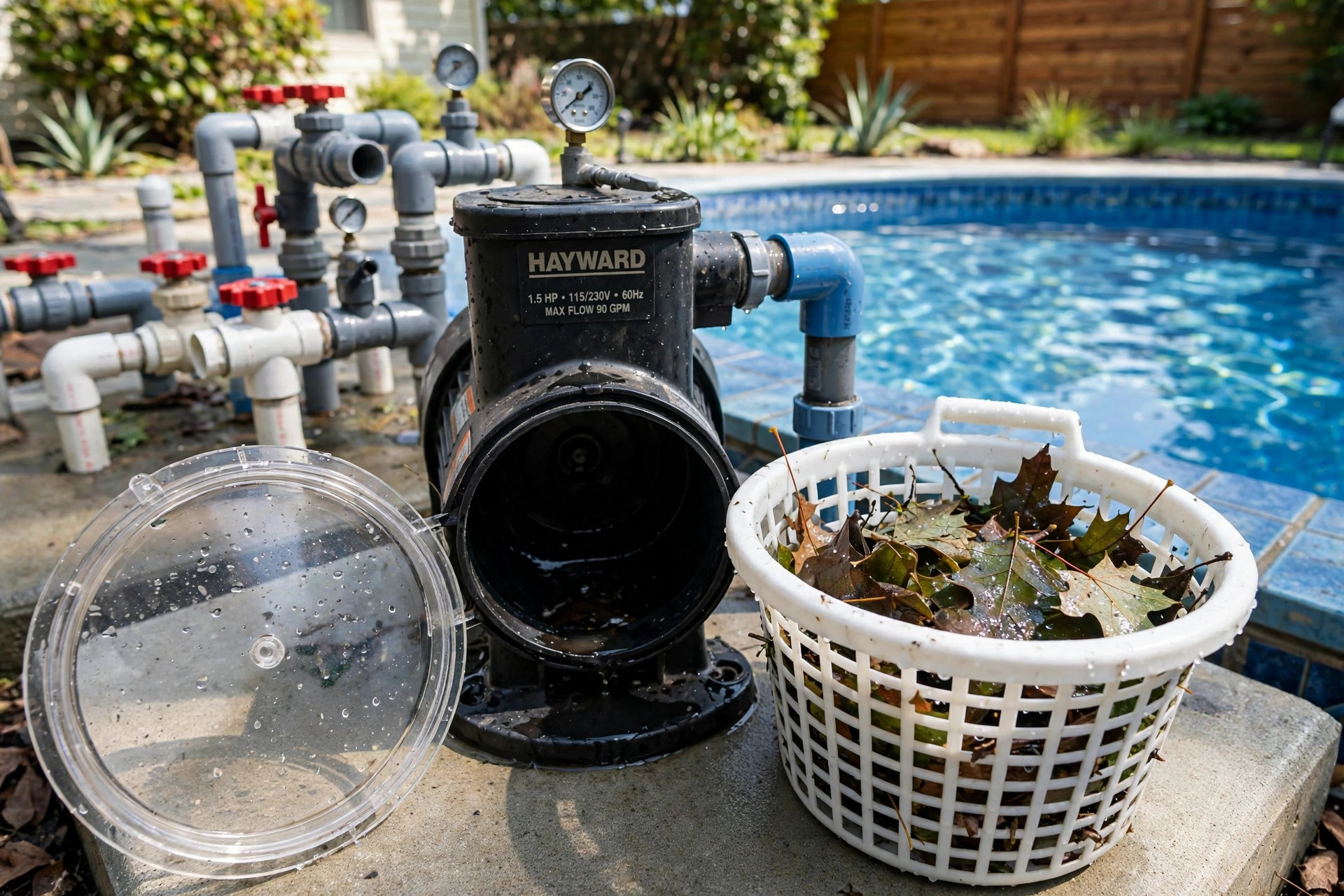

If you own a pool, you will need to learn how to clean pool pump basket at some point. It is one of the simplest pool care jobs. It takes only a few minutes. It protects the heart of your pool system. Many new pool owners skip this task. They do not know where the basket is. They do not know why it matters. This guide explains the full process in plain terms. You will learn what the basket does, what tools you need, and how to clean it step by step. You will also learn how often to do the job and what to watch for along the way.
Why a Clean Pump Basket Matters
The pool pump basket sits inside the pump, right before the motor. Water flows from the pool through the skimmer and into the pump. Along the way it picks up leaves, twigs, seeds, hair, and small bits of trash. The basket catches this debris. It keeps large pieces from entering the pump and the filter.
When the basket fills up, water flow slows down. The pump has to work harder. The motor can overheat. In bad cases the pump can burn out. A clogged basket also starves the filter of water. Your water chemistry becomes harder to manage. You may end up with cloudy or green pool water that costs more to fix.
Cleaning the basket on a regular schedule is cheap insurance. It keeps the pump running at full strength. It extends the life of the pool pump. It also helps your filter last longer, since less debris reaches it. Guides at Swim University and Leslie’s Pool Supplies both list basket cleaning among the first maintenance tasks every pool owner should master.
What You Will Need: How to Clean Pool Pump Basket
You do not need special tools for this job. Most pool owners already have everything at hand. Gather the following before you start:
– A garden hose with a spray nozzle – A bucket or plastic bag for the debris – A small brush or old toothbrush for stubborn dirt – Pool lubricant for the pump lid O-ring, if you have it – A spare pump basket, if you keep one on hand – A towel for wiping your hands
If your lid O-ring looks dry or cracked, a tube of silicone-based pool lubricant is worth buying. Pool Warehouse and other pool supply stores carry it at a low price. A spare basket is also useful. Some owners swap in a clean basket right away and rinse the dirty one later.
How to Clean a Pool Pump Basket
Follow these steps in order. The whole job takes about ten minutes once you have done it a few times.
Step 1: Turn Off the Pool Pump
Safety comes first. Turn off the pool pump at the switch or the circuit breaker. Never open the pump lid while the pump is running. Water pressure inside the pump can push the lid off with force. Let the pump sit for one minute after you switch it off. This gives the system time to lose pressure.
Step 2: Close the Valves
Look for the valves on the pipes near the pump. Most systems have a suction-side valve between the pool and the pump. Close it. If you have a multiport valve on the filter, note its position so you can return it later. Some inground pools do not have separate valves. In that case, you may need to plug the skimmer with a winter plug or a rubber stopper to slow the water flow while you work.
Step 3: Open the Pump Lid
The pump lid is the round or oval clear cover on top of the pump. It may twist off with a turn, or it may be held by knobs or a clamp ring. Turn it slowly. If it is tight, tap it gently with the heel of your hand. Do not use metal tools that can crack the plastic. Some lids are easier to open when the O-ring is greased, which is one more reason to keep it lubricated. Information from Pentair and Hayward, two major pump makers, stresses that lids should be opened only after the power is off and pressure is released.
Step 4: Remove the Basket
Lift the basket straight out of the pump housing. It should slide out with a gentle pull. Take note of how it sits so you can put it back the same way. Most baskets have a handle or a notch for your fingers. If the basket is full of wet leaves, it can be heavy. Hold it over the housing for a moment to let water drain back into the pump.
Step 5: Empty and Rinse the Basket
Tip the basket upside down into your bucket or bag. Shake it to loosen stuck leaves. Then rinse it well with the garden hose. Use a firm spray, not a jet so strong that it damages the plastic mesh. For grit stuck in the mesh, scrub lightly with the small brush. Rinse until water runs clear through the mesh. If your basket is cracked, warped, or missing chunks of mesh, this is the time to replace it. A damaged basket lets debris pass through, which defeats its purpose.
Step 6: Check the Basket and the Lid Seal
Before you put the basket back, inspect the inside of the pump housing. Scoop out any leaves or pebbles with your fingers. Look at the lid O-ring, which is the rubber ring that seals the lid. Wipe it clean. If it is dry, apply a thin coat of pool lubricant. If it is cracked or flat, replace it. A worn O-ring lets air into the system. Air in the system causes the pump to lose prime and run dry, which can damage the motor. The U.S. Consumer Product Safety Commission also notes that well-maintained pool equipment with sound seals reduces the risk of suction and pressure problems.
Step 7: Put Everything Back
Slide the clean basket into the housing. Make sure it sits flat and lines up with the suction port. Place the lid back on and tighten it firmly. Do not over-tighten. Reopen any valves you closed. Remove the skimmer plug if you used one.
Step 8: Restart the Pump
Turn the pump back on at the switch or breaker. Watch the lid for a few seconds. Look for drips or air bubbles under the lid. A few bubbles at first are normal. They should clear within a minute as the pump primes. Check that water is moving through the skimmer and the return jets. If the pump hums but does not move water, turn it off and check the lid seal again. Air leaks are the most common cause of a pump that will not prime.
Inground and Above-Ground Baskets
Inground pool pumps and above-ground pool pumps use baskets that work the same way, but they differ in size and access. Inground pumps are larger. Their baskets hold more debris. They sit in a pump room or near the equipment pad. Above-ground pump baskets are smaller and may sit close to ground level. Some above-ground systems use a skimmer basket as the main line of defense and a smaller pump strainer basket as backup.
The cleaning steps are the same for both types. The main difference is frequency. Above-ground baskets fill faster because they are small. Inground systems with big trees nearby may also need frequent checks. Advice from The Spruce on pool equipment care notes that matching your cleaning schedule to your yard conditions matters more than the type of pool you own.
How Often Should You Clean the Basket?
There is no single rule. Check the basket at least once a week during swim season. If your pool sits under trees, check it two or three times a week in fall. During pollen season or after storms, check it daily. A basket that is half full of debris still flows well. A basket that is packed tight does not.
Watch the pump’s pressure gauge. A sudden drop in pressure on the filter gauge can signal a full basket. So can weak return jets or a skimmer that barely pulls. Many owners add basket checks to the same routine as testing the water. It takes only a minute to glance through a clear pump lid and see how full the basket is.
If you use a pool vacuum for leaves, the pump basket still needs attention. Vacuums pick up what is on the pool floor. The basket catches what floats in through the skimmer. The two jobs complement each other.
Cost and Price
Cleaning the basket costs nothing if you do it yourself. It takes water from your hose and a few minutes of time. Replacement parts are cheap. A new pump basket usually costs between ten and forty dollars, depending on the pump model. A new lid O-ring costs about five to fifteen dollars. A tube of pool lubricant costs under ten dollars and lasts for years.
Compare that with the cost of a burned-out pump motor, which can run into hundreds of dollars. Regular basket cleaning is one of the cheapest ways to protect your equipment. Retailers such as The Home Depot stock replacement baskets and O-rings for the most common pump brands, so parts are easy to find.
Care and Upkeep Through the Season
Basket cleaning is part of a larger upkeep routine. Keep the skimmer baskets empty too, since they catch debris first. Brush the pool walls weekly. Backwash or clean the filter on the schedule your filter maker suggests. Test water chemistry two or three times a week.
At the start of the season, inspect the pump basket for winter damage. Plastic can become brittle in cold weather. Mid-season, watch for small cracks from sun exposure. At closing time, remove the basket and store it indoors if you winterize your pool. A basket that sits in a freezing pump housing can crack.
If you own a spa or hot tub, the same habit applies on a smaller scale. Spas use small strainer baskets that clog quickly. Hot tub resources from Hot Spring and Bullfrog Spas remind owners that clean water paths protect heaters and jets just as they protect pool pumps.
Safety Tips
Always cut power before you open the pump. Keep children away from the equipment pad while you work. Never reach into a running pump. Wear gloves if you have cuts on your hands, since pool water and debris can carry germs.
If your pump lid is stuck, do not pry it with a screwdriver. You can crack the lid or the housing. Instead, turn off the power, release any pressure through the filter air-relief valve, and try again. If the lid still will not move, call a pool service professional. Forcing it can cause a leak or an injury.
Frequently Asked Questions
Can I clean the pool pump basket while the pump is running?
No. Turn the pump off first. Opening the lid on a running pump is dangerous. Pressurized water can force the lid off. The pump can also draw air into the system, which causes it to lose prime.
How do I know if my basket needs cleaning?
Look through the clear pump lid. If you see leaves packed against the mesh, clean it. Other signs include weak return jets, a skimmer that barely pulls, or a drop in filter pressure. When in doubt, open it and look.
What happens if I never clean the pump basket?
Debris builds up and blocks water flow. The pump works harder and can overheat. The motor may burn out. Poor flow also leads to cloudy water and algae growth. In the worst case, a blocked basket can damage seals and cause leaks.
Can a cracked basket still work?
Not well. A cracked basket lets leaves and twigs pass into the pump. They can jam the impeller or reach the filter. Replace a cracked basket as soon as you spot the damage. Spare baskets are cheap and easy to swap.
Do I need to prime the pump after cleaning the basket?
Usually not. If you closed the valves and reopened them, the pump should prime itself within a minute. If it does not, check the lid O-ring for wear and make sure the lid is seated firmly. Air leaks are the usual cause of priming trouble.
How long does a pump basket last?
A good basket lasts several years. Sun exposure and chemicals break down the plastic over time. Inspect it each time you clean it. Replace it when you see cracks, warping, or missing mesh.
A Final Word
Learning how to clean pool pump basket is a small skill with a large payoff. It takes ten minutes. It costs nothing. It keeps your pump healthy and your water clear. Make it part of your weekly pool routine. Your equipment will last longer, and your pool will be ready for a swim whenever you are.
References
Bullfrog Spas. (n.d.). Hot tubs and spas. https://www.bullfrogspas.com Hayward. (n.d.). Pool equipment and automation. https://www.hayward.com Hot Spring Spas. (n.d.). Hot tubs and spas. https://www.hotspring.com Leslie’s Pool Supplies. (n.d.). Pool supplies and equipment. https://www.lesliespool.com Pentair. (n.d.). Pool and spa equipment. https://www.pentair.com Pool Warehouse. (n.d.). Pool equipment and supplies. https://www.poolwarehouse.com Swim University. (n.d.). Pool and hot tub care guides. https://www.swimuniversity.com The Home Depot. (n.d.). Home improvement products. https://www.homedepot.com The Spruce. (n.d.). Home and garden advice. https://www.thespruce.com U.S. Consumer Product Safety Commission. (n.d.). Product safety information. https://www.cpsc.gov
Was this guide helpful?

About Lisa Anderson
The My Garden US editorial team writes practical, in-depth home and garden guides for American homeowners — tested advice, no fluff.
You May Also Like
Best Pool Cover for Inground Winter: How to Pick the Right One
August 7, 2026 0 views
Pool Deck Resurfacing Cost Near Me: Prices, Options, and How to Hire
July 3, 2026 0 views
How to Clean Pool Coping Tiles: A Simple Step-by-Step Guide
September 26, 2026 0 views