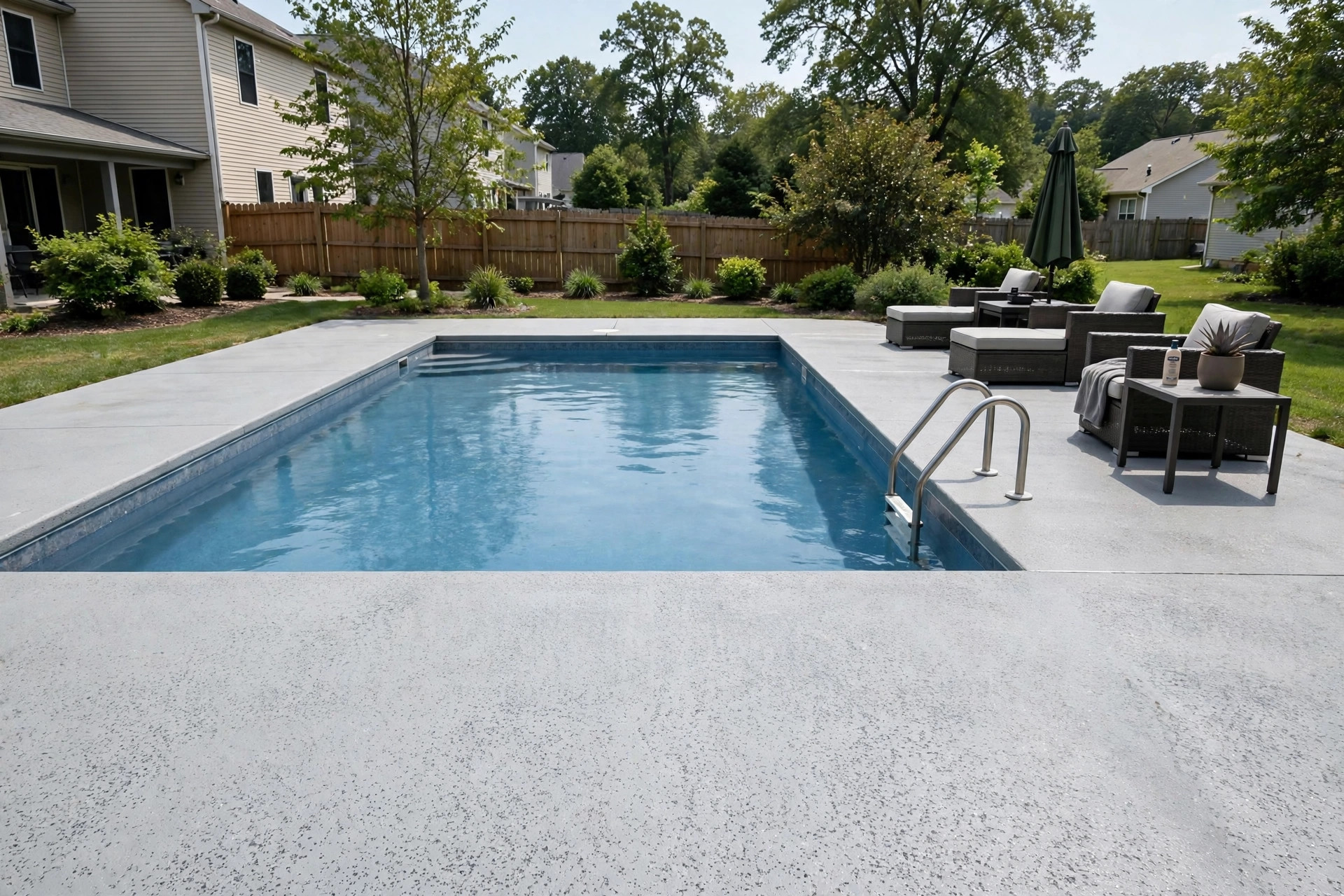

The best pool deck paint for concrete is the one that stands up to sun, water, and bare feet. A pool deck takes a hard beating. Chlorine splashes on it. The sun bakes it. Kids run across it all summer. Plain concrete turns rough, gray, and hot underfoot. A good coat of paint can fix all three problems at once. This guide will help you choose the right product, plan the job, and keep the finish in good shape for years.
Why a Painted Deck Matters
A pool deck is more than a walking surface. It frames the whole backyard. When the concrete around a pool looks worn, the entire yard looks tired. Paint gives the deck a fresh color and a smooth, even finish. It hides stains from leaves, rust, and old sealers. It can also make the deck safer and cooler.
Heat is the first reason to paint. Bare concrete soaks up the sun. On a hot July afternoon, it can burn tender feet. Light-colored deck paint reflects heat instead of storing it. Many products are made to keep surface temperatures lower than plain concrete. That means more time in the pool and less hopping across the deck.
Safety is the second reason. Wet concrete is slippery. A fall on concrete can break a bone. Good pool deck paints include grit or texture that adds grip. Some come with anti-slip additives built in. With others, you stir in a grit packet before rolling. Either way, the result is a surface that holds your footing when it is wet.
The third reason is protection. Water and pool chemicals seep into bare concrete. Over time, this causes pitting and flaking. Paint forms a barrier. It slows down the damage from chlorine and sun. A painted deck often lasts years longer between major repairs than an unpainted one.
Finally, there is the matter of looks. A clean deck in a soft sand, gray, or blue-gray tone makes the water look bluer. It ties the pool to the house and the garden. Home care writers at The Spruce note that a fresh finish on the deck is one of the cheapest ways to refresh a whole pool area.
What to Look For in a Pool Deck Paint: Best Pool Deck Paint for Concrete
Not every paint will work on concrete around a pool. The label must say it is meant for concrete, masonry, or pool decks. Ordinary house paint will peel within weeks. Here are the qualities that matter most.
Slip Resistance
This is the most important feature. Look for words like “non-slip,” “textured,” or “anti-skid” on the can. The paint should keep its grip when wet. If the product does not include grit, ask the store for an anti-slip additive. It costs little and mixes in with a stir stick. Test a small patch first. The surface should feel rough under your shoe but not sharp on bare skin.
Heat Reflection
Some deck paints are made with heat-reflective pigments. These coatings bounce back more of the sun’s rays. Dark colors get hotter, so choose light tones for comfort. White, sand, light gray, and pale blue are common picks. If you live in the South or Southwest, this feature matters a great deal.
Water and Chemical Resistance
Pool decks face constant splashes of chlorinated water. The paint must resist chlorine, salt, and the chemicals used to balance pool water. Acrylic pool deck paints are built for this. Check the label for “chlorine resistant” or “chemical resistant.” A paint that softens when pool water sits on it will not last a season.
Durability
The coating should resist scuffs from chairs, toys, and pool equipment. Two thin coats last longer than one thick coat. Look for products that promise several years of service on concrete. Reviews from other homeowners can tell you how a paint holds up in real weather.
Types of Pool Deck Paint for Concrete
There are three main types of pool deck paint for concrete surfaces. Each has strengths and weak points.
Acrylic Deck Paint
Acrylic is the most common choice. It is water-based, which makes cleanup easy. It goes on with a roller like ordinary paint. It dries fast, often in a few hours. It resists chlorine and sun fade well. Most acrylic deck paints cost less than the other types. For most homeowners, acrylic is the best balance of price and performance. Paint makers such as Behr publish coverage rates and color charts for deck coatings on their websites. Renovation advice sites like Bob Vila also compare paint types for concrete surfaces.
Epoxy Coatings
Epoxy is tougher than acrylic. It forms a hard shell over the concrete. It resists chemicals, stains, and heavy foot traffic very well. Epoxy comes in two parts that you mix before use. It is harder to apply. The working time is short, and the fumes are strong. It also tends to be more slippery unless you add grit. Epoxy suits indoor pool rooms and commercial decks. For a home backyard, it may be more work than you need.
Textured Non-Skid Coatings
These are thick coatings with built-in rubber or sand texture. They create a cushioned, grippy surface. They are very comfortable on bare feet. They hide cracks and rough spots in old concrete well. The cost is higher than plain acrylic paint. They take more work to roll on evenly. If your deck is old and pitted, a textured coating may be the best fix short of resurfacing.
Sealers Are Not Paint
A clear sealer is not the same as paint. Sealers soak into concrete and protect it without adding color. They do not hide stains or change the look. Some homeowners put a clear sealer over deck paint for extra protection. That can work well. But a sealer alone will not give you the color, grip, or heat reflection of a true deck coating.
Cost and Price
Price depends on the type of paint, the brand, and the size of your deck. A gallon of acrylic pool deck paint usually costs between 30 and 60 dollars. Textured coatings can run 60 to 100 dollars per gallon. Epoxy kits cost more, often 80 to 150 dollars for enough to cover a few hundred square feet.
One gallon covers about 200 to 300 square feet with one coat. Most jobs need two coats. A medium deck of 500 square feet may need four to six gallons. Add in primer, cleaner, grit additive, and rollers, and the total for a do-it-yourself job often lands between 300 and 700 dollars.
A professional job costs more. Painters may charge 2 to 5 dollars per square foot for prep and two coats. If the concrete needs crack repair or heavy cleaning first, the price rises. You can compare this with pool deck resurfacing costs in your area. Resurfacing gives a brand-new surface, but paint costs far less and takes far less time.
Prices also move with the season. Late spring is the busy season for pool products. Buying in early spring or fall can save money. Watch for sales at home improvement stores in the spring.
How to Apply Pool Deck Paint
Good prep decides the result. Paint over dirt or old flakes will fail. Take your time with these steps.
1. Clean the deck. Sweep off leaves and dirt. Scrub with a deck cleaner and a stiff brush. Rinse with a hose or pressure washer on a low setting. If your deck has old paint that is peeling, scrape and sand those spots. Guides to cleaning your concrete pool deck can help you pick the right cleaner.
2. Repair the concrete. Fill small cracks with concrete crack filler. Let patches dry fully. Smooth rough patches with a wire brush or grinder.
3. Etch if needed. Some paints call for acid etching. This opens the pores of smooth concrete so paint can grip. Follow the product directions. Rinse well and let the deck dry for a day or two.
4. Prime. A concrete primer helps paint stick and last longer. One coat of primer is usually enough.
5. Roll on the paint. Use a long-nap roller for texture. Cut in edges with a brush. Apply thin, even coats. Let the first coat dry as the label says, then add the second. If you use a grit additive, stir it in just before the final coat.
6. Cure before use. Paint feels dry in hours, but it needs days to harden fully. Keep feet, chairs, and water off the deck for the time the label states. Rushing this step causes early wear.
Work on a dry day with mild temperatures. Paint does not bond well in rain or extreme heat. Morning hours are often best. Step-by-step guides from repair experts at Family Handyman offer more detail on concrete prep for do-it-yourself painters.
Care and Upkeep
A painted deck needs little care, but regular cleaning keeps it fresh. Sweep the deck weekly. Hose it down to remove dust and pollen. Clean spills of sunscreen and food quickly, since oils can stain the paint.
Once or twice a year, give the deck a deeper wash. Use a mild pool deck cleaner and a soft brush. Avoid bleach in strong doses. It can fade color. A pressure washer is fine on a low setting, but hold it back. A strong blast can lift paint at the edges.
Touch up worn spots as they appear. Keep a small can of the same paint and color for repairs. Pool owners can find touch-up supplies at pool supply retailers such as Leslie’s. A quick touch-up each spring stops small bare spots from spreading. With basic care, a good acrylic deck paint lasts three to five years. Textured coatings may last longer.
Safety
Slips are the main danger around any pool. Even the best non-slip coating needs care. Keep the deck free of algae, which makes any surface slick. Trim back plants that drop leaves and berries onto the deck. Make sure the deck drains well. Standing water is a hazard on any finish.
Fumes matter during the job. Paint and etch in open air. Keep children and pets away until the deck is dry and cured. Wear gloves and eye protection when handling acid etch or strong cleaners. Save leftover paint for touch-ups. The Environmental Protection Agency offers guidance on safe disposal of paint waste and cans.
The federal safety agency publishes guidance on pool and spa safety. It covers barriers, drains, and slip hazards. Read it before you start a pool project. Pool care educators at Swim University also offer clear advice on keeping decks and water safe through the season.
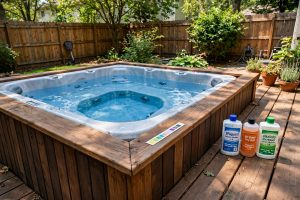
Think about the area beyond the pool, too. Many homes have a spa or hot tub deck nearby. The same non-slip, heat-reflective paint works well on those surfaces.
FAQ
How long does pool deck paint last on concrete? Most acrylic deck paints last three to five years on concrete. The exact life depends on sun, foot traffic, and prep work. Textured coatings can last five to seven years. When the color fades or the surface feels smooth, it is time to recoat.
Can I paint over old pool deck paint? Yes, if the old paint is sound. Scrape off loose flakes. Sand rough edges. Clean the surface well. Prime bare spots. Then roll on the new coat. If more than a quarter of the old paint is peeling, strip it all off first. Painting over failing paint wastes your work.
What color is best for a pool deck? Light colors work best. White, sand, light gray, and pale blue stay cooler underfoot. They also make the pool area look larger and brighter. Dark colors absorb heat and can burn feet in summer. If you love a dark tone, use it on a border or trim, not the main walking area.
Is pool deck paint slippery when wet? A paint made for pool decks should not be slippery. Look for non-slip or textured products. Add a grit additive if the paint does not include one. Test a patch with water before you paint the whole deck. Smooth paints meant for walls or floors are unsafe around pools.
How soon can we use the pool after painting? Follow the label. Most products ask for two to three days of curing before heavy use. Some need a full week. Walking on the deck too soon can leave marks and shorten the life of the finish. Plan the job for a stretch of dry weather when you can stay out of the pool.
Does pool deck paint work on pavers? Most deck paints are made for poured concrete. Pavers need a different approach. The gaps between pavers move and shift, which cracks rigid paint. If your deck uses pavers, read guides on maintaining pool deck surfaces instead. There are sealers made just for pavers.
A Final Word
The best pool deck paint for concrete turns a hot, gray slab into a cool, safe, good-looking surface. Choose a paint made for pool decks. Pick a light color with non-slip texture. Prep the concrete well. Take your time with two coats. The result will serve your family for years of summer days.
References
Behr. (n.d.). Paints, primers, and stains. https://www.behr.com Bob Vila. (n.d.). Home improvement advice. https://www.bobvila.com Bullfrog Spas. (n.d.). Hot tubs and spas. https://www.bullfrogspas.com Family Handyman. (n.d.). DIY home repair and maintenance. https://www.familyhandyman.com Leslie’s Pool Supplies. (n.d.). Pool supplies and equipment. https://www.lesliespool.com Swim University. (n.d.). Pool and hot tub care guides. https://www.swimuniversity.com The Home Depot. (n.d.). Home improvement products. https://www.homedepot.com The Spruce. (n.d.). Home and garden advice. https://www.thespruce.com U.S. Consumer Product Safety Commission. (n.d.). Product safety information. https://www.cpsc.gov U.S. Environmental Protection Agency. (n.d.). Protecting human health and the environment. https://www.epa.gov
Was this guide helpful?

About Lisa Anderson
The My Garden US editorial team writes practical, in-depth home and garden guides for American homeowners — tested advice, no fluff.
You May Also Like
How to Raise Pool Alkalinity Levels the Safe Way
September 7, 2026 0 views
Best Hot Tub for Seniors Reviews: What to Know Before You Buy
March 22, 2026 0 views
How to Clean Pool Tile Grout and Keep Your Waterline Bright
July 1, 2026 0 views