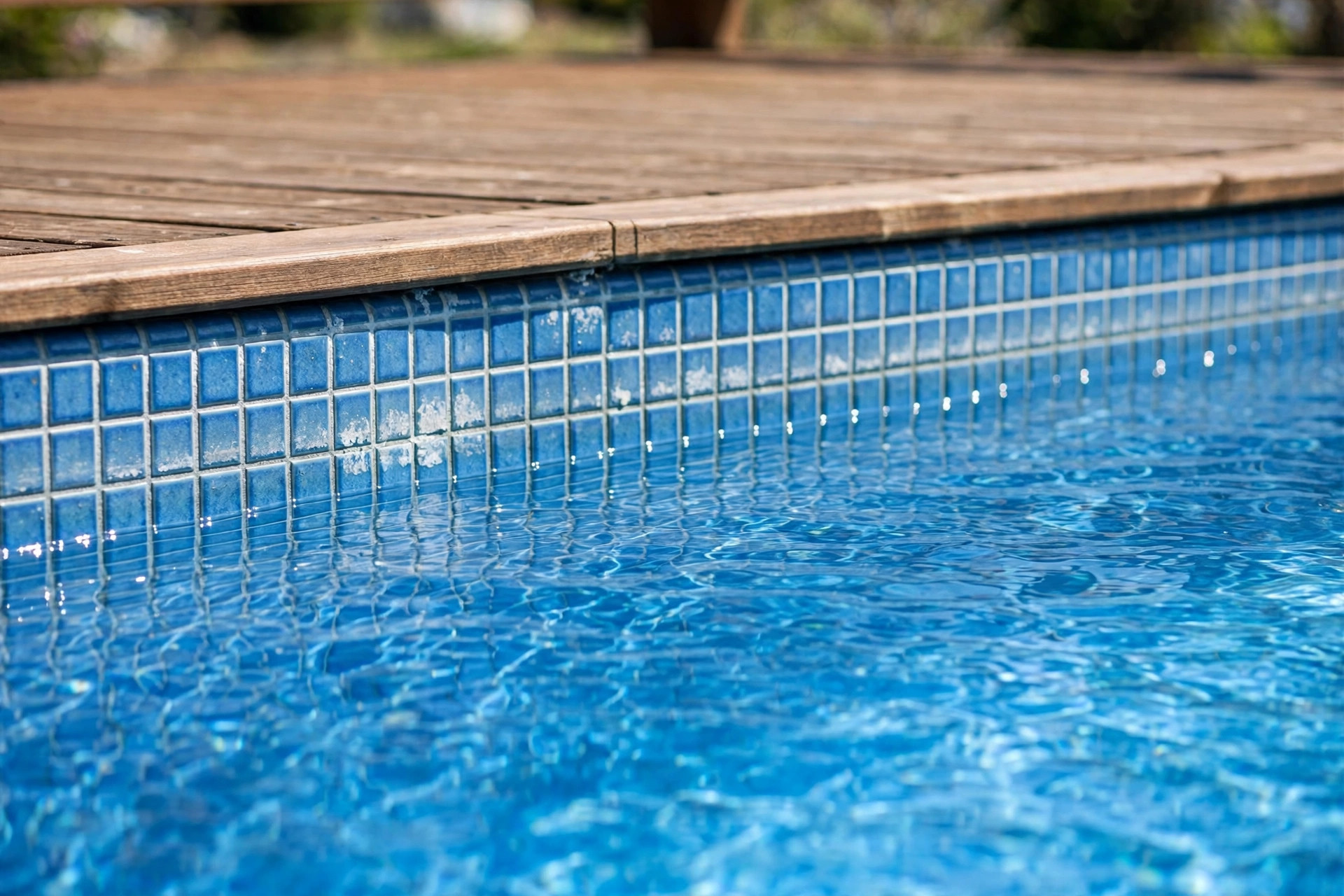
Many pool owners ask how to remove calcium from pool tile. White crust on the waterline is a common sight. It forms when hard water dries on tile again and again. The tile starts to look dull and rough. Left alone, the scale grows thicker each season. The good news is that this problem has simple fixes. You can clean the tile with tools you may already own. This guide shows each step in plain words. By the end, you will know which method fits your pool and how to keep the tile clean all year.
Why It Matters
Calcium scale on pool tile is more than a cosmetic issue. The white layer is hard mineral deposit. It traps dirt and oil from swimmers. Algae can hide in the rough surface. That makes the pool harder to keep clean.
Thick scale can also damage the tile. The rough edge scrapes bathers who brush against it. In cold climates, water trapped behind scale can freeze and pop grout loose. A clean waterline helps the pool last longer. It also keeps the water chemistry more stable, which means fewer chemicals to buy.
Scale forms for a few clear reasons. Hard fill water adds calcium with every top-off. High pH and high alkalinity make calcium drop out of solution. Hot weather and splashing speed up the process. Areas with very hard tap water see scale sooner. If you know the cause, you can pick the right fix.
Scale also hides small tile problems. Cracked grout and loose tiles can sit under the crust unnoticed. When you clean the tile, look for cracks, missing grout, and sharp edges. Fix them early. Small repairs are cheap. Waiting can lead to water leaks behind the tile, and that repair costs far more.
What to Look For Before You Start: How to Remove Calcium From Pool Tile
Not all white marks are the same. Two kinds of scale appear on pool tile. The first kind feels rough and looks white or gray. It comes off with mild acid. The second kind is tougher and may look smooth and shiny. It resists simple scrubbing.
Test a small spot first. Pick a hidden corner of the tile line. Try a stiff brush with water. If nothing changes, try white vinegar on a cloth. Leave it for a few minutes, then wipe. If the white film softens, you likely have the common kind. If nothing happens, you may need a stronger product or a pro.
Check your water before you clean. Test strips or a liquid kit will do. Write down pH, alkalinity, and calcium hardness. If pH is above 7.8, scale will return fast. If calcium hardness is very high, you may need to drain part of the pool later. Plan to adjust the water after cleaning. Guides from Swim University explain basic water tests in simple steps.
Look at the tile itself. Glazed ceramic tile handles scrubbing well. Glass tile is more delicate. Natural stone tile needs extra care, since acid can etch it. If your pool has stone coping near the tile, protect it from drips. Tape plastic sheeting over stone before you start. Leslie’s and other pool supply shops sell tile-safe cleaners made for this job.
Types of Removal Methods
There are four main ways to remove calcium deposits from pool waterline tile. Start with the gentlest method. Move to stronger methods only if you need them. Work on a cool, cloudy day if you can. Direct sun dries products too fast and makes the job harder. Keep a bucket of clean water nearby for rinsing.
Scrubbing With a Pumice Stone
A wet pumice stone is the classic tool. Wet the stone and the tile. Rub gently in small circles. The stone wears down the scale without scratching glazed tile. Keep both surfaces wet the whole time. This works well for light scale. It takes elbow grease, but it is cheap and safe. Replace the stone when it gets smooth. Pumice and pool brushes are easy to find at Home Depot stores and online.
Vinegar Solution
White vinegar cuts mild scale. Mix one part vinegar with one part water in a spray bottle. Spray the tile and wait ten minutes. Scrub with a nylon brush or a non-scratch pad. Rinse with pool water. For stubborn spots, soak a cloth in the mix and press it on the tile for half an hour. Vinegar is safe for most tile, but rinse stone nearby right away. For a light film, this may be all you need. It also works well as a weekly wipe-down to stop new scale.
Store-Bought Tile Descalers
When vinegar is not enough, a pool tile cleaner can help. These products use mild acids made for pool use. Read the label before you buy. Make sure it says safe for your tile type. Apply with a sponge or brush. Wear gloves and eye protection. Work in small sections so the product does not dry on the tile. Rinse each section well. Products like these are stocked by retailers such as Pool Warehouse.
Professional Soda or Bead Blasting
For heavy scale, pros use soda blasting. The tech sprays baking soda or fine glass beads at the tile. It strips thick scale fast without harming the tile. This method costs more, but it saves hours of hand work. It is the best choice when the waterline is rough and thick all the way around. Ask the tech about your tile type first. Glass and stone need a gentle touch even with blasting.
How to Choose the Right Method
Match the method to the scale. Light film means scrubbing or vinegar. Medium scale means a descaler. Heavy, rough scale means a pro with blasting gear.
Think about your tile type. Ceramic tile takes the most abuse. Glass tile wants gentle tools only. Stone tile and grout want pH-neutral products. When in doubt, call a local pool service for advice. A short visit is cheaper than replacing etched tile.
Think about your time. Hand scrubbing a whole pool can take a full weekend. Blasting finishes in hours. If your time is tight, the pro cost may be worth it.
Think about your skill level too. Mild methods are simple for any beginner. Acid products need care and proper gear. If you feel unsure, start with scrubbing. You can always call a pro later. There is no shame in getting help for a tough job.
Cost and Price
Most owners spend little to fix this problem. A pumice stone costs a few dollars. A gallon of white vinegar costs a few dollars more. A brush and gloves add a small amount. Store-bought descalers run from about ten to thirty dollars a bottle.
Pro blasting is the big expense. Prices vary by region and pool size. Many companies charge by the linear foot of tile. Expect a few hundred dollars for an average pool. Get two or three quotes. Ask what method they use and how long the job takes. The Consumer Product Safety Commission site also offers general pool safety guidance worth reading before any pool work.
Water testing is another small cost. Test strips are cheap. A liquid kit costs more but lasts longer. Keeping water balanced after cleaning is the best way to protect your money spent. A floating chlorine dispenser and a basic skimmer net are other low-cost tools that help the water stay clear between tests.
Care and Upkeep After Cleaning
Cleaning is only half the job. Keeping the scale off is the other half. Test the water every week. Keep pH between 7.4 and 7.6. Keep alkalinity in the right range for your pool. Lower pH lets calcium stay dissolved instead of crusting on tile.
Watch calcium hardness. Hard fill water pushes it up over time. Some pools need partial draining each year to reset it. A sequestering agent can also slow new scale. Add it as the label directs. Hot Spring and Bullfrog Spas both publish water care guides that explain balance in plain terms, and the advice works for pools too.
Wipe the waterline each week. A quick pass with a brush stops new film before it hardens. Top off the pool with soft water if you can. A simple hose filter for filling can cut calcium at the source.
Keep a small notebook by the pool equipment. Write down your test results each week. Note when you add chemicals and how much. Over a season, this log shows patterns. You will see when scale risk rises. Owners who track numbers catch problems before the tile shows them.
Winter care matters too. If you close your pool, brush the tile line before you cover it. Scale that sits all winter is harder to remove in spring. Guides on /how-to-winterize-pool-equipment-properly/ walk through the full closing routine.
Safety
Safety comes first with any acid product. Wear rubber gloves and safety glasses. Never mix acid with chlorine or bleach. The fumes can be dangerous. Work with good air flow if the pool is indoors.
Keep kids and pets away while you work. Rinse all tools and the tile when done. Store chemicals in a cool, dry place, out of reach of children. If a product touches skin, rinse with plenty of water. Call poison control if you feel ill. Home care sites like The Spruce offer extra cleaning safety tips.
FAQ
How often should I clean calcium from pool tile? Wipe the waterline weekly during swim season. Do a deep clean once or twice a year. Pools in hard-water areas may need it more often.
Can vinegar damage pool tile? Vinegar is safe for glazed ceramic tile when rinsed well. It can etch natural stone and some glass tile. Test a hidden spot first and rinse stone nearby right away.
Why does calcium keep coming back? High pH, high alkalinity, and hard fill water cause repeat scale. Balance the water after cleaning and wipe the line weekly to slow it down.
Is it safe to swim right after using a descaler? Wait until you have rinsed the tile and retested the water. Most products say to wait until pH and chlorine are back in range. When in doubt, wait a day.
Should I hire a pro or do it myself? Do it yourself for light to medium scale. Hire a pro for thick scale, stone tile, or glass tile. Blasting is fast and safe in trained hands.
Does an inflatable hot tub get calcium scale too? Yes, warm spa water can scale fast. The same balance rules apply. For buying advice, see our guide on the /best-inflatable-hot-tub-for-couples/. And if you use an above-ground pool, keep its entry clean too — see /best-pool-steps-for-above-ground/.
A Short Final Word
Learning how to remove calcium from pool tile is a skill every pool owner should have. Start gentle, test your water, and keep up with weekly wipes. Your tile will stay smooth and bright. Your pool will look better and cost less to run. Small habits now save big repairs later. Do the job once the right way, and the upkeep from then on is simple.
References
Bullfrog Spas. (n.d.). Hot tubs and spas. https://www.bullfrogspas.com Hot Spring Spas. (n.d.). Hot tubs and spas. https://www.hotspring.com Leslie’s Pool Supplies. (n.d.). Pool supplies and equipment. https://www.lesliespool.com Pool Warehouse. (n.d.). Pool equipment and supplies. https://www.poolwarehouse.com Swim University. (n.d.). Pool and hot tub care guides. https://www.swimuniversity.com The Home Depot. (n.d.). Home improvement products. https://www.homedepot.com The Spruce. (n.d.). Home and garden advice. https://www.thespruce.com U.S. Consumer Product Safety Commission. (n.d.). Product safety information. https://www.cpsc.gov
Was this guide helpful?

About Sarah Mitchell
The My Garden US editorial team writes practical, in-depth home and garden guides for American homeowners — tested advice, no fluff.