
An inground pool cost breakdown by size is the first thing a wise buyer should study. Price never comes from a single number. It comes from size, shape, material, soil, yard access, and the extras a family adds. This guide walks through each part in plain words. It shows what small, medium, and large pools cost in the United States. It also shows why two pools of the same size can carry very different price tags. Read it before you sign a builder contract. It may save you thousands of dollars.
Why Size Matters So Much
Size is the strongest driver of pool cost. A larger pool needs more digging. It needs more steel, more concrete or more liner, and more water. It also needs a larger pump, a larger filter, and more chemicals every season. Labor grows with size too. Crews spend more days on a big pool than on a small one.
But size is not the whole story. A small pool with a tanning ledge, a spa, and custom tile can cost more than a plain medium pool. Still, when buyers compare quotes, size gives the best starting point. Once you know the price range for your size, you can judge whether a quote is fair.
What to Look for Before You Choose a Size: Inground Pool Cost Breakdown By Size
How Builders Measure Pool Size
Builders talk about pool size in a few ways. They use length and width, such as 14 by 28 feet. They use surface area, measured in square feet. And they use water volume, measured in gallons. A typical 16 by 32 foot pool holds about 20,000 gallons. Ask your builder to give you all three numbers. Surface area drives the shell cost. Volume drives the chemical and heating cost.
Matching Size to Yard and Use
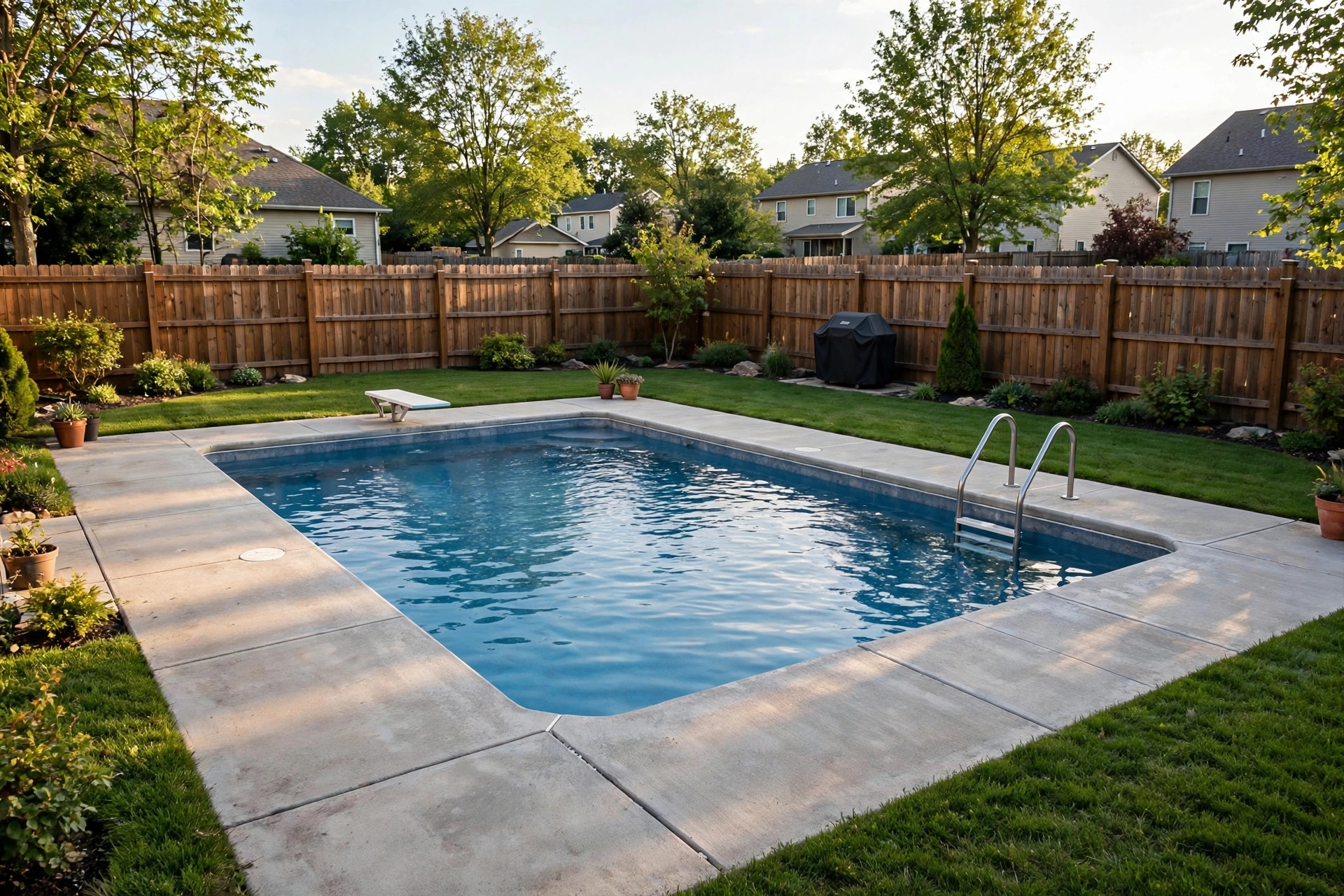
Think about how your family will use the pool. A couple that wants to cool off needs less space than a family with four swimmers. A lap swimmer needs length, not width. A family that plays water games needs width and a shallow play area. Walk your yard with a tape measure. Mark the pool outline with spray paint or garden hose. Then check local rules. Most towns require a setback from the property line, often five to ten feet. A fence with a self-closing gate is required in most states. The pool that fits your yard may be smaller than the pool in your dreams. Guides from The Spruce explain common setback and fencing rules in plain language.
Types of Inground Pools and How Size Affects Each
Three main types of inground pools are sold in the United States. Each one reacts to size in its own way.
Concrete (Gunite) Pools
Concrete pools are sprayed over a steel frame. They can take any shape and any size. They are the most costly type to build. A small concrete pool may cost about the same as a medium vinyl pool. But concrete lasts for decades, and it suits custom shapes. Size changes the price in a smooth line. Every extra foot of length adds material and labor in a clear way.
Vinyl Liner Pools
Vinyl liner pools use steel or polymer walls with a vinyl liner. They cost less to build than concrete. The liner must be replaced every seven to twelve years. That cost ranges from a few thousand dollars for a small pool to much more for a large one. Learn more in our pool liner replacement cost estimate guide. Size matters here because a larger liner and a larger wall kit cost more to make and ship.
Fiberglass Pools
Fiberglass pools arrive as one shell, made in a factory and set into a hole with a crane. They install fast, often in two to four weeks. But the factory makes fixed molds, so buyers pick from set sizes. A large fiberglass shell costs more to ship and set than a small one. The price gap between small and large fiberglass pools is often smaller than buyers expect.
Inground Pool Cost Breakdown by Size
The numbers below are typical 2026 ranges for a finished pool in the United States. They include excavation, shell, basic deck, pump, filter, and start-up chemicals. They do not include high-end extras such as heaters, spas, covers, or fancy decking. Prices vary by region. Labor is higher on the coasts and lower in the South and Midwest. Always get three written quotes from licensed builders. Reviews and buying guides from Consumer Reports can help you judge builder claims.
Small Pools: Under 600 Square Feet
Small pools include plunge pools, cocktail pools, and spools (a spa-pool mix). Common sizes run 10 by 20 feet to 14 by 28 feet. Typical installed cost ranges from $35,000 to $60,000. A fiberglass plunge pool sits near the low end. A custom concrete plunge pool with a spa sits near the high end.
Small pools suit small yards and tight budgets. They cost less to heat and less to treat with chemicals. Many owners add a heater, since a small body of water warms fast. If you want a pool mainly for cooling off and relaxing, small is often the best value.
Medium Pools: 600 to 900 Square Feet
Medium pools are the most common choice for families. Common sizes run 16 by 32 feet to 18 by 36 feet. Typical installed cost ranges from $55,000 to $85,000. A vinyl liner pool of this size sits near the low end. A concrete pool with a diving area sits near the high end.
A medium pool fits games, exercise, and parties. It still fits many suburban yards. Heating and chemical costs stay moderate. This size also keeps resale value strong. Most buyers of family homes expect a pool in this range, not a tiny plunge pool and not a resort-size pool.
Large Pools: Over 900 Square Feet
Large pools run 20 by 40 feet and up. They suit big yards, lap swimmers, and owners who entertain often. Typical installed cost ranges from $80,000 to $130,000 or more. Custom shapes, beach entries, and attached spas push the price higher. A large concrete pool with full extras can pass $150,000.
Big pools cost more to run every year. They need more chemicals, more energy for the pump, and more heat. A variable-speed pump cuts energy use sharply. The U.S. Department of Energy explains how variable-speed pool pumps save electricity. Our guide to the best pool pump for inground pools covers what to look for by pool size.
Hidden Costs That Change the Final Bill
The pool shell is only part of the bill. Builders may list some items as extras. Ask about each one before you sign.
– Soil and rock. Rocky soil or a high water table adds digging cost. A soil test before the contract avoids surprises. – Yard access. If the digger cannot reach the yard, crews may remove a fence or use a smaller machine. That adds labor days. – Electrical work. Pumps, lights, and heaters need wiring. An older panel may need an upgrade. – Decking. Basic concrete deck may be included, but pavers, stamped concrete, or stone cost extra. – Fencing. A code-compliant fence and gate can add several thousand dollars. The U.S. Consumer Product Safety Commission publishes pool barrier safety guidance every owner should read. – Permits. Most towns require a building permit and inspections. Fees range from a few hundred to over a thousand dollars.
Retailers such as The Home Depot sell many of these add-ons, from fencing to lighting, which lets you price extras yourself before you meet a builder.
Care and Upkeep Costs by Pool Size
A pool costs money every year after it is built. Size drives these costs too.
A small pool may cost $1,200 to $2,000 per year for chemicals, energy, and minor repairs. A medium pool runs about $2,000 to $3,500 per year. A large pool can reach $3,500 to $5,500 per year. These ranges cover a normal season in most states. Year-round pools in warm states cost more.
Chemicals are the steady cost. Chlorine or salt, pH balancers, and algaecide add up month by month. Pool supply stores such as Leslie’s Pool Supplies and Pool Warehouse publish price ranges that help you budget. Energy is the second cost. The pump often runs six to eight hours a day in summer. A variable-speed pump can cut that bill in half.
Many owners switch to salt water to soften the water feel. A salt water pool conversion cost guide walks through that choice. For day-to-day care steps, Swim University offers free maintenance guides written for beginners.
Opening and closing the pool each season adds cost if you hire it out. A professional opening runs a few hundred dollars. A closing with winterizing runs about the same. Owners who learn the steps can do it themselves after the first year.
Safety Rules for Every Pool Size
Every pool, small or large, needs the same safety care. Drowning is fast and silent. It can happen in a small plunge pool as easily as in a large pool.
Install a fence at least four feet high with a self-latching gate. Keep the gate locked when the pool is not in use. Add a pool alarm if your town requires one. Never leave children alone near water, even for a minute. Keep rescue gear, such as a shepherd’s hook and life ring, within reach. Learn CPR. These steps cost little and save lives.
Spas and hot tubs follow the same rules. If your pool project includes a spa, makers such as Hot Spring Spas and Bullfrog Spas publish safety and cover guidance for owners.
Frequently Asked Questions
How much does a small inground pool cost? A small inground pool of under 600 square feet typically costs $35,000 to $60,000 installed. Fiberglass plunge pools sit near the low end. Custom concrete pools with spas sit near the high end.
What is the most popular inground pool size? The 16 by 32 foot rectangle is the most popular size in the United States. It holds about 20,000 gallons. It fits games, exercise, and parties, and it fits most suburban yards. Installed cost usually falls between $55,000 and $85,000.
Does a bigger pool always cost more to maintain? Yes, in almost every case. A larger pool holds more water, so it needs more chemicals. It needs a larger pump that uses more energy. It also takes more time to clean. The yearly gap between a small and a large pool can reach several thousand dollars.
Can I save money by choosing a smaller pool? Often yes. A smaller pool costs less to build, less to heat, and less to maintain. Many families find that a medium pool gives the best mix of fun and cost. Walk your yard and mark the size before you decide.
How long does it take to build an inground pool? A fiberglass pool often takes two to four weeks. A vinyl liner pool takes four to eight weeks. A concrete pool takes eight to twelve weeks or more. Weather, permits, and custom features can stretch the schedule.
Should I get more than one quote? Always get at least three written quotes. Make sure each quote lists the same items: shell, deck, equipment, electrical, fence, and permits. A quote that leaves items out will look cheaper than it really is.
A Short Final Word
An inground pool cost breakdown by size turns a confusing purchase into a clear one. Pick the size that fits your yard, your family, and your budget. Get three written quotes. Read the fine print on extras. A pool is a long joy when the price is fair and the plan is sound.
References
Bullfrog Spas. (n.d.). Hot tubs and spas. https://www.bullfrogspas.com Consumer Reports. (n.d.). Product reviews and ratings. https://www.consumerreports.org Hot Spring Spas. (n.d.). Hot tubs and spas. https://www.hotspring.com Leslie’s Pool Supplies. (n.d.). Pool supplies and equipment. https://www.lesliespool.com Pool Warehouse. (n.d.). Pool equipment and supplies. https://www.poolwarehouse.com Swim University. (n.d.). Pool and hot tub care guides. https://www.swimuniversity.com The Home Depot. (n.d.). Home improvement products. https://www.homedepot.com The Spruce. (n.d.). Home and garden advice. https://www.thespruce.com U.S. Consumer Product Safety Commission. (n.d.). Product safety information. https://www.cpsc.gov U.S. Department of Energy. (n.d.). Energy efficiency and renewable energy. https://www.energy.gov
Was this guide helpful?

About Robert Taylor
The My Garden US editorial team writes practical, in-depth home and garden guides for American homeowners — tested advice, no fluff.
You May Also Like
The Best Pool Chemical Feeder for Chlorine: How to Choose the Right One
June 4, 2026 0 views
Best Hot Tub Insulation for Winter: A Complete Guide
January 18, 2026 0 views
Best Pool Skimmer Basket Replacement: A Complete Guide
July 25, 2026 0 views