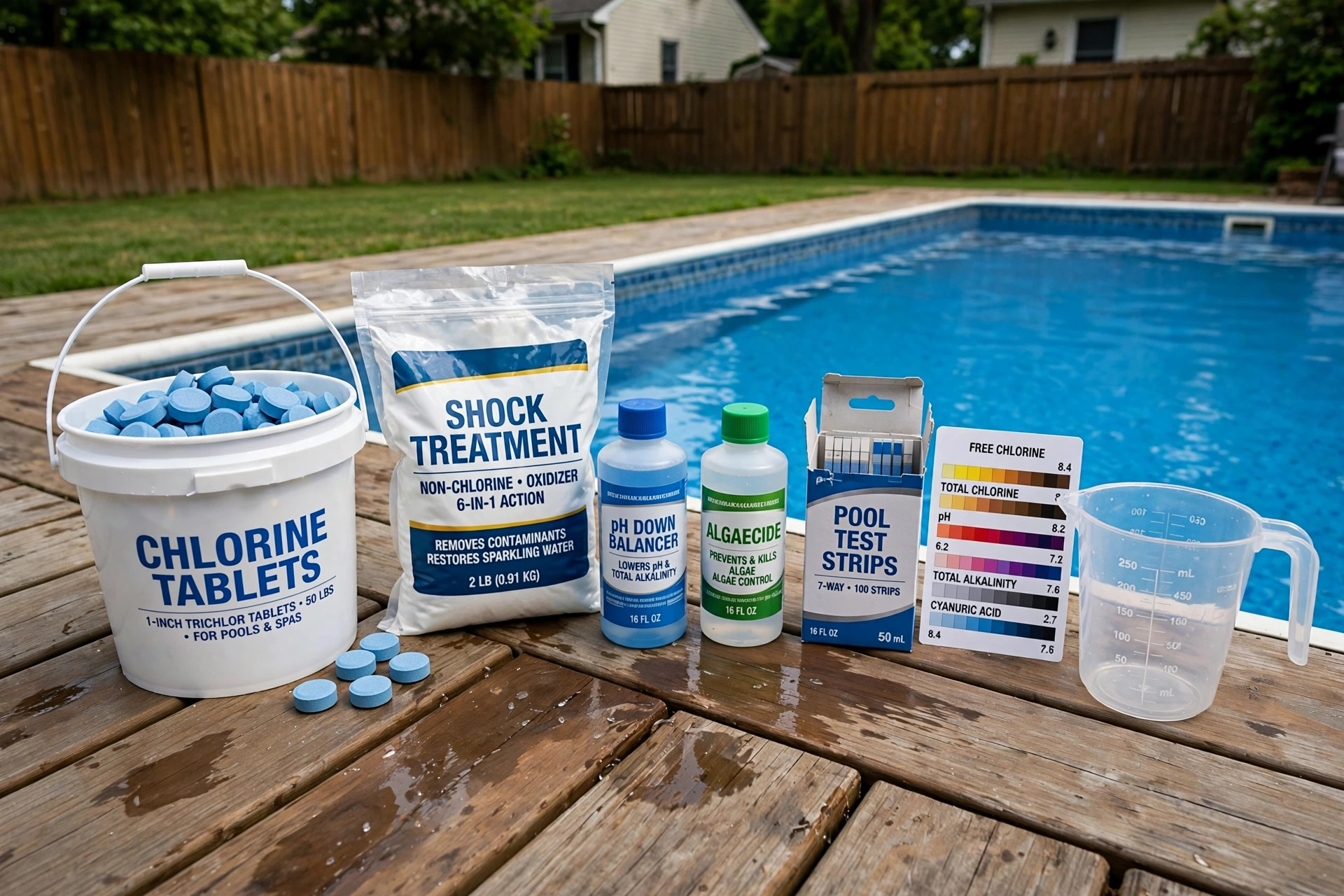

A new pool is a joy, but the water will not stay clear on its own. This guide to the best pool chemicals for beginners kit explains what to buy, what to skip, and how to use each product without worry. A good kit holds the basics in one box: sanitizer, pH control, shock, algaecide, and a test kit. With these tools in hand, a beginner can keep water clear and safe from the first swim of the season to the last.
Many new owners feel lost in the pool aisle. Bottles and buckets crowd the shelves, each with bold claims on the label. A starter kit cuts through that noise. It gives you one set of products that work together, and it spares you the task of guessing which items belong together. The rest of this guide walks through each part of the kit in plain terms.
Why a Starter Kit Matters
Pool water looks simple, but it is never still. Sun, wind, rain, and swimmers change it every day. Chlorine burns off in sunlight. Rain can lower the pH and wash debris into the pool. Body oils and sunscreen feed algae. Without regular care, clear water can turn green in a week or less.
A kit matters because it brings order to a daily job. Instead of shopping for five separate items, you buy one package that covers the core needs. Most kits from major makers pair well with guidance from Leslie’s Pool Supplies, which sells starter sets built around the same five groups of chemicals. A beginner who starts with a full kit is less likely to forget one key product and more likely to test and treat on a steady schedule.
A kit also helps with dosing. Many kits include measuring cups or clear dose tables on the box. That small detail matters when one extra scoop of shock can cloud the water or bleach a liner. Clear labels and simple charts let a new owner add the right amount with confidence.
What to Look for in a Kit: Best Pool Chemicals for Beginners Kit
Not every box on the shelf deserves your money. A solid kit for beginners has five traits.
First, it must include a sanitizer. For most home pools this is chlorine in some form: tablets, granules, or both. Sanitizer is the one product you cannot do without. It kills germs and keeps algae from taking hold.
Second, it must include a test kit or test strips. You cannot manage water by sight alone. A kit without any way to measure chlorine and pH is not a full kit. Look for drops or strips that read at least free chlorine, pH, and total alkalinity.
Third, it must include a shock treatment. Shock is a stronger dose of oxidizer used once a week or after heavy use. It breaks down waste that daily chlorine cannot handle alone.
Fourth, it must include a pH control pair or at least a pH increaser. Chlorine works best when pH stays between 7.2 and 7.6. When the number drifts, you need a way to bring it back.
Fifth, it should include algaecide for warm months. Algae grows fast in heat. A weekly dose of algaecide buys you room for error while you learn the routine.
Check the labels for the pool size the kit suits.
Types of Chemicals in the Kit
Chlorine: The Main Sanitizer
Chlorine does most of the daily work. It kills bacteria and holds algae down. Beginners usually start with tablets in a floating dispenser or in the skimmer basket. Tablets dissolve slowly and keep a steady level. Some kits use granular chlorine instead, which dissolves fast and works well for weekly top-ups.
Tablets come in one-inch and three-inch sizes. One-inch tablets fit small feeders and above-ground pools. Three-inch tablets fit larger feeders and in-ground pools. Never mix tablet types in one feeder, and never mix brands without reading the label first.
Shock: The Weekly Reset
Shock is oxidizer in a strong dose. It burns off waste from swimmers: sweat, oils, sunscreen, and the chlorine byproducts that cause the harsh smell many people blame on too much chlorine. A weekly shock keeps water fresh and clear.
Two common types exist. Chlorine shock is strong and fast. It needs a few hours of waiting before swimming, often overnight. Non-chlorine shock lets you swim sooner, usually in about fifteen minutes.
pH Balancers: Keeping Water in Range
pH measures how acid or basic the water is. The safe range is 7.2 to 7.6. Below that, water can sting eyes and eat at metal parts. Above that, chlorine loses strength and the water turns cloudy.
A kit usually holds a pH increaser (soda ash) and sometimes a pH decreaser (dry acid). Test first, then add the right one in small doses. Small steps beat big ones. Recheck after a few hours of pump run time before adding more.
Algaecide: The Backup Guard
Algaecide does not replace chlorine. It backs it up. In hot weather, a weekly dose keeps algae from getting a start, even when chlorine dips a little. Beginners benefit most from this cushion. Copper-based and polyquat formulas both work. Follow the dose on the label, since extra algaecide can foam or stain.
Test Kits: Reading the Water
The test kit is the brain of the operation. Without it, you dose in the dark. Drop-based kits read color changes in small vials and are the most exact for home use. Test strips are faster: dip, wait, read the color blocks. Strips cost less and suit a busy beginner. Either way, test at least twice a week, and more often in heat waves or after storms.
Cost and Price Guide
A good starter kit costs between $40 and $120 in most stores. Small kits for above-ground pools sit at the low end. Larger kits with drop test kits and more tablets sit at the high end. That first box usually lasts a month or more for a small pool, and two to four weeks for a large one in summer.
After the kit runs out, you buy refills by the item. Chlorine tablets are the largest ongoing cost. A 40-pound bucket of three-inch tablets runs $90 to $160 and can last a whole season for a small pool. Granular shock sells in one-pound bags or multi-packs, often $5 to $8 per bag. Test strips are cheap in bulk: a hundred-count bottle often costs under $25.
Watch for the false saving of tiny kits. A kit that costs $30 but lacks a test kit forces you to buy strips separately. A kit with poor-quality tablets may dissolve too fast and cost more in the long run. Compare what is inside, not just the price on the front.
Large home stores such as Home Depot stock starter kits from several brands, and online pool shops like Pool Warehouse carry kits sized for very small and very large pools alike. Prices shift with the season: buy in spring before demand peaks if you want the best choice.
How to Use the Kit Step by Step
New owners do best with a simple weekly routine. Here is one that works.
1. Test the water. Dip a strip or fill the vials. Read free chlorine, pH, and total alkalinity. 2. Adjust pH first if it is out of range. Chlorine works poorly when pH is off, so fix this before anything else. 3. Check sanitizer. If chlorine is low, add tablets to the feeder or the right dose of granules. 4. Shock once a week. Pick a calm evening. Run the pump overnight so the shock mixes well. 5. Add algaecide. Once a week in warm months, add the label dose after the shock has mixed. 6. Retest the next day. Write the numbers in a notebook. Patterns show up fast when you keep notes.
For a fresh fill or a pool opening, the same order holds, but doses are larger. It helps to read a solid walkthrough of how to open a pool for the summer season before you start, since an opening needs a stronger first shock and a full set of fresh tests.
Keep the pump running long enough each day. Chemicals cannot work in still water. Most pools need eight to twelve hours of filtration daily in summer. If your setup seems weak or the water turns cloudy despite good chemistry, read about choosing the best pool pump for in-ground pools to make sure your equipment is not the weak link.
Care and Upkeep of Your Kit
Chemicals need care too. Store all products in a cool, dry place away from sun and rain. A garage shelf or a deck box with a lid works well. Never store pool chemicals near gasoline, fertilizer, or paint. Keep the containers sealed. Moisture ruins tablets and granules, and open containers let fumes spread.
Keep everything out of reach of children and pets. A locked cabinet is best. Never move products into food containers or drink bottles. Labels carry safety facts you may need in an emergency, and a wrong container can cause a dangerous mix-up.
Note the shelf life. Chlorine loses strength over time, and test reagents fade. Buy fresh product each spring rather than trusting last year’s leftovers. Old strips may read wrong and lead you to dose wrong.
Check equipment weekly as well. A full skimmer basket or a dirty filter makes chemicals work harder. Leaf nets and vacuum heads need clean seals and hoses. For help picking a vacuum, see reviews of the best pool vacuum for leaves, since leaves are a top source of the organic waste that feeds algae.
Safety Rules Every Beginner Must Know
Pool chemicals are safe when handled right and risky when handled wrong. These rules are worth memorizing.
Never mix chemicals together outside the pool. Mixing can cause heat, fumes, or fire. Add each product to the water one at a time, with the pump running, and let it dissolve fully before adding the next.
Read every label before opening a container. Labels carry the dose, the wait time before swimming, and first-aid facts. The U.S. Consumer Product Safety Commission publishes pool chemical safety guidance that every pool owner should read at least once.
Add chemicals to water, never water to chemicals. Wear gloves and eye protection when handling dry products. Avoid breathing the dust from tablets or shock. Work in the open air when you can.
Keep swimmers out until the label says it is safe. After chlorine shock, this often means waiting until free chlorine falls back under 4 parts per million. A quick test tells you when the water is ready. Rushing this step can irritate skin and eyes.
Keep a phone number for poison control on the inside of your chemical cabinet door. The national Poison Control line is 1-800-222-1222. Fast access to that number matters if a child swallows a tablet or splashes granules in their eyes.
FAQ
How often should I test my pool water? Test at least twice a week in normal summer weather. Test daily during heat waves, after heavy rain, and after pool parties. Frequent small tests beat rare big fixes. A quick dip with a strip takes less than a minute and saves you from guessing.
Can I use a starter kit for a saltwater pool? A salt pool makes its own chlorine from salt through a generator cell, so it needs less added sanitizer. You still need the test kit, pH control, and shock from a starter kit. Skip the bulk chlorine tablets and use a kit built for salt pools, or buy the test and pH items on their own.
Do I need algaecide if my chlorine level is fine? Strictly speaking, no. But beginners miss doses while they learn, and algae grows fast in warm water. Algaecide gives you a safety net during that learning curve. Once your routine is steady, many owners drop it. Guides like those at Swim University explain how to phase it out once your water stays stable.
What is the difference between chlorine shock and non-chlorine shock? Chlorine shock adds a strong burst of chlorine that kills everything and breaks down waste. You must wait, often overnight, before swimming. Non-chlorine shock uses a different oxidizer that burns off waste without adding chlorine, so you can swim within about fifteen minutes. It costs more per dose but wins on convenience.
Why is my pool cloudy even though the kit is new? Cloudy water with new chemicals usually means a filtration or dosing problem. Check the filter first: a clogged filter cannot clear particles no matter how good the chemistry is. Then retest and confirm pH and chlorine are in range. If both are fine, the pool may need a full shock dose, since mild daily chlorine cannot fix a heavy buildup.
Where can I learn more about pool care basics? Home improvement guides such as The Spruce cover pool upkeep in plain language, with seasonal checklists that pair well with a starter kit routine.
A Short Final Word
The best pool chemicals for beginners kit is not the fanciest box on the shelf. It is the one you will actually use: sanitizer, shock, pH control, algaecide, and a test kit, matched to your pool size, with clear labels you understand. Pair the kit with steady habits. Test twice a week. Run the pump. Keep notes. Hot tub and spa owners follow much of the same logic, and makers like Hot Spring and Bullfrog Spas publish water-care guides that reinforce the same habits for smaller bodies of water.
Clear water is not luck. It is a short routine, done well, week after week. Buy the kit, learn the steps, and your first season will teach you the rest.
References
Bullfrog Spas. (n.d.). Hot tubs and spas. https://www.bullfrogspas.com Hot Spring Spas. (n.d.). Hot tubs and spas. https://www.hotspring.com Leslie’s Pool Supplies. (n.d.). Pool supplies and equipment. https://www.lesliespool.com Pool Warehouse. (n.d.). Pool equipment and supplies. https://www.poolwarehouse.com Swim University. (n.d.). Pool and hot tub care guides. https://www.swimuniversity.com The Home Depot. (n.d.). Home improvement products. https://www.homedepot.com The Spruce. (n.d.). Home and garden advice. https://www.thespruce.com U.S. Consumer Product Safety Commission. (n.d.). Product safety information. https://www.cpsc.gov
Was this guide helpful?

About Michael Thompson
The My Garden US editorial team writes practical, in-depth home and garden guides for American homeowners — tested advice, no fluff.
You May Also Like
How to Fix Pool Filter Leaking: A Practical Guide for Pool Owners
June 11, 2026 0 views
Best Pool Test Kit Digital Reviews: A Plain Guide for Pool Owners
March 24, 2026 0 views
How to Fix Pool Skimmer Leaking: A Simple Step-by-Step Guide
August 18, 2026 0 views