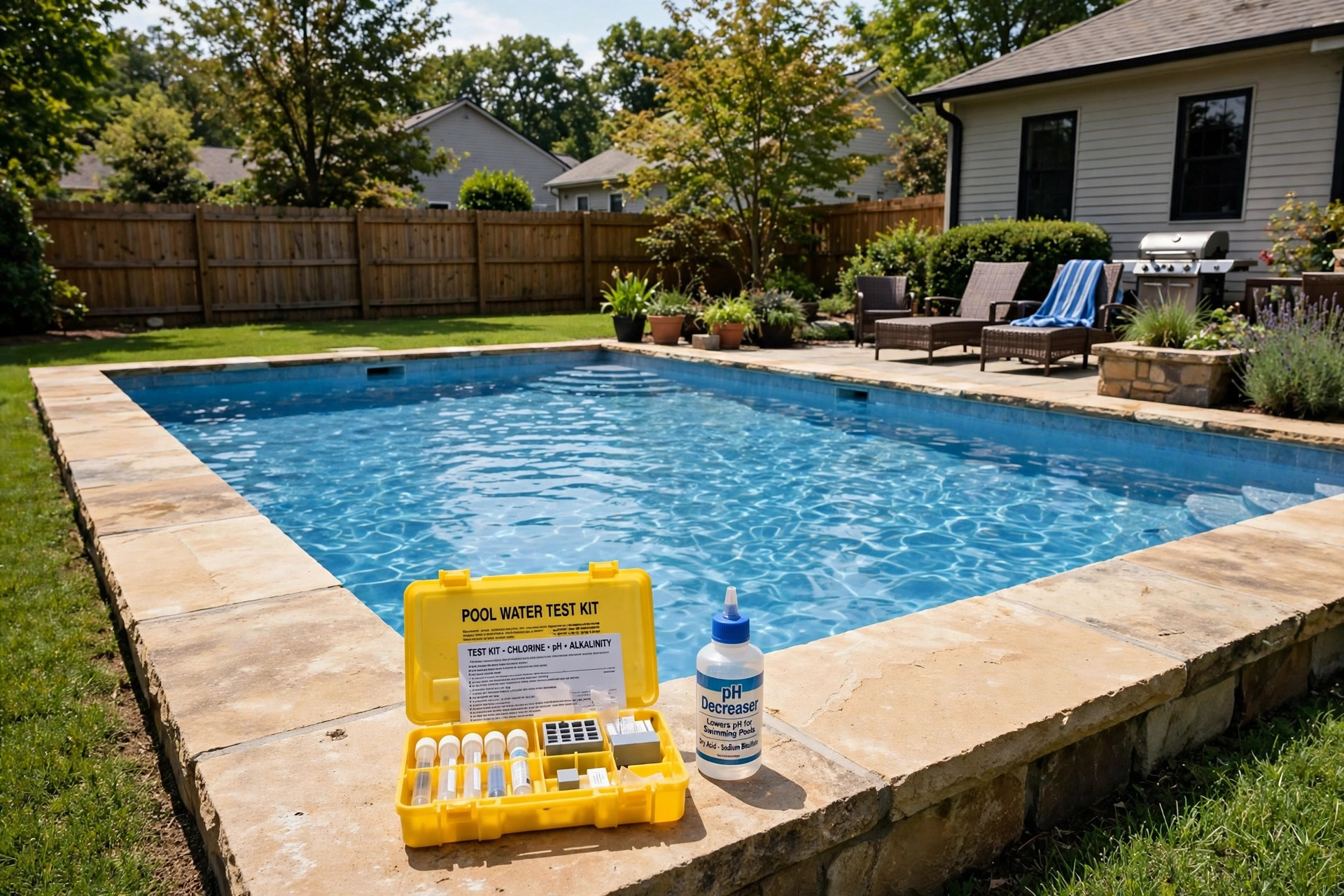

High pH makes pool water cloudy, rough on the skin, and hard on the equipment. When owners learn how to lower pool ph levels safely, the water feels softer, the chlorine works better, and the whole season runs with fewer problems. The task is not hard. It takes a test kit, the right product, and a careful hand.
Why High pH Matters
pH is a measure of how acid or basic the water is. Pool experts give an ideal range of 7.2 to 7.6. When the number climbs above 7.8, trouble begins. The water may turn milky or cloudy. Swimmers may feel dry skin or itchy eyes. Scale can form on the walls, the ladder, and inside the heater. Chlorine also loses strength when pH is high, so the pool may use more sanitizer and still show algae.
Common causes of high pH include fresh fill water that is naturally hard, heavy use of liquid chlorine, and long runs of a salt water chlorine generator. Wind, heat, and aeration from waterfalls or spa jets can push the number up as well. The key point is simple: test often, and act early before the problem grows.
What to Look For Before You Start: How to Lower Pool Ph Levels Safely
A good plan starts with good data. Choose a reliable way to test the water. The best pool test strips accurate reviews can point you to strips that read fast and true. Many owners prefer a liquid drop test kit because it gives a sharper read on pH. Digital meters work too, but they need regular calibration.
Test at the same depth each time, about elbow deep, away from the return jets. Run the pump for at least 30 minutes before testing so the water is mixed. Write down the pH, the total alkalinity, and the free chlorine. Alkalinity matters because it buffers the pH. If total alkalinity is high, pH will keep bouncing back up after treatment. Ideal total alkalinity sits between 80 and 120 parts per million.
Also note the size of the pool in gallons. Dose charts are based on volume. An above ground pool of 10,000 gallons needs far less product than an inground pool of 30,000 gallons. A rough dose in a small pool can overshoot the target in a large one, or barely move the needle.
Types of Products That Lower pH
Two main products bring pH down. Each has its place.
Muriatic acid. This is liquid hydrochloric acid diluted for pool use. It is strong, cheap, and works fast. It lowers both pH and total alkalinity. Hardware chains and pool shops stock it in gallon jugs. A 31 percent strength jug is standard. Because it is strong, it needs respect and careful handling.
Dry pH decreaser. This is sodium bisulfate in powder form. It is gentler and easier for beginners to handle. It also lowers pH and alkalinity, though more slowly than the acid. Many owners keep it for small adjustments, especially in above ground pools or spas.
Do not use vinegar, lemon juice, or household cleaners. They are not made for pools. They can feed algae, cloud the water, or damage the liner.
How to Lower Pool pH Levels Safely: Step by Step
Follow these steps in order. Do not rush them.
Step 1: Test the Water
Test pH, total alkalinity, and free chlorine. If pH is 8.0 or higher, treatment is wise. If total alkalinity is above 120, plan to bring that down as well, since high alkalinity will fight your pH work.
Step 2: Work Out the Dose
Read the product label for the dose chart. As a rule of thumb, one quart of muriatic acid lowers pH by about 0.2 in 10,000 gallons of water. One pound of dry pH decreaser does about the same. Start with half of what the chart says. You can always add more. Taking pH too low is harder to fix.
Step 3: Add the Product With the Pump Running
For muriatic acid, pour slowly in front of a return jet, close to the water surface, away from the skimmer. Keep the jug low so it does not splash. For dry product, broadcast it across the deep end with the pump running. Never mix products together in the same bucket.
Step 4: Wait and Retest
Let the pump run for at least four hours, then test again. If the pH is still above 7.6, add another half dose. Repeat until the reading sits between 7.2 and 7.6. Most pools reach target in one or two rounds.
Step 5: Check Alkalinity
Once pH is in range, check total alkalinity again. If it dropped too low, below 80, raise it with baking soda. Low alkalinity makes pH swing wildly, which is its own problem.
Cost and Price
Lowering pH is one of the cheapest pool chores. A gallon of muriatic acid often costs between 8 and 15 dollars at retail. A five pound pail of dry pH decreaser runs 15 to 25 dollars. A typical home pool may need only a few treatments per season, so the yearly cost stays well under fifty dollars. Test strips or liquid reagents cost more over time than the chemicals themselves, but regular testing is what keeps the small problems small.
Care and Upkeep After Treatment
Water balance is not a one time job. Test pH twice a week during swim season, and weekly in the off season. Keep a simple log book with dates and readings. Patterns show up fast: if pH always climbs after heavy swim days or after rain, you will know what to expect.
Keep the pump running enough hours to mix the water fully each day. Brush the walls weekly so scale cannot take hold. If the pool uses a salt system, watch pH more closely, since these systems tend to push pH upward. When cloudy water appears, test first before reaching for more chemicals. Many owners add clarifier when the real fault is high pH.
For bigger water problems, such as an algae bloom, the guide on how to clean green pool water fast pairs well with this one. Get the pH right first, and the rest of the cleanup goes faster.
Signs Your pH Is Too High
Most owners catch the problem only when the water looks wrong. Cloudy water is the most common sign. It often looks like a light haze that does not clear even when the filter runs all day. Swimmers may complain of red eyes or dry, tight skin after a short swim. On the equipment side, white crust may grow around the waterline tile, on the ladder rails, or at the spa spillway. This crust is calcium scale, and it forms fast when pH stays high.
Another quiet sign is chlorine that seems to do nothing. The test may show a good chlorine level, yet the water still smells stale or shows the first green tint of algae. When pH is above 8.0, chlorine works at a fraction of its strength. Many owners keep adding shock when the real fix is a simple pH correction. That is why the test always comes first. A two minute test can save a whole week of guesswork and a lot of wasted chemicals.
Lowering pH in Salt Water Pools and Spas
Salt water pools deserve a special note. The chlorine generator in these systems adds a steady stream of sodium hydroxide as a byproduct, which pushes pH upward day after day. Owners of salt pools often find they need small acid additions every week or two. This is normal. The same half dose rule applies: add a little, wait, retest. Keep the salt cell clean, since a scaled cell drives pH even higher.
Spas and hot tubs swing faster than pools because the water volume is small and the jets add heavy aeration. In a spa, add dry pH decreaser in very small amounts, a tablespoon at a time, and wait 30 minutes between doses. The smaller the body of water, the easier it is to overshoot. Spa owners can find water balance guides from Hot Spring and Bullfrog Spas that cover the same safe steps on a smaller scale.
A Worked Dosing Example
A short example helps the math feel real. Imagine an inground pool of 20,000 gallons. The morning test shows pH at 8.2 and total alkalinity at 140. The label on the muriatic acid jug says one quart lowers pH by 0.2 in 10,000 gallons. For 20,000 gallons, one quart would lower pH by about 0.1. To move from 8.2 down to 7.6, a drop of 0.6, the chart suggests about six quarts in total.
Do not pour all six quarts at once. Start with three quarts, poured slowly at the return jet with the pump running. Wait four hours and test again. If the pH now reads 7.9, add two more quarts and test once more. Small steps keep you in control. The alkalinity will fall with each dose, which is good here, since 140 was above the ideal range. When both numbers land in range, the job is done.
Safety Rules That Must Not Be Skipped
These products are safe when handled right and dangerous when handled wrong. Keep every rule below.
– Wear gloves, eye protection, and old clothes when pouring acid. – Work upwind and never breathe the fumes from an open acid jug. – Add acid to water, never water to acid. – Store muriatic acid away from chlorine products. Mixed together, they can release deadly gas. – Keep all pool chemicals locked away from children and pets. – Do not swim until the pH is back in the 7.2 to 7.6 range and the pump has run for several hours.
Federal safety guidance on pool chemicals is published by the U.S. Consumer Product Safety Commission. Retailers such as The Home Depot carry the protective gear and the chemicals in one trip. Step by step water balance walkthroughs are published by Swim University. Dose charts and product guides are available from Leslie’s Pool Supplies and Pool Warehouse. General pool care advice appears on The Spruce. Hot tub owners can compare pH care notes from Hot Spring and Bullfrog Spas, since spas face the same balance issues on a smaller scale.
FAQ
How often should I test pool pH? Test twice a week in summer and once a week in cooler months. Test after heavy rain, after many swimmers, and after any chemical addition.
Can I swim right after adding muriatic acid? Wait. Let the pump run for at least four hours and test first. Swim only when pH reads between 7.2 and 7.6.
Is dry pH decreaser safer than muriatic acid? It is easier to handle and more forgiving of small mistakes. Muriatic acid works faster and costs less. Both are safe with gloves, eye protection, and label directions.
Why does my pH keep climbing back up? High total alkalinity is the usual cause. Bring alkalinity down to 80 to 120 parts per million, and pH will hold steady longer. Salt systems and aeration also push pH up.
What happens if I add too much and pH drops too low? Water below 7.0 can sting eyes, corrode metal parts, and etch plaster. Raise it back up with soda ash, following the label dose, then retest.
Can I lower pH and shock the pool on the same day? Do the pH correction first. Wait until the pH is in range and the pump has run for several hours before shocking. Chlorine works best when pH is balanced.
A Short Final Word
Balanced water is the quiet base of every good pool season. Test with care, add half doses, wait, and retest. Handle the chemicals with respect, and keep them stored safe. Once pH sits steady between 7.2 and 7.6, the water feels better, the sanitizer lasts longer, and the equipment lives longer too. That is the whole reward of learning how to lower pool ph levels safely: clear water, earned the careful way.
References
Bullfrog Spas. (n.d.). Hot tubs and spas. https://www.bullfrogspas.com Hot Spring Spas. (n.d.). Hot tubs and spas. https://www.hotspring.com Leslie’s Pool Supplies. (n.d.). Pool supplies and equipment. https://www.lesliespool.com Pool Warehouse. (n.d.). Pool equipment and supplies. https://www.poolwarehouse.com Swim University. (n.d.). Pool and hot tub care guides. https://www.swimuniversity.com The Home Depot. (n.d.). Home improvement products. https://www.homedepot.com The Spruce. (n.d.). Home and garden advice. https://www.thespruce.com U.S. Consumer Product Safety Commission. (n.d.). Product safety information. https://www.cpsc.gov
Was this guide helpful?

About Emily Rodriguez
The My Garden US editorial team writes practical, in-depth home and garden guides for American homeowners — tested advice, no fluff.
You May Also Like
Best Pool Chemicals for Beginners Kit: A Simple Guide
July 2, 2026 0 views
Best Pool Cover Pump for Winter: A Plain Buyer’s Guide
January 4, 2026 0 views
Best Pool Light for Above Ground Pools: A Homeowner’s Guide
March 22, 2026 0 views