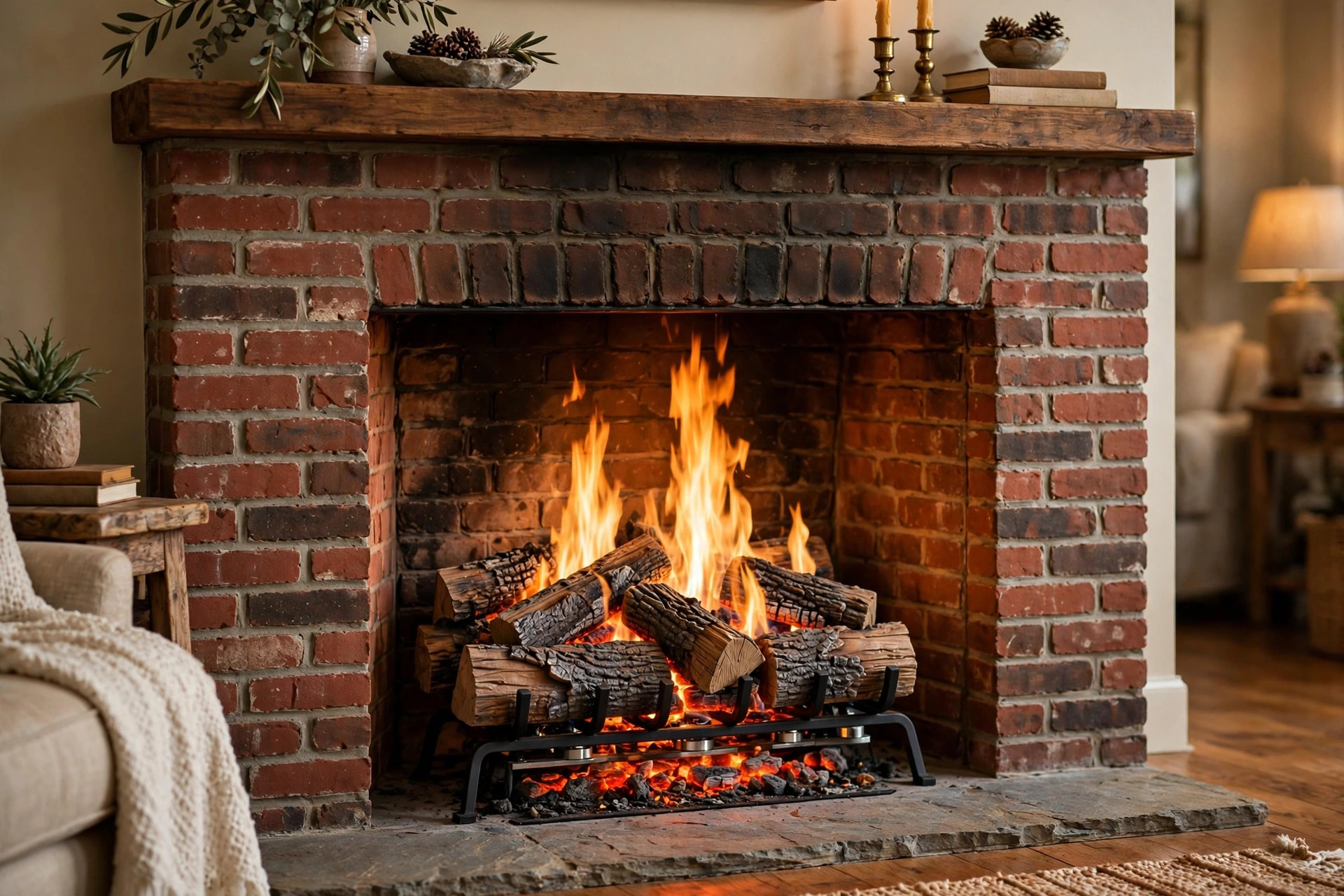

Many homeowners love the look of a real fire but not the work that comes with it. Hauling wood, sweeping ash, and waiting for a chimney to draw can take the joy out of a cold evening. A vented gas log set offers a middle path. It gives you the tall, lively flame of a wood fire with the push-button ease of gas. This vented gas log sets reviews and buying guide walks you through how these sets work, what to look for, how much they cost, and how to keep them safe.
Why Vented Gas Log Sets Matter
A vented gas log set sits inside an existing wood-burning fireplace. Gas flows through a burner, and the flames wrap around ceramic or refractory logs that look like real split wood. Because the set is “vented,” the flue damper must stay fully open during use, just as it would for a wood fire. This lets combustion gases rise up the chimney and out of the home.
The appeal is simple. You get the beauty of a real flame without the mess. There is no ash to carry out, no sparks to chase, and no half-burned logs to move. Most sets light with a match, a pilot, or an electronic switch. For busy families, this turns the fireplace from a weekend chore into an everyday pleasure.
Vented sets also serve a second purpose. In homes where a masonry chimney has aged, a gas log set can give new life to a fireplace that is no longer safe for wood. The gas burns cleaner than wood, so creosote does not build up the way it does with cordwood fires. You still need a sound chimney, but the load on it is lighter.
What to Look For When You Buy: Vented Gas Log Sets Reviews and Buying Guide
Shopping for a gas log set can feel like reading a foreign language. The terms below will help you read any product listing with confidence.
Size and Fit
Size is the first thing to check. Measure the front width, back width, depth, and height of your firebox. Log sets are sold by size, often from 18 to 30 inches. The rule of thumb is simple: the set should be a few inches smaller than the firebox on every side. A set that crowds the walls can trap heat and damage the fireplace or the set itself. A set that is too small will look lost and may not fill the hearth with a good flame.
BTU Rating
BTU, or British thermal unit, measures heat output. Most vented gas log sets run between 40,000 and 90,000 BTU. Higher is not always better. Vented sets are made for looks first and heat second, because much of the warmth goes straight up the open flue. A higher BTU rating gives a taller, more active flame, but it also burns more gas. Pick a rating that suits the size of your firebox and your local gas supply.
Log Material
The logs themselves are made from either ceramic fiber or refractory cement. Ceramic fiber logs are light and glow bright orange at the edges when heated. Refractory cement logs are heavier and often look more like real bark and wood grain. Both can look fine when the flame is dancing. If a warm glow matters to you, ceramic fiber is the usual choice. If rugged detail matters more, refractory cement wins.
Burner Style
The burner is the metal pan or bar that feeds gas to the flames. Single-sided burners are simple and cheap. Double-sided or “triple-T” burners spread the flame wider and look more natural from across the room. Some burners include glowing embers, small rock-wool pieces that pulse with heat. These details add realism for a small extra cost.
Ignition Type
Match-light sets are the cheapest. You hold a long lighter to the burner while you turn on the gas. Pilot systems keep a small flame lit so you can turn the set on with a knob or wall switch. Electronic ignition uses a spark or a remote control, and many models pair with a handheld remote or even a wall thermostat. If you plan to use the fire every night, electronic ignition is worth the money.
Fuel: Natural Gas or Propane
Sets come in natural gas or propane versions, and they are not interchangeable. Check what fuel your home uses before you order. Propane models sometimes need a special air mixer. If you are not sure, ask your gas company or a local installer.
Types of Vented Gas Log Sets
Not every set is built the same. Knowing the main types helps you match one to your fireplace and your taste.
Traditional split-oak sets are the most common. The logs are molded to look like split oak, with deep bark texture and darkened ends. They suit classic brick or stone fireplaces.
Charred look sets have blackened faces that suggest logs mid-burn. The charring hides soot marks and looks good in older fireplaces that show wear.
Driftwood and birch sets use lighter colors and smoother bark. They fit modern or coastal rooms where dark oak would look heavy.
See-through sets are built for fireplaces that open to two rooms. The logs are arranged so the flame looks full from both sides. These cost more but solve a tricky design problem.
Small apartment sets run 18 inches or less. They work in the shallow fireboxes common in condos and newer tract homes. Measure carefully, because a shallow firebox will not accept a standard set.
For shoppers who also want to compare efficient models, our high efficiency gas log sets for sale page covers sets built to waste less fuel.
Cost and Price Ranges
Price depends on size, material, burner, and ignition. A basic 18-inch match-light set with ceramic logs can cost as little as 150 to 250 dollars. A mid-range 24-inch set with a pilot and glowing embers often runs 400 to 700 dollars. Large 30-inch sets with electronic ignition, a remote, and refractory logs can reach 1,000 to 1,500 dollars or more.
Installation is a separate cost. If a gas line already reaches the fireplace, a licensed installer may charge 200 to 400 dollars to hook up the set and test it. If a new gas line must be run, the total can rise by 500 to 1,000 dollars or more, depending on the distance and the difficulty of the run.
Running costs are modest. A 65,000-BTU set burns about two-thirds of a therm per hour on natural gas. At typical gas prices, that works out to well under a dollar per hour in many areas. Propane costs more per hour than natural gas in most markets, so propane owners should check local prices before they estimate.
Installation Basics
Most local codes require a licensed gas fitter for the hookup. This is not a job for a weekend do-it-yourselfer. Gas lines must be pressure-tested, and the burner must be leveled and centered in the firebox.
Before the set arrives, have your chimney checked by a certified sweep. The flue must draw well and be free of blockages, cracks, and heavy creosote. The sweep will also confirm that the damper opens fully and locks in the open position. Many gas log sets ship with a small clamp that holds the damper open. Installers use this to meet code, which requires that a vented set can never run with a closed flue.
Clearance matters too. Keep mantels, trim, and nearby walls within the distances listed in the set’s manual. Wood mantels above the firebox may need a heat shield if they sit close to the opening. These rules are there to protect your home, so follow them exactly.
Care and Upkeep
A vented gas log set needs little care, but it is not care-free. Once a year, before the heating season, give it a simple check.
First, look at the logs. If any are cracked or crumbling, replace them. Broken logs can fall onto the burner and block gas ports, which makes the flame burn yellow and sooty. Second, brush dust off the burner with a soft brush and check that the gas ports are open. Third, replace the ember material if it looks flat and gray. Fresh embers glow brighter and cost only a few dollars.
Have the gas connection checked by a professional each year. A tech will test for leaks, confirm the pilot is clean, and check that the flame pattern looks right. If you smell gas at any time, turn the set off, leave the room, and call your gas company from outside the home. Do not try to find the leak yourself.
When the burning season ends, turn off the gas supply to the set. Cover the firebox opening with a screen or glass doors to keep dust and pets out of the logs. A set of fireplace glass doors can also cut drafts when the fireplace is idle.
Safety Rules You Must Follow
Safety is the heart of this vented gas log sets reviews and buying guide. Gas is a fine servant but a bad master. These rules are not optional.
– Always burn with the damper fully open. This is the single most important rule. A vented set sends carbon monoxide up the flue. A closed damper lets it spill into the room. – Install carbon monoxide detectors. Place one on every floor and near sleeping areas. Test them monthly and change the batteries twice a year. – Never leave the fire unattended. Treat a gas fire like a wood fire. Turn it off before bed and before leaving the house. – Keep children and pets away. The glass, logs, and surround get hot. Use a screen or gate to keep small hands and paws at a safe distance. – Do not burn anything else in the fireplace. No paper, no trash, no wood on top of the gas logs. Foreign objects can block burners and create dangerous flare-ups. – Follow the manual. Every set has its own clearances, fuel pressure, and lighting steps. Read them and keep the booklet near the fireplace.
The chimney caps and covers buying guide is a useful companion read, since a good cap keeps rain and animals out of the flue your set depends on.
Where to Compare Reviews
Good reviews come from owners who have lived with a set for a season or more. Retail sites with large review counts are a fine starting point, because you can sort by rating and read the low reviews first. Look for patterns: repeated complaints about soot, yellow flames, or poor remotes tell you more than any single angry post.
Manufacturer pages are useful for specs. Sites such as Napoleon and Heatilator list BTU ratings, firebox requirements, and venting rules in one place. Big retailers like The Home Depot and Lowe’s let you compare several brands side by side and filter by size and fuel type.
For how-to advice and project walkthroughs, This Old House and Family Handyman publish clear guides on fireplace care and gas appliance basics. The Spruce offers plain buying explainers that are easy to follow. And the EPA publishes guidance on cleaner home heating, which is worth reading if you are weighing gas against wood.
Frequently Asked Questions
Do vented gas log sets heat a room? They give off some radiant heat, and you will feel warmth if you sit near the fire. But most of the heat escapes up the open flue. Think of them as mood lighting with a side of warmth, not as a furnace. If heat is your main goal, a vent-free set or a gas insert is a better fit.
Can I install a vented gas log set myself? You can place the logs yourself, but the gas connection should be done by a licensed professional. Local codes in most areas require it, and a pro will test for leaks and set the gas pressure correctly. A bad hookup can leak gas or produce carbon monoxide.
How long do vented gas log sets last? With normal use, the logs last 10 to 15 years. The burner and valves can last longer if they are kept clean. Ember material and batteries for remotes need replacing every year or two. Annual service keeps the whole system running well.
Do vented gas logs produce carbon monoxide? Yes, like any gas flame, they produce some carbon monoxide. That is why the damper must stay open and why detectors are a must. When installed and used correctly, the flue carries these gases safely out of the home.
Can I use a vented set in a fireplace without a chimney? No. A vented set requires a working, code-compliant chimney. If your fireplace has no flue, or if the flue is damaged beyond repair, look at vent-free sets or electric options instead. Never vent a gas set into a closed or damaged flue.
Are vented or vent-free gas logs better? It depends on your goal. Vented sets look more like a real wood fire, with a tall yellow flame. Vent-free sets keep more heat in the room but have a smaller, bluer flame and come with strict room-size and use limits. Many buyers choose vented for beauty and vent-free for heat.
A Short Final Word
A vented gas log set is one of the simplest upgrades a fireplace can get. Measure your firebox, pick a size and fuel type that fit, and have a pro handle the gas. Read the vented gas log sets reviews and buying guide tips above once more before you shop, and you will walk into the store or the checkout page knowing exactly what you need. The reward is a fire you can enjoy every night of the season, with none of the ash and all of the glow.
References
Family Handyman. (n.d.). DIY home repair and maintenance. https://www.familyhandyman.com Heatilator. (n.d.). Fireplaces and fireplace products. https://www.heatilator.com Lowe’s. (n.d.). Home improvement products. https://www.lowes.com Napoleon. (n.d.). Fireplaces, grills, and heating products. https://www.napoleon.com The Home Depot. (n.d.). Home improvement products. https://www.homedepot.com The Spruce. (n.d.). Home and garden advice. https://www.thespruce.com This Old House. (n.d.). Home renovation guidance. https://www.thisoldhouse.com U.S. Environmental Protection Agency. (n.d.). Protecting human health and the environment. https://www.epa.gov
Was this guide helpful?

About Emily Rodriguez
The My Garden US editorial team writes practical, in-depth home and garden guides for American homeowners — tested advice, no fluff.
You May Also Like
Buying a Wood Burning Stove Online in Florida: A Complete Guide
May 7, 2026 0 views
Premium Chimney Inspection Services Near Me: A Homeowner’s Guide
August 7, 2026 0 views
Top Rated Ethanol Wall Fireplaces for Southern States: A Buying Guide
March 12, 2026 0 views