
Introduction
Every American home with a bath needs a way to move damp air out. A loud fan makes the job feel cheap and raw. This quiet exhaust fans american homes guide explains how low-noise vent fans work, which features matter most, and how to pick the right one for your house. It also covers price ranges, care, and safety in plain words.
A bath fan does more than clear a mirror. It pulls warm, wet air out of the room before it can settle into the walls. Left alone, that wet air feeds mold on the ceiling, warps paint, and loosens trim. A good fan runs for twenty minutes and then shuts off on its own, leaving the room dry. The best ones do this so quietly that you hardly know they are on.
Older homes often came with loud, small fans. They shook the ceiling and droned like a small plane. Many owners stopped using them at all. That was a mistake. A loud fan that stays off gives no help. A quiet fan that runs every day gives great help. Modern fans use better motors and better housings. They move more air with far less noise. This guide will show you how to find one, how to mount it right, and how to keep it running for years.
Why a Quiet Fan Matters: Quiet Exhaust Fans American Homes Guide
Noise stops use
The number one reason people leave a fan off is noise. A fan rated at four sones or more sounds harsh. A fan rated under one sone sounds like a soft hum. People use the quiet one. Studies from Home Depot buying guides note the same pattern: quiet models see far more use. Use is what counts. The fan only helps when it runs.
Damp air causes real damage
A hot shower puts about a cup of water into the air. That water has to go somewhere. If it stays, it soaks into drywall and wood trim. Over months, paint peels and ceilings stain. In cold states, the wet air can freeze inside an attic vent and drip back down. A strong, quiet fan moves the air out before any of that starts. This Old House repair guides stress that good venting is one of the cheapest forms of home protection.
Health and comfort
Mold loves wet rooms. It grows on grout, on caulk, and behind the toilet tank. Mold spores can trigger coughs and stuffy noses, mainly in children and older adults. A fan that runs during and after each shower keeps the room dry enough to starve the mold. Comfort matters too. A quiet fan lets you talk, listen to the radio, or simply enjoy a calm bath.
How to Choose a Quiet Exhaust Fan
Understand sones
Sones measure how loud a fan sounds to the human ear. Lower is quieter. Here is the plain scale used in Bob Vila guides and on maker web pages:
– Under 0.5 sones: near silent. You hear only a faint breath of air. – 0.5 to 1.0 sones: very quiet. The most common target for new homes. – 1.0 to 1.5 sones: quiet, but you know it is on. – Above 2.0 sones: noticeable. Above 4.0: loud and old-fashioned.
For a small or medium bath, aim for 1.0 sone or less. For a master bath used at night, look for 0.7 or less. The rating is printed on the box and on the maker web page.
Size the fan by room volume
A fan must be strong enough for the room. The common rule is one CFM for each square foot of floor space. CFM means cubic feet per minute, the amount of air moved. An eight-by-ten bath is eighty square feet, so it needs about eighty CFM. Round up, not down. For a bath over one hundred square feet, add a second rule: fifty CFM for each toilet, shower, or tub. American Standard sizing charts follow the same math. A small fan working hard makes more noise than a larger fan running easy.
Look at motor type
Older fans used a shaded-pole motor with a small metal wheel. It was cheap and loud. Newer fans use DC motors or improved AC motors. A DC motor runs quieter, uses less power, and often lasts longer. Many Moen and Kohler vent models now list DC motors. The motor is the heart of the fan. Pay a little more for a good one.
Check the housing
Noise also comes from the metal box that holds the fan. Thin boxes ring and rattle. Look for a housing with a sealed damper and a thick body. Some makers add a foam seal where the grille meets the ceiling. That seal stops the grille from buzzing. A good duct run helps too. Short, smooth ducts make less noise than long, crinkled ones.
Humidity sensors and timers
The best quiet fans add smart controls. A humidity sensor turns the fan on when the air gets damp and off when it dries. You never forget to run it. A timer switch runs it for a set time after you leave. Both options are listed on Lowe’s product pages and cost only a little extra. A quiet bathroom exhaust fan with humidity sensor is one of the most useful upgrades in a bath remodel.
Types and Options
Ceiling mount fans
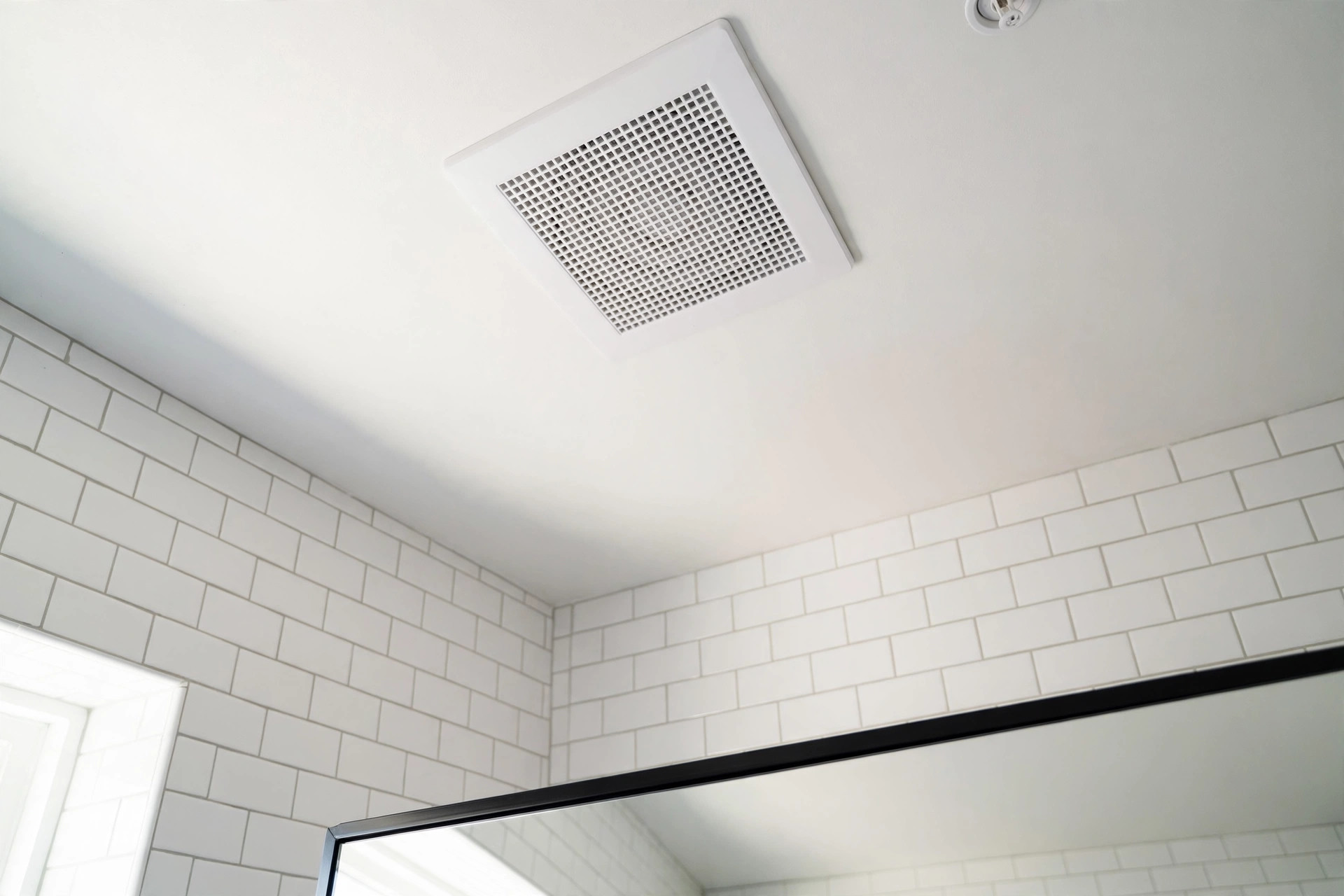
The ceiling mount is the standard in most American homes. It sits between the ceiling joists and vents up through the roof or out a side wall. It suits baths up to about one hundred square feet. Most quiet models under one sone are ceiling mounts. Delta Faucet and other bath brands sell them in many CFM sizes.
Inline fans
An inline fan sits in the duct run, often in the attic, with only a small grille in the ceiling. Because the motor sits far from the room, inline fans are among the quietest made. They suit large baths, two-bath runs from one fan, or rooms where silence matters most. They cost more and need attic access for mounting.
Wall mount fans
A wall mount fan goes through an outer wall and blows straight outside. It suits baths on an outer wall where attic space is tight. The duct run is short, so the fan can be small and quiet. Make sure the wall cap has a backdraft damper so cold air does not blow back in.
Fan and light combinations
Many baths pair the fan with a light or a night-light. Combo units save a hole in the ceiling and suit small baths. Look for combos with a separate switch for the fan and the light. That way the fan can run on its timer after you turn the light off.
Fan and heater combinations
A heater combo adds a small heat lamp or heat coil. It warms the room fast on cold mornings. These units need their own circuit because the heater draws heavy power. The fan part still follows the same rules: low sones, right CFM.
Cost and Price
Prices in American stores fall into clear bands. A basic quiet fan at eighty CFM costs about sixty to ninety dollars at Home Depot or Lowe’s. A mid-range model with a DC motor and one sone or less runs about one hundred twenty to one hundred eighty dollars. A top model with a humidity sensor, LED light, and 0.3 sones costs about two hundred to three hundred dollars. Inline fan kits run about one hundred fifty to three hundred dollars before ducts and grilles.
Labor adds to the total if you hire an electrician. A straight swap of an old fan for a new one in the same hole often costs one hundred fifty to two hundred fifty dollars in labor. A new fan where none existed, with new wiring and a roof or wall vent, can cost four hundred to eight hundred dollars. Prices vary by state and by how hard the attic is to reach. The Spruce cost guides track the same ranges.
Think of the fan as cheap insurance. A few hundred dollars now can save thousands in mold cleanup later. When you plan a larger bath project, fold the fan into it. A new fan goes well with walk in shower kits california homes usa remodels, and a fresh fan pairs nicely with bathroom linen cabinets american homes guide storage updates. Builders who add shower niche inserts usa online deals often upgrade the fan at the same time, since the ceiling is already open.
Care and Upkeep
A quiet fan stays quiet only with care. Dust is the main enemy. Dust on the blades makes the fan work harder and hum louder. Clean the grille twice a year. Pull it down, wash it in warm soapy water, and let it dry. Vacuum the fan wheel with a soft brush. Wipe the housing with a damp cloth. This takes ten minutes.
Check the outside vent cap once a year. Leaves, lint, and bird nests can block it. A blocked cap makes the fan strain and groan. Make sure the damper flap moves freely. In cold states, check for frost in the duct in winter. Insulate any duct that runs through a cold attic so warm air does not condense inside.
Listen to the fan now and then. A new rattle often means a loose screw or a grille that needs reseating. A grinding sound can mean the motor bearings are worn. Most good fans last ten to fifteen years. When the motor finally wears out, many makers sell a motor swap kit that fits the old housing. That swap is cheaper than a full new fan.
Safety
Vent to the outside, never to the attic
This is the top safety rule in every This Old House venting guide. A bath fan must blow its damp air all the way outside the house, through a roof cap or a wall cap. Venting into the attic dumps gallons of water vapor into the wood framing each year. That breeds mold and rots the roof deck. Many older homes still vent into the attic. Fix it when you upgrade the fan.
Electrical safety
A bath is a wet place. The fan circuit should be protected by a GFCI breaker or outlet where local code calls for it. Turn the power off at the breaker before you touch the wiring. If the fan shares a circuit with a heater, the circuit must be sized for the heater load. When in doubt, call a licensed electrician. A permit may be required in your town for new wiring.
Duct and fire safety
Use smooth metal duct or approved flexible duct, not thin plastic dryer hose. Keep the duct run short and free of sharp bends. Seal joints with metal tape, not cloth duct tape, which dries out. Keep insulation away from the fan motor housing unless the unit is rated for contact. These steps cut noise and cut risk together.
Ladder and attic safety
Fan work often means attic time. Wear a dust mask and gloves. Step only on joists or on laid boards, never on bare drywall. Bring a bright light. In summer attics, work early in the morning to avoid heat illness. These are plain rules, but they prevent most injuries.
Frequently Asked Questions
How quiet should a bath fan be?
Aim for one sone or less in most baths. Under 0.7 sones is near silent and suits baths near bedrooms. The rating is printed on the box. A low sone bathroom fan for small bathrooms is a smart pick because small rooms carry sound more.
What size fan does my bath need?
Use one CFM per square foot of floor space as a base. An eight-by-ten bath needs about eighty CFM. For large baths, add fifty CFM per toilet, shower, or tub. Round up. A slightly larger fan running at low speed is quieter than a small fan straining.
How long should the fan run after a shower?
Twenty minutes is the common rule. That clears the damp air from one shower. A timer switch or a humidity sensor handles this on its own. If you flip a plain switch, leave the fan on while you dress and dry off.
Can I install a quiet fan myself?
A straight swap in the same ceiling hole is a fair do-it-yourself job if you are handy and the wiring is already there. Turn off the breaker first. New wiring, a new ceiling hole, or a new roof vent are jobs for a licensed electrician or roofer. Check local code for permits.
Why is my new fan still loud?
First, check the duct. A crushed or extra-long duct makes any fan loud. Second, check the mounting. A loose housing rattles. Third, check the size. An undersized fan screams as it strains. Fourth, check the outside cap for blockage. Fix these and most noise fades. Bob Vila troubleshooting guides walk through the same list.
Do quiet fans use much power?
No. A modern DC-motor fan draws about ten to twenty watts, less than an old sixty-watt bulb. Running it for an hour a day costs only a few dollars a year in power. The savings from avoided mold damage are far larger.
A Short Final Word
A quiet fan is one of the simplest upgrades in an American home. Pick a low-sone model, size it right, vent it to the outside, and keep it clean. Then use it every day. Your walls, your paint, and your lungs will all thank you. When the house is calm and the fan is a soft whisper, the bath feels like the clean room it should be.
References
American Standard. (n.d.). Bathroom and kitchen products. https://www.americanstandard.com Bob Vila. (n.d.). Home improvement advice. https://www.bobvila.com Delta Faucet. (n.d.). Kitchen and bathroom faucets. https://www.deltafaucet.com Kohler. (n.d.). Bathroom and kitchen fixtures. https://www.kohler.com Lowe’s. (n.d.). Home improvement products. https://www.lowes.com Moen. (n.d.). Faucets and plumbing fixtures. https://www.moen.com The Home Depot. (n.d.). Home improvement products. https://www.homedepot.com The Spruce. (n.d.). Home and garden advice. https://www.thespruce.com This Old House. (n.d.). Home renovation guidance. https://www.thisoldhouse.com
Was this guide helpful?

About Michael Thompson
The My Garden US editorial team writes practical, in-depth home and garden guides for American homeowners — tested advice, no fluff.
You May Also Like

Frameless Shower Doors Reviews Buying Guide USA
January 3, 2026 0 views
Freestanding Soaking Tubs: Where to Buy in the USA
March 8, 2026 0 views
Brushed Towel Holders: Where to Buy Them in the USA
April 24, 2026 0 views