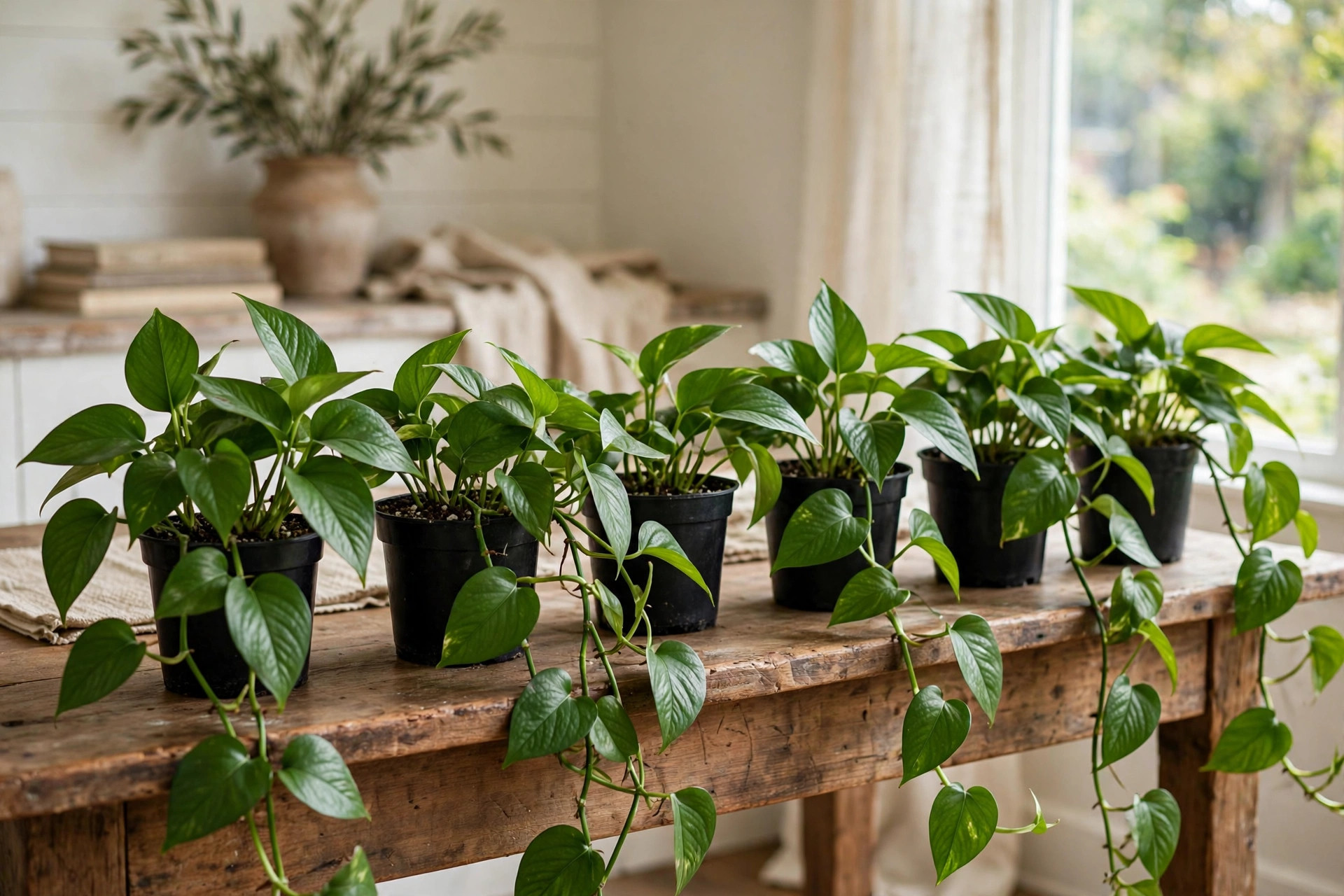

Few houseplants are as simple to keep as the pothos. It trails down from shelves, climbs a moss pole, or fills a hanging basket with little care. For many people in California, buying pothos plants bulk california homes usa is a smart way to fill large rooms, new houses, and home offices with living green. One order can place the same plant in every corner and still keep the cost low.
Bulk buying works well for people who have just moved, for renters who want to soften plain walls, and for families who like a full look without paying nursery prices one pot at a time. This guide explains why pothos suits California homes, how to pick strong plants, what kinds to order, what they cost, how to care for them, and how to keep them safe around children and pets.
Why California Homes Favor Pothos
California homes have the kind of light that pothos likes. Many rooms get bright but indirect sun through windows, and the dry indoor air does not harm a tough vine. Pothos grows in the mild parts of the state with little fuss. A plant that costs a few dollars can, in a year, send vines three or four feet long.
Pothos also cleans the look of a room. A row of the same trailing plant on a bookshelf gives order and calm. In new tract homes with white walls, a dozen pots of green soften the space fast. Buyers often look for growing advice from plant care guides before they place a large order, and the plant itself then does the rest.
Large orders also suit offices in the home. A pothos on a desk, on a file cabinet, and on a shelf ties the room together. The plant asks for little water and no special light, so it survives busy weeks.
Why Buy in Bulk
Buying one plant at a time from a garden center adds up fast. Bulk packs of ten, twenty, or fifty plants cut the price per pot by half or more. Many online sellers and wholesale nurseries ship to California addresses every week of the year, and the plants arrive in small nursery pots that fit straight into decorative containers.
Bulk orders also give a matched set. The pots are the same size and the vines are about the same length, so a long shelf looks planned rather than patched together. For landlords, stagers, and new homeowners, that even look matters.
What to Look for When You Buy Pothos Plants in Bulk: Pothos Plants Bulk California Homes Usa
A low price means nothing if half the plants fail. Check the seller and the plants before you pay.
Leaf Health and Roots
Good pothos has firm green leaves with no brown edges. Variegated kinds should show clear cream or yellow marks. Skip listings where the leaves look pale or the stems look mushy. If the seller shows photos, look for full pots rather than two or three thin vines.
Strong roots matter more than long vines. Plants rooted in small pots with firm soil adjust better than long plants with weak root balls. When the box arrives, water each pot lightly and set it in indirect light for a day before you move it to its spot.
Pot Size and Quantity
Bulk pothos usually comes in three, four, or six inch pots. A four inch pot holds enough roots to take off fast. Orders of twelve to twenty-four pots fill a whole house. For one large room, six to ten plants may be enough.
Check the count in the offer. Some packs list “six plants” but show six small cuttings in one pot. Read the description and count the pots, not the photos. Reviews from other buyers in California often note how the plants held up in transit.
Common Types of Pothos for Bulk Orders
Most bulk packs mix common kinds, but some sellers let you pick one type for the whole order. These are the kinds you will see most.
Golden Pothos
Golden pothos is the classic. Its heart shaped leaves carry yellow streaks. It grows fast, takes low light, and comes back strong after a trim. For a buyer who wants one kind for the whole house, this is the safe pick. It is also the least costly kind in bulk packs.
Marble Queen and N’Joy
Marble Queen has white and green leaves that look almost painted. N’Joy has smaller leaves with crisp white edges. Both grow a little slower than golden pothos, and they cost a bit more in bulk. Their bright leaves stand out in plain rooms. Plant breeders have spent years refining these varieties, and you can learn more about how new houseplants reach the market through industry plant breeders.
Jade and Neon
Jade pothos has plain deep green leaves. Neon pothos glows a bright lime green that lifts a dark corner. Both are hardy and cheap in bulk. Neon does best a few feet from a window, where its color stays bright.
Other kinds, such as Manjula and Cebu Blue, appear in mixed packs now and then. They grow slower and need a bit more care, so read the label before you mix them with fast growers.
Cost and Price of Bulk Pothos Plants
Prices vary by count, pot size, and type. A pack of six four inch pots often costs between fifteen and thirty dollars. Twenty plants may run forty to seventy dollars. Fifty small starter plants can cost less than a dollar a pot from wholesale nurseries.
Shipping to California is usually by ground, and most sellers ship Monday to Wednesday so plants do not sit in a truck over the weekend. Some sellers add a heat pack or cold pack at no charge in rough weather. Compare the price per pot, not the pack price. A twenty dollar pack of four plants costs more per plant than a thirty dollar pack of ten.
Check what is included. Good offers name the pot size and the kind. Vague offers that say only “live plant” often send thin cuttings. A trusted seed and plant seller such as Burpee sets a good example of clear product descriptions, and you can hold plant sellers to the same standard.
If you plan to repot right away, buy soil and pots with the order. One bag of houseplant soil serves about ten four inch pots. That small extra cost saves a second trip to the store.
Care and Upkeep
Pothos asks for little, but it rewards simple habits. A few minutes a week keeps a whole bulk order healthy.
Light
Give pothos bright, indirect light. Near an east window is ideal. It also lives under fluorescent office lights. Direct hot sun through a south window can burn the leaves, so move the plant back a few feet or hang a sheer curtain. Variegated kinds need more light to keep their marks.
Water
Water when the top inch of soil feels dry. In most California homes that means once a week in summer and every ten to fourteen days in winter. Lift the pot. A light pot needs water; a heavy pot does not. Too much water causes yellow leaves and soft stems. Drainage holes in the pot stop most trouble.
Soil and Feeding
Use a loose houseplant mix that drains well. Feed once a month in spring and summer with a weak liquid houseplant food. Skip feeding in fall and winter, when growth slows. Repot when roots circle the bottom of the pot, usually once a year. A slightly larger pot, one or two inches wider, is enough. Garden suppliers such as Park Seed carry soil mixes and pots that suit houseplants, and their catalogs show how growers grade potting supplies.
Pruning and Propagation
Trim long vines to keep the plant full. Cut just above a leaf node, the small bump where a leaf meets the stem. Place the cuttings in water, and roots will form in two to three weeks. A bulk order of twenty plants can become forty plants in a season this way. Many growers share step by step propagation tips through gardening how to sites, which is a free way to grow your stock.
Wipe dust from leaves with a damp cloth once a month. Dust blocks light and dulls the color. Turn the pots a quarter turn each time you water so the vines grow even.
Safety for Children and Pets
Pothos is not safe to eat. Every part of the plant holds calcium oxalate crystals. Chewing a leaf causes a burning mouth, swelling, and upset stomach in people and animals. It is not deadly in small bites, but it is painful.
Keep plants out of reach of small children. Hang them high or place them on tall shelves. For cats and dogs, the risk is real because pets chew leaves. A cat that bites pothos may drool, paw at its mouth, and refuse food for a day. Call a veterinarian if symptoms last. Pet owners often check pet health guides such as the ASPCA plant database before they bring new plants home, and that habit is worth keeping.
Tell every person in the house that the plant is for looks only. Wash hands after handling cuttings or repotting. When you trim vines, bag the cuttings right away so pets do not find them on the floor.
Frequently Asked Questions
How many pothos plants do I need for a whole house? For a three bedroom home, fifteen to twenty plants give full coverage without crowding. Start with one plant per room, then add more where the light is good.
Can pothos survive a California winter indoors? Yes. Indoor temperatures suit it year round. Keep it away from cold window glass on frosty nights and cut back on water in the short days.
How fast will bulk pothos fill a hanging basket? A four inch plant with four or five vines will fill a ten inch basket in about six months under good light. Pinching the tips makes the vines branch and fill faster.
Should I order all one kind or a mix? One kind gives a clean, even look. A mix of green and variegated kinds gives more interest. Fast golden pothos will outgrow slow N’Joy in the same room, so group slow kinds together if you mix.
What if some plants arrive damaged? Take photos the day the box arrives and contact the seller at once. Good sellers replace dead plants or refund them. Hold the plants in indirect light for two days before you judge; some perk up after water.
Where do bulk sellers in California get their plants? Many grow in large greenhouses in California, Florida, and Texas, then ship nationwide. Growing guides from White Flower Farm show how commercial nurseries raise houseplants in volume, which explains why bulk prices stay low.
A Final Word
Buying pothos plants in bulk is one of the cheapest ways to green a California home. Pick healthy plants from a clear listing, give them bright indirect light and light water, and they will grow for years. Keep them away from mouths and paws, and you will have a house full of green vines with very little work.
If bulbs interest you too, a bulk dahlia buying guide can help you compare plant types, and spring bulb shoppers may like daffodil packs for sale or sunflower seed packs for Texas style gardens. For dates and planting tips through the year, the Old Farmer’s Almanac keeps a simple seasonal calendar.
References
ASPCA. (n.d.). Pet care and animal welfare resources. https://www.aspca.org Burpee. (n.d.). Seeds, plants, and gardening supplies. https://www.burpee.com Gardening Know How. (n.d.). Gardening guides and plant care. https://www.gardeningknowhow.com Park Seed. (n.d.). Seeds, plants, and gardening supplies. https://www.parkseed.com Proven Winners. (n.d.). Plants and gardening inspiration. https://www.provenwinners.com The Old Farmer’s Almanac. (n.d.). Gardening calendars and advice. https://www.almanac.com The Spruce. (n.d.). Home and garden advice. https://www.thespruce.com White Flower Farm. (n.d.). Plants, bulbs, and garden supplies. https://www.whiteflowerfarm.com
Was this guide helpful?

About James Carter
The My Garden US editorial team writes practical, in-depth home and garden guides for American homeowners — tested advice, no fluff.
You May Also Like

Dahlia Bulbs Bulk Reviews Buying Guide USA
September 10, 2026 0 views
Tulip Bulbs Fall California Homes USA: A Simple Planting Guide
June 1, 2026 0 views
Tulip Bulbs Fall USA Online Deals: A Plain Guide to Buying and Planting
July 30, 2026 0 views