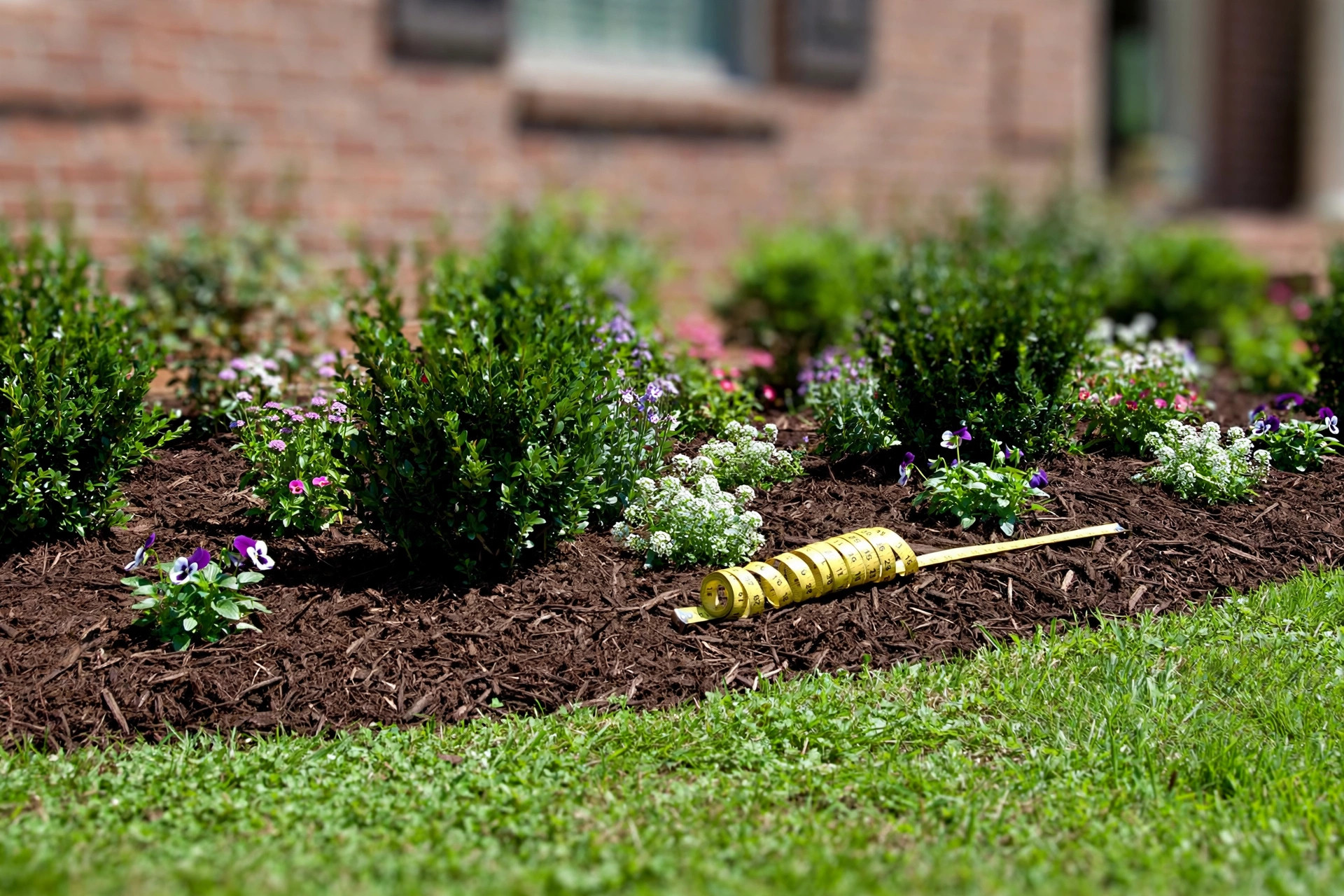
Mulch is one of the simplest ways to make a yard look neat. It also helps soil hold water, keeps weeds down, and protects plant roots. But many home owners buy too much or too little. A landscape mulch calculator answers the key question: how much needed? This guide shows you how to do the math by hand, step by step. You will learn how to measure your beds, pick the right depth, and turn those numbers into the bags or cubic yards you must buy.
Why Getting the Amount Right Matters
Buying mulch costs money, and delivery costs more. If you order too much, bags pile up in the driveway. Loose mulch from a truck sits in a heap on the lawn and kills the grass under it. If you buy too little, the beds look thin. Weeds push through. The yard looks half done, and you pay a second delivery fee.
A correct amount also helps your plants. Mulch that is too thin does not hold water well. Mulch that is too deep can smother roots. When you know the right amount, you spread the right layer. The job goes faster too. You can plan the day, get the help you need, and finish before the light fades.
Many stores sell mulch in bags. Bulk dealers sell it by the cubic yard. A landscape mulch calculator works for both. The math is the same. Only the last step changes.
What a Landscape Mulch Calculator Does: Landscape Mulch Calculator How Much Needed
A landscape mulch calculator takes three facts: the length of the bed, the width of the bed, and the depth you want. From those, it finds the volume of mulch you need. That volume is the space the mulch will fill.
You do not need a computer for this. A pencil, a tape measure, and a bit of time are enough. The steps below follow the same logic any calculator uses. Once you learn them, you can size any bed in your yard.
The Basic Idea
Volume is area times depth. Area is length times width. So the math is:
length × width × depth = volume
The hard part is the units. Length and width are in feet. Depth is in inches. Volume for bulk mulch is in cubic yards. For bagged mulch, volume is in cubic feet. You must change inches to feet, and cubic feet to cubic yards. The steps below walk through each change.
Step 1: Measure Your Beds
Start with a tape measure. Walk to each bed or area you want to mulch. Measure the length in feet. Measure the width in feet. Write both numbers down.
Most beds are rectangles or close to it. For a rectangle, the math is simple. Multiply length by width. That is the area in square feet.
Some beds are circles. Flower beds around a tree are often round. For a circle, measure across the middle. That is the diameter. Cut it in half to get the radius. Multiply 3.14 × radius × radius. That is the area.
Some beds are triangles. For a triangle, measure the base and the height. Multiply base × height, then cut the answer in half.
Many yards have odd shapes. A curved bed by the walk, for example. Break it into parts. Treat each part as a rectangle or a circle. Add the parts up. Close is fine. Mulch math does not need to be exact to the inch.
Tips for Measuring
– Measure in feet, not inches. It makes the later math easier. – Round each number to the nearest foot or half foot. – Sketch each bed on paper with its numbers. Label them bed one, bed two, and so on. – Add all bed areas into one total. This total is the square footage you will mulch.
If you are also weighing options like best mulch for flower beds bulk delivery, you will want this total handy when you call the dealer.
Step 2: Pick the Right Depth
Depth matters as much as area. The right depth depends on what the mulch is for and what kind you use.
For most flower beds and shrub beds, three inches is the common choice. It holds water well and blocks most weeds. Two inches is the light choice. It works for beds that already had mulch and just need a fresh top layer. Four inches is the heavy choice. It suits new beds, beds on slopes, or beds where weeds are a real fight.
Do not go deeper than four inches near plant stems and trunks. Deep mulch holds too much water against bark. That can rot the plant. Keep mulch a few inches away from stems and tree trunks. Shape it like a flat ring, not a volcano mound.
Different mulch types settle in different ways. Shredded bark knits together and stays put. Wood chips are chunky and settle less. Pine straw is light and needs a deeper layer to do the same job. Stone does not break down, so the depth you lay is the depth you keep.
If you are torn between materials, a look at gravel vs mulch for landscaping beds can help you decide before you measure.
Step 3: Do the Math for Cubic Feet
Now turn area and depth into volume. Work in feet so the units match.
First, change the depth from inches to feet. Divide the inches by 12. Three inches is 0.25 feet. Two inches is about 0.17 feet. Four inches is about 0.33 feet.
Next, multiply the total square feet by the depth in feet. The answer is cubic feet.
Example: You have a bed that is 20 feet long and 5 feet wide. The area is 100 square feet. You want three inches of mulch. Three inches is 0.25 feet. Multiply 100 × 0.25. You need 25 cubic feet of mulch.
Another example: A round bed with a radius of 4 feet. Area is 3.14 × 4 × 4, which is about 50 square feet. At three inches deep, you need 50 × 0.25, or 12.5 cubic feet.
Step 4: Change Cubic Feet to Cubic Yards
Bulk mulch is sold by the cubic yard. One cubic yard holds 27 cubic feet. To change cubic feet to cubic yards, divide by 27.
Take the first example: 25 cubic feet ÷ 27 = about 0.93 cubic yards. That is just under one full yard. You would order one cubic yard.
A full-size pickup truck bed holds about two to three cubic yards, heaped. A small yard with a few beds often needs two to five cubic yards. A large yard with beds all around the house can need ten or more.
Round up, not down. It is better to have a little extra than to run short. Order about five to ten percent more than the math says. Mulch settles. Some spills. Some blows away. A small cushion saves a second trip.
Step 5: Change Cubic Feet to Bags
Bagged mulch is sold by the cubic foot. Common bag sizes are two cubic feet and three cubic feet. The bag label tells you the size.
Divide your total cubic feet by the bag size. Take the earlier example of 25 cubic feet. With two-cubic-foot bags, you need 25 ÷ 2, or 12.5 bags. Buy 13 bags.
Bags cost more per cubic foot than bulk mulch. But bags make sense for small jobs. If you need less than one cubic yard, bags are often cheaper once you count the bulk delivery fee. Bags are also easier to move. You carry them to the bed and cut them open. No wheelbarrow work from a pile in the driveway.
A Quick Reference Table
This table shows how much mulch common bed sizes need at three inches deep. Use it to check your own math.
| Bed Size | Area | Cubic Feet | Cubic Yards | 2-Cu-Ft Bags | |—|—|—|—|—| | 5 ft × 10 ft | 50 sq ft | 12.5 | 0.46 | 7 | | 10 ft × 10 ft | 100 sq ft | 25 | 0.93 | 13 | | 10 ft × 20 ft | 200 sq ft | 50 | 1.85 | 25 | | 20 ft × 20 ft | 400 sq ft | 100 | 3.70 | 50 | | 20 ft × 40 ft | 800 sq ft | 200 | 7.41 | 100 |
These numbers are at three inches. For two inches, take two-thirds of the amount. For four inches, add one-third more.
Types of Mulch and How Much Each Needs
Not all mulch behaves the same. The type you pick can change how much you buy and how often you reapply.
Shredded hardwood bark is the most common choice in the United States. It mats together, stays in place, and breaks down in one to two years. Three inches is the standard depth.
Wood chips are larger and chunkier. They last longer, often two to three years. They work well on paths and around trees. Three inches is fine, but some people lay four for a longer-lasting cover.
Pine straw is popular in the South. It is light and easy to spread by hand. It settles fast, so plan on four inches to start. You will add more each year.
Pine bark nuggets are neat and tidy. They come in small, medium, and large sizes. Large nuggets can wash away on slopes. Three inches works for most beds.
Cedar mulch costs more but smells good and resists insects. It breaks down slowly. Two to three inches is enough for most uses. If you want to check local prices before you order, search for bulk pricing in your area and compare it to bag prices per cubic foot.
Dyed mulch, often red or black, is shredded wood with color added. It looks sharp but fades in the sun. You may need a fresh top layer each year to keep the color. For a side-by-side look at colored options, read red mulch vs brown mulch which better before you buy.
Stone and gravel are a different case. They do not break down, so you buy once. Two to three inches is enough. Stone is heavy, so delivery and spreading cost more in labor.
Rubber mulch is made from old tires. It lasts for years and does not fade much. It costs more up front. Two to three inches is the usual depth. Note that some gardeners avoid it near food plants.
Cost and Price: What to Expect
Prices change by region and by season. These ranges give a rough picture for planning.
Bagged mulch at a home store often costs three to five dollars for a two-cubic-foot bag. That works out to about forty to sixty dollars per cubic yard, not counting your labor to haul it.
Bulk mulch from a landscape supply yard often costs twenty-five to fifty dollars per cubic yard. Delivery adds thirty to seventy-five dollars, sometimes more for long trips. One delivery fee covers the whole load, so bulk gets cheaper per yard as the order grows.
Dyed and specialty mulches cost more than plain bark. Stone costs the most per yard but never needs replacing. Pine straw is sold by the bale in many areas, often four to seven dollars a bale, and one bale covers about fifty square feet at three inches.
Labor is the other cost. Spreading mulch is hard work. A cubic yard of mulch weighs roughly four hundred to eight hundred pounds, depending on how wet it is. Many home owners can spread two to three cubic yards in a day. If you hire help, expect to pay by the hour or by the yard.
To keep costs down, order in spring when supply yards run sales. Split a bulk delivery with a neighbor. And measure first. Every yard you do not need is money saved.
Care and Upkeep After Spreading
Mulch is not a one-time job. It breaks down and thins out. Plan to check your beds once or twice a year.
In spring, rake the old mulch lightly. This fluffs it up and lets air reach the soil. Add a fresh one- to two-inch top layer where it has thinned. You do not need to remove the old mulch unless it is matted into a hard crust.
Keep an eye on depth through the year. Heavy rain can wash mulch off slopes and pile it in low spots. Rake it back into place. In fall, leaves land on the mulch. You can blow them off or let a thin layer break down into the soil.
Watch for weeds. Mulch stops most weeds, but some push through. Pull them while they are small. A weed barrier fabric under the mulch can help in beds with heavy weed pressure. Fabric has trade-offs, though. It can block water and air over time. For a fair look at both sides, the pros and cons of fabric under mulch are worth reading before you decide.
Turn the mulch near plant bases each season. Mulch can pack down around stems. Loosen it with a rake so water can reach the roots.
Safety Tips for Handling Mulch
Mulch work is safe, but a few care points help.
Wear gloves. Bark and wood chips can give splinters. Dyed mulch can stain hands and clothes. Wear boots with good grip when you work around a bulk pile. The pile can shift under your feet.
Lift with care. A two-cubic-foot bag weighs about forty pounds. A three-cubic-foot bag can weigh sixty. Bend your knees. Take breaks. Spread the work over two days if the load is big.
Keep mulch away from the house foundation if termites are a concern in your area. Many experts advise a gap of six inches or more between mulch and wood siding. Stone near the foundation avoids the issue entirely.
Do not let mulch pile against tree trunks. The “mulch volcano” is a common mistake. It holds water against bark and invites rot and pests. Keep a flat, shallow ring instead.
If you use a truck or trailer to haul bulk mulch, tie the load down. Cover it with a tarp. Mulch blows out at speed and can hit cars behind you. Check your local rules on uncovered loads before you drive.
Store extra bags in a dry spot. Wet bags grow mold. Keep bagged mulch off bare soil if you plan to store it for weeks.
Frequently Asked Questions
How much mulch do I need for 100 square feet?
At three inches deep, 100 square feet needs 25 cubic feet of mulch. That is just under one cubic yard, or about thirteen two-cubic-foot bags. For two inches, you need about 17 cubic feet. For four inches, about 33 cubic feet.
How many bags of mulch are in a cubic yard?
A cubic yard holds 27 cubic feet. That equals about fourteen two-cubic-foot bags, or nine three-cubic-foot bags. Bag sizes are exact on the label, so divide 27 by the bag size to check.
Should I put landscape fabric under mulch?
Fabric blocks weeds at first, but it can cause problems later. It can trap water, stop air flow, and make it hard to plant new things. Many gardeners skip fabric and use a thick mulch layer instead. In beds with severe weed problems, fabric may still be worth it.
How often should I add more mulch?
Most bark mulches need a fresh layer once a year. Wood chips can go two to three years. Pine straw often needs topping up each year because it settles fast. Stone and rubber mulch rarely need more added.
Can I put new mulch over old mulch?
Yes, in most cases. Rake the old layer to loosen it, then add one to two inches of new mulch on top. Do not let the total depth pass four inches. If the old mulch is matted or moldy, rake it out first.
Is three inches of mulch too much for flower beds?
Three inches is the standard depth for most flower beds. It holds water and blocks weeds without smothering roots. Keep mulch a few inches back from stems. For new plants with shallow roots, two inches may be safer until they settle in.
Where to Learn More
Maker sites for lawn and garden gear often carry care guides for yard projects. For example, Toro and John Deere publish lawn care tips, and Briggs & Stratton offers engine and equipment upkeep guides. These can help you plan the full job, from mowing to spreading.
A Short Final Word
A landscape mulch calculator is just simple math. Measure the beds. Pick a depth. Multiply area by depth. Change the answer to cubic yards or bags. Do this before you shop, and you will buy the right amount the first time. Your beds will look neat, your plants will thank you, and your wallet will feel the difference.
References
Toro. (n.d.). Lawn mowers and yard care equipment. https://www.toro.com Deere & Company. (n.d.). Lawn care and landscaping equipment. https://www.deere.com Briggs & Stratton. (n.d.). Outdoor power equipment engines and parts. https://www.briggsandstratton.com
Was this guide helpful?

About Jennifer Lee
The My Garden US editorial team writes practical, in-depth home and garden guides for American homeowners — tested advice, no fluff.