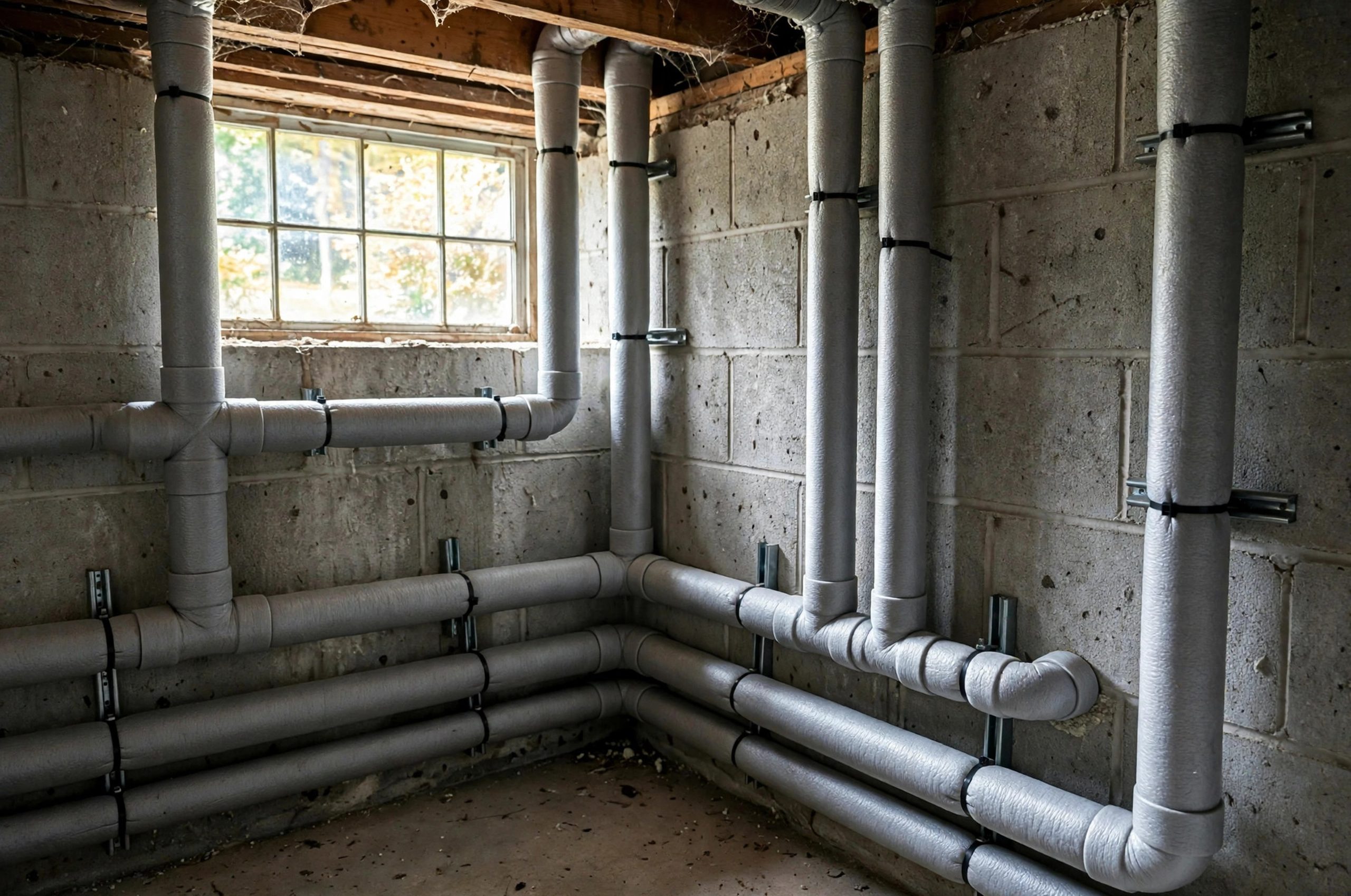
Cold water pipes sweat. On a humid day, you can watch beads of water form on a bare copper line in the basement, then drip onto the floor. It looks harmless, but steady dripping rots wood, feeds mold, and rusts metal. The fix is simple in concept: keep warm, moist air away from the cold pipe surface. Foam insulation does most of the work, and cutting the humidity in the room does the rest. Here is how to stop sweating pipes for good. This article explains condensation on cold water pipes in simple terms.
Table of Contents
Table of Contents
- Condensation on Cold Water Pipes: Why Pipes Sweat
- Leak or Sweat: The Wipe Test
- The Main Fix: Foam Pipe Insulation
- Installing the Sleeves
- Handling Elbows, Tees, and Valves
- The Second Fix: Lower the Humidity
- Special Cases
- What Not to Do
- When to Call a Professional
- Frequently Asked Questions
- Where to Learn More
- References
Condensation on Cold Water Pipes: Why Pipes Sweat
When it comes to condensation on cold water pipes, getting the details right makes all the difference.
Many homeowners find that condensation on cold water pipes is easier than they expected once they know the basics.
Sweating is condensation, the same thing that fogs a cold glass on a warm day. Air holds moisture. Warm air holds more than cold air. When warm, humid basement air touches a cold pipe, the air right against the pipe cools below its dew point. The moisture has to go somewhere, so it turns to liquid on the pipe surface.
Two things make it worse. Very cold incoming water, like well water or water from a deep municipal line, keeps the pipe surface frigid. High indoor humidity, common in basements and crawl spaces in warm weather, loads the air with moisture. When both line up, pipes drip steadily. The condensation explainers describe this dew-point meeting as the whole story behind sweating pipes.
Leak or Sweat: The Wipe Test
Many homeowners find that condensation on cold water pipes is easier than they expected once they know the basics.
The key to condensation on cold water pipes is choosing the right approach for your space and budget.
Before you insulate, make sure the water is condensation and not a leak. Dry a section of pipe completely with a towel. Wait fifteen to thirty minutes. If a fine, even film of moisture returns across the whole surface, it is sweating. If a single droplet forms fast at one joint, valve, or seam, that is a leak, and insulation will only hide it.
Fix leaks first. Insulating over a leak traps water against the pipe and speeds up corrosion. Once you are sure it is sweat, move on.
The Main Fix: Foam Pipe Insulation
The key to condensation on cold water pipes is choosing the right approach for your space and budget.
With a little planning, condensation on cold water pipes can fit even a busy schedule.
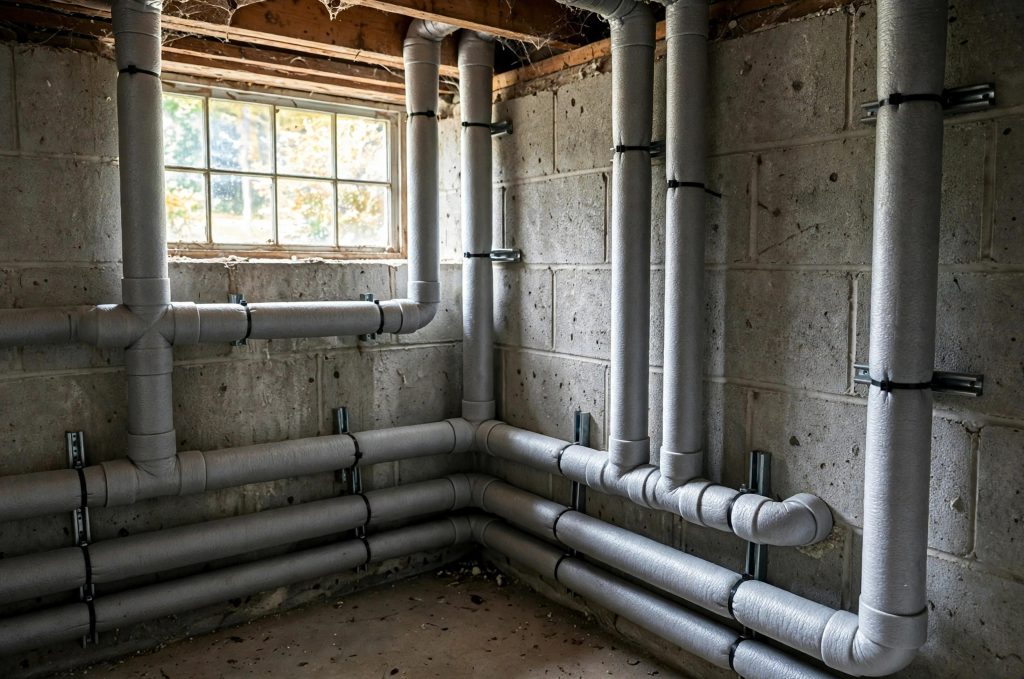
Foam pipe sleeves are the standard answer, and for good reason. They are cheap, they install in minutes, and they work. The sleeves are pre-slit tubes of closed-cell foam. You open the slit, slip the tube over the pipe, and seal the seam. The foam keeps humid air from ever touching the cold pipe, so no condensation forms.
Buy the right diameter for your pipes. A sleeve that is too loose leaves air gaps. One that is too tight will not close. Measure the pipe's outside diameter or bring a small cut piece to the store. Foam sleeves come in standard lengths, usually six feet, and cut easily with scissors or a utility knife.
Installing the Sleeves
Start with the pipe clean and dry. This matters. Trapping moisture under the insulation defeats the purpose and can corrode the pipe. Wipe the pipe down and let it air dry fully.
Open the slit and press the sleeve onto the pipe. Butt each length tight against the last so there are no bare gaps. Seal the lengthwise seam with the sleeve's self-adhesive strip, or wrap it with pipe insulation tape. Seal the butt joints between lengths the same way. Every seam is a place where humid air can sneak in, so be thorough. The installation walkthroughs stress sealed seams as the difference between insulation that works and insulation that just hides the problem.
Handling Elbows, Tees, and Valves
Straight runs are easy. Fittings take a little fitting. For a 90-degree elbow, cut two sleeve pieces with 45-degree angle cuts and butt the angled ends together around the bend. For tees, cut and notch the pieces so they meet without gaps. Pre-formed elbow and tee covers exist for common sizes and save time.
Valves and other irregular shapes are where foam sleeves struggle. Anti-sweat tape, a self-adhesive foam tape, wraps around anything. Spiral it around the fitting with a slight overlap on each pass until the metal is fully covered. For the toughest spots, a spray-on anti-sweat coating builds an insulating skin that conforms to any shape. The spray coating makers describe it as the answer for intricate installations where sleeves cannot reach.
The Second Fix: Lower the Humidity
With a little planning, condensation on cold water pipes can fit even a busy schedule.
Before you start, it helps to understand how condensation on cold water pipes works in real homes.
Insulation treats the pipe. Lowering humidity treats the air. Do both and sweating stops completely.
A dehumidifier in a damp basement is the most direct tool. Size it for the space and let it drain into a floor drain or a sink so you are not emptying buckets. Keep the basement relative humidity below 60 percent and most sweating stops even on uninsulated pipes. A smart dehumidifier with a pump handles the draining itself. A basement dehumidifier with a pump is built for exactly this kind of space.
Seal the air leaks that let humid outside air in. Open basement windows in humid weather, gaps around the rim joist, and unsealed penetrations all feed moisture to the basement. Caulk and foam are cheap. Running the air conditioner also dries the air as it cools, which is why sweating often eases when the AC runs steadily.
Do not vent a clothes dryer into the basement. Do not leave standing water in the basement. Both pump moisture into the air and make every condensation problem worse.
Special Cases
Before you start, it helps to understand how condensation on cold water pipes works in real homes.
A good plan for condensation on cold water pipes saves time, money, and frustration.
Crawl spaces are the hardest case. They are cool, damp, and hard to reach. Insulate the pipes the same way, seal the seams carefully, and consider a crawl-space dehumidifier with the vents sealed. It is a bigger project, but sweating pipes in a crawl space rot floor joists silently for years.
Pipes inside finished walls can sweat too, and you cannot insulate what you cannot reach. If you open a wall for another reason and find bare cold-water lines, insulate them before you close it up. That is also the time to check for old leaks and water stains.
Toilet tanks sweat for the same reason as pipes. A tank full of cold water in a humid bathroom condenses on the porcelain. Insulating liners made for toilet tanks fix it, or a tempering valve that mixes a little warm water into the tank supply raises the tank temperature above the dew point.
What Not to Do
A good plan for condensation on cold water pipes saves time, money, and frustration.
For most people, condensation on cold water pipes comes down to a few smart choices.
Do not wrap cold pipes in fiberglass insulation without a vapor barrier. Fiberglass soaks up the condensation, sags, and holds water against the pipe. If you use fiberglass for freeze protection on cold lines, it needs an intact vapor-barrier jacket sealed at every seam. Closed-cell foam is simpler and safer for sweat control.
Do not insulate over a wet pipe. Dry it first. Do not leave gaps at fittings and call it done. Humid air finds every gap. The job is only as good as its weakest seam.
When to Call a Professional
For most people, condensation on cold water pipes comes down to a few smart choices.
If you are new to condensation on cold water pipes, start with the simplest option and build from there.
Call a plumber if the wipe test shows a leak you cannot reach, if pipes inside walls are sweating and staining drywall, or if the basement humidity stays high despite a dehumidifier and sealed leaks. Persistent dampness can mean groundwater intrusion or a failed foundation drain, which is beyond pipe insulation.
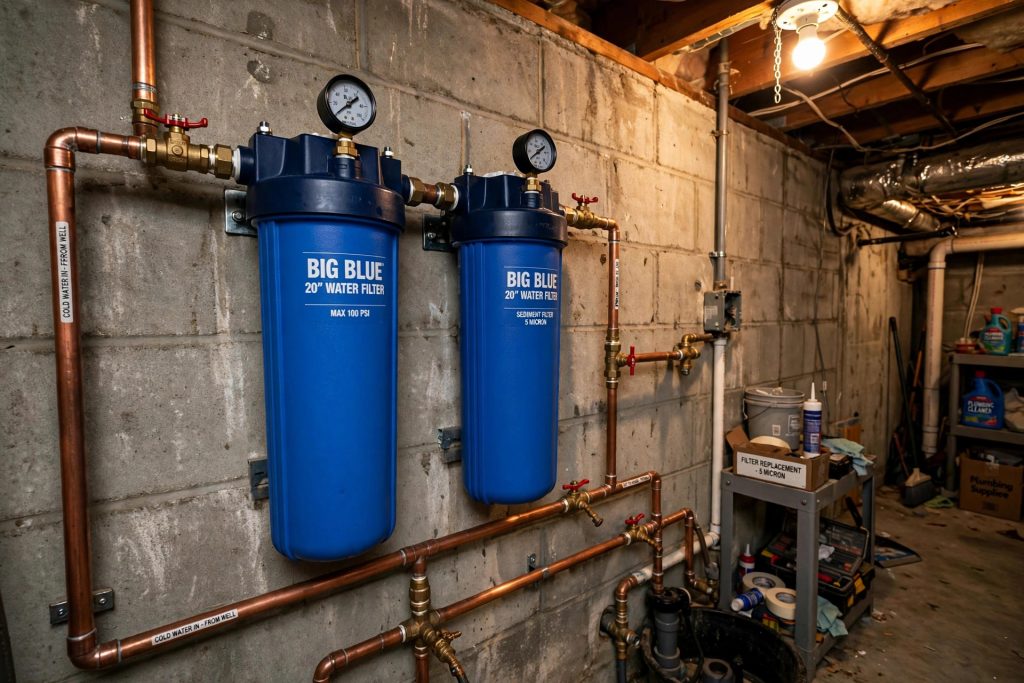
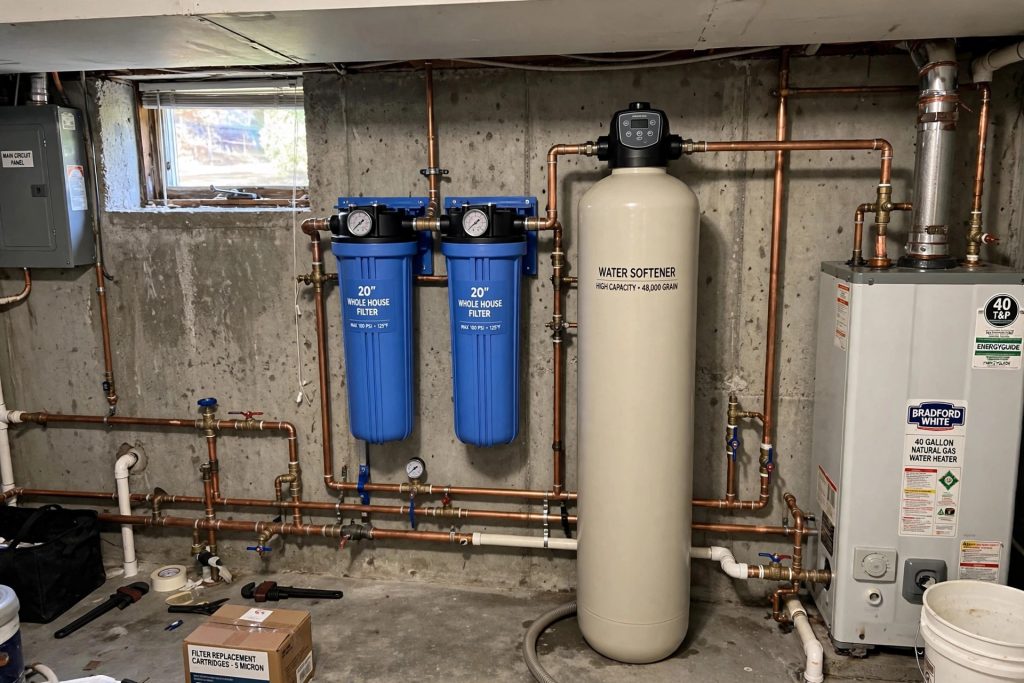
If you are insulating pipes as part of a bigger efficiency push, look at the whole system. Pipe insulation for cold climates covers freeze protection too, which matters in unheated spaces. A water leak detector near the water heater and washing machine catches the leaks that insulation cannot prevent.
Frequently Asked Questions
If you are new to condensation on cold water pipes, start with the simplest option and build from there.
Will insulation stop sweating completely?
Properly installed closed-cell foam with sealed seams stops it on the covered pipe. If the room is extremely humid, pair insulation with a dehumidifier for full control.
Can I insulate pipes that are already wet?
Dry them first. Wipe them down and let the surface dry fully. Insulating over moisture traps it against the pipe.
Is sweating dangerous for copper pipes?
Over time, yes. Constant moisture speeds corrosion and can pit copper. It also drips onto wood and drywall, causing rot and mold far from the pipe itself.
What is the cheapest fix?
Foam pipe sleeves cost very little per foot and install in an afternoon. For most homes, they are the cheapest effective fix.
My pipes only sweat in warm weather. Is that normal?
Yes. Warm air holds more moisture, so condensation peaks in the humid months. That seasonal pattern is the signature of sweating rather than leaking.
Does pipe material matter?
It does. Copper is the most common sweater because it conducts cold so well. Steel and iron sweat too. Plastic pipe stays a little warmer on the surface and sweats less, but in very humid air even plastic can bead up. Insulation helps every material.
Where to Learn More
When it comes to condensation on cold water pipes, getting the details right makes all the difference.
Engineer Fix has a general pipe condensation guide alongside the basement version. Family Handyman's pipe condensation article quotes working plumbers on the 60-percent humidity rule. SoCool's condensation guide covers anti-condensation tape and heat cables for tight spots. Dad Improvement compares foam tubes, wraps, and tapes side by side. And O'Leary Plumbing's fall condensation FAQ answers the leak-versus-sweat question clearly. That is all it takes to handle condensation on cold water pipes with confidence.
References
Brodi. (n.d.). Pipewrap, spray-on anti-sweat insulating coating to prevent condensation buildup. https://www.brodi.com/pipewrap-anti-sweat-cold-pipe-spray-on-insulating-coating
Dad Improvement. (n.d.). Best insulation options for cold water pipes to prevent freezing and heat loss. https://dadimprovement.com/best-insulation-for-cold-water-pipes/
Engineer Fix. (n.d.). How to stop condensation on pipes. https://engineerfix.com/how-to-stop-condensation-on-pipes/
Engineer Fix. (n.d.). How to stop condensation on pipes in your basement. https://engineerfix.com/how-to-stop-condensation-on-pipes-in-your-basement/
Family Handyman. (n.d.). How do you stop condensation on water pipes? https://www.familyhandyman.com/article/pipe-condensation/?srsltid=AfmBOorgQVDr6rkkPtBavPsaKWFwvOKu5VTllaOhrJ3PNZnrRJLXwoH6
Frost King. (n.d.). A no-sweat fix for sweating pipes. https://www.frostking.com/tips-and-tricks/pipe-duct-insulation/no-sweat-fix-for-sweating-pipes
O'Leary Plumbing & Heating. (n.d.). Why pipes sweat: Fall weather & pipe condensation. https://www.olearyplumbingandheating.com/blog/why-basement-pipes-sweat
SoCool. (n.d.). The best method for avoiding "sweating" or condensation in cold water pipes. https://www.socool.sg/the-best-method-for-avoiding-sweating-or-condensation-in-cold-water-pipes/
Was this guide helpful?

About My Garden US
The My Garden US editorial team writes practical, in-depth home and garden guides for American homeowners — tested advice, no fluff.
You May Also Like
Best Water Leak Detector for Water Heater USA: A Complete Buying Guide
January 2, 2026 18 views
Sulfur Smell in Well Water Filter Solution: A Complete Guide
March 14, 2026 17 views
Lead in Drinking Water Filter Reviews USA: What Tests, Types, and Brands to Trust
February 25, 2026 19 views