---
Table of Contents
Table of Contents
- Install a Fireplace Mantel: Safety Comes First: Clearance Rules
- Choosing Your Mantel and Brackets
- Pick the right material
- Pick the right brackets
- Tools and Materials
- Step-by-Step: Installing on Drywall Over Studs
- Step 1: Measure and mark
- Step 2: Find the studs
- Step 3: Mount the brackets
- Step 4: Set the mantel
- Step 5: Test it
- Step-by-Step: Installing on Brick or Stone
- Common Mistakes to Avoid
- Decorating Your New Mantel
- When to Hire a Pro
- Frequently Asked Questions
- References
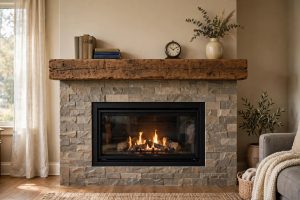
A mantel shelf turns a plain fireplace into the centerpiece of the room. It holds stockings, photos, and art, and it frames the fire below. But a mantel is heavy, it sits above intense heat, and a bad installation can pull out of the wall or, worse, catch fire. This guide shows how to install a fireplace mantel safely: the right height, the right brackets, and the right anchors for your wall type. This guide shows how to install a fireplace mantel in plain steps.
Install a Fireplace Mantel: Safety Comes First: Clearance Rules
When it comes to install a fireplace mantel, getting the details right makes all the difference.
When it comes to install a fireplace mantel, getting the details right makes all the difference.
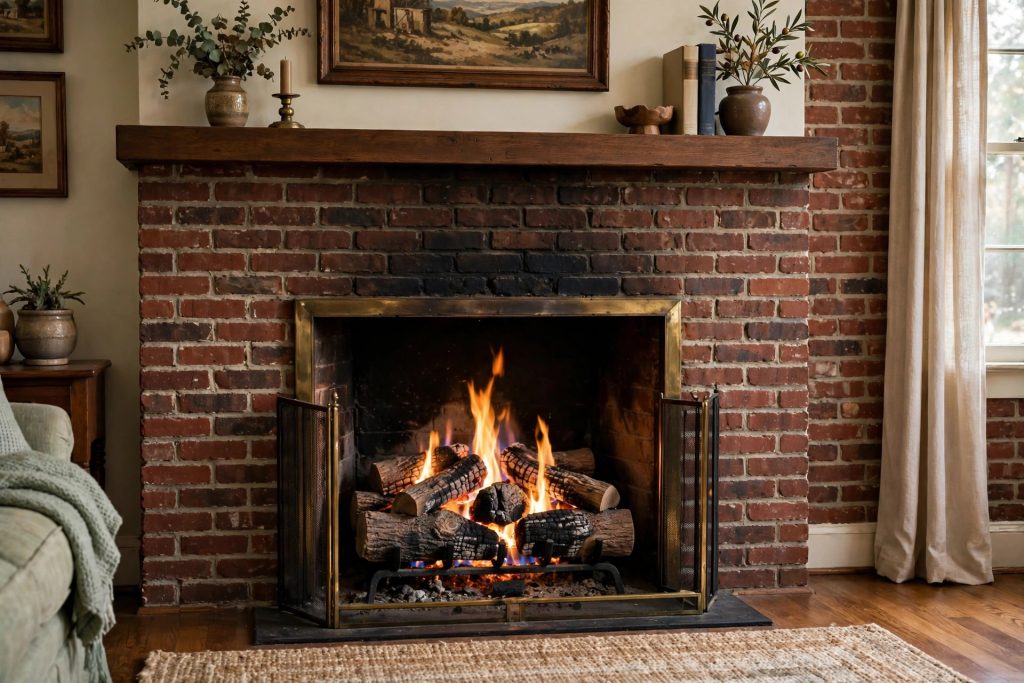
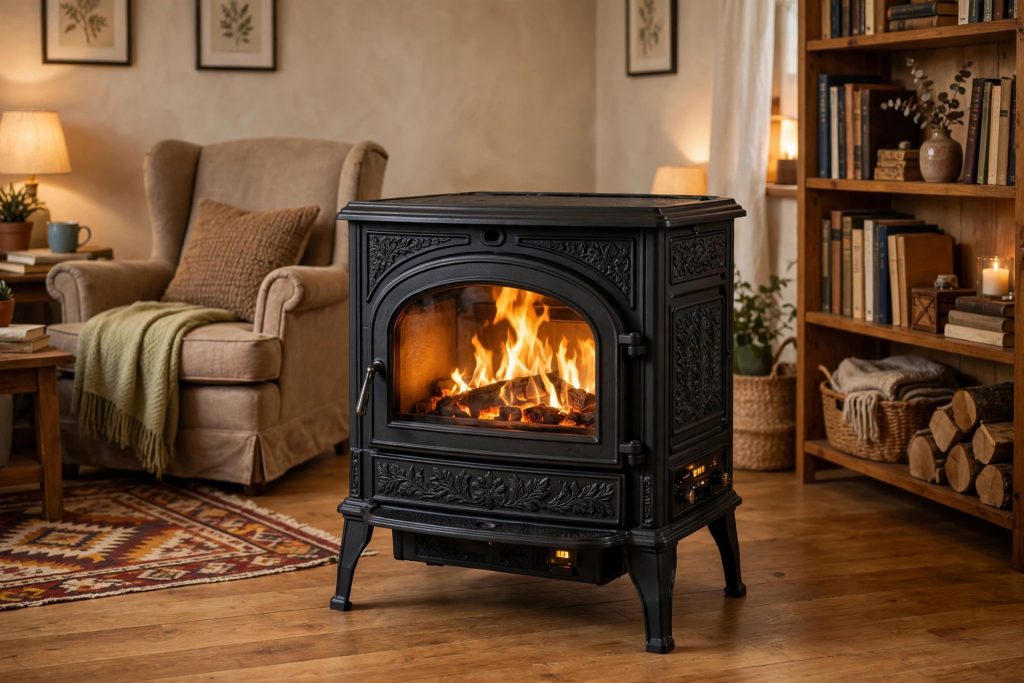
Many homeowners find that install a fireplace mantel is easier than they expected once they know the basics.
Before you drill a single hole, you must know the clearance rules. Building codes, based on NFPA 211, set minimum distances between combustible materials (wood, MDF, particleboard) and the firebox opening.
The baseline rule: no combustible material within six inches of the top or sides of the firebox opening. When a mantel projects out from the wall, it needs more clearance because it catches more radiant heat. The standard formula is one extra inch of vertical clearance for every one-eighth inch the mantel projects beyond the first 1.5 inches (Engineer Fix).
A simpler working rule used by many installers: place the mantel at least 12 inches above the firebox opening, then add one inch of height for every inch of shelf depth. So a mantel that is six inches deep should sit about 18 inches above the opening (ProfoundQa).
In practice, most mantels end up with the shelf top about 54 to 60 inches from the floor. Always check your fireplace manufacturer's manual too, since factory-built units and gas inserts can have stricter requirements than masonry fireplaces (Engineer Fix). Non-combustible mantels made of stone or concrete face relaxed rules, but they still need sensible distance from the heat.
Choosing Your Mantel and Brackets
Many homeowners find that install a fireplace mantel is easier than they expected once they know the basics.
Many homeowners find that install a fireplace mantel is easier than they expected once they know the basics.
The key to install a fireplace mantel is choosing the right approach for your space and budget.
Pick the right material
- Solid wood beams are the classic choice. Heavy, beautiful, and strong. Reclaimed beams are popular.
- Box mantels are hollow wood shells that look like solid beams but weigh far less, making installation easier.
- Stone or concrete mantels are non-combustible and can sit closer to the firebox, but they are very heavy.
- Metal mantels suit modern rooms but need rust-resistant fasteners.
Stoll Industries, a mantel manufacturer, notes that hidden bracket systems give a clean floating look and that most of their mantels install with a simple backplate-and-slide method (Stoll Industries).
Pick the right brackets
- Hidden floating brackets are steel rods or plates that slide into the back of the mantel. No visible hardware.
- Corbels are decorative wood or stone brackets that support the shelf from below. The News Independent's bracket guide explains that corbels are structural pieces designed to carry weight, installed with lag bolts and washers (The News Independent).
- Angle brackets are simple metal L-brackets. Home Depot's installation sheet for shelf and mantel angle brackets stresses that at least one screw per bracket must go into a wall stud (Home Depot).
Match the bracket rating to your mantel's weight plus the decor you plan to load on it. When in doubt, go stronger.
Tools and Materials
The key to install a fireplace mantel is choosing the right approach for your space and budget.
With a little planning, install a fireplace mantel can fit even a busy schedule.
You will need:
- Stud finder
- Four-foot level
- Drill with wood and masonry bits
- Socket wrench set
- Measuring tape and pencil
- Lag screws (3 to 4 inches) with washers
- Masonry anchors for brick or stone walls
- Your mantel, brackets, and mounting hardware
- A helper for heavy mantels
Industrial Farm Co's installation walkthrough recommends lag screws, washers, a four-foot level, and a socket wrench as the core kit, plus wall anchors where studs do not line up (Industrial Farm Co).
Step-by-Step: Installing on Drywall Over Studs
With a little planning, install a fireplace mantel can fit even a busy schedule.
Before you start, it helps to understand how install a fireplace mantel works in real homes.
Step 1: Measure and mark
Measure your firebox opening width. Plan for the mantel to extend about six inches past each side of the opening. Mark your mounting height on the wall, respecting the clearance rules above. Draw a level line across the full width.
Step 2: Find the studs
Run the stud finder across the mounting area and mark every stud. You need at least two studs carrying the load. Never hang a heavy mantel on drywall alone. If studs do not line up with your bracket positions, plan to use a horizontal mounting board screwed into the studs first, then mount the brackets to that board.
Step 3: Mount the brackets
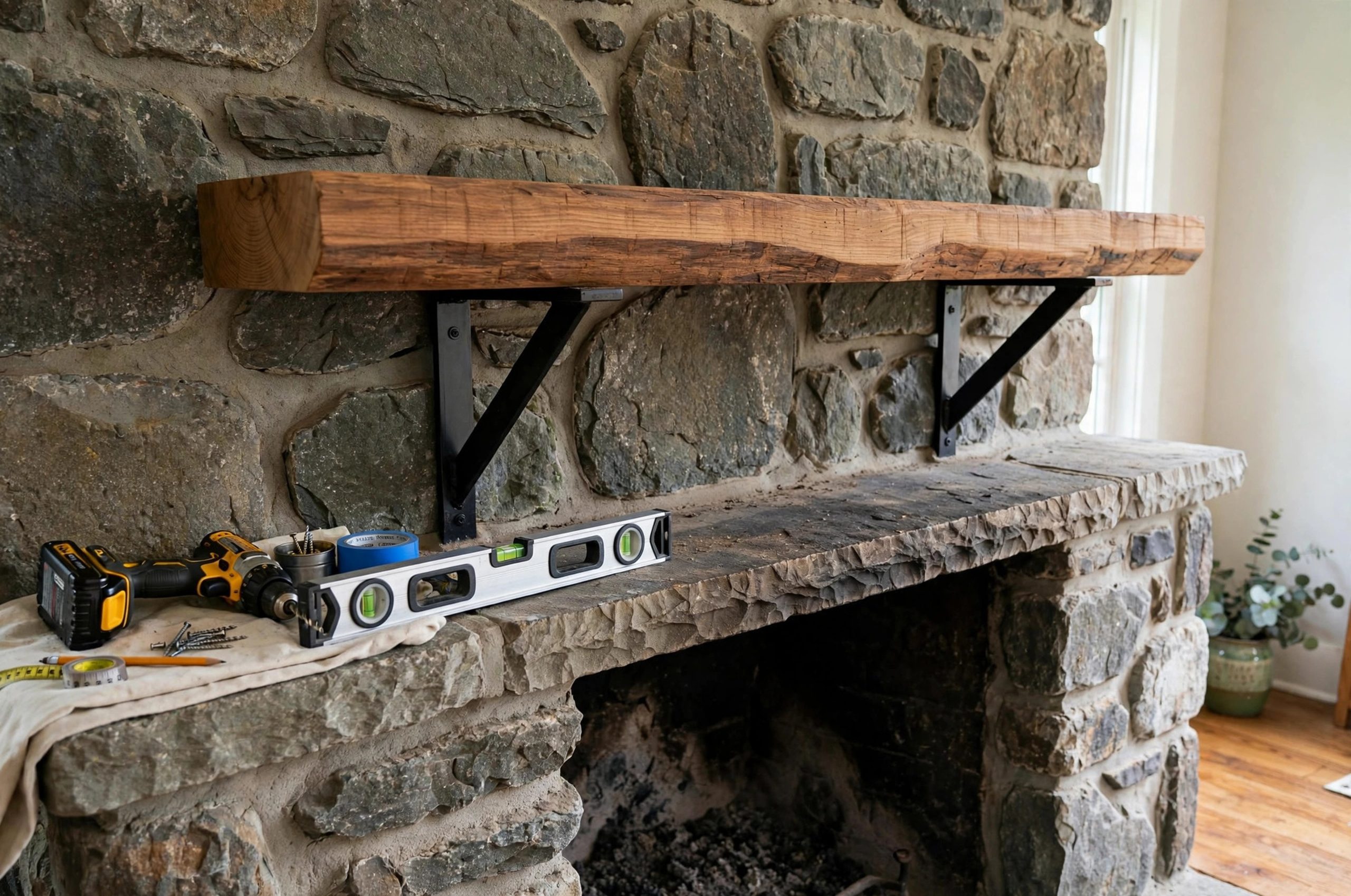
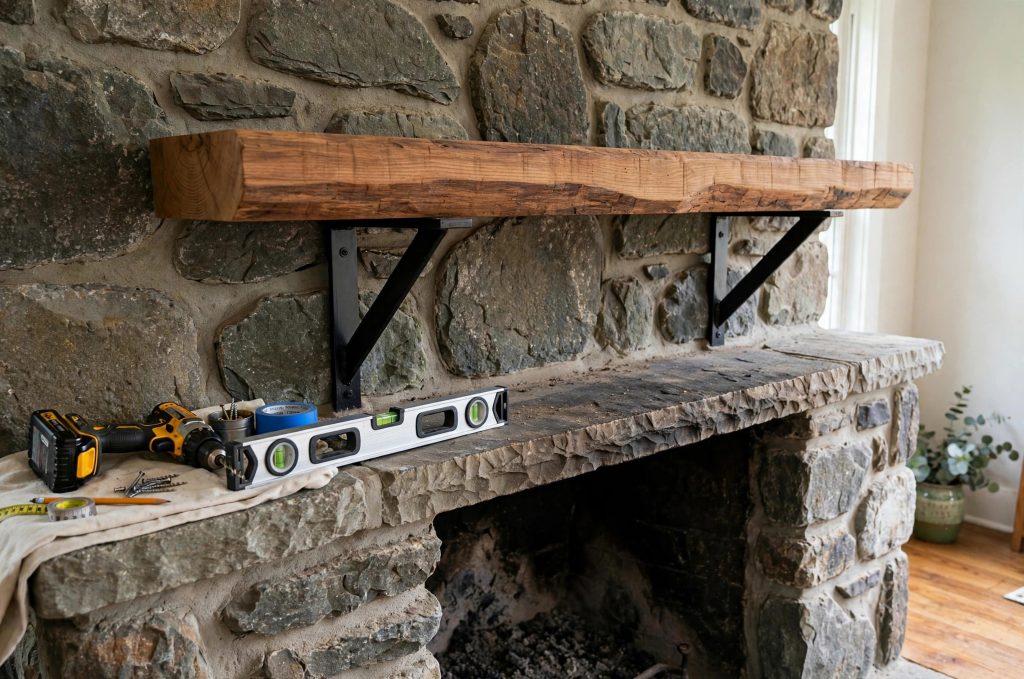
Hold the first bracket at your level line and mark the screw holes. Drill pilot holes slightly smaller than your lag screws, centered on the studs. Drive the lag screws with washers, checking level as you go. Mount all brackets and check that they are level with each other across the full span.
Step 4: Set the mantel
With your helper, lift the mantel onto the brackets. For floating brackets, slide the mantel's pre-drilled holes onto the steel rods. For corbels or angle brackets, set the shelf on top and secure it with the provided screws from below or behind. Check level across the full length.
Step 5: Test it
Press down firmly on the mantel at several points. There should be no wobble or movement. Load it gradually and recheck after a day.
Step-by-Step: Installing on Brick or Stone
Before you start, it helps to understand how install a fireplace mantel works in real homes.
Masonry walls need a different approach:
1. Mark your level line and bracket positions as above. 2. Aim for the center of solid brick units, not the mortar joints, which are weaker (Engineer Fix). 3. Drill with a hammer drill and a masonry bit matched to your anchors. 4. Vacuum or brush the dust from each hole. 5. Set sleeve anchors or wedge anchors per the maker's instructions and tighten to spec. 6. For floating systems, make sure the steel rods are level and spaced to match the holes in the mantel. 7. Slide the mantel on, check level, and test with firm downward pressure. 8. A bead of construction adhesive along the back edge closes small gaps and adds stability.
Brick dust is abrasive and messy. Tape a paper catch-bag below your drill points and wear a dust mask.
Common Mistakes to Avoid
A good plan for install a fireplace mantel saves time, money, and frustration.
- Anchoring into drywall only. The number one cause of mantel failure. Always hit studs or use proper masonry anchors.
- Ignoring clearance rules. A beautiful wood mantel placed too close to the firebox is a fire hazard. Measure twice.
- Skipping the level. A mantel that is off by even a quarter inch across four feet is visible from across the room.
- Underestimating weight. A solid oak beam plus decor can top a hundred pounds. Size your brackets and fasteners for the real load.
- Drilling into mortar joints. Mortar crumbles under load. Anchor into the brick or stone units themselves.
- No helper. Heavy mantels are awkward. A second pair of hands prevents drops, wall damage, and injuries.
Decorating Your New Mantel
For most people, install a fireplace mantel comes down to a few smart choices.
Once the mantel is solid, the fun starts. Keep heat in mind: candles, dried flowers, and paper items should sit well back from the edge above the firebox, and never hang anything flammable down toward the opening. If you collect holiday villages, a Christmas village church for the mantel makes a classic seasonal display.
When shopping, look at fireplace mantel shelves rated for your climate, browse mantel shelves available in Texas for regional options, or consider reclaimed wood mantels for a rustic beam with character.
When to Hire a Pro
If you are new to install a fireplace mantel, start with the simplest option and build from there.
Call a professional installer if:
- Your mantel weighs more than you and a helper can safely lift.
- The wall is stone, tile, or another hard material you have never drilled.
- You are unsure about the clearance rules for your specific fireplace model.
- The fireplace is a factory-built unit with strict manufacturer clearances.
A safe mantel installation is mostly planning: right height, right brackets, solid anchors. Take your time with the measuring and the stud-finding, and the shelf will hold firm for decades.
Frequently Asked Questions
When it comes to install a fireplace mantel, getting the details right makes all the difference.
How high should a mantel be above the floor? Most mantels sit with the shelf top 54 to 60 inches from the floor. The exact height depends on your firebox size and the clearance rules. Always satisfy the safety clearances first, then adjust for looks.
Can I install a wood mantel over a gas fireplace? Yes, as long as you follow the clearance rules for combustible materials. Gas fireplaces produce less intense heat than wood-burning ones, but the six-inch minimum and projection rules still apply. Check the fireplace manual for any stricter requirements.
How much weight can a mantel hold? It depends on the brackets and the wall anchors. A properly installed mantel on studs or masonry with rated brackets can hold many dozens of pounds of decor. Check your bracket rating and never exceed it.
Can I install a mantel myself or should I hire someone? A handy homeowner can install a light to medium mantel on drywall over studs with basic tools. Hire a professional for very heavy beams, stone or tile walls, or any situation where you are unsure about clearances or anchors. With these steps, you can install a fireplace mantel with confidence.
References
Engineer Fix. (n.d.). How high above a fireplace should a mantel be? https://engineerfix.com/how-high-above-a-fireplace-should-a-mantel-be/
Engineer Fix. (n.d.). How to install a fireplace mantel on brick. https://engineerfix.com/how-to-install-a-fireplace-mantel-on-brick/
Engineer Fix. (n.d.). What is the proper mantel height above a fireplace? https://engineerfix.com/what-is-the-proper-mantel-height-above-a-fireplace/
Home Depot. (n.d.). Shelf/mantle installation using angle brackets. https://images.thdstatic.com/catalog/pdfImages/93/93e5faec-be2c-41fd-aa20-33d3fae92c45.pdf
Industrial Farm Co. (n.d.). Fireplace mantel styling guide. https://industrialfarmco.com/blogs/tips-inspiration/5-ways-to-style-your-fireplace-mantel-with-industrial-farm-co-brackets
ProfoundQa. (n.d.). What is code for a fireplace mantel? https://profoundqa.com/what-is-code-for-a-fireplace-mantel/
Stoll Industries. (n.d.). How to choose the right fireplace mantel. http://stollindustries.com/how-to-choose-the-right-fireplace-mantel-for-your-home/
The News Independent. (n.d.). What are fireplace mantel brackets called? http://thenewsindependent.com/what-are-fireplace-mantel-brackets-called/
Was this guide helpful?

About My Garden US
The My Garden US editorial team writes practical, in-depth home and garden guides for American homeowners — tested advice, no fluff.
You May Also Like
Propane Fire Pits Price Comparison USA: A Practical Guide to What You Should Pay
September 24, 2026 16 views
EPA Certified Chimney Caps and Covers for Sale: A Buyer's Guide
May 23, 2026 12 views
Top Rated Chimineas for Patios for Cold Climates
April 4, 2026 14 views