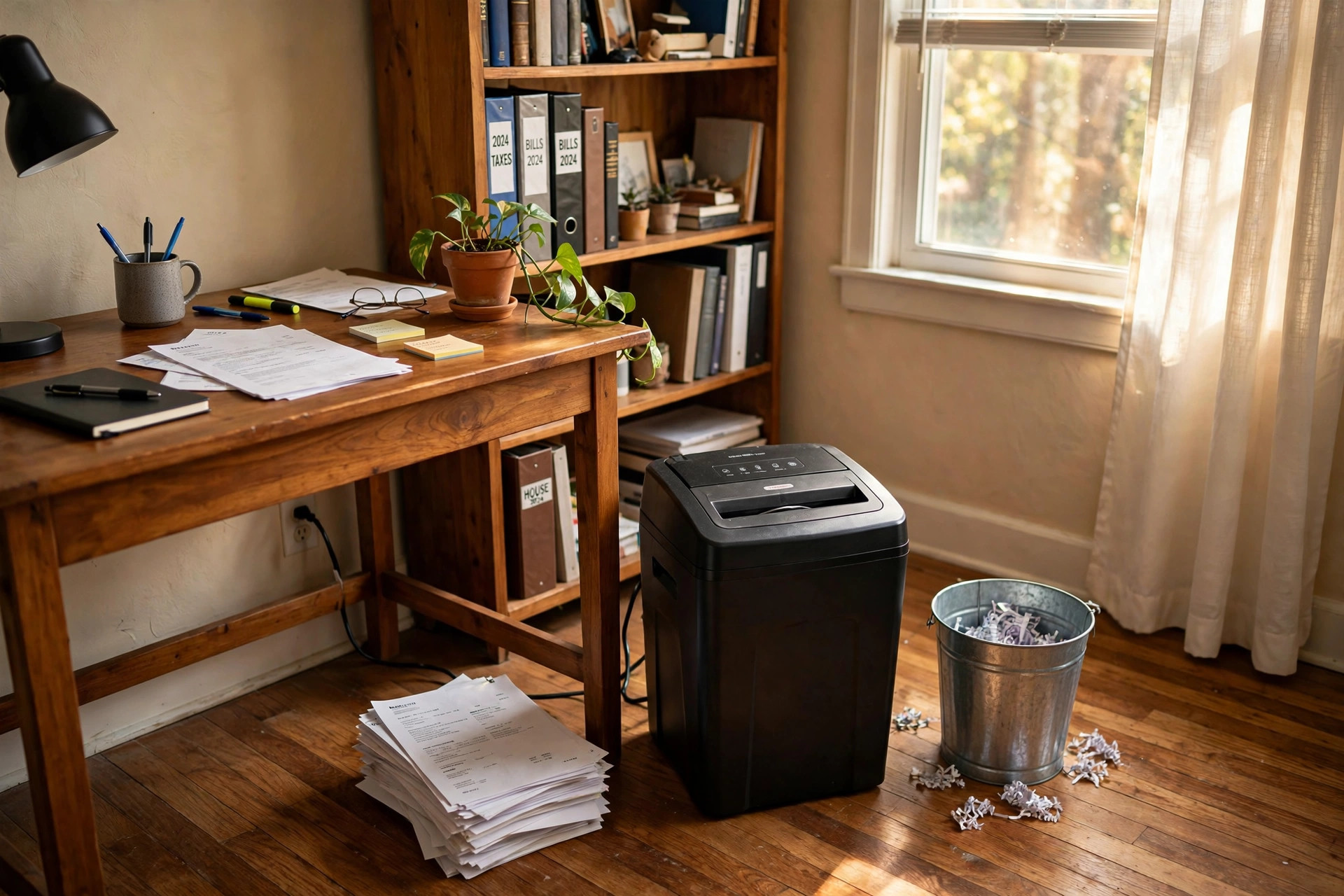

Every year, millions of Americans throw away papers they should have destroyed. Old bank statements, tax forms, medical bills, and credit card offers sit in trash cans or recycling bins. Thieves can take them. They can open new accounts in your name. They can steal your identity. A home office shredder for sensitive documents usa buyers trust is a simple tool that stops this danger.
A shredder cuts paper into small pieces that no one can read. It is one of the cheapest forms of home security. This guide explains why it matters, what to look for, the types you can buy, what they cost, and how to keep one in good order.
Why It Matters
Identity theft starts with paper. A thief does not need to be clever. He only needs to find a full name, a date of birth, and an account number in your trash. Many people shred only some papers and keep the rest. That is not enough.
The old way was a bonfire. Some people still burn papers. But burning is slow, it smells, and it can be dangerous in a home. Others tear paper by hand. Hand-torn pieces can be put back together. A machine does the job better.
Remote work has made the problem larger. Millions of people now work from home. They print work papers with client names, payroll data, and company records. When these papers are done, they must be destroyed the right way. A small business owner with a home office may have a legal duty to protect client papers. A paper shredder for home office security is no longer a luxury. It is part of a normal office.
Think about the papers in your own home. Pay stubs. Insurance forms. Old loan papers. Letters from the bank. Any one of these can be misused. Shredding takes only seconds. It gives peace of mind.
What to Look For: Home Office Shredder for Sensitive Documents Usa
Choosing a home office shredder for sensitive documents is not hard. You need to know a few key points. They are cut type, security level, sheet capacity, run time, and bin size.
Cut Type
The cut type is the most important choice. It decides how small the pieces are.
Strip-cut shredders cut paper into long strips. They are cheap and fast. But the strips can be read. For bank statements and tax papers, they are not safe enough.
Cross-cut shredders cut paper both ways. They make small confetti-like pieces. They are much safer than strip-cut machines. For most homes, a cross-cut machine is the right pick.
Micro-cut shredders cut paper into very tiny bits. They give the highest level of safety. They cost more and run slower. But if you handle legal or medical papers, they are worth the price.
Security Level
Shredders sold in the USA use a rating system called DIN security levels. They run from P-1 to P-7. P-1 is the lowest. It is for junk mail. P-4 is a good level for most home use. P-5 and above are for very private papers. Look for P-4 or better when you shop for a shredder for confidential documents home use.
Sheet Capacity and Run Time
Sheet capacity tells you how many sheets the machine can take at once. A small home machine may take 6 to 8 sheets. A larger one may take 12 to 16. If you shred only a few papers a week, a small machine is fine. If you shred stacks of old files, buy a larger one.
Run time is how long the motor can work before it needs to rest. Many home machines run for 5 to 10 minutes, then need 20 to 40 minutes of cooling. This is normal. Do not push a small machine past its limit. It will wear out faster.
Bin Size and Extra Features
The bin holds the cut paper. A small bin fills up fast. A 4 to 6 gallon bin suits a home office. Some machines have a pull-out bin. Others have a lift-off top. Either one is fine.
Extra features can help. A shredder that also cuts credit cards and staples saves time. You do not have to remove staples first. A machine that handles junk mail envelopes saves trips to the mailbox. Look for auto-start and auto-stop. The machine starts when you feed paper and stops when it is done.
Types of Shredders and Where They Fit
Personal Desk Shredders
These are the smallest machines. They sit beside a desk. They shred 6 to 8 sheets at a time. They cost the least. They suit a person who shreds a few papers each week. Their bins are small, so they need emptying often.
Medium Home Office Shredders
These are the most common. They shred 10 to 16 sheets. They have larger bins. They can run longer. They handle credit cards and staples. This is the right class for most buyers looking for a home office shredder for sensitive documents usa shoppers can rely on every day.
Heavy-Duty and Auto-Feed Shredders
Heavy-duty machines shred more sheets and run longer. Auto-feed models let you stack up to 100 pages and walk away. They feed the pages one by one. They cost more, but they save time if you clear out years of old files. Families who are sorting papers after a move often like these.
For a full workspace, pair your shredder with good storage. A home office storage cabinet with locking doors keeps the papers you must keep under lock. A lockable filing cabinet for home business documents adds a second layer of safety. If space is tight, a rolling file cabinet for home office organization moves where you need it.
Cost and Price
A basic strip-cut personal shredder costs about 25 to 40 dollars. A good cross-cut machine for home use costs about 60 to 120 dollars. A micro-cut machine costs about 120 to 200 dollars. Auto-feed models can cost 200 to 400 dollars or more.
Price depends on the brand, the cut type, and the features. Big box stores carry many models. You can read about workspace gear on The Spruce and check office setups at IKEA or Wayfair. Furniture makers like Herman Miller and Steelcase publish good guides on planning a home workspace. Standing desk makers such as UPLIFT Desk also sell small office tools and storage.
Do not buy the cheapest machine if you shred private papers. A 30 dollar strip-cut model will not protect you. Spend a little more for a cross-cut or micro-cut machine. The cost is small next to the cost of identity theft. Review sites like Wirecutter and PCMag test shredders each year and compare prices. Their lists can help you find a fair deal.
Watch for sales in January and during back-to-school season. Stores often cut prices on office gear at those times. Buy an extra bag of shredder oil when you buy the machine. It costs a few dollars and lasts a long time.
Care and Upkeep
A shredder needs little care. But small steps keep it running for years.
Oil the blades. Most makers say to oil after every 30 minutes of use, or each time you empty the bin. Use oil made for shredders. Pour a line across a sheet of paper and run it through. Or buy oil sheets and feed one through. Never use cooking oil or spray oil. They can harm the machine.
Empty the bin before it packs full. When paper packs tight under the blades, the motor works harder. It can jam. A jam is easy to fix. Turn the machine off, unplug it, and switch it to reverse if it has that button. Pull the stuck paper out gently. Then run it forward again.
Keep the machine cool. Let it rest after its rated run time. Do not shred thick cardboard, plastic bags, or wet paper. They can break the blades. Keep fingers, ties, and hair away from the slot. Always unplug the machine before you clear a bad jam.
Recycle the shredded paper. Many cities accept it in the recycling bin if it is in a clear bag. Check your local rules first. Some places do not take shredded paper curbside. In that case, put it in your compost or take it to a recycling center.
Shredder oil is not the only supply to keep on hand. Keep a few spare waste bags that fit your bin. They make emptying quick and clean. Keep the manual in a drawer near the machine. It lists the run time and the sheet limit for your model. When in doubt, check it. These small habits keep the machine ready for years.
Safety
Shredders are safe when used the right way. But they can hurt careless hands. Keep children and pets away from a running machine. Never reach into the slot. If paper starts to bunch up, stop and reverse instead of pushing it down.
Place the machine on a flat, stable surface. A wobbly table can tip it over. Keep it away from water and damp floors. Unplug it when you are done for the day. This saves power and removes any risk.
If you work with very old papers, wear a dust mask. Old paper gives off fine dust when cut. A mask keeps it out of your lungs. Open a window or run a fan for fresh air.
FAQ
How often should I shred papers at home?
Shred private papers as soon as you no longer need them. Do not let them pile up. A weekly habit takes only a few minutes. Many people shred while they sort their mail.
Shred expired credit cards, old insurance cards, and canceled checks. Shred pre-approved loan offers the same day they arrive. Shred anything with an account number or a signature. When in doubt, shred it.
Is a strip-cut shredder enough for bank statements?
No. Strip-cut machines leave long pieces that can be read. For bank statements, tax forms, and medical bills, use a cross-cut or micro-cut machine at security level P-4 or higher.
Can a home shredder destroy credit cards and CDs?
Many cross-cut models can cut credit cards. Check the manual first. CDs and DVDs need a special slot. Do not feed them into a paper-only slot. They can break the blades.
What should I do with papers before the shredder arrives?
Keep them in one locked spot. A locking cabinet works well until you can destroy them. Do not leave private papers in open trash bags. Shred them the day the machine arrives.
How long does a home shredder last?
A good home machine lasts 5 to 10 years with normal care. Oil the blades, let the motor rest, and empty the bin on time. Cheap machines wear out faster.
Can I recycle shredded paper?
In most places, yes. Put it in a clear or paper bag so it does not blow away. Check your city rules first. Some towns do not accept it curbside. Then take it to a recycling drop-off or add it to compost.
A Short Final Word
A home office shredder for sensitive documents is a small machine with a big job. It protects your money, your name, and your privacy. Choose a cross-cut or micro-cut model. Look for a P-4 security level or better. Oil the blades, let the motor rest, and shred on a regular schedule. The best time to start is today. Your future self will thank you.
References
Herman Miller. (n.d.). Office furniture and ergonomic seating. https://www.hermanmiller.com IKEA. (n.d.). Home furnishings. https://www.ikea.com PCMag. (n.d.). Technology product reviews. https://www.pcmag.com Steelcase. (n.d.). Office furniture and workplace research. https://www.steelcase.com The Spruce. (n.d.). Home and garden advice. https://www.thespruce.com UPLIFT Desk. (n.d.). Standing desks and ergonomic office furniture. https://www.uplift-desk.com Wayfair. (n.d.). Furniture and home goods. https://www.wayfair.com Wirecutter. (n.d.). Product reviews from The New York Times. https://www.nytimes.com/wirecutter
Was this guide helpful?

About James Carter
The My Garden US editorial team writes practical, in-depth home and garden guides for American homeowners — tested advice, no fluff.
You May Also Like

Home Office Trash Can With Lid for Documents
September 28, 2026 0 views
Home Office Closet Organizer for Office Supplies: A Complete Guide
May 26, 2026 0 views
Ergonomic Mouse Pad with Gel Wrist Support: A Plain Buyer’s Guide
February 3, 2026 0 views