
What Are Deck Cap Lights
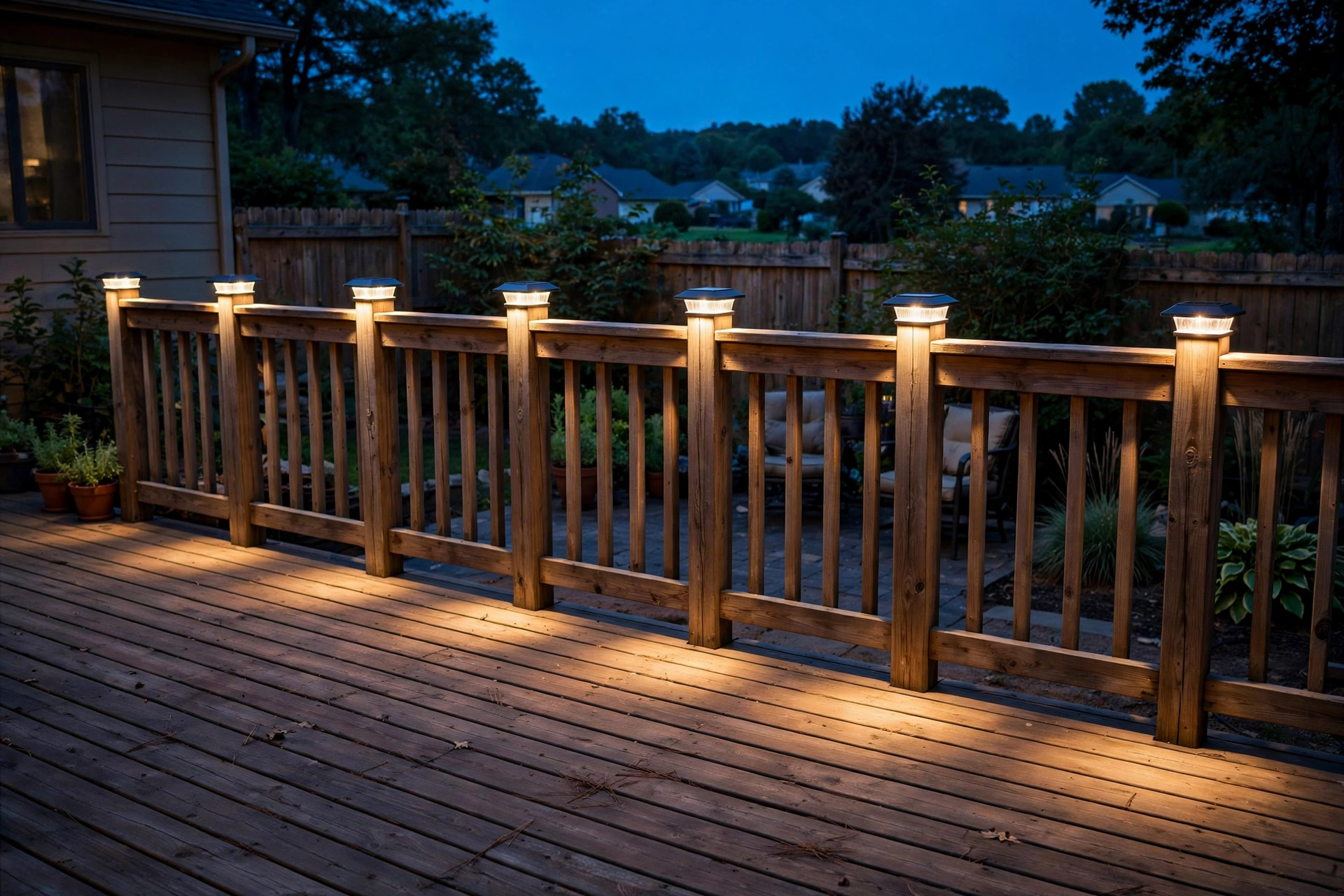
This deck cap lights reviews buying guide usa will walk you through every step of choosing the right lights for your deck. Deck cap lights are small lamps that sit on top of deck posts or rail caps. They send light down along the rail and the deck boards. Many American homes use them to make the deck safe and pleasant after dark.
A cap light does not flood the yard with light. It makes small pools of light. These pools show where the steps are and where the rail ends. Guests can see the edges of the deck. You can see your drink on the table. The look is warm and calm.
Most deck cap lights in the USA fall into two groups. Solar models charge a small battery during the day and turn on at dusk. Low voltage models wire into a transformer that plugs into an outlet. Both types work well. Each has strong points and weak points.
Why Deck Cap Lights Matter: Deck Cap Lights Reviews Buying Guide Usa
A deck is one of the most used rooms of an American home. People cook there, eat there, and talk there. When the sun sets, a dark deck becomes a risk. People miss steps. They bump into rails. They spill food. A few well placed lights fix all of this.
Safety is the first reason. The U.S. Consumer Product Safety Commission gives guidance on outdoor product safety, and lit stairs and rails are a simple way to cut falls at home. Small lights on each post mark the deck edge clearly.
Comfort is the second reason. You do not need bright flood lights to enjoy a deck at night. Soft light along the rails is enough. It lets you see faces and food without killing the night sky.
Value is the third reason. Real estate writers often note that outdoor living space adds appeal to a home. A deck that looks good at night feels larger and more finished. Review sites like The Spruce cover how outdoor lighting shapes the mood of a home.
How to Choose Deck Cap Lights
Start with the size of your posts. Measure the top of the post or the rail cap. Many American decks use 4×4 posts, which are really 3.5 by 3.5 inches. Some use 6×6 posts. A cap light must fit flat on the surface. Many models come in several sizes, so check the fit before you buy.
Next, pick the power source. Solar deck cap lights are the simplest choice. They need no wire and no electrician. Low voltage deck cap lights give steadier light and can be put on a timer. If your deck gets full sun, solar works well. If tall trees or a house shade the deck, low voltage may serve you better.
Look at brightness. Brightness is measured in lumens. For a cap light, 10 to 30 lumens per light is common. That sounds low, but it is right for the job. These lights mark edges and steps. They are not meant to light a whole yard. Many deck cap lights reviews from buyers note that too bright a cap light hurts the eyes.
Check the color of the light. Warm white, around 2700 to 3000 Kelvin, gives a cozy glow. Cool white looks harsh on a deck. Most buyers prefer warm white for outdoor living.
Look at the material. Cap lights face sun, rain, and snow. Plastic models cost less but can crack in cold winters. Aluminum and stainless steel models last longer. Look for an IP rating. IP65 or higher means the light keeps out dust and rain. This matters in snowy and wet parts of the country.
Types of Deck Cap Lights
Solar Deck Cap Lights
Solar models are the most sold type in the USA. A small panel on top of the light charges the battery by day. At dusk a sensor turns the light on. Good models run six to eight hours. Weak models fade after three hours.
The strong point is easy setup. You screw or glue the light to the post cap. There is no wire to bury. The weak point is winter. Short days and snow on the panel cut the run time. Retailers like Lowe’s sell solar models in packs of four, six, or eight.
Low Voltage Deck Cap Lights
Low voltage lights wire to a transformer. The transformer plugs into a normal outlet and steps the power down to 12 volts. The wire is safe to bury under a few inches of mulch or soil.
These lights turn on and off with a timer or a photocell. They give the same brightness every night of the year. The strong point is steady light. The weak point is the work of running wire. If you are already building a deck, low voltage is easy to add. This Old House has guides on running low voltage wire on decks.
Deck Post Cap Lights With Built-In Caps
Some lights are sold as full post caps with the lamp built in. You take off the old flat cap and put on the lighted cap. These give a clean look. They cost more per light than flat solar discs. They come in wood tones and metal finishes to match the rail.
Step Lights and Accent Lights to Pair With Them
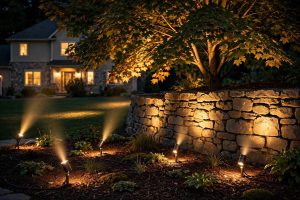
Cap lights work best with other small lights. Step lights on the risers show each stair. A landscape spot light can wash light up a tree. A solar path light can line the walk to the deck. A string of patio string lights over the seating area adds warmth. Plan the whole deck at once instead of buying one type at a time.
What to Look for in Reviews
When you read deck cap lights reviews, look past the star count. Read what buyers say after six months. Many lights shine well on day one. Fewer shine well after a year of rain.
Check reviews for run time. Buyers will say if solar models fade by midnight. Check for the solar panel size. Larger panels charge better on cloudy days.
Check reviews for fit. Buyers note if screws were too short or if the base wobbled on a 4×4 post. Check for the switch. Some models have a hidden on-off switch under the cap that is hard to reach.
Check reviews for winter life. In northern states, batteries die in the cold. Some brands sell replacement batteries. Bob Vila and Lamps Plus buying guides often note which models hold up in cold climates.
Watch for fake reviews. A flood of five star reviews with the same wording is a red flag. Trust reviews that give detail and mention months of use.
Cost and Price
Deck cap lights are one of the cheapest deck upgrades in the USA. Prices vary by type and material.
– Solar plastic cap lights: about 5 to 12 dollars per light in multi-packs. – Solar metal cap lights: about 10 to 20 dollars per light. – Low voltage cap lights: about 15 to 30 dollars per light, plus 40 to 100 dollars for the transformer and wire. – Built-in lighted post caps: about 20 to 45 dollars per cap.
A small deck with six posts can be lit for under 60 dollars with solar models. A larger deck with low voltage lights may run 200 to 400 dollars with the transformer. Big retailers like Home Depot sell starter kits that bundle the transformer, wire, and six lights.
Energy cost is tiny. Solar lights cost nothing to run. Low voltage LED lights use a few watts each. The U.S. Department of Energy notes that LED lighting uses far less power than older bulb types. ENERGY STAR lists efficient LED options for home use. Philips and other makers publish LED life ratings, often 25,000 hours or more.
Installation Tips
Most homeowners can install deck cap lights in an afternoon. Read the manual first. Lay out the lights on the posts before you fix them in place. Step back and look at the spacing. Even spacing looks best.
For solar models, clean the panel with a damp cloth. Mount the light so the panel faces the sky. Avoid spots under deep eaves. Screw them down if the deck sees high wind. Glue can fail in heat.
For low voltage models, plan the wire path. Run wire along the underside of the rail or under the deck. Keep splices in dry boxes. Mount the transformer near an outlet, out of the sprinkler spray. Set the timer to dusk and pick an off time that fits your life.
Test everything at night. Walk the deck. Look for dark steps. Move a light if one spot is too bright or too dim. Small changes make a big difference.
Care and Upkeep
Deck cap lights need little care, but a small routine keeps them bright.
Clean solar panels twice a year. Dust and pollen cut charging. A damp cloth is enough. Do not use harsh cleaners on the lens.
Replace batteries when run time drops. Most solar cap lights use small rechargeable AA batteries. Keep spares on hand. In cold states, take solar lights in for the worst winter weeks if the maker advises it.
Check low voltage wire each spring. Look for cuts from mowers or edgers. Tighten loose connections. Replace any lens that cracked over winter.
Trim plants that shade the panels. A bush that grew over summer can block the sun a panel needs. A quick trim in spring fixes it.
Safety
Outdoor lights are safe when installed with care. Keep these rules in mind.
Do not use indoor lights outside. Outdoor models are built to shed rain. Indoor models can short out in wet weather.
Keep low voltage wire away from mower paths. Bury it a few inches deep or clip it under the rail. Do not staple through the wire jacket.
Do not overload the transformer. Add up the watts of all lights on the run. Stay under the transformer rating. Leave some head room for growth.
Watch the heat of the lens. LEDs run cool, but cheap models can still get warm. Keep dry leaves and mulch away from the lights.
If you are not sure about wiring, call an electrician. A short visit costs less than a fire risk.
Frequently Asked Questions
How many deck cap lights do I need?
One light per post is the common rule. For a deck with six posts, buy six. Long rails between posts may need a small light mid span. Walk the deck at night after install and add where it is dark.
Are solar deck cap lights bright enough?
For marking posts and steps, yes. Solar models give a soft glow that shows edges and faces. They will not light a grill or a reading chair. For task light, add a brighter fixture near the work spot.
Do deck cap lights work in winter?
They work, but solar models run for fewer hours. Snow on the panel stops charging until you brush it off. Low voltage models give full light all winter. In very cold states, many buyers pick low voltage for this reason.
Can I put cap lights on a composite deck?
Yes. Most makers say their lights fit composite rails and posts. Use the screws the maker supplies. Do not over tighten, or you can crack the cap. Check the fit on one post before you buy the full set.
How long do LED deck cap lights last?
The LED chip often lasts 25,000 hours or more, which is many years of night use. The battery in a solar model is the weak part. Plan on new rechargeable batteries every one to two years.
What color light is best for a deck?
Warm white, about 2700 to 3000 Kelvin, is the favorite for decks. It flatters wood and skin tones. Cool white can make a deck feel like a parking lot. Match the color across all your outdoor lights for a clean look.
A Short Final Word
This deck cap lights reviews buying guide usa comes down to a few plain points. Measure your posts. Pick solar for ease or low voltage for steady light. Choose warm white LEDs in weatherproof housings. Read reviews that talk about months of use, not just day one. Spend an afternoon on install and a few minutes each season on care. Do that, and your deck will be safe, warm, and inviting every night of the year.
References
Bob Vila. (n.d.). Home improvement advice. https://www.bobvila.com ENERGY STAR. (n.d.). Energy efficient products. https://www.energystar.gov Lamps Plus. (n.d.). Lighting and home decor. https://www.lampsplus.com Lowe’s. (n.d.). Home improvement products. https://www.lowes.com Lumens. (n.d.). Lighting and ceiling fans. https://www.lumens.com Philips. (n.d.). Lighting products. https://www.philips.com The Home Depot. (n.d.). Home improvement products. https://www.homedepot.com The Spruce. (n.d.). Home and garden advice. https://www.thespruce.com This Old House. (n.d.). Home renovation guidance. https://www.thisoldhouse.com U.S. Consumer Product Safety Commission. (n.d.). Product safety information. https://www.cpsc.gov U.S. Department of Energy. (n.d.). Energy efficiency and renewable energy. https://www.energy.gov
Was this guide helpful?

About David Wilson
The My Garden US editorial team writes practical, in-depth home and garden guides for American homeowners — tested advice, no fluff.
You May Also Like
Kitchen Track Lighting Reviews: A Buying Guide for USA Homes
March 26, 2026 0 views
Under Cabinet Strips Buying Guide for USA Kitchens
March 2, 2026 0 views
Kitchen Track Lighting for Sale USA: A Plain Buying Guide
July 30, 2026 0 views