
A tile project begins with a single straight cut. If the cut is clean, the whole job looks like the work of a skilled craftsman. If the cut is rough, no amount of grout can hide it. That is why choosing the best tile saw for diy homeowners usa is one of the most important choices a homeowner can make before laying tile. The right saw saves time, cuts down on broken tile, and gives a beginner the steady results that make a project look professional.
Many homeowners in the United States now take on tile jobs themselves. Kitchens, bathrooms, laundry rooms, and entryways all call for tile that can stand up to water and daily wear. A manual tile cutter works for simple ceramic, but porcelain and stone need a power saw. This guide explains what to look for, the main types of saws, what they cost, how to use them with care, and how to keep one working for many years.
Why the Right Tile Saw Matters
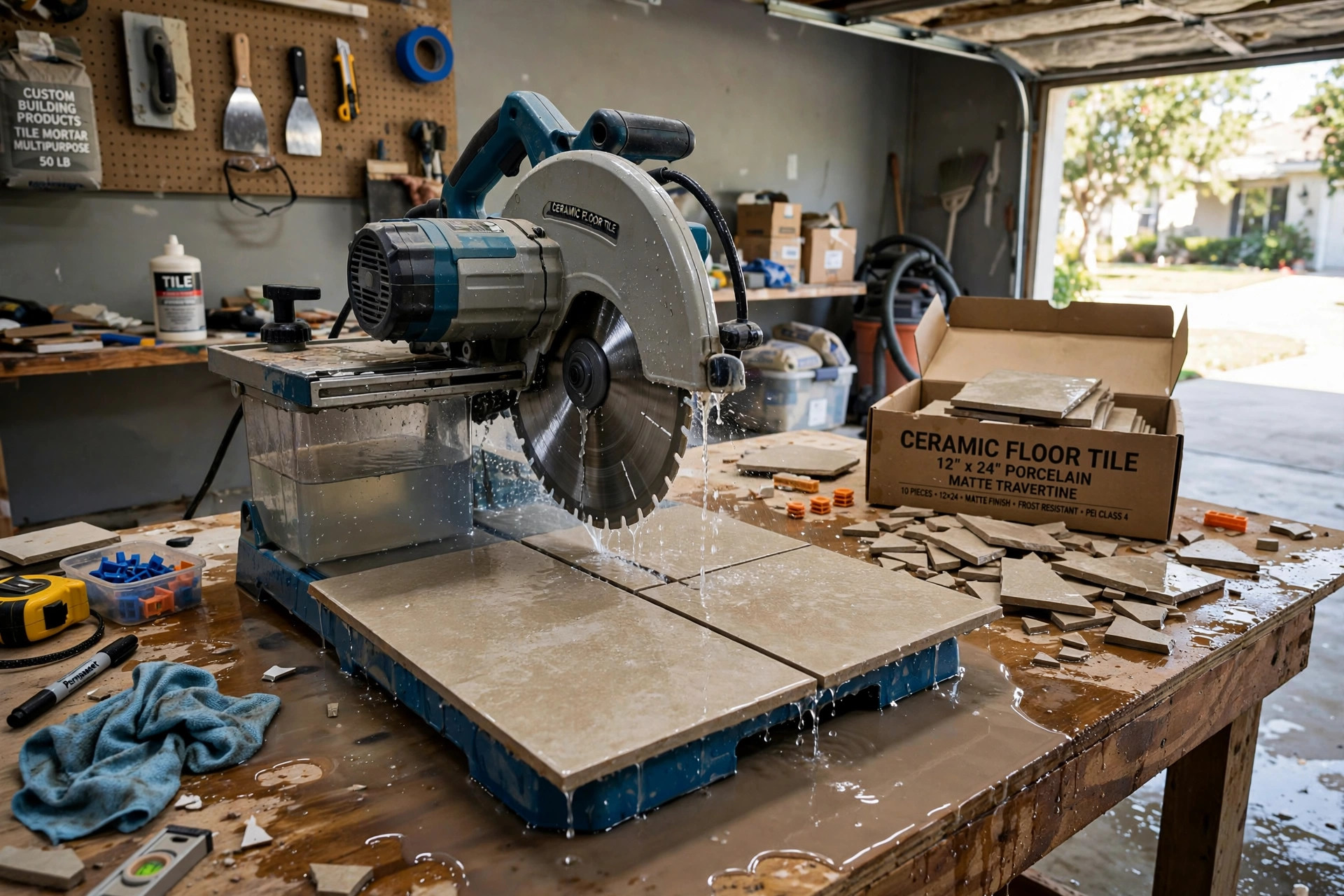
Tile is a hard material. Ceramic, porcelain, and natural stone all resist the tools that cut wood. A wet tile saw uses a diamond blade and a steady flow of water to grind through tile instead of tearing it. The water cools the blade and keeps dust out of the air. The result is a smooth edge that fits tight against walls and fixtures.
A poor cut causes trouble from the start. Chips along the edge show through thin grout lines. Crooked cuts leave gaps that grow wider as the layout runs across the room. Broken tiles waste money and send the homeowner back to the store for more stock. The best tile saw for diy homeowners usa keeps each of these problems small. It gives straight cuts, easy control, and edges that need little or no dressing.
Homeowners also save real money by cutting their own tile. Professional tile installation cost per square foot usa runs high enough that a single bathroom project can pay for a good saw. After that first job, the saw keeps paying for itself on every future project. That makes the purchase a sound one for any homeowner who plans more than one tile job.
Types of Tile Saws: Best Tile Saw for Diy Homeowners Usa
Wet Tile Saws
The wet tile saw is the most common choice for home use. It has a sliding tray that moves the tile into a fixed diamond blade. Water from a tray or pump wets the blade while it cuts. Most models cut ceramic and porcelain up to three quarters of an inch thick. Larger models handle stone and pavers.
Wet saws come in two main sizes. A compact seven-inch saw fits on a workbench and suits small rooms and backsplashes. A ten-inch saw cuts thicker and wider tile but costs more and needs more space. For most homes, the seven-inch saw is enough.
Bridge Saws
A bridge saw mounts the blade on an overhead arm that slides back and forth. The tile stays still while the blade moves across it. This design gives very straight cuts on large format tile. Bridge saws cost more than tray saws and take up more room. They suit homeowners who plan big floors with large tile.
Handheld Wet Saws
A handheld wet saw works like a small circular saw with a diamond blade and a water feed. It cuts tile that is already laid, trims edges in place, and handles odd shapes. It is not a replacement for a table saw, but it is a useful second tool for repairs and tight spots.
Manual Tile Cutters
A manual cutter scores the tile surface and snaps it along the line. It is quiet, clean, and cheap. It works well on straight ceramic cuts but struggles with porcelain, stone, and thick tile. Many homeowners keep both a manual cutter for quick ceramic cuts and a wet saw for the rest.
What to Look for When Choosing
Blade Size and Cutting Depth
The blade sets the limit of the saw. A seven-inch blade cuts tile about two inches deep in one pass. That covers nearly all floor and wall tile. Check the maximum cut length too. A saw that cuts eighteen inches handles twelve-inch tile with room to spare. Diagonal cuts need more length than straight ones.
Motor Power
A stronger motor cuts faster and strains less on porcelain and stone. Most home saws run between three quarters and one and a half horsepower. For ceramic only, the smaller motor is fine. For porcelain or stone, choose the stronger one. Homeowners comparing models can read the spec sheets posted by makers like DeWalt and RIDGID sold at major home centers.
Water System
A steady water flow keeps the blade cool and the cut clean. Look for a saw with a removable water tray that is easy to empty and clean. A pump-fed system feeds water to the blade more evenly than a splash tray. Models sold through LL Flooring and Shaw Floors retailers often list water capacity in the specs.
Fence and Guides
A straight, firm rip fence is the mark of a good saw. It should lock in place without wobble. An angle guide helps with forty-five degree cuts around corners and vents. Loose or flimsy guides are the most common complaint in owner reviews, so test this part in the store if you can.
Portability
Tile saws are heavy. A seven-inch saw weighs thirty to fifty pounds. Look for a sturdy stand, folding legs, or built-in handles. If the saw will move between rooms or job sites, wheels or a rolling stand are worth the extra cost.
Dust Control
Wet saws make far less dust than dry cutting, but they are not dust free. Cut outdoors or in a garage when you can. Indoors, set the saw near a window and wear a dust mask. Guides from This Old House show simple setups for indoor tile work.
Popular Options for American Homes
The market holds many fine saws, but a few patterns stand out for home use. Compact seven-inch wet saws from the big tool brands lead sales year after year. They cost less, fit small spaces, and cut the ceramic and porcelain found in most American kitchens and baths.
Homeowners who tile whole floors often step up to a ten-inch saw with a sliding tray. The extra capacity cuts twelve and twenty-four inch tile without turning the piece mid-cut. That saves time and keeps edges cleaner.
For small repair jobs, a handheld wet saw earns its keep. It trims tile around toilets, cuts outlets, and fixes mistakes without pulling up whole rows.
Price is not the only guide. Owner reviews on The Spruce and Bob Vila give honest notes on blade wobble, tray smoothness, and water splash. Mohawk Flooring and Daltile also publish care guides that list which blades suit their tile lines.
Cost and Price Ranges
Tile saws for home use fall into clear price bands. A basic seven-inch wet saw costs between one hundred and two hundred dollars. These saws cut ceramic and light porcelain and suit one or two projects.
Mid range saws cost between two hundred and four hundred dollars. They add stronger motors, better fences, and smoother trays. This is the sweet spot for the best tile saw for diy homeowners usa. Most owners in this band get clean cuts on porcelain and can take on several rooms.
High end home saws cost between four hundred and eight hundred dollars. They approach contractor quality, with ten-inch blades and rolling stands. They suit homeowners who tile often or who plan a whole-house project.
Do not forget the extras. A spare diamond blade costs thirty to eighty dollars. A stand costs fifty to one hundred fifty dollars. Safety gear runs about thirty dollars. Add these to the budget before you buy.
How to Set Up and Use a Tile Saw
Set the saw on a flat, firm surface. Fill the tray with clean water to the marked line. Place the tile on the tray with the marked cut line lined up with the blade. Stand to the side of the blade, never in line with it.
Turn the saw on and let the blade reach full speed. Push the tray forward at a slow, even pace. Let the blade do the work. Forcing the tile causes chips and can bind the blade. Near the end of the cut, slow down and support the offcut so it does not snap and fall.
For angled cuts, set the miter guide to the needed angle and test on a scrap piece first. For curved cuts, make a series of close straight cuts and snap away the waste, then smooth the edge with a rubbing stone.
Wear eye protection and hearing protection on every cut. Keep fingers clear of the blade path. Unplug the saw before changing the blade or cleaning the tray. Tips from Family Handyman stress the same point: slow hands and a sharp blade beat speed every time.
Care and Upkeep
A tile saw lasts many years with simple care. Empty and rinse the water tray after each work session. Tile slurry hardens fast and clogs pumps. Wipe down the tray rails so the sliding action stays smooth.
Check the blade often. A dull blade cuts slow and chips edges. Replace it when cuts take twice as long as they did when the blade was new. Clean the blade with a soft brush to remove built-up glaze.
Store the saw in a dry place. Water left in the tray can rust steel parts and freeze in cold garages. Oil the tray rails lightly before long storage. Keep the power cord coiled and off the floor to stop damage.
Safety Tips Every Homeowner Should Know
Water and power tools need respect. Plug the saw into a ground fault outlet. Keep the cord out of standing water. Never cut with dry hands near a running motor; wear rubber-soled shoes on wet floors.
Keep bystanders and pets away from the cutting area. Tile chips fly farther than most people expect. A simple cardboard shield behind the saw catches most of them.
Read the manual before the first cut. Each saw has its own blade guard, splash guard, and lockout switch. Learn where they are. Never remove a guard to make a hard cut easier. The guard is there for a reason.
Take breaks during long sessions. Tired hands push harder and make mistakes. A short rest every hour keeps cuts straight and fingers safe.
Choosing Tile to Match Your Saw
The saw you buy should suit the tile you plan to lay. Ceramic cuts easy on any wet saw. Porcelain needs a sharper blade and a stronger motor. Natural stone needs the strongest home saw and a slow feed rate.
Before you buy tile, read up on the best tile for shower walls reviews usa to see which materials cut clean and hold up in wet rooms. If you plan a shower floor, the best grout for shower floor reviews usa will help you finish the job right. Picking tile and grout together keeps the whole project on track.
Large format tile is the trend in American homes, but it needs a saw with a long cut capacity. Measure your largest tile before you buy. A saw that is too short for the tile forces mid-cut turns that ruin edges.
Frequently Asked Questions
Can a beginner use a tile saw?
Yes. A wet tile saw is one of the easiest power tools to learn. The tray guides the tile in a straight line, so the tool does most of the work. Practice on spare tiles first. Most beginners make clean cuts within the first hour.
What size tile saw do I need?
For most homes, a seven-inch saw is enough. It cuts twelve-inch tile, which covers most floors and walls. Buy a ten-inch saw only if you plan to cut large format tile or thick stone on a regular basis.
Can a tile saw cut porcelain?
Yes, with a good diamond blade and steady water flow. Porcelain is harder than ceramic, so feed the tile slower. A mid range saw with a strong motor handles porcelain without trouble.
Wet saw or manual cutter?
Use both if you can. The manual cutter makes fast straight cuts in ceramic with no setup and no mess. The wet saw handles porcelain, stone, angles, and notches. Together they cover every cut a home project needs.
How long does a diamond blade last?
A home user can expect a blade to last through several rooms of ceramic tile. Porcelain and stone wear blades faster. Replace the blade when cuts slow down or edges start to chip.
Is it cheaper to rent or buy?
Renting makes sense for a single small job. Buying makes sense for two or more rooms. A mid range saw often costs less than two weekend rentals, and you keep the tool for future repairs.
A Short Final Word
The best tile saw for diy homeowners usa is the one that fits your projects, your space, and your budget. A solid mid range wet saw covers nearly every home job, from a kitchen backsplash to a full bathroom floor. Buy for the tile you will cut most, keep the blade sharp, and work at a steady pace. Do that, and your cuts will look like the work of a pro. Your tile will lie flat, your grout lines will run true, and the whole room will show the care you put into it.
References
Bob Vila. (n.d.). Home improvement advice. https://www.bobvila.com Daltile. (n.d.). Ceramic and porcelain tile. https://www.daltile.com Family Handyman. (n.d.). DIY home repair and maintenance. https://www.familyhandyman.com LL Flooring. (n.d.). Hardwood, vinyl, and tile flooring. https://www.llflooring.com Lowe’s. (n.d.). Home improvement products. https://www.lowes.com Mohawk Flooring. (n.d.). Flooring products. https://www.mohawkflooring.com Shaw Floors. (n.d.). Flooring products. https://www.shawfloors.com The Home Depot. (n.d.). Home improvement products. https://www.homedepot.com The Spruce. (n.d.). Home and garden advice. https://www.thespruce.com This Old House. (n.d.). Home renovation guidance. https://www.thisoldhouse.com
Was this guide helpful?

About Robert Taylor
The My Garden US editorial team writes practical, in-depth home and garden guides for American homeowners — tested advice, no fluff.
You May Also Like

Brick Paver Driveway Cost Per Square Foot: A Plain Guide for Homeowners
July 9, 2026 0 views
Best Concrete Floor Stain for Garage USA: A Plain Guide for Homeowners
February 6, 2026 0 views
Kit Kat Tile for Bathroom Reviews USA: What Buyers Say Before They Buy
May 7, 2026 0 views