
Introduction
When shoppers type “air plants bulk deals near me” into a search box, they usually want the same thing. They want a good price on many air plants at once. Maybe they need favors for a wedding. Maybe they run a gift shop. Or maybe they simply love these plants and want a large collection without a large bill.
Air plants are Tillandsia. They are real plants that grow without soil. They take water and food from the air through small scales on their leaves. This makes them easy to ship and easy to sell in bulk. A single plant may cost five dollars at a garden center. A bag of twenty-five may cost half as much per plant.
This guide will show you where to find air plants bulk deals near me, what to look for, and how to keep your plants alive after the purchase. It also covers fair prices, care rules, and answers to common questions.
Why Buying in Bulk Matters: Air Plants Bulk Deals near Me
Most plants are sold one by one. Air plants are different. They are small and light. A grower can fit hundreds in one box. The cost of packing and shipping drops when you buy more. That is why bulk deals exist.
Buying in bulk also helps with events. Weddings, baby showers, and office parties often use air plants as gifts. A guest gets a living favor that needs little care. The host saves money by ordering fifty or a hundred at a time.
Stores and craft sellers also buy in bulk. They mount air plants on wood or stone and sell them at craft fairs. A low price per plant leaves room for profit. Even home gardeners win. A group of plants looks better than one plant on a shelf.
Where to Look for Bulk Deals
The search phrase “air plants bulk deals near me” points to local options. Start with garden centers in your area. Many carry air plants in wire bins or on display trees. Ask a staff member about price breaks for twenty or more. Some stores will discount a box even if the sign does not say so.
Nurseries are another good stop. A nursery that grows tropical plants often has Tillandsia in stock. They may sell lots of ten or twenty-five at a wholesale price. Call ahead and ask what sizes they carry. Small plants are often sold in bulk bags.
Craft stores and home decor shops can also be worth a visit. These stores sell air plants for craft projects. They may offer multi-packs near the floral section. Prices are sometimes higher than at a nursery, but coupons and sales can close the gap.
Farmers markets and plant swaps are worth your time too. Local growers bring plants they raised at home. Prices are fair and the plants are fresh. You can see the exact plants you are buying. You can also ask the grower for care tips.
Online sellers ship bulk air plants across the country. This widens your choices far past your town. Look for sellers with clear photos and honest reviews. Many offer free shipping on large orders. Just remember that the plants may travel for days. A short trip is kinder to the plant.
Types of Air Plants Sold in Bulk
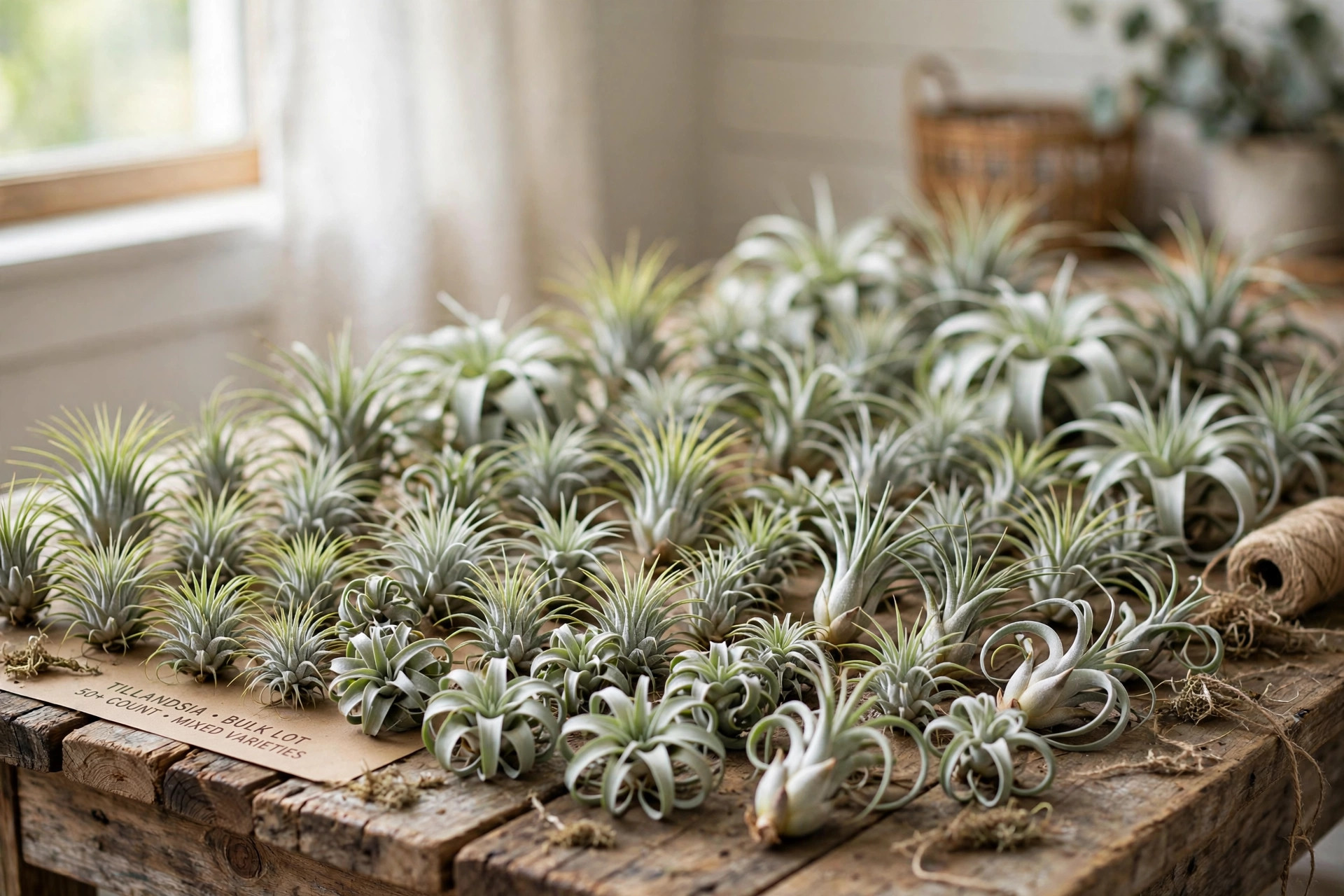
Growers sell bulk air plants in groups. The groups usually have names. A “variety pack” holds many kinds. This is a good choice for gifts. Each guest gets a plant that looks a little different.
A “single variety bundle” holds many plants of one kind. Tillandsia ionantha is the most common. It is small and hardy. Tillandsia xerographica is larger and costs more. Tillandsia capitata and Tillandsia stricta are also sold in bulk.
Sizes matter. Growers grade plants by size. Small plants may be one to two inches across. Medium plants run two to four inches. Large plants are four inches and up. Small plants are best for favors and terrariums. Medium plants suit desks and shelves. Large plants make strong gifts.
Some sellers offer “grab bags” or “mystery lots.” These are cheaper per plant. You do not choose the kinds. They are fine if you want volume and do not mind surprises. They are less suited for events where every plant should look alike.
What to Look For When You Choose
Healthy air plants have firm leaves. The leaves should feel springy, not dry and brittle. Color should be even. Green, gray-green, or silver are normal. Brown tips can mean the plant was kept too dry. Soft black spots can mean rot.
Check the base of the plant. The center should be firm and clean. A dark, mushy base is a bad sign. It means water sat in the center too long. Skip plants like that.
Ask about shipping. If you buy online, ask how fast the order ships. Air plants can sit in a dark box for a few days. Longer trips stress them. A good seller ships early in the week so plants do not sit in a warehouse over the weekend.
Read the return policy. Live plants are not like books. A fair seller replaces dead plants that arrive in poor shape. Some sellers ask for photos within two days. Know the rule before you order.
Cost and Price: What Is Fair
Air plants bulk deals near me should lower the price per plant. Expect small plants to cost one to three dollars each in a bulk lot. Medium plants often run three to five dollars. Large show pieces may run eight to fifteen dollars even in bulk.
Shipping can change the math. A lot of fifty plants at two dollars each is one hundred dollars. If shipping is twenty dollars, the real cost is two dollars and forty cents per plant. Compare the full cost, not just the sticker price.
Watch for fake discounts. Some sellers raise the single-plant price and then call a bulk lot a deal. Check the per-plant price. That is the true number. A real deal beats the single-plant price by at least twenty percent.
Season matters too. Prices often dip in spring when growers ship large crops. Around the holidays, prices can rise because demand for gifts is high. Plan ahead if you need plants for a winter event.
Care and Upkeep After You Buy
Air plants need water, air, and light. Water them by soaking in room-temperature water for twenty to thirty minutes. Do this once a week in most homes. In dry homes, soak twice a week.
After soaking, shake the plant gently. Turn it upside down on a towel. It must dry within four hours. Standing water in the center causes rot. Good air flow speeds drying. A fan on low can help.
Give the plants bright, indirect light. A spot near a window with a sheer curtain works well. Direct noon sun can burn the leaves. A few feet from a bright window is safe for most kinds.
Feed the plants once a month. Use a mild air plant or orchid fertilizer. Mix it at quarter strength in the soak water. Rinse well. Skip fertilizer in winter when growth slows.
Temperature matters. Air plants like rooms between fifty and ninety degrees. Keep them away from heat vents and cold drafts. Frost will kill most kinds in minutes.
Safety Notes for Home and Pets
Air plants are not listed as toxic to people or pets. Still, keep a few safety rules in mind. Do not eat them. They are not food. Wash your hands after handling many plants, as you would with any garden stock.
Some air plants have stiff, sharp leaves. Tillandsia xerographica has strong leaf edges. Keep large plants out of reach of small children. Teach children to look with their eyes first.
If you mount plants on wood, use safe glue or wire. Avoid pressure-treated wood with old chemicals. Use clean driftwood or untreated cedar. If you hang plants with wire, use coated wire. Bare copper wire can stain and harm the plant.
Display plants where they get air. Closed glass globes look nice but trap moisture. If you use a globe, leave the top open. Take the plant out for watering and drying.
Pairing Air Plants With Other Plants
Many bulk buyers also shop for other easy plants. A desk with air plants and a small succulent looks complete. Readers who liked this guide often browse our piece on succulent variety packs for Texas homes for ideas that pair well with Tillandsia.
If you want trailing green plants for the same shelf, our guide on pothos plants in bulk for Texas homes shows how bulk buying works for leafy houseplants too. And gardeners planning outdoor beds may enjoy our notes on sunflower seed packs for Texas homes.
Buying for Events and Gifts
Bulk air plants are a strong pick for event favors. They are small, light, and easy to hand out. Plan on one plant per guest plus ten percent extra. A few plants may look poor on arrival. Extras save the day.
Order three to four weeks ahead. This gives time for shipping and for you to check each plant. Unpack the box on arrival. Soak any plant that looks dry. Let them rest in bright light for a day or two before you bag them.
Pack favors simply. A small paper bag with tissue works well. Add a care card with three lines: soak weekly, dry upside down, bright indirect light. Guests keep the plant alive when they know the rules.
For weddings, match the plant size to the table. Small plants suit place cards. Medium plants suit centerpieces. Large plants are best as gifts for the wedding party. Keep plants out of hot cars on the wedding day.
What to Ask a Seller
Good questions lead to good deals. Ask how the plants were grown. Ask when they were last watered. Ask the size range in the lot. Ask if the lot is one variety or mixed.
Ask about the shipping box. Bulk plants should be wrapped in dry paper, not sealed in wet plastic. Wet plastic breeds mold on a long trip. A little air in the box keeps plants fresh.
Ask about the minimum order. Some sellers set the minimum at twenty-five or fifty. Others sell lots of ten. Know the minimum before you drive to the store or place an order.
Common Mistakes to Avoid
The most common mistake is overwatering. New owners soak plants every day. The plants rot within weeks. One good soak per week is enough. Let the plant dry fully between soaks.
The second mistake is too little light. Air plants survive in dim rooms, but they do not thrive. Move them closer to a window. Pale, stretched leaves signal a lack of light.
The third mistake is skipping the dry step. Plants left wet in a closed globe turn brown from the center out. Always dry upside down. Always allow air flow.
The fourth mistake is buying the cheapest lot without checking reviews. A lot of one hundred dead plants is not a deal. Read recent reviews. Look at photos from real buyers. Pay a little more for a trusted seller.
FAQ
How many air plants come in a typical bulk deal? Most bulk deals start at ten or twelve plants. Common lots hold twenty-five, fifty, or one hundred. Event lots may hold two hundred or more. Ask the seller for the exact count and size range before you buy.
Are air plants hard to keep alive? No. They are among the easiest houseplants. They need a weekly soak, bright indirect light, and good air flow. Follow those three rules and most plants will live for years.
Do air plants need soil or pots? No. They grow without soil. You can set them in shells, on wood, or in open glass. The roots only serve to hold the plant in place. They do not feed from soil.
How long do air plants live? A healthy air plant can live for several years. Many bloom once in their life. After blooming, the mother plant makes small pups at its base. The pups grow into new plants.
Can I keep air plants outside? Yes, in warm months. Most kinds like nights above fifty degrees. Bring them inside before the first frost. Hang them in shade with good air flow. Rinse them after heavy rain so water does not sit in the center.
Where can I find reliable growing advice? Trusted garden sites offer solid care guides. Burpee and Park Seed both carry plant knowledge from years of growing. Gardening Know How has simple care articles for beginners. The Spruce covers houseplant care in plain language. The Old Farmer’s Almanac offers seasonal growing notes. Monrovia and Proven Winners share care tips from plant growers. Gurneys and White Flower Farm publish useful garden guides. The National Institute of Food and Agriculture provides research-based plant information.
A Short Final Word
Air plants bulk deals near me are worth the search. You can fill a shelf, stock a shop, or supply a wedding for far less than the single-plant price. Start with a small lot if you are new. Learn the weekly soak and the drying rule. Then scale up with confidence. A little care goes a long way with these tough, graceful plants.
References
Burpee. (n.d.). Seeds, plants, and gardening supplies. https://www.burpee.com Gardening Know How. (n.d.). Gardening guides and plant care. https://www.gardeningknowhow.com Gurney’s Seed & Nursery Co. (n.d.). Seeds, plants, and garden supplies. https://www.gurneys.com Monrovia. (n.d.). Plants for home gardens. https://www.monrovia.com National Institute of Food and Agriculture. (n.d.). Agricultural research and extension. https://www.nifa.usda.gov Park Seed. (n.d.). Seeds, plants, and gardening supplies. https://www.parkseed.com Proven Winners. (n.d.). Plants and gardening inspiration. https://www.provenwinners.com The Old Farmer’s Almanac. (n.d.). Gardening calendars and advice. https://www.almanac.com The Spruce. (n.d.). Home and garden advice. https://www.thespruce.com White Flower Farm. (n.d.). Plants, bulbs, and garden supplies. https://www.whiteflowerfarm.com
Was this guide helpful?

About Robert Taylor
The My Garden US editorial team writes practical, in-depth home and garden guides for American homeowners — tested advice, no fluff.
You May Also Like
Lavender Seed Packets Buying Guide USA: How to Choose the Best Seeds for Your Garden
March 21, 2026 0 views
Sunflower Seed Packs for Texas Homes USA
May 17, 2026 0 views
Pothos Plants Bulk: Where to Buy USA for Homes, Offices, and Events
April 19, 2026 0 views