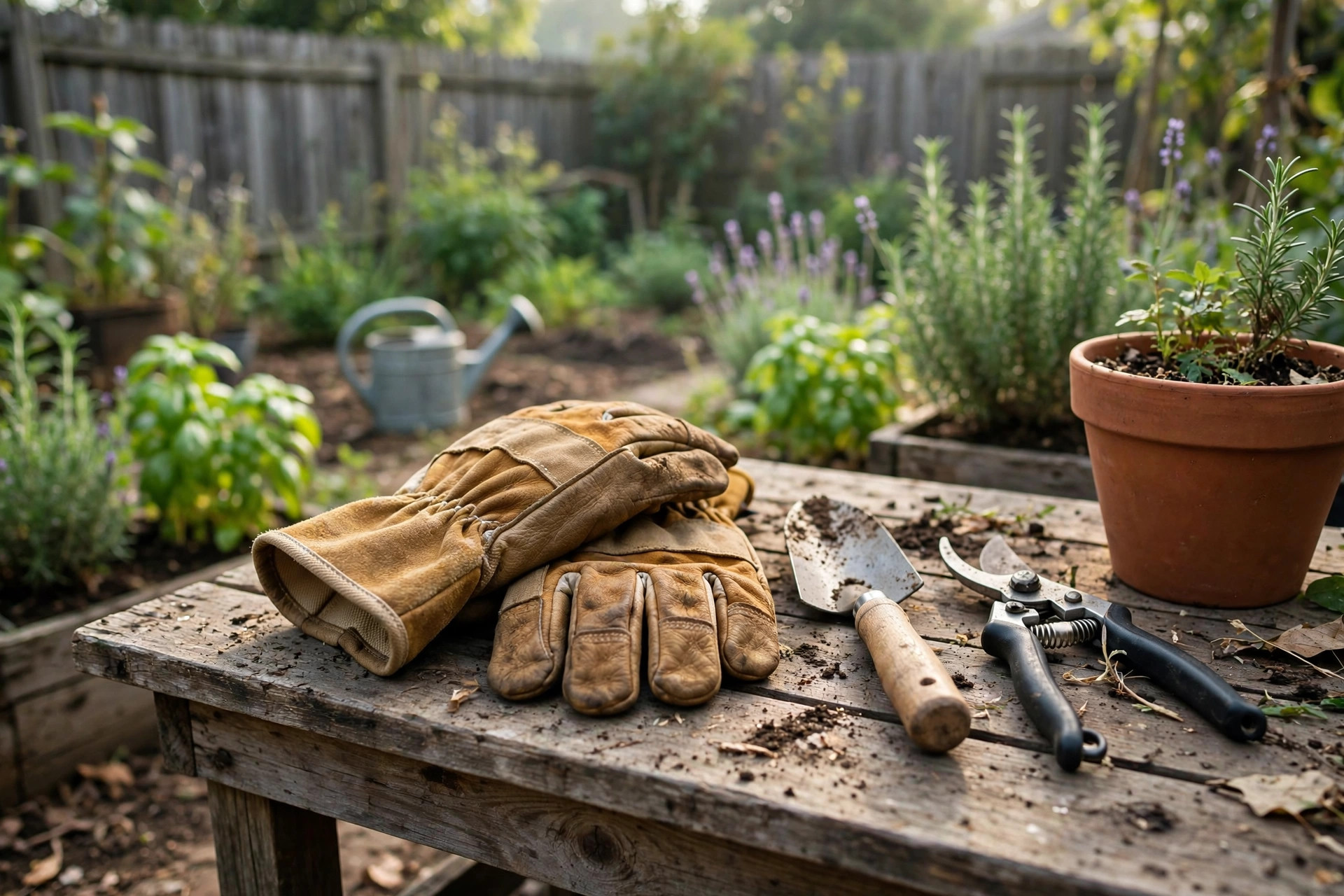

Anyone who has spent a full day moving stone or clearing brush knows the value of a good pair of gloves. Blisters form fast. Thorns find every gap. Cold soil numbs the fingers. The best garden gloves for landscaping work keep your hands safe without taking away your grip. This guide explains what to look for, the main types of gloves, what you should expect to pay, and how to make a pair last.
Why Good Gloves Matter
Landscaping work asks more of your hands than most garden chores. You grip rough lumber. You haul bags of mulch. You pull weeds with deep roots. You handle tools that shake and twist in your hands. Without gloves, small cuts and scrapes pile up over the course of a day.
Gloves do more than stop cuts. A thick palm reduces the shock from tools like mattocks and axes. A snug fit keeps dirt out of your sleeves. A long cuff guards the wrist when you reach into dense shrubs. Garden writers at The Spruce note that the right glove for the job makes heavy yard work far less tiring.
There is also the matter of hygiene. Soil holds bacteria and fungi. Open cuts on the hands give those organisms a way in. A plain pair of gloves closes that door. The Environmental Protection Agency reminds homeowners that soil can carry chemicals from old treatments too, so a barrier matters more than many people think.
What to Look for in Garden Gloves: Best Garden Gloves for Landscaping Work
Not every pair sold as a garden glove will hold up to real landscaping work. Thin cotton gloves tear on the first rough log. Loose gloves slip and cause more blisters than bare hands. Here is what matters most.
Material
Leather remains the standard for hard work. Split cowhide and goatskin stand up to rough loads and last through many seasons. Goatskin feels soft right away and needs little break-in time. Cowhide starts stiff but grows more comfortable as it molds to your hand. Many Corona Tools pruning gloves use goatskin palms with reinforced fingertips for this reason.
Synthetic palms have improved a great deal. Nitrile and polyurethane coatings give strong grip in wet soil and cost less than leather. They dry fast after rain and wash well in a bucket. Their weak point is heat. They melt near grills and fire pits, so keep them away from hot coals.
For garden gloves for thorn protection, look for extended leather cuffs or gauntlet styles. These cover the forearm up to the elbow. Rose work and blackberry clearing call for this kind of coverage.
Fit
Fit decides whether gloves help or hinder. The fingers should end near the tips of your fingers without pressing hard. The palm should have no loose folds when you grip a tool handle. The wrist closure should sit snug without cutting off blood flow.
Measure your hand around the knuckles with a tape measure to find your size. Most makers give a size chart. Men and women often share sizes marked S through XL. A glove that is too big will bunch up and rub blisters. A glove that is too small will tire your hands fast.
Try gloves on late in the day if you can. Hands swell a little by evening, much as they do during hot yard work. A pair that feels right at that hour will feel right on the job.
Cuff Style
Knit cuffs keep dirt and mulch from sliding into the glove. They cost less and work well for planting and weeding. Leather or gauntlet cuffs give more protection when you reach into thorns and rough brush. For heavy landscaping work, a mid-length cuff with an elastic wrist hits a good middle point.
Dexterity and Grip
Some jobs need fine finger work. Planting seedlings and tying vines require you to feel what you touch. Lightweight nitrile-coated gloves win here. Other jobs need pure strength. Hauling stone and swinging a pick need thick leather with padded knuckles. Think about what you do most, then pick the glove that matches.
Types of Garden Gloves for Landscaping Work
Gloves fall into a few broad groups. Knowing them helps you pick the right pair for each task.
Leather Work Gloves
Leather work gloves for landscaping are the old reliable choice. They resist punctures from thorns and wire. They handle rough stone, logs, and metal tools without wearing through. Good ones last for years with basic care. The trade is price and break-in time. They cost more up front and feel stiff for the first few jobs.
Synthetic Coated Gloves
These are knit gloves with a dipped coating on the palm and fingers. They grip well in wet conditions and stay flexible in cool weather. They are light, cheap, and easy to wash. Gardeners often buy them in packs of six or twelve and treat them as semi-disposable. They do not protect against thorns or sharp edges as well as leather.
Waterproof Gloves
Waterproof garden gloves for wet soil use a lined shell that keeps water out. They suit early spring planting, pond work, and rainy days. The lining adds warmth too. Their weak point is breathability. In hot weather, hands sweat inside them. Save them for wet jobs and switch to lighter gloves when the sun comes out.
Gauntlet and Thorn-Proof Gloves
These have long cuffs that guard the forearm. They suit rose pruning, berry patch work, and brush clearing. Some use reinforced leather palms. Others add a thorn-proof layer on the back of the hand. They run large on purpose, so check the size chart with care.
Chemical and Spray Gloves
If you apply herbicide or pesticide, wear gloves rated for chemical use. Standard leather soaks up liquids and holds them against the skin. Chemical-resistant gloves made of nitrile or neoprene keep liquids off your hands. Read the product label. It will state the glove type required.
Cost and Price
Price tracks with material and build. Coated knit gloves sell for a few dollars a pair. They suit light tasks and short jobs. Mid-range gloves in synthetic leather or split cowhide run five to fifteen dollars. These handle most landscaping work well.
Full-grain leather gloves and gauntlet styles cost more. Expect fifteen to forty dollars for a quality pair. The higher price buys durability. One pair of good leather gloves can outlast five pairs of cheap ones, which makes the cost per season lower in the long run.
Consumer testers at Consumer Reports remind buyers that price alone does not prove quality. Check the stitching. Look for double seams in the palm and reinforced thumb areas. Turn the glove inside out in the store. Loose threads and thin spots show up fast.
Watch for value packs. Many home centers sell three-packs of mid-range gloves at a discount. These work well if you keep pairs at the shed, the garage, and the truck. Retailers such as Lowe’s and Home Depot stock wide ranges, which lets you compare fit across brands in one trip.
Care and Upkeep
Good care doubles the life of a pair of gloves. Leather gloves need oil now and then. A thin coat of neatsfoot oil or a leather conditioner keeps the hide soft and stops cracks. Wipe off mud first with a damp cloth. Never soak leather gloves in water. Let them dry at room temperature, away from direct heat.
Coated gloves are simpler. Rinse them in a bucket of soapy water and hang them to dry. Machine washing wears out the coating fast, so hand washing is better. Once the palm coating cracks or peels, retire the pair to light duty.
Store gloves dry. A damp shed breeds mildew, which weakens both leather and fabric. Keep a hook near the door of your tool shed and hang gloves after each use. This small habit saves many pairs.
Check gloves before each season. Flex the fingers. Look for holes in the palm and worn spots on the fingertips. A small hole grows fast under real work. Replace gloves that show thin spots in high-wear areas. As the writers at Bob Vila point out, worn gloves give a false sense of safety, which is worse than no gloves at all.
Safety Tips for Landscaping Work
Gloves are part of a larger safety picture. A few habits keep you out of trouble.
First, match the glove to the hazard. Leather for thorns and rough loads. Chemical-rated gloves for sprays. Never use leather gloves for pesticide work. The hide absorbs chemicals and keeps them against your skin.
Second, remove gloves before using spinning tools. Drill presses, augers, and grinders can catch a loose glove and pull your hand in. This is standard advice in workshop safety guides, and the Family Handyman repeats it for yard tool users as well.
Third, wash your hands after you take off the gloves. Dirt and residues collect inside gloves over time. A quick wash with soap and water finishes the job.
Fourth, keep gloves away from open flame. Synthetic coatings and knit linings melt or catch fire fast. Store them clear of grills, smokers, and burn piles.
Internal Guides Worth Reading
If you do a lot of thorn-heavy work, read our guide on garden gloves for thorn protection before you buy. Heavy loads are easier with the right cart; see our review of the best garden cart for heavy loads. And when pruning season comes, our look at the best pruning shears for rose bushes pairs well with this glove guide.
Frequently Asked Questions
How many pairs of garden gloves do I need?
Most homeowners do well with two pairs. Keep one leather pair for heavy landscaping work and one light coated pair for planting and weeding. Add a waterproof pair if you garden in wet seasons. Rotating pairs also lets each one dry fully between uses.
What is the best material for landscaping gloves?
Goatskin leather gives the best mix of toughness and comfort for most people. It resists thorns, grips tools well, and needs little break-in. For wet work, a nitrile-coated glove grips better. Match the material to the job rather than buying one pair for everything.
How do I clean leather garden gloves?
Wipe off dirt with a damp cloth and let them air dry at room temperature. Never use a hair dryer or radiator, since heat cracks the leather. Once dry, rub in a thin coat of leather conditioner. This keeps the hide soft and water resistant.
When should I replace my garden gloves?
Replace them when you see holes, thin spots in the palm, or cracked coating. Worn gloves let thorns and splinters through. They also grip poorly, which makes tools slip. A fresh pair costs far less than a trip to the clinic for a deep thorn wound.
Are expensive gloves worth the money?
Often, yes. A well-made leather glove can last several seasons of hard use. Cheap gloves tear fast and need constant replacement. Add up the cost of five cheap pairs over two years and the expensive pair often wins. Check reviews on Gardener’s Supply or Fiskars pages to compare real user reports.
Can I use construction work gloves for gardening?
You can for hauling and digging, since both need tough palms. But garden gloves add features that work gloves lack, such as longer cuffs, thorn guards, and better touch for fine tasks. A dedicated pair of garden gloves is the better buy for landscape work.
A Final Word
The best garden gloves for landscaping work are the ones that fit your hands, match your jobs, and hold up through the season. Start with a quality leather pair for heavy tasks and add lighter gloves for detail work. Keep them clean, store them dry, and replace them when they wear thin. Your hands will thank you after every long day in the yard. For more garden gear advice, browse the seasonal tips at Burpee or compare tool guides on The Spruce.
References
Bob Vila. (n.d.). Home improvement advice. https://www.bobvila.com Burpee. (n.d.). Seeds, plants, and gardening supplies. https://www.burpee.com Consumer Reports. (n.d.). Product reviews and ratings. https://www.consumerreports.org Corona Tools. (n.d.). Garden and landscape tools. https://www.corona-tools.com Family Handyman. (n.d.). DIY home repair and maintenance. https://www.familyhandyman.com Fiskars. (n.d.). Garden and cutting tools. https://www.fiskars.com Gardener’s Supply Company. (n.d.). Gardening tools and supplies. https://www.gardeners.com Lowe’s. (n.d.). Home improvement products. https://www.lowes.com The Home Depot. (n.d.). Home improvement products. https://www.homedepot.com The Spruce. (n.d.). Home and garden advice. https://www.thespruce.com U.S. Environmental Protection Agency. (n.d.). Protecting human health and the environment. https://www.epa.gov
Was this guide helpful?

About Sarah Mitchell
The My Garden US editorial team writes practical, in-depth home and garden guides for American homeowners — tested advice, no fluff.
You May Also Like
Best Garden Kneeler Seat Combo Reviews: Comfort for Long Days in the Garden
February 15, 2026 0 views
Drip Irrigation for Raised Beds DIY: A Practical Guide for Home Gardeners
February 28, 2026 0 views
Cold Hardy Herbs for Winter Garden Growing: A Plain Guide
June 20, 2026 0 views