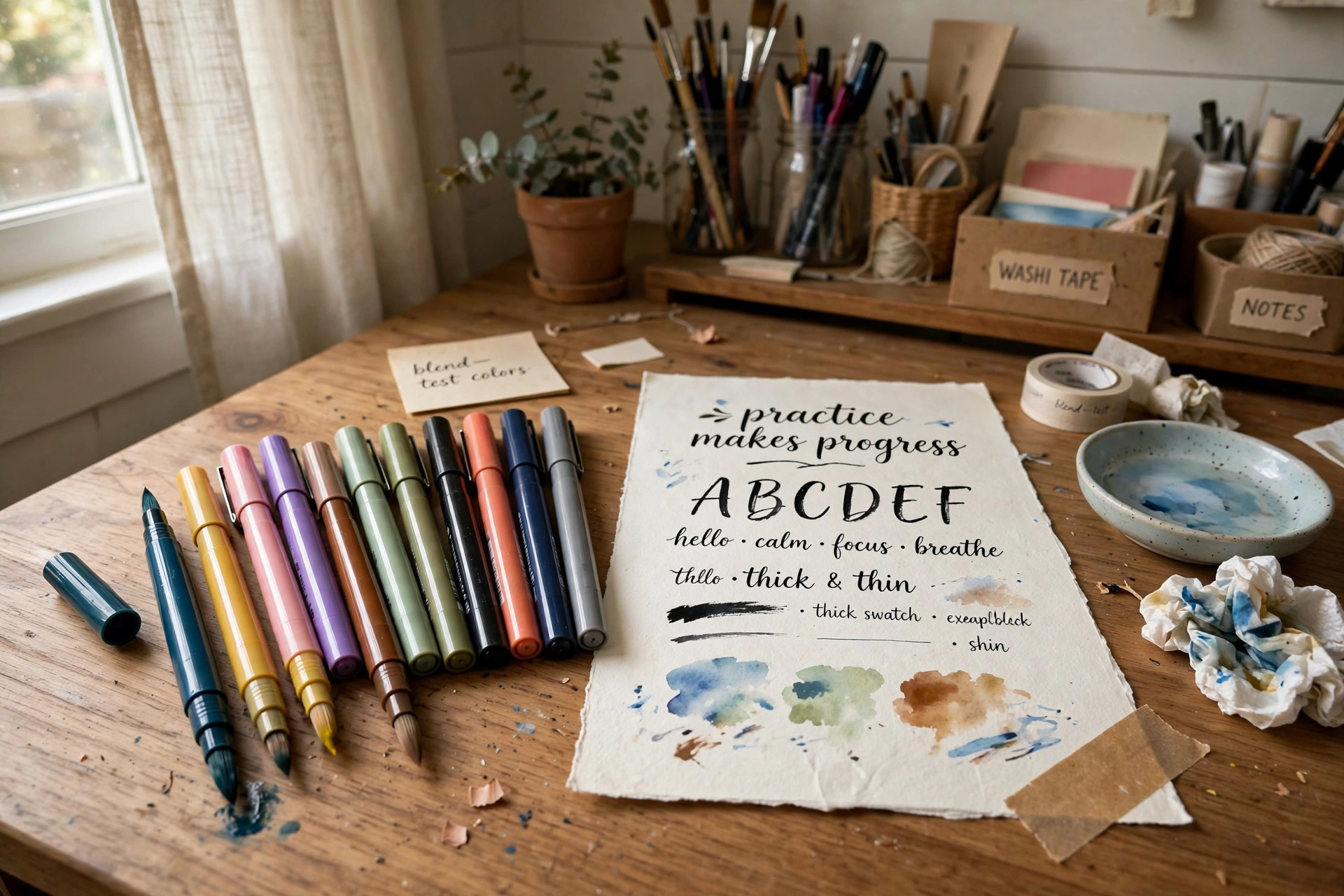

Hand lettering has a quiet charm. Letters turn into small drawings. A plain card becomes a gift. The best watercolor brush pens for lettering art make this craft easy to start. They carry color to paper with one smooth stroke. Thick and thin lines flow from the same nib. You press harder for wide strokes. You ease up for fine lines. No separate brush, paint, and water cup is needed. This is why so many beginners and hobbyists keep a set at their desk. The pens are tidy. They travel well. They work on greeting cards, journals, and wall art. This guide explains what to look for, what types exist, what they cost, and how to care for them. It answers the common questions that come up before a first purchase. The advice here fits beginners and hobbyists alike. It draws on common craft practice, not on brand hype.
Why Watercolor Brush Pens Matter for Lettering
Lettering with a real brush takes practice and setup. You mix paint. You clean the brush. You mind the water cup. Watercolor brush pens remove all of that. The color is inside the pen. The tip acts like a brush. Beginners can focus on letter shapes instead of paint handling.
The stroke control is the key feature. A firm brush tip bends under pressure. Light pressure makes a hairline. Heavy pressure makes a broad band. One pen can draw a full alphabet in many styles. This control is hard to get from a regular marker.
Color blending is another strong point. Touch two tips together and the colors mix on the nib. Lay one color next to another on paper and pull with a wet brush for a smooth gradient. These tricks give letters a painterly look. A calligraphy pen set for beginners lettering is a good first step into the craft, and brush pens often come next once letterforms feel steady.
The pens are also practical. They do not spill. They fit in a bag or drawer. A full set weighs less than a watercolor tin. For people who letter at home or in small rooms, that tidy footprint matters.
Home crafters put these pens to many uses. Wedding invitations carry hand-lettered names. Kitchen chalkboards get seasonal quotes. Gift tags turn plain packages into small presents. Teachers label classroom charts with bright headings. Small shops write signs and price cards by hand. Each use starts with the same basic strokes.
How to Choose the Right Set: Best Watercolor Brush Pens for Lettering Art
Tip Size and Flexibility
The nib decides the feel of the pen. A small, firm tip suits small letters and detail work. It holds its shape and springs back fast. A large, soft tip suits bold letters and wide strokes. It bends more and lays down more ink.
Beginners do well with a medium tip of moderate firmness. It forgives small errors. It still shows clear thick and thin contrast. A softer tip asks for a lighter hand. A firmer tip asks for more pressure. Try to hold a pen before buying if a store display allows it. If you buy online, read the tip description with care.
Ink Type
Most sets use water-based dye ink. It flows smoothly and blends with water. Dye ink fades faster in sunlight than pigment ink. For framed pieces that hang in bright rooms, look for sets that state lightfastness or use pigment ink.
Acid-free ink matters for archival work. It slows yellowing of paper and fading of color. Scrapbookers and card makers often seek this out. Check the package before you buy.
Color Range
Small sets of 12 to 20 colors cover most practice. They include the basic reds, blues, greens, browns, and blacks. Large sets of 48 or more add subtle tints and grays. Wide ranges help with shaded letters and blended washes.
Note that many sets repeat near-duplicate shades. Count unique hues, not just pen numbers. A 36-color set with 30 true hues is better than a 48-color set with heavy repeats.
Barrel and Comfort
Lettering sessions run long. A barrel that is too thick or too thin will tire the hand. Look for a barrel close to a standard pen in width. A grip zone with slight texture helps the fingers hold steady. Weight should feel balanced, not tip-heavy.
Types of Watercolor Brush Pens
Dual Tip Brush Pens
Dual tip pens put a brush nib on one end and a fine liner on the other. The brush end draws the letters. The fine end draws outlines, flourishes, and small details. These pens cut down on clutter. One pen does two jobs. They are popular with journal keepers and card makers.
The trade is size. Two tips share one body, so the ink supply per tip is smaller than on a single-tip pen. Heavy daily users may prefer single-tip pens for the brush side.
Single Brush Pens with Blending Nibs
Single-tip brush pens carry more ink in the barrel. Many sets add a clear blending pen. The blender has no color of its own. It carries water or clear fluid to the tip. Strokes laid with it pull color across the paper for watercolor effects.
Blenders are also handy for fixing edges. A light pass can soften a harsh line. They are useful for gradient lettering, where each letter shifts from one color to another.
Refillable Water Brush Pens
Water brushes hold plain water in the barrel. They are used with a separate watercolor paint set for artists at home or solid watercolor pans. Squeeze the barrel gently and water flows to the brush tip. The user loads color from the pan onto the wet tip.
These tools suit people who already own watercolor paints. They suit letterers who want custom mixed colors. They do not replace ink brush pens, but they add range.
Fine Detail Liners
Liners have small, firm tips. They draw clean outlines around letters. They add dots, borders, and shadow lines. Some letterers outline every word in black liner before adding color. This gives the letters a crisp frame. A liners set pairs well with any brush pen set.
Cost and Price
Prices run from a few dollars to over a hundred. A starter set of 12 to 24 dye-based pens often costs between ten and thirty dollars. Mid-range sets of 36 to 48 pens cost between thirty and sixty dollars. Professional-grade sets with pigment ink and larger barrels can reach eighty dollars or more.
Price alone does not decide quality. Many mid-priced sets perform well for hobby use. Read user reviews about tip durability and ink consistency. Cheap pens sometimes split tips or leak. Look for even color laydown in review photos.
Buy from established retailers. Craft stores such as Michaels and JOANN stock well-known brands and accept returns. Art supply shops like Blick carry professional lines and detailed product notes. General retailers such as Walmart, Target, and Amazon offer broad selection and user ratings. Major home improvement retailers, including The Home Depot, also carry craft aisles worth a look.
Starter sets are the sensible first buy. A new letterer can learn pressure control with a small set. Colors can be added later. Buying the largest set first often wastes money on shades that see no use.
Care and Upkeep
Store brush pens flat or with the tip pointing slightly down. Tip-down storage keeps ink at the nib. Never store them tip-up for long periods. Heat dries the tips faster, so keep sets away from sunny windows and radiators.
Cap every pen after use. Even a few minutes uncapped can dry the nib. If a tip dries out, dip it briefly in clean water and blot on scrap paper. Do not press the tip hard to force ink. Hard pressure splits the fibers.
Use smooth, high-quality paper for practice. Rough paper frays brush tips over time. Mixed-media paper or marker paper works well. Keep a sheet of scrap paper nearby for color testing and blending.
Clean blenders between color changes. Wipe the tip on damp scrap paper until it runs clear. If tips get stained, that is normal. Staining rarely hurts performance.
Replace pens when the tip loses its spring. A worn tip frays and lays uneven color. There is no shame in retiring a pen that served well.
Safety
Watercolor brush pens are generally safe for home craft use. Still, follow a few simple rules.
Keep pens away from small children who may chew the tips. Most inks are not meant to be swallowed. Wash hands after long sessions, especially before eating.
Work in a ventilated room. The inks are water-based and low in odor, but fresh air is always good practice. Do not mix pen ink with household chemicals.
Check labels if anyone in the home has allergies or sensitivities. Look for non-toxic marks such as the AP seal on art materials. Store pens out of reach of toddlers and pets.
Never refill a pen with ink it was not made for. The wrong ink can clog the feed or react with the tip. Buy refill cartridges only from the pen maker.
Frequently Asked Questions
Can beginners use watercolor brush pens for lettering?
Yes. Brush pens are among the easiest tools for beginners. The pen shape feels familiar. The pressure control comes quickly with practice sheets. Start with a small set and a lined practice pad. Work on basic strokes before full words.
How long does a brush pen last?
It depends on use. A pen used daily may run dry in a few months. A pen used weekly can last a year or more. Large brush tips use ink faster than small ones. Store pens well and cap them tightly to stretch their life.
Do watercolor brush pens work on black paper?
Standard watercolor inks are transparent and show poorly on dark paper. For black paper, look for metallic or opaque brush pens made for dark surfaces. Test one pen on scrap paper first. Results vary by brand.
Can I blend colors with brush pens?
Yes. Blending is one of their strengths. Layer wet strokes together on paper. Or touch two tips together to load a second color onto the nib. A clear blender pen makes gradients easy. Practice on scrap paper to learn timing.
What paper is best for lettering with brush pens?
Smooth, thick paper works best. Look for paper of at least 100 gsm with a smooth finish. Rough or thin paper frays the tips and lets ink bleed. Mixed-media pads and marker pads are good choices. Avoid cheap copy paper for finished work.
Are expensive brush pens worth it for a beginner?
Not at first. Mid-priced sets perform well for learning. Expensive sets shine in lightfastness and tip quality, which matter more for selling art or framing pieces. Learn the basics first. Upgrade when your skills outgrow your tools.
Final Word
The best watercolor brush pens for lettering art are the ones that match your hand and your budget. Choose a tip that feels steady. Pick colors you will actually use. Care for the pens and they will last. Lettering is a slow craft, and the tools should be simple enough to let the letters lead. Alongside a good brush set for acrylic work and a shelf of trusted supplies, a solid brush pen set earns its place in any home craft room. Project ideas and craft guidance from sites like Bob Vila and the Family Handyman can keep the practice fresh long after the first set runs dry.
References
Amazon. (n.d.). Online shopping. https://www.amazon.com Blick Art Materials. (n.d.). Art and craft supplies. https://www.dickblick.com Bob Vila. (n.d.). Home improvement advice. https://www.bobvila.com Family Handyman. (n.d.). DIY home repair and maintenance. https://www.familyhandyman.com JOANN. (n.d.). Fabric and craft supplies. https://www.joann.com Michaels. (n.d.). Arts and crafts supplies. https://www.michaels.com Target. (n.d.). Retail store. https://www.target.com The Home Depot. (n.d.). Home improvement products. https://www.homedepot.com Walmart. (n.d.). Everyday low prices. https://www.walmart.com
Was this guide helpful?

About Lisa Anderson
The My Garden US editorial team writes practical, in-depth home and garden guides for American homeowners — tested advice, no fluff.
You May Also Like
Knitting Loom Kit for Hats and Scarves Beginners: A Complete Guide
March 15, 2026 0 views
DIY Pillow Cover Kit for Sewing Beginners: A Plain Guide to Your First Stitch Project
August 19, 2026 0 views
DIY String Art Kit for Wall Decor Beginners: A Complete Guide
June 1, 2026 0 views