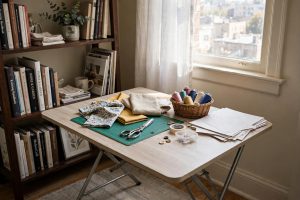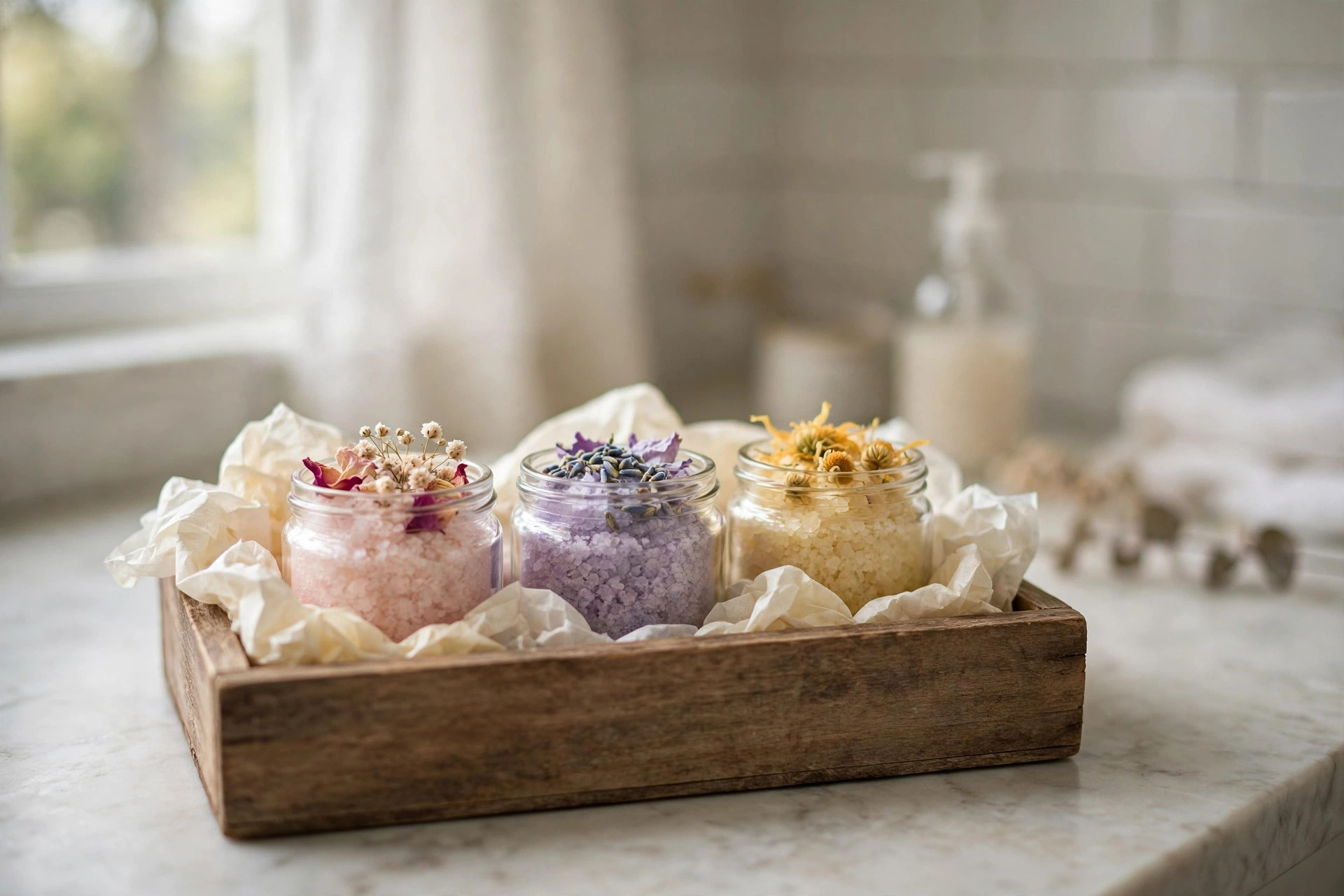

A diy bath salt kit for spa gifts home is one of the easiest handmade gifts a person can make. It costs very little. It takes less than an hour. And it gives the feeling of a store-bought spa gift, even though it came from a kitchen table. This guide shows how to build a kit, choose safe ingredients, blend scents, pack the jars, and store them so they last.
Why a DIY Bath Salt Kit for Spa Gifts Home Matters
Store shelves are full of bath salts, and most of them work fine. But a diy bath salt kit for spa gifts home has something store jars often lack: a personal touch. When you mix the salts yourself, you choose the color, the scent, and the label. You can write the name of the person on the lid. You can keep the recipe plain for a friend with sensitive skin, or add dried flowers for a friend who likes color.
The kit idea matters too. Instead of giving one jar, you give a small set. Three or four small jars in a box look generous. They cost little more than one large jar. The person who gets the kit can try one scent, then another.
Handmade bath salts also fit times when money is tight. A dozen gifts for the holidays can cost less than two restaurant meals. Each kit uses cheap base salts and only a few drops of scent per jar. No special machine is needed. If you can stir a pot, you can make this gift.
What to Look For When You Choose a Kit Style: Diy Bath Salt Kit for Spa Gifts Home
Before you buy supplies, decide how the kit will look and who will get it. A kit for a wedding guest is different from a kit for a tired parent. Three choices shape the rest of the work.
First, choose the jar. Small glass jars with screw lids are the best pick. Four-ounce jars work well. They hold enough for two or three baths. They are easy to fill and easy to stack in a gift box. Wide-mouth jars are easier to scoop from than narrow ones. Avoid thin plastic jars; they can crack when packed.
Second, choose the number of jars per kit. Two jars is a fine start. Three jars looks full. Four jars feels like a real set. Keep each jar small so the cost stays low and the set stays light.
Third, choose the mood of the set. A calm set uses pale colors and soft scents like lavender and vanilla. A fresh set uses bright colors and sharp scents like lemon and eucalyptus. A floral set uses pinks and rose scents. Pick one mood per kit. Mixed moods in one box can look messy.
Other handmade gift kits follow the same idea of a small planned set. A diy coasters kit for resin art beginners pairs small pieces into one box, just like this one. A diy photo frame kit for wall gallery crafts also uses three or four parts that look best when they match.
Types of Bath Salt Bases and Scents
The salt is the heart of the gift. You need two things: the base salt and the scent. Both come in simple, cheap forms.
Base Salts
Epsom salt is the main base. It is sold in large bags at most stores, and it costs little. It dissolves fast in warm water. It has no scent of its own, so it takes scent well. Sea salt is the second choice. It has a slightly coarse grain and looks pretty in a clear jar. Pink Himalayan salt is the third choice. It costs more, but its pale pink color makes jars look fancy with no added dye. Many makers mix two bases in one jar, such as half Epsom salt and half sea salt.
Avoid table salt. It is too fine and it can leave the skin dry. Plain, food-grade salt is the safest pick.
Scents and Colors
Essential oils give the scent. Lavender, peppermint, lemon, eucalyptus, and tea tree are the most common picks for a diy bath salt kit for spa gifts home. They are sold in small bottles at craft stores and online. You only need a few drops per jar, so one small bottle serves many kits. Never pour oil without counting the drops. Too much oil can irritate the skin.
Carrier oil holds the scent on the salt. A teaspoon of sweet almond oil or jojoba oil per cup of salt is enough. It keeps the salt from clumping and helps the scent last.
Color comes from a drop or two of food coloring or soap-safe colorant. One drop of color in a cup of salt gives a soft tint. Stir well after each drop so no dark spots remain. For a natural look, skip the color and add a spoonful of dried flower petals instead. Dried lavender buds, rose petals, and chamomile flowers are safe and pretty. Make sure the flowers are fully dry before they go in the jar, or they can mold.
For makers who enjoy blending colors, a glass painting kit for beginners suncatchers diy teaches the same patient mixing habits this craft needs.
How to Build the Kit: A Step-by-Step Recipe
This recipe makes one jar of about four ounces. Multiply it for a full kit of three jars. Read the safety section before you start.
Supplies You Need
– 1 cup Epsom salt – 1/4 cup coarse sea salt – 1 teaspoon sweet almond oil or jojoba oil – 8 to 10 drops of essential oil – 1 drop of food coloring (optional) – 1 tablespoon dried flower petals (optional) – Small glass jars with lids, 4 ounces each – A large mixing bowl and a spoon – Labels and a pen
Craft stores carry most of these supplies in one aisle. Michaels lists its jar and container stock online, and JOANN carries gift-wrap and labeling supplies that suit this project. Art suppliers such as Dick Blick sell mixing tools and storage jars that work well for small-batch crafts.
Mixing Steps
1. Pour the Epsom salt and the sea salt into the mixing bowl. Stir until they are even. 2. Add the carrier oil. Stir until every grain looks slightly coated and no wet clumps remain. 3. Add the essential oil drops one at a time. Stir well between drops. Count every drop. 4. Add the food coloring drop if you want color. Stir for a full minute. Check for dark spots. 5. Add the dried flowers last. Stir gently so the petals do not break. 6. Let the mix sit for ten minutes. This lets the scent settle into the salt. 7. Spoon the mix into the jar. Tap the jar lightly on the table to settle the salt. Do not press it down hard. 8. Wipe the rim of the jar clean. Close the lid tight. 9. Write the scent name and the date on the label. Stick the label on the jar.
Packing the Gift Kit
Place the jars in a small box, a paper gift bag, or a shallow wooden tray. Add a layer of tissue paper under the jars so they do not slide. Tie a ribbon around the box or bag. Add a small card that tells the person how to use the salts: “Pour two spoonfuls into warm bath water and stir.”
Make the kit once for a test run before you make many. One test kit shows you how long the work takes and how the colors look in daylight. Home repair and craft writers at Family Handyman and This Old House advise test runs for any new project, and Bob Vila suggests keeping notes on each batch so repeat kits turn out the same.
Cost and Price: What a DIY Bath Salt Kit for Spa Gifts Home Really Costs
The cost is one of the strongest reasons to make this gift. Here is a rough breakdown for a three-jar kit made at home in the United States.
– Epsom salt: a 4-pound bag costs about four to six dollars and fills roughly 24 jars. Cost per kit: under one dollar. – Sea salt: a coarse box costs about three dollars and fills roughly 20 jars. Cost per kit: under one dollar. – Essential oil: a half-ounce bottle costs about six to ten dollars and scents roughly 20 jars. Cost per kit: about one dollar. – Carrier oil: a small bottle costs about eight dollars and serves dozens of jars. Cost per kit: under fifty cents. – Jars: bought in bulk, four-ounce glass jars cost about one dollar each. Cost per kit: three dollars. – Labels, ribbon, and box: bought in bulk, about two dollars per kit.
Total per three-jar kit: about eight to ten dollars. A store-bought spa set of the same size often costs thirty to forty dollars. Ten kits made at home cost under one hundred dollars. Ten store kits cost three to four hundred dollars.
Buying in bulk cuts the cost further. A home improvement retailer may carry large bags of Epsom salt, and bulk jar suppliers online sell cases of glass jars at lower prices. Home and garden guides such as The Spruce often compare bulk prices for craft supplies, which helps makers plan large batches for holidays.
Care and Upkeep of the Salts
Bath salts are simple, but they need proper storage to stay fresh. Moisture is the main enemy. Salt pulls water from the air. If a jar lid is loose, the salt turns into a hard lump. Keep lids tight. Store jars in a cool, dry place away from the stove and the shower.
Light fades color and weakens scent. Do not store jars on a sunny windowsill. A closed box or a dark cabinet keeps the colors bright.
Write the date on each label. Bath salts made with dried flowers last about three months. Bath salts without flowers last about six months. For gift kits, make the salts no more than a few weeks before you give them. Fresh kits smell the best.
Safety for Skin and Home
Safety is not hard, but it must not be skipped. Essential oils are strong. A few rules keep the gift safe for everyone.
First, keep the oil dose low. Eight to ten drops per cup of salt is the safe range for adults. For children over six, use half that amount. For small children, for pregnant women, and for people with skin problems, skip essential oils entirely and give plain scented salts made with dried flowers only.
Second, some oils can burn the skin in sunlight. Lemon, lime, and other citrus oils can cause dark spots if the person goes in the sun after a bath. Note this on the gift card if you use citrus scents. Peppermint oil can sting the eyes.
Third, test for allergies. The gift card should list every ingredient in plain words: salt, almond oil, lavender oil, dried rose petals. People with nut allergies must avoid almond oil. Jojoba oil is the safer carrier for them.
Fourth, keep the salts out of reach of small children and pets. Essential oils can harm cats and dogs. A closed jar on a high shelf is fine. Loose salts on a low table are not.
Safety advice for seasonal crafts, which often share these oils, appears in home guides from Country Living and Good Housekeeping. Both stress clear ingredient labels on any gift that touches the skin.
Frequently Asked Questions
How long does a diy bath salt kit for spa gifts home take to make? One three-jar kit takes about 45 minutes. This includes mixing, filling, labeling, and packing. A second kit takes less time because the supplies are already out.
Can I make bath salts without essential oils? Yes. Use dried flowers, dried citrus peel, or dried herbs for scent instead. The scent will be lighter, but the salts will still soften the bath water. This version is safest for children and for people with sensitive skin.
What is the best jar size for a gift kit? Four-ounce jars are the best size. They hold enough salt for two or three baths. They are light to ship and easy to wrap. Eight-ounce jars work too, but they double the cost of the kit.
Do I need to add a preservative? No. Salt is a natural preservative. As long as the dried flowers are fully dry and the jars stay dry inside, the salts keep well for months.
Can I sell kits I make at home? Many people do sell them at craft fairs and online. Check your local rules first. Some places require a simple label with ingredients and weight. Rules vary by state, so read the rules for your area before you list your kits.
What should I write on the gift card? Write the scent name, the ingredient list, the date made, and simple directions: how much to use per bath and how to store the jar. Plain words are best. The card turns a pretty jar into a safe and trusted gift.
A Final Word
A diy bath salt kit for spa gifts home is a small craft with a large result. The ingredients are cheap. The steps are simple. The jars look like something from a spa shop. But the real value is in the personal care: the scent chosen for one friend, the label written by hand, the box packed with tissue and ribbon. Make one test kit this week. Then make the rest with confidence, knowing each jar carries a little of your own hand and thought.
References
Blick Art Materials. (n.d.). Art and craft supplies. https://www.dickblick.com Bob Vila. (n.d.). Home improvement advice. https://www.bobvila.com Country Living. (n.d.). Country home and lifestyle. https://www.countryliving.com Family Handyman. (n.d.). DIY home repair and maintenance. https://www.familyhandyman.com Good Housekeeping. (n.d.). Product reviews and home advice. https://www.goodhousekeeping.com JOANN. (n.d.). Fabric and craft supplies. https://www.joann.com Michaels. (n.d.). Arts and crafts supplies. https://www.michaels.com The Home Depot. (n.d.). Home improvement products. https://www.homedepot.com The Spruce. (n.d.). Home and garden advice. https://www.thespruce.com This Old House. (n.d.). Home renovation guidance. https://www.thisoldhouse.com
Was this guide helpful?

About James Carter
The My Garden US editorial team writes practical, in-depth home and garden guides for American homeowners — tested advice, no fluff.
You May Also Like
Best Cordless Glue Gun for Detailed Craft Work
July 5, 2026 0 views
Best Craft Scissors Set for Paper and Fabric
March 2, 2026 0 views
DIY Jewelry Box Kit for Woodworking Beginners: A Simple Guide
June 27, 2026 0 views