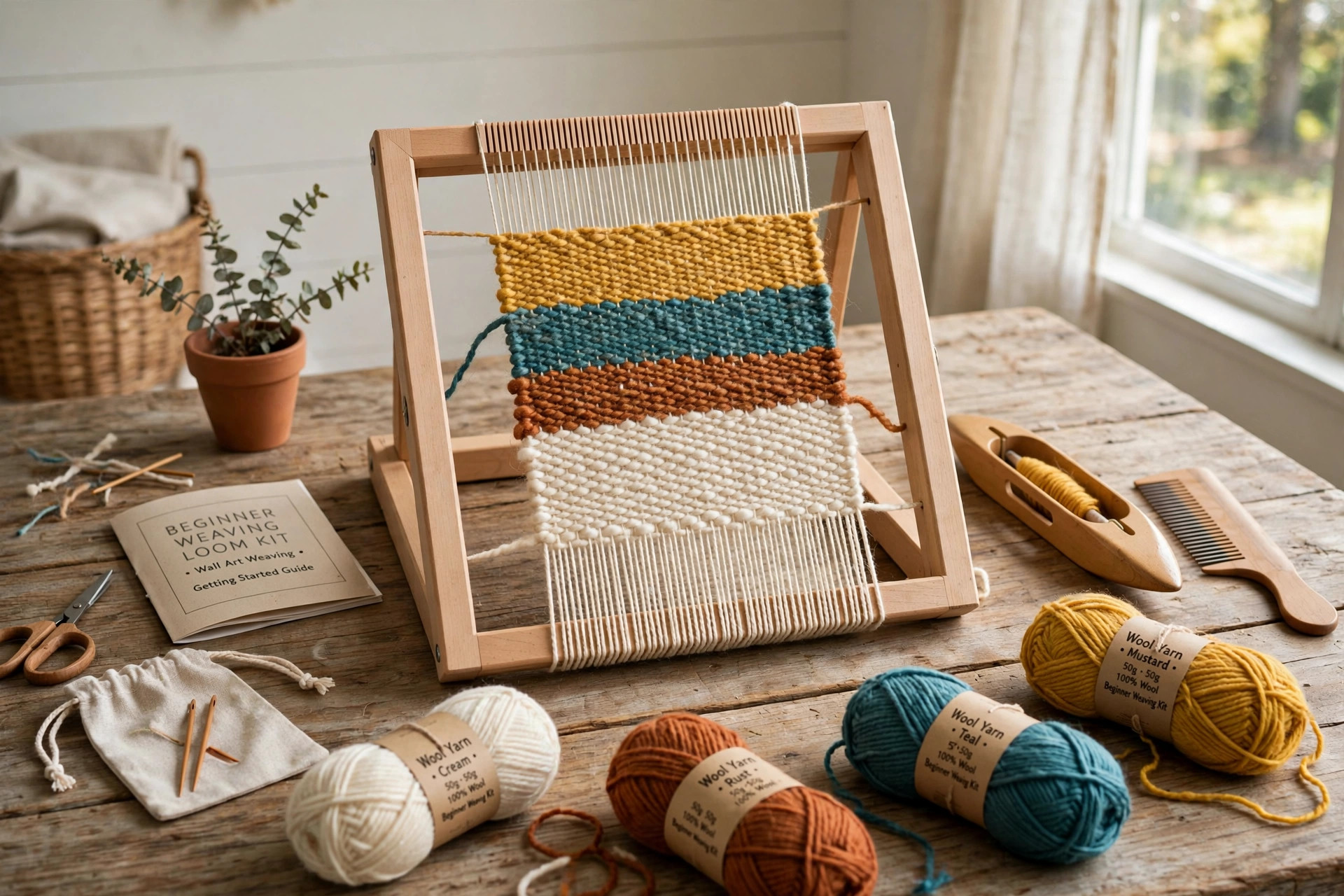

A weaving loom kit for beginners wall art is one of the simplest ways to start making your own home decor. The box holds a small wooden frame, some yarn, a comb, and a shuttle. You learn the basic weave in an afternoon. By the end of the week you can hang a finished piece on your wall. Many people begin with no craft skill at all. The process is slow and calm. It asks for patience more than talent.
Wall weaving has an old history. People have woven cloth for thousands of years. Woven pieces hung in homes long before painted art was common. A beginner kit brings this old craft to the modern table. You do not need a large floor loom. You do not need years of study. The kit fits in a closet. The finished art fits any room in the house.
Why Weaving Matters
A hand made object changes a room. A woven wall hanging adds texture that paint cannot give. It adds warmth to plain walls. It shows the hand of the maker in every row. Visitors notice it. They ask who made it. That is the reward of the craft.
Weaving is also good for the mind. The repeated motion of passing yarn over and under calms the nerves. It is like slow breathing. Many beginners say an hour at the loom feels like rest. The work moves at your own pace. There is no deadline. If you make an error, you pull the row out and try again. The material is kind to learners.
A kit lowers the cost of entry. Buying a loom, yarn, and tools one by one is hard for a beginner. You do not know what fits together. A kit solves this. The maker of the kit has chosen parts that work well as a set. You open the box and start. For a person who wants a weaving loom kit for beginners wall art, this simple start is the whole point.
Handmade wall art also saves money. Bought art for the wall can cost a great deal. A kit costs little. The yarn in a good kit makes two or three pieces. Each piece is unique. You can give extras as gifts. Friends value a gift made by hand more than one bought in a shop.
What to Look for in a Beginner Kit: Weaving Loom Kit for Beginners Wall Art
Not all kits are equal. A good kit teaches as well as supplies. Read the box before you buy. Look at the list of contents. A beginner kit should hold all you need for the first piece. You should not need to buy extra tools to begin.
Loom Size and Shape
Most beginner kits hold a frame loom between ten and sixteen inches wide. This size is large enough for real art and small enough for a lap. A frame that is too small will limit your design. A frame that is too large is hard to hold. For wall art, a width of about twelve inches is a good middle ground. Check that the frame has even notches or pegs to hold the warp threads. Uneven notches make straight edges hard.
Some kits offer round looms. A round loom makes a round piece, which suits some walls. But a square frame is more forgiving for a first try. Straight edges are easier to finish. Keep to the square frame for your first kit.
Included Supplies
A complete kit should include a shuttle or needle for the weft yarn, a comb or fork to press rows down, and at least three colors of yarn. A printed guide is a must. The guide should show how to set the warp, how to weave plain rows, and how to take the piece off the loom. Some kits add a wooden dowel for hanging the finished piece. This is a useful extra. Without it you must find your own way to hang the art.
Good yarn matters. Cheap rough yarn is hard to weave and looks poor. Look for kits with soft wool or cotton blend yarn. Craft stores such as Michaels and art supply shops like Blick stock kits with tested materials. Reading reviews before you buy will tell you if the yarn in a kit is worth using.
The Instruction Guide
A beginner needs clear steps. The guide should use photos, not only words. Each step should show the hands, the thread, and the tool. If the guide is only a thin sheet, the kit may not be made for true beginners. The best guides also show two or three simple patterns. Plain weave comes first. A simple stripe pattern comes next. This order builds skill in the right way.
Types of Weaving Loom Kits
Kits differ in how the loom is built and what kind of art they make. Knowing the types helps you choose.
Lap Looms
A lap loom is a flat frame that rests on your lap. It is the most common beginner loom. You can use it on a couch or at a table. It needs no stand. Most kits sold as a weaving loom kit for beginners wall art use this style. The finished piece is flat and ready to hang. Lap looms are light and easy to store.
Wall-Mount Practice Looms
Some kits include a small loom meant to hang on the wall while you weave. This is less common. It suits a person who wants to weave standing up. For most beginners it adds needless trouble. A lap loom is the safer pick.
Rigid Frame Looms with Stands
A few kits step up to a small table loom with legs. These cost more and suit a learner who plans to weave often. They hold tension better than a lap frame. But they take more space. Start with the simple lap loom. Move up only when you know you love the craft.
How Much Do Kits Cost?
Price tells you much about quality. A fair kit with a wooden frame, yarn, tools, and a guide costs between twenty and sixty dollars. Kits under fifteen dollars often use thin wood and rough yarn. The frame may warp. The yarn may break. Kits above seventy dollars usually add tools you do not need yet. Fancy shuttles and extra fiber are nice, but they do not help a first piece.
Plan for the yarn too. The kit yarn makes two or three small pieces. After that you will buy more. A skein of decent wool yarn costs a few dollars. Sellers like Lion Brand and Purl Soho offer yarns that suit wall art. Over a year, a steady weaver may spend fifty to one hundred dollars on fiber. That is still far less than buying finished art.
The craft scissors set you already own will trim your yarn ends. You do not need special shears to start. Keep spending low until the skill is firm.
Care and Upkeep
A wooden loom lasts for years with small care. Keep it in a dry room. Damp air can warp thin wood. After each use, brush off loose fibers with a dry cloth. Do not oil the wood. Do not soak it. If a peg loosens, press it back in with a drop of wood glue. Let it dry a full day before weaving again.
Store the loom flat. Do not lean it against a wall for long months. The frame can bend under its own weight. Keep yarn in a closed box away from sun. Sun fades dyed wool. Moths love wool, so a cedar block in the yarn box is wise. Cotton yarn needs less care but still fades in bright light.
Finished wall art needs care too. Dust it with a soft brush once a month. Do not wash it. If it hangs near a window, move it now and then so one side does not fade. A woven piece can last decades if kept dry and out of harsh sun.
Safety Tips
Weaving is a safe craft, but a few rules keep it so. The comb and fork tools have blunt teeth, yet they can scratch. Keep them away from small children. Cut yarn with scissors, not with teeth or a knife. Small bits of yarn on the floor are a slip hazard for old people and pets. Sweep after you weave.
If you build your own frame from scrap wood, sand every edge smooth. Splinters are the main risk of a home made loom. Wear simple eye protection when sawing wood. Keep the work area bright. Good light protects your eyes during long weaving sessions.
Wool dust is mild, but some people are sensitive to it. If you sneeze around wool, choose cotton yarn instead. Wash your hands after long sessions with dyed yarn. Some dyes can stain skin. None of these risks are great. Common sense covers them all.
Frequently Asked Questions
How long does a first piece take?
A small wall piece takes about six to ten hours of weaving for a true beginner. Most people spread this over a week. Do one hour a day. The work will not tire you. Speed grows with practice. A second piece often takes half the time.
Do I need to know how to sew?
No. Weaving uses no needle and thread skills. The shuttle carries the yarn. The comb presses rows tight. If you can tie a knot, you have all the hand skill you need. Some weavers later add stitched details, but that is a choice, not a need.
What is the difference between warp and weft?
The warp is the set of threads stretched on the loom first. They run up and down. The weft is the yarn you weave in and out across them. The warp is the skeleton. The weft is the skin. The guide in your kit will show both with clear photos.
Can children use a weaving kit?
Older children, around ten and up, can weave with adult help. The tools are simple. The main risks are the scissors and small parts. A child under seven should not use a kit alone. For a family project, let the child pick the colors. You handle the warping and the finishing knots.
How do I hang the finished piece?
Most kits include a wooden dowel. Tie the top edge of the weaving to the dowel with short yarn ties. Then tie a longer piece of yarn to each end of the dowel for hanging. Use a small nail or hook on the wall. For heavy pieces, use two hooks. Guides on This Old House show safe ways to hang art of many kinds.
Where can I learn more patterns?
After the plain weave, try stripes, then try a simple triangle shape. Books from the library teach these well. Online shops like Etsy sell pattern guides for small looms. Loom makers such as Schacht Spindle publish free learning material. Craft guides on Bob Vila also cover fiber projects for the home.
Related Crafts to Try Next
Weaving pairs well with other fiber crafts. A needle felting kit teaches you to shape wool with barbed needles. The skills differ, but the love of fiber is the same. Many weavers keep both crafts on one table.
For the home, a candle warmer kit makes a fine gift alongside a woven piece. The two crafts suit the same slow evening mood. Hobby shops like Hobby Lobby stock supplies for both.
Final Word
A weaving loom kit for beginners wall art is a small box with a large promise. It teaches an old skill in a few evenings. It fills a wall with something no shop can sell: a piece made by your own hands. Choose a kit with a solid frame, soft yarn, and a photo guide. Work slow. Fix errors with patience. Hang the first piece where you will see it daily. It will remind you that good things grow from simple starts.
References
Blick Art Materials. (n.d.). Art and craft supplies. https://www.dickblick.com Bob Vila. (n.d.). Home improvement advice. https://www.bobvila.com Etsy. (n.d.). Handmade and craft marketplace. https://www.etsy.com Family Handyman. (n.d.). DIY home repair and maintenance. https://www.familyhandyman.com Hobby Lobby. (n.d.). Arts, crafts, and home decor. https://www.hobbylobby.com Lion Brand Yarn. (n.d.). Yarn and knitting supplies. https://www.lionbrand.com Michaels. (n.d.). Arts and crafts supplies. https://www.michaels.com Purl Soho. (n.d.). Craft studio and tutorials. https://www.purlsoho.com Schacht Spindle Company. (n.d.). Hand weaving looms. https://www.schachtspindle.com This Old House. (n.d.). Home renovation guidance. https://www.thisoldhouse.com
Was this guide helpful?

About Sarah Mitchell
The My Garden US editorial team writes practical, in-depth home and garden guides for American homeowners — tested advice, no fluff.
You May Also Like
Best Craft Scissors Set for Paper and Fabric
March 2, 2026 0 views
The Best Craft Paper Pack for Scrapbooking in the USA
August 23, 2026 0 views
Wooden Bead Kit for Garland and Crafts DIY: A Plain Guide
February 16, 2026 0 views