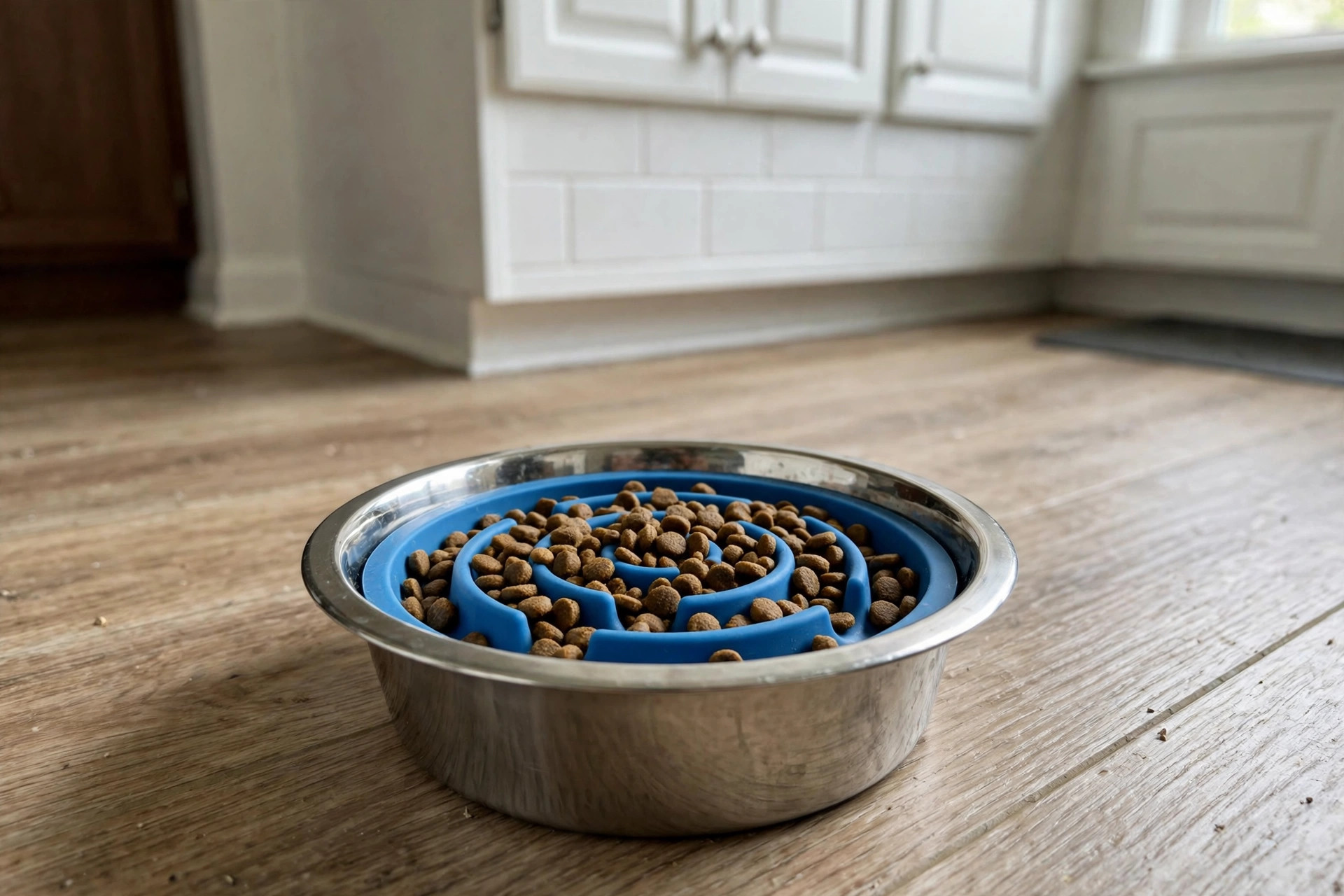
Many dogs eat too fast. They gulp their food in seconds. They choke, cough, and vomit. They bloat with air. If this sounds like your dog, the best slow feeder insert for dog bowl use can help. It is a simple plastic or silicone piece. It sits inside the bowl your dog already owns. Its ridges and mazes force your dog to eat around them. Meal time takes longer. Your dog takes in less air. Many owners see better digestion in a few weeks.
You do not need to buy a whole new bowl. An insert costs less. It also lets you keep the bowl your dog knows. That matters for older dogs. It matters for anxious dogs. A familiar bowl feels safe. The insert only changes the inside surface. It makes food harder to grab.
Why Fast Eating Is a Problem
Dogs that eat fast swallow large mouthfuls. They also swallow air. The air builds up in the stomach. This can cause gas, belching, and pain. In large deep-chested breeds, fast eating raises the risk of bloat. Bloat is a serious condition. The stomach fills with gas and may twist. It can kill a dog in hours.
Even without bloat, fast eating causes daily trouble. Dogs regurgitate their food minutes after a meal. They feel sick. They may eat the vomit and get sick again. Fast eaters also miss the taste of food. They gulp and never chew. Chewing matters. It starts digestion in the mouth. It slows the whole process.
How a Slow Feeder Insert Works: Best Slow Feeder Insert for Dog Bowl
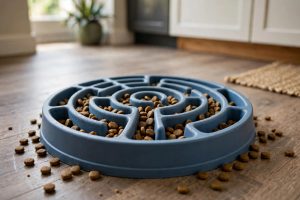
A slow feeder insert is a shaped piece that drops into a dog bowl. It has raised parts. These parts may look like bumps, fins, or maze walls. Food falls between the raised parts. Your dog cannot take a big mouthful. The tongue must push food around the shapes. This takes time.
Most inserts use suction cups or a tight friction fit. They stay in place while the dog eats. Some have weighted bases. They do not float up. The best ones fit the bowl size. A loose insert slides around. A dog may flip it out.
Inserts come in different challenge levels. A simple insert has wide open spaces. It suits mild fast eaters. A hard insert has tight narrow paths. It suits dogs that inhale food. You can start easy and move up. That keeps the dog from giving up. A dog that cannot reach food may stop eating. That is not the goal.
What to Look for When You Choose
Fit comes first. Measure the inside of your dog bowl. Note the diameter at the bottom. Note the diameter at the top. The insert must sit flat on the bottom. It should not wobble. Many inserts list the bowl sizes they fit. Check these numbers before you buy.
Material comes next. Most inserts are plastic or silicone. Plastic is firm and holds its shape. It works well for strong chewers, though no insert should be a chew toy. Silicone is soft and quiet. It bends a little. Some dogs like the soft feel. Both types must be food grade. They should be free of BPA and harsh chemicals. Read the label for words like food safe and dishwasher safe.
Cleaning matters more than people think. Dog bowls hold germs. Saliva and old food breed bacteria. A maze with deep narrow grooves is hard to wash. Choose an insert you can clean well. Dishwasher safe is best. If you wash by hand, pick one with smooth open curves. Avoid sharp corners that trap food.
Watch the suction. A good insert stays put. Some dogs learn to lift the insert with the nose. Strong suction stops that. Test it at home. Press the insert down. Try to slide it. If it moves too easy, your dog will move it too.
Think about your dog’s snout shape. Flat-faced dogs, like pugs and bulldogs, need shallow wide paths. They cannot reach deep narrow slots. Long-nosed dogs can handle deeper mazes. Pick the challenge for your dog’s face. A mismatch leads to stress. The dog may paw at the bowl or bark. Meal time should be calm, not a battle.
Types of Slow Feeder Inserts
Silicone Mat Inserts
Silicone mat inserts are soft sheets with raised shapes. They lay flat in the bowl. Many have suction cups on the back. They are quiet. They do not scratch metal bowls. They come in many colors and patterns. Some look like grass blades. Some look like honeycombs. They suit mild to medium fast eaters. They are easy to clean. Most go in the dishwasher. They fold for travel. A silicone insert can also sit flat on the floor without a bowl. That makes it handy on trips.
Plastic Maze Inserts
Plastic maze inserts are rigid pieces with deep walls. They drop into the bowl like a puzzle. The walls are tall. Food hides between them. These suit strong fast eaters. They give the highest challenge. They last long. Good ones resist chewing. They work best in heavy bowls that do not tip. Some have a twist lock that grips the bowl. Cleaning takes more work. Soak them first. Then wash with a brush.
Stainless Steel Compatible Inserts
Some inserts are made to fit inside stainless steel bowls. Steel bowls are common. They last for years. They do not hold odors. An insert for a steel bowl must match the exact bowl shape. Steel bowls vary in size. Measure twice. These inserts often use strong suction. The smooth steel lets the cups grip well. This combo is a favorite in many homes. The bowl lasts. The insert can be swapped as the dog learns.
Adjustable and Two-Piece Inserts
A few inserts come in two parts. You can set them close or far apart. Close means harder. Far means easier. This helps you train the pace step by step. Start with wide gaps. Narrow them over weeks. The dog adjusts without stress. Two-piece inserts cost a bit more. They suit dogs new to slow feeding. They also suit puppies that are still growing. You can widen the gaps as the puppy’s snout grows.
Getting the Right Fit
Measure your bowl before you shop. Use a tape measure. Write down the inside diameter at the base. Write down the depth. Compare with the insert’s listed size. Most product pages show a size chart. Follow it.
Test the fit at home. Put the insert in the empty bowl. Press down. Try to rock it side to side. It should sit still. Pour in a small meal. Watch your dog eat. The dog should take at least five to ten minutes for a full meal. Less than two minutes means the insert is too easy. More than thirty minutes may mean it is too hard. Adjust as needed.
Check the food type too. Dry kibble works in almost any insert. Keep kibble fresh between meals with a pet food storage container airtight large. Wet food needs wider paths. It can clog narrow slots. Semi-moist food sits in the middle. Some owners mix wet and dry. Use a medium insert for mixed food. Wash it after each wet meal. Wet food spoils fast.
Puppies need special care. A very hard insert may scare a young pup. Start with the easiest level. Let the puppy learn. You can raise the challenge at six months or later. Senior dogs may have weak teeth. Pick soft silicone for them. Hard plastic can hurt sore gums.
Cost and Price
Slow feeder inserts are not costly. Most sell for five to twenty dollars. Simple silicone mats cost the least. Rigid maze inserts cost a bit more. Adjustable two-piece sets cost the most. Prices vary by brand and size.
A full slow feeder bowl costs more than an insert. That is the main draw of an insert. You keep your bowl. You spend less. You also save space. One bowl serves two roles. If the insert wears out, you replace only the insert.
Watch for false savings. A very cheap insert may use thin plastic. It may crack. It may lose suction in weeks. Then you buy again. A mid-price insert from a known pet brand often lasts longer.
Care and Upkeep
Wash the insert after every meal if you feed wet food. Wash it at least once a day for dry food. Saliva carries bacteria. Old kibble dust holds germs. A dirty insert can upset the stomach. That defeats the purpose.
Most inserts are dishwasher safe. Place them on the top rack. Use a normal cycle. Check the label first. Some soft silicone can warp in high heat. If in doubt, wash by hand. Use warm water and mild dish soap. Scrub the grooves with a small brush. An old toothbrush works well. Rinse clean. Let it air dry.
Inspect the insert each week. Look for cracks. Look for chew marks. Look for loose suction cups. A cracked insert can trap food. It can also break into pieces. A dog may swallow a small piece. Replace any insert that shows damage. Do not wait.
Safety Tips
Never leave a new insert with the dog alone at first. Watch the first few meals. Some dogs try to chew the insert. Some try to pull it out. If your dog chews hard, the insert may not suit them. A chewer can break off pieces. Those pieces are a choking risk. In that case, use the insert only under watch. Or switch to a tougher option.
Check the material label. It should say BPA free and food grade. Avoid inserts with strong chemical smells. A strong smell can mean poor quality plastic. Air it out before use. If the smell stays, return it.
Match the insert to your dog’s size. A tiny insert in a big bowl leaves open space. The dog eats from the open space and ignores the insert. A huge insert in a small bowl may not fit at all. Size charts exist for a reason. Use them.
Dogs with flat faces need care. Deep narrow mazes can block their breathing while they eat. They may push too hard and panic. Choose shallow wide designs for these breeds. If your dog paws at the face or whines during meals, stop. Try an easier insert. Talk to your vet if the trouble continues.
Clean water matters too. Slow feeding helps at meal time. Fresh water helps all day. A best slow feeder dog bowl for fast eaters may suit some dogs better than an insert. And a best elevated cat bowl stand for neck comfort shows how bowl height can ease neck strain in other pets. Every animal feeds a little differently.
Frequently Asked Questions
Will a slow feeder insert work in any dog bowl?
It works in most bowls if the size matches. Round bowls are the easiest fit. Square or odd-shaped bowls are harder. Measure the inside of your bowl. Match it to the insert’s size chart. Suction inserts grip best on smooth surfaces like steel or ceramic. They grip less on rough or textured bowls.
How long should a meal take with an insert?
A good target is five to fifteen minutes. Most fast eaters finish in under two minutes without help. An insert that stretches the meal to ten minutes is doing its job. If meals pass thirty minutes, the insert may be too hard. Your dog may lose interest. Step down one level.
Can puppies use slow feeder inserts?
Yes, with the right type. Use a soft, easy insert for puppies under six months. Hard mazes can frustrate a young pup. Start simple. Raise the challenge as the puppy grows. Watch the puppy’s weight too. Slow feeding should not cut the food amount. Feed the same portions. Only the pace changes.
Are slow feeder inserts safe for aggressive chewers?
They need care. No insert is a chew toy. A strong chewer can damage plastic or silicone. Use the insert only at meal time. Pick it up when the meal ends. If the dog still chews it during meals, try a rigid maze type. Check it often for damage. Replace it at the first crack.
Do inserts help with vomiting after meals?
They often help. Fast eating is a top cause of post-meal vomiting. The dog gulps air and food together. The stomach rebels. Slowing the pace cuts the air intake. Many owners report less vomiting in the first week. If vomiting continues, see a vet. It may have another cause.
Can I put wet food in a slow feeder insert?
Yes, if the paths are wide enough. Wet food clogs narrow slots. It also spoils fast. Use a medium or easy insert for wet food. Wash it right after the meal. Do not leave wet food sitting in the grooves. For mixed wet and dry meals, a silicone mat with open shapes works well.
A Final Word
The best slow feeder insert for dog bowl use is the one that fits your bowl, suits your dog’s snout, and stays clean with ease. It is a small tool with a real job. It slows fast eaters. It cuts down on choking, vomiting, and gas. It costs little. It asks only that you measure well and wash it often.
Start with your dog’s needs. A mild fast eater does fine with a soft silicone mat. A strong gulper needs a firm maze. Flat-faced dogs need shallow paths. Puppies need easy levels. Match the tool to the dog in front of you.
Give it time. Most dogs learn the new pace in one to two weeks. Some take longer. Stay patient. Watch the first meals. Keep the insert clean. Your dog’s meal time can shift from a frantic race to a calm daily ritual. That is a change worth making.
For more background, see PetMD, American Kennel Club, and The Spruce Pets. For more background, see The Home Depot, Chewy, and ASPCA. See also Petco and PetSmart for further detail.
References
American Kennel Club. (n.d.). Dog care and training resources. https://www.akc.org ASPCA. (n.d.). Pet care and animal welfare resources. https://www.aspca.org Chewy. (n.d.). Pet supplies. https://www.chewy.com Petco. (n.d.). Pet supplies and services. https://www.petco.com PetMD. (n.d.). Pet health information. https://www.petmd.com PetSmart. (n.d.). Pet supplies and services. https://www.petsmart.com The Home Depot. (n.d.). Home improvement products. https://www.homedepot.com The Spruce Pets. (n.d.). Pet care guides and product reviews. https://www.thesprucepets.com
Was this guide helpful?

About Jennifer Lee
The My Garden US editorial team writes practical, in-depth home and garden guides for American homeowners — tested advice, no fluff.