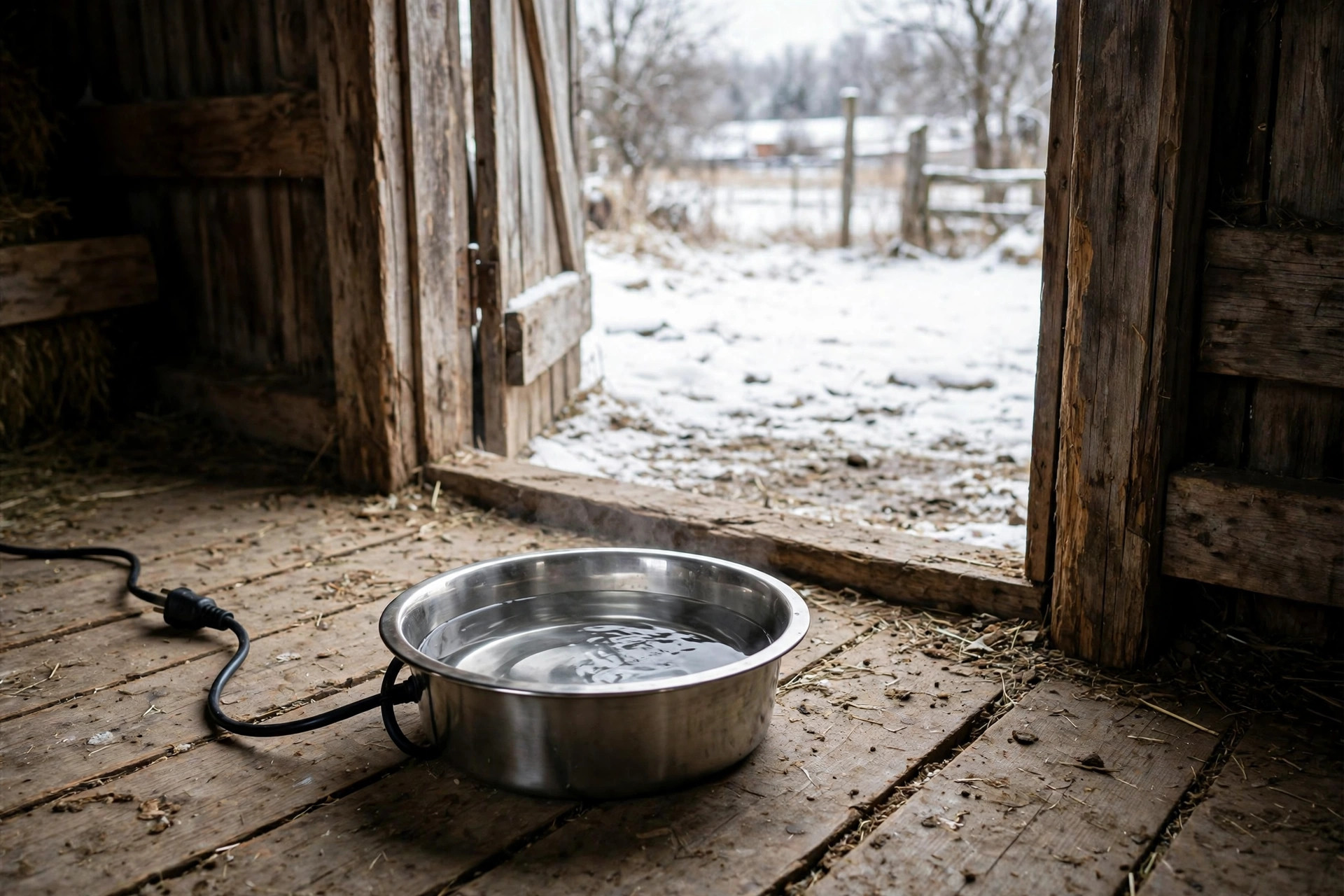
A heated water dish for outdoor barn cats solves a simple problem. Water freezes. Cats get thirsty. In winter, a bowl left in the barn can turn to solid ice by morning. Cats cannot drink ice. They need fresh liquid water every day, even in the cold months. A heated water dish keeps the water just warm enough that it never freezes.
Barn cats work hard through the winter. They patrol the hay loft. They keep mice away from the feed room. They earn their keep. A warm drink is a small return for their work. Many owners do not think about water in winter. They remember food. They forget that thirst can hurt a cat just as fast as hunger.
This guide explains why a heated dish matters. It shows what to look for before you buy. It lists the main types and the price ranges you can expect. It covers care, cleaning, and safety. It ends with answers to common questions.
Why It Matters
Cats drink less in winter. The cold air makes them drink less often. But they still need water every day. When the only bowl is a block of ice, a cat may skip drinking altogether. That can lead to dry skin. It can lead to hard stool. It can lead to trouble with the kidneys over time.
A heated water dish for outdoor barn cats keeps water open and drinkable around the clock. The heating element is low power. It turns on when the air drops near freezing. It turns off when the weather warms. The cat drinks when it wants. The owner does not have to chip ice twice a day.
Barn cats face more risk than indoor cats. They live in open buildings. The wind cuts through the cracks. Night temperatures drop fast. A bowl near the door can freeze solid in an hour. Farther inside the barn, near the hay, it lasts longer. But a hard cold snap freezes everything in the end.
Water also matters for body heat. A cat burns more energy to stay warm in winter. The body uses water to move food through the gut. The body uses water to keep the blood thin and flowing. Less water means a slower body. A slower body means a colder cat. Fresh water helps the cat keep warm.
Many owners set out warm water in the morning. By noon it is cold. By night it is ice. Refilling a bowl three times a day is a lot of work. A heated dish does the work for you. You fill it once. The heater does the rest. The ASPCA and other animal welfare groups remind owners that outdoor animals need unfrozen water in winter. A heated bowl is the easiest way to give it.
What to Look For: Heated Water Dish for Outdoor Barn Cats
Not every heated bowl fits a barn. Look for the traits that matter in farm life.
Size and Depth
Barn cats share. One dish may serve three or four cats. A small one-quart bowl empties fast. Look for a bowl that holds at least one gallon. A wider bowl is better than a deep one. Cats do not like their whiskers to touch the sides. A wide, shallow bowl feels safer to a cat.
Power and Thermostat
The dish should have a built-in thermostat. The heater turns on near freezing and shuts off above forty degrees. This saves power. It also keeps the water from getting hot. The water should feel cool, not warm. A cat will not drink hot water.
Cord Length and Protection
Barns are big. The outlet may be far from the spot where the cats eat. Look for a cord at least six feet long. The cord should have a steel wrap. Cats chew. Rats chew. A bare cord will not last a week in a barn. A metal-wrapped cord lasts for years.
Material
Plastic bowls are light and cheap. But plastic can crack in deep cold. It can also hold odors. Stainless steel bowls last longer. They clean easy. They do not hold smell. Some heated dishes come with a steel bowl that lifts out of a heated base. That design is the best of both worlds.
Stability
Cats bump bowls. They step on the rim. They lean on the edge. A wide base keeps the bowl from tipping. Some models have a non-slip ring on the bottom. Place the dish against a wall or in a corner. That stops it from sliding across the floor.
Outdoor Rating
Check the label. The dish should be rated for outdoor or barn use. An indoor-only pet warmer may fail in damp air. Look for words like weather-resistant or all-weather. The PetMD library notes that electrical pet products must match their setting. A barn is not a living room. Buy for the barn.
Types and Options
Most heated water dishes fall into three groups. Each has strengths.
Electric Heated Bowls
This is the most common type. A heating wire sits in the base of the bowl. It plugs into a standard outlet. The thermostat controls the heat. These bowls work well down to very low temperatures. They come in one, two, and five gallon sizes. Farm supply stores like Tractor Supply carry them in the winter months. Online shops such as Chewy and Petco stock them year-round.
Heated Base Pads
A heated pad sits under a normal bowl. The pad warms the bowl from below. This option costs less than a full heated bowl. It also lets you use any bowl you like. The downside is weaker heat. A pad may keep up with mild frost. It may fail in a hard freeze. For barns in cold states, a full heated bowl works better.
Solar and Battery Models
A few makers sell solar-powered warmers. They sound nice. In practice, they give little heat. Winter days are short. Snow covers the panels. Batteries die in the cold. For a barn with power, an electric model is far more reliable. Solar may suit a shed with no outlet, but check reviews first. The Spruce Pets site often tests such products and gives plain advice on what works.
For most barns, an electric heated bowl with a steel insert is the right pick. It lasts. It cleans well. It keeps up with deep cold.
Cost and Price
Prices are fair. A basic one-gallon heated bowl costs between twenty and thirty-five dollars. A larger two-gallon model with a steel bowl runs forty to sixty dollars. Heavy-duty farm models in the five-gallon size can reach eighty dollars.
Electricity costs stay low. A typical heated dish draws about twenty-five to sixty watts. That is less than a light bulb. Running one bowl all winter often adds only a few dollars to the power bill. The thermostat cuts power most of the day. It only works on the coldest nights.
Think about the cost of the other path. Refilling frozen bowls twice a day takes time. A vet visit for a dehydrated cat costs far more than a bowl. The American Veterinary Medical Association points out that prevention is cheaper than treatment. A heated dish is cheap prevention.
If you also keep dogs on the place, winter gear for them matters too. An older farm dog may need a good dog bed for joint pain in large seniors to rest well through cold nights. Puppies raised in the barn do well with a playpen for puppies that works indoors and outdoors to keep them out of harm. And a dog tie-out cable for the yard keeps working dogs safe when they are not on duty.
Care and Upkeep
A heated dish needs little care. A few habits keep it working for years.
Clean the bowl every two or three days. Lift out the steel bowl if your model has one. Wash it with warm water and mild dish soap. Rinse it well. Soap left in the bowl can upset a cat’s stomach. Do not pour harsh chemicals into the bowl. Cats taste everything.
Wipe the base with a damp cloth once a week. Do not soak the base in water. The heating parts sit inside. Water and electric parts do not mix. Let the base dry fully before you set the bowl back in place.
Check the cord each month. Look for chew marks. Look for cracks in the coating. Feel the plug for looseness. A damaged cord is a fire risk. Replace the unit if the cord is cut through to the wire. Never tape over a cut cord and keep using it.
In spring, unplug the dish. Clean it well. Store it in a dry spot. Mice will chew on stored cords, so hang it up or box it tight. Bring it back out when the first frost comes. A well-kept dish can last five to eight winters.
Keep the water fresh even though it does not freeze. Dump the old water and refill with clean water every day or two. Hay dust blows into open bowls. Feed dust blows in too. Fresh water tastes better. Cats drink more of it. The American Kennel Club winter care guides stress clean water for all outdoor animals, and the same rule holds for cats.
Safety
Electricity and water need care. Follow these rules and the dish is safe.
Use a ground-fault outlet. Most barns have at least one GFCI outlet. If yours does not, use a portable GFCI adapter. It cuts power if current leaks. That protects the cats. It protects the barn.
Keep the cord short and tidy. Run it along the wall. Pin it up out of reach. Do not let it cross a walkway. A tripped cord pulls the bowl over. A pulled cord can snap the plug.
Place the dish on a flat, dry surface. A pallet or a rubber mat works well. Keep it away from deep bedding. Straw can pile against a warm base. That is a fire risk in theory. In practice, low-watt bowls run cool. Still, keep bedding back a few inches.
Do not let the bowl run dry. The heater is made to warm water. An empty bowl can overheat the element. Check the water level each day. In a busy barn, top it up each morning.
Watch the cats at first. Most cats walk up and drink at once. A shy cat may need a day to trust the new bowl. If a cat paws at the water or the base, check that nothing is wrong. A cracked bowl or a hot spot means the unit should be replaced.
The U.S. Consumer Product Safety Commission sets the baseline rules for electrical products sold in America. Buy from a known brand. Look for a UL or ETL mark on the box. That mark means the product passed safety tests. The Home Depot and other large retailers only stock listed products, which adds a layer of trust.
Frequently Asked Questions
Will a heated dish make the water too warm?
No. A good unit has a thermostat. It keeps the water just above freezing. The water feels cool to your hand. It never gets hot. If the water feels warm, the thermostat may be broken. Replace the dish.
How cold can a heated water dish handle?
Most models work down to minus twenty degrees Fahrenheit. Below that, the water may form a thin skin of ice at the edges. The center stays liquid. Place the dish inside the barn, out of the wind, for best results.
Is it safe to leave the dish plugged in all winter?
Yes, if the unit is rated for outdoor use and plugged into a GFCI outlet. The thermostat cycles the heat on and off. Check the cord and water level each week. Unplug it in spring.
Can kittens use a heated water dish?
Yes. Use a shallow bowl so small kittens can reach the water. Keep the dish low to the ground. Watch young kittens around any cord. For more on feral and barn cat care, Alley Cat Allies has free guides.
How much power does one bowl use?
Most draw twenty-five to sixty watts when the heater is on. The heater runs only in freezing weather. For most of the winter, the cost is a few dollars per month.
What if my barn has no power outlet?
Run a heavy outdoor extension cord from the house or garage. Use a cord rated for outdoor use. Protect the connection from rain and snow. If no power is possible, set out fresh water twice a day and use an insulated bowl cover. It is more work, but it keeps the cats drinking.
A Final Word
A heated water dish for outdoor barn cats is a small buy with a big payoff. It ends the daily fight with frozen bowls. It keeps working cats healthy through the hardest months. Pick a sturdy model with a thermostat, a steel bowl, and a chew-proof cord. Plug it into a safe outlet. Keep the water fresh. The cats will do the rest.
References
Alley Cat Allies. (n.d.). Feral cat care and resources. https://www.alleycat.org American Kennel Club. (n.d.). Dog care and training resources. https://www.akc.org American Veterinary Medical Association. (n.d.). Pet care resources. https://www.avma.org ASPCA. (n.d.). Pet care and animal welfare resources. https://www.aspca.org Chewy. (n.d.). Pet supplies. https://www.chewy.com Petco. (n.d.). Pet supplies and services. https://www.petco.com PetMD. (n.d.). Pet health information. https://www.petmd.com The Home Depot. (n.d.). Home improvement products. https://www.homedepot.com The Spruce Pets. (n.d.). Pet care guides and product reviews. https://www.thesprucepets.com Tractor Supply Co. (n.d.). Farm and ranch supplies. https://www.tractorsupply.com U.S. Consumer Product Safety Commission. (n.d.). Product safety information. https://www.cpsc.gov
Was this guide helpful?

About James Carter
The My Garden US editorial team writes practical, in-depth home and garden guides for American homeowners — tested advice, no fluff.