
Many dog owners fear nail trimming. The fear grows when the dog has dark nails. Dark nails hide the quick, the small blood vessel inside each nail. Cut too far and the nail bleeds. It also causes pain. An electric nail file can lower this risk. It removes nail in thin layers instead of one hard clip. The best dog nail file electric for dark nails gives you control, a clear view, and a calmer dog.
Why an Electric Nail File Helps With Dark Nails
Dark nails make nail care harder. With a light nail, you can see the pink quick through the nail. You know where to stop. With a dark nail, you see nothing but black. You must guess. A clipper forces one cut. If you guess wrong, the nail bleeds.
An electric file works in small steps. The grinding head spins and sands the nail bit by bit. You can stop at any time. You can check the nail after each pass. You look at the tip of the nail. When you see a dark dot appear in the center, you are near the quick. You stop there. This step-by-step method suits dark nails well.
An electric dog nail grinder for dark nails also helps nervous dogs. Many dogs fear the loud snap of clippers. A file makes a soft buzzing sound instead. It is less sudden. Dogs can accept it more easily once they get used to it.
Another gain is shape. Clippers can leave sharp edges. A file leaves a smooth, round tip. Smooth nails are kinder to your floors, your sofa, and your skin. The dog walks more comfortably too.
What to Look For When You Choose: Best Dog Nail File Electric for Dark Nails
Not every tool fits every dog. Here are the points that matter most.
Motor speed. A good tool has more than one speed. Low speed suits small dogs and first sessions. High speed suits large dogs with thick nails. Two or three speeds are enough. Very high speed makes more heat, so you should use short passes.
Noise and vibration. Many dogs are sound shy. A quiet motor helps a lot. Look for tools described as low noise. Low vibration also helps. Less shaking means less fear. If your dog is very nervous, read our guide on the best dog nail grinder quiet for nervous dogs for tips that pair well with any file.
Grinding head. Heads come in sizes and textures. A coarse head removes nail fast. A fine head gives a smooth finish. Some sets include two or three heads. That gives you more choice. Diamond-coated heads last longer than plain sanding bands.
LED light. Some tools have a small light near the head. A dog nail file with LED light can help you see the nail tip more clearly. On dark nails, any extra light helps you spot the dark dot that tells you to stop.
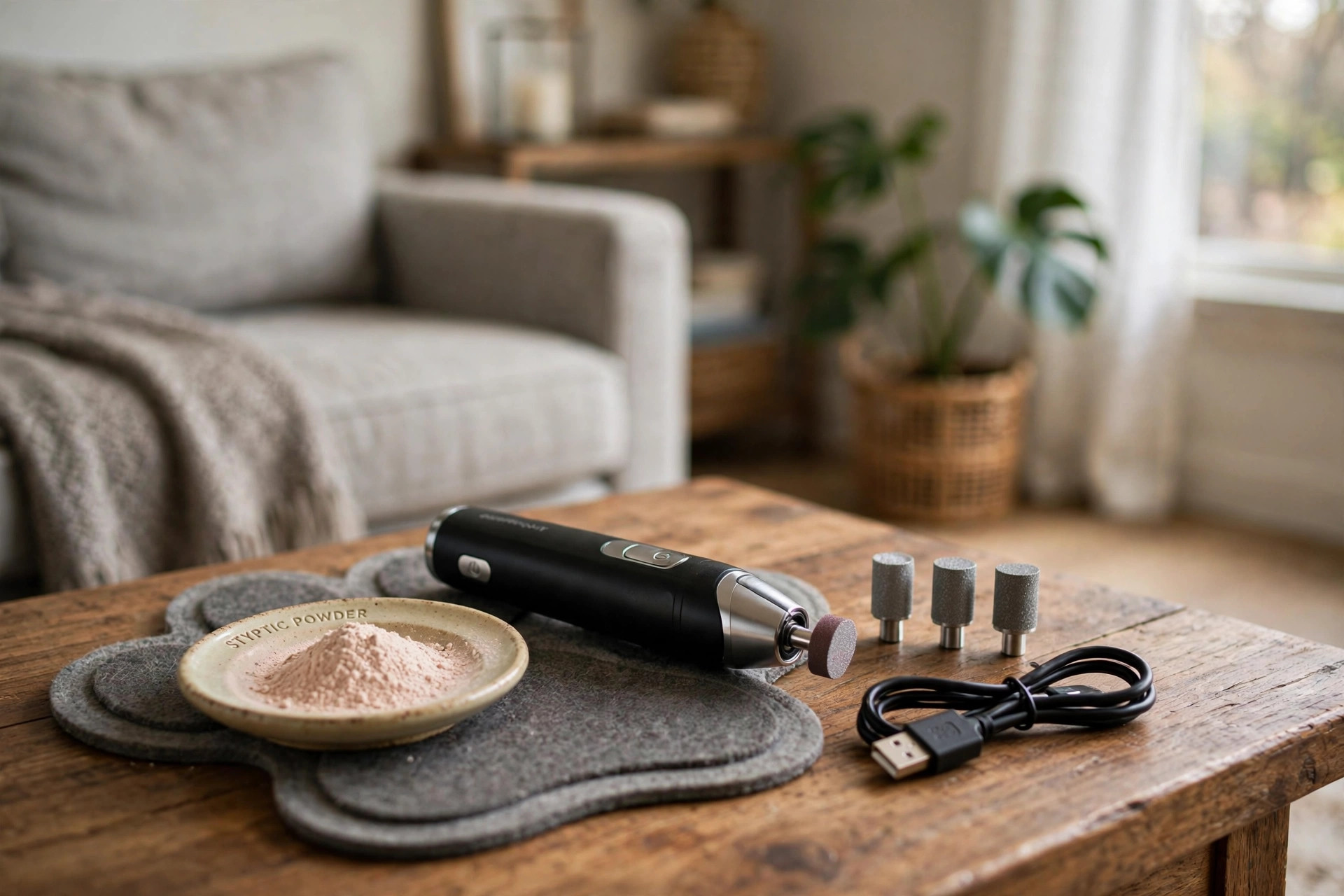
Battery type. Rechargeable tools are the most common now. They charge with a USB cable. A full charge should last for at least two or three full nail sessions. Replaceable-battery tools are still sold, but they cost more over time.
Grip. The tool should feel steady in your hand. A slim body with a non-slip grip is best. You will hold it for several minutes. A heavy tool will tire your hand.
Size of your dog. Small dogs need small heads and low speed. Large dogs need stronger motors and coarse heads. Many tools work for all sizes, but check the box before you buy.
Types of Electric Nail Files
There are a few main types on the market.
Basic rotary grinders. These are the most common. A small cylinder head spins at high speed. You hold the nail against it. They are simple and low priced. They suit most pet dogs.
Grinders with dust caps. These have a cover over the head with small ports. You push one nail through a port. The cap catches nail dust. This keeps the air cleaner. It also helps you hold the nail at the right angle.
Two-speed and three-speed models. More speeds give more control. Use low speed for puppy nails and for finishing. Use high speed for thick adult nails.
Combination trimmers. Some tools add a small clipper on the back end. You can clip first, then file smooth. This works well for very long nails. But for dark nails, filing alone is often safer than clipping.
Professional groomer units. These are stronger and cost more. They suit people who groom many dogs. For one family dog, a basic home model is enough.
Cost and Price
Prices vary by brand, motor power, and extra heads.
– Basic single-speed grinders cost about 15 to 25 dollars. – Mid-range two-speed models with LED lights cost about 25 to 40 dollars. – Top home models with quiet motors and several heads cost about 40 to 60 dollars. – Professional units can cost 60 dollars or more.
You do not need the most costly tool. A mid-range model with two speeds and an LED light serves most dark-nailed dogs well. Replacement heads add to the cost. Diamond heads cost more but last longer. Sanding bands are cheap and need frequent change.
Buy from a store with a fair return policy. Some dogs will not accept any grinder. If your dog panics at the sound, you may need another method. A good return policy protects you. Check buyer guides at places like Consumer Reports and product pages at PetSmart to compare prices and features before you choose.
How to Use the File Safely
Good technique matters more than the tool itself. Follow these steps.
1. Let the dog sniff the tool. Turn it on near the dog. Give treats. Do this for a few days before you file any nail. 2. Start with one nail. Touch the head to one nail for two or three seconds. Praise the dog. Stop while the dog is still calm. 3. Work in short passes. Grind for two to three seconds, then lift the tool. Check the nail tip. This stops heat from building up. 4. Watch the tip. On dark nails, look for a small dark or gray dot in the center of the tip. That dot means the quick is near. Stop filing that nail. 5. Do not hold one spot. Keep the tool moving slightly. Holding it in one place makes heat. Heat causes pain. 6. Keep fur away. Long fur can catch in the spinning head. Push the fur back from each nail before you start. 7. Keep sessions short. Do two or three nails, then take a break. You can finish the rest the next day.
Have styptic powder nearby. Even with care, you may go too far one day. Styptic powder stops the bleeding fast. Pet first aid guides at the ASPCA explain how to handle small nail bleeding at home.
Care and Upkeep of the Tool
A little care keeps the tool working well.
Clean the head after each use. Tap out nail dust. Wipe the body with a dry cloth. Do not wash the tool under water unless the box says it is safe.
Replace the grinding head when it feels smooth. A worn head grinds slowly and makes more heat. That is bad for the dog. Sanding bands need change more often than diamond heads.
Charge the battery after each session. Do not store the tool fully drained. That shortens battery life.
Store the tool where pets cannot chew it. Keep the power cord or USB cable out of reach.
Safety Points to Remember
Safety comes first with any powered grooming tool.
– Never use the tool on broken or infected nails. See a vet first. – Never file while the dog struggles hard. A frightened dog can get hurt. Stop and try again later. – Keep the tool away from eyes, nose, and mouth. – Do not share tools between many dogs without cleaning. Clean heads between dogs. – Watch for heat. If the nail feels warm, you have filed too long on one spot. – Puppies can use a file, but use the lowest speed and very short passes.
If you are unsure about your dog’s nail health, ask your vet before you start. Health guides at PetMD and the American Kennel Club offer plain advice on nail care and when a vet visit is wise.
Alternatives Worth Knowing
An electric file is not the only choice. Some owners prefer nail clippers. Clippers work fast but need a sure hand on dark nails. If you want to compare, see our piece on the best pet nail clippers for large dog nails before you decide.
Some owners use a plain hand file. It is silent and cheap. It takes longer, but some dogs accept it best.
Nail care is one part of grooming. Teeth matter too. Our review of the best dog toothbrush kit for dental health covers the other end of routine care.
Frequently Asked Questions
How often should I file my dog’s dark nails? Most dogs need filing every two to three weeks. If you hear clicking on hard floors, the nails are too long. Active dogs that walk on pavement may need less filing. Check the nails weekly to learn your dog’s pace.
Is an electric file better than clippers for dark nails? For most owners, yes. A file removes nail in thin layers, so the risk of cutting the quick is lower. Clippers work faster, but one wrong cut on a dark nail can cause pain and bleeding. Many vets suggest files for dark-nailed dogs.
Will the noise scare my dog? It can at first. Most dogs get used to the sound in a few days if you go slow. Let the dog hear the tool while giving treats. Use the lowest speed first. A quiet dog nail trimmer for nervous dogs can make this process much easier.
What is the dark dot I should look for? As you file a dark nail, the tip changes. Near the quick, a small dark or gray dot appears in the center of the nail tip. Some owners call this the bullseye. When you see it, stop filing that nail. It means you are close enough.
Can I use a human nail file on my dog? A human nail file is too slow for thick dog nails. It can work for tiny puppy nails in a pinch, but a proper electric dog tool does the job far better and faster.
How long does a grinding head last? It depends on use. Sanding bands may last for a few full sessions. Diamond-coated heads can last for months of home use. Replace the head when it grinds slowly or feels smooth.
A Short Final Word
Dark nails do not have to mean hard nail care. The best dog nail file electric for dark nails turns a scary job into a calm routine. Go slow. Watch the nail tip. Praise your dog. In a few weeks, nail time will be just another part of the day. For more pet care ideas, browse care guides at The Spruce Pets, product picks at Petco, grooming tips at Vetstreet, and services info at Banfield.
References
American Kennel Club. (n.d.). Dog care and training resources. https://www.akc.org ASPCA. (n.d.). Pet care and animal welfare resources. https://www.aspca.org Banfield Pet Hospital. (n.d.). Veterinary care and pet health. https://www.banfield.com Chewy. (n.d.). Pet supplies. https://www.chewy.com Consumer Reports. (n.d.). Product reviews and ratings. https://www.consumerreports.org Petco. (n.d.). Pet supplies and services. https://www.petco.com PetMD. (n.d.). Pet health information. https://www.petmd.com PetSmart. (n.d.). Pet supplies and services. https://www.petsmart.com The Spruce Pets. (n.d.). Pet care guides and product reviews. https://www.thesprucepets.com Vetstreet. (n.d.). Veterinary advice for pet owners. https://www.vetstreet.com
Was this guide helpful?

About Emily Rodriguez
The My Garden US editorial team writes practical, in-depth home and garden guides for American homeowners — tested advice, no fluff.
You May Also Like

Dog Crate With Wheels for Easy Transport: A Complete Buyer’s Guide
October 2, 2026 0 views
A Self Cleaning Litter Box for Busy Cat Owners
May 20, 2026 0 views
Best Slow Feeder Insert for Dog Bowl: A Guide for Fast Eaters
May 4, 2026 0 views