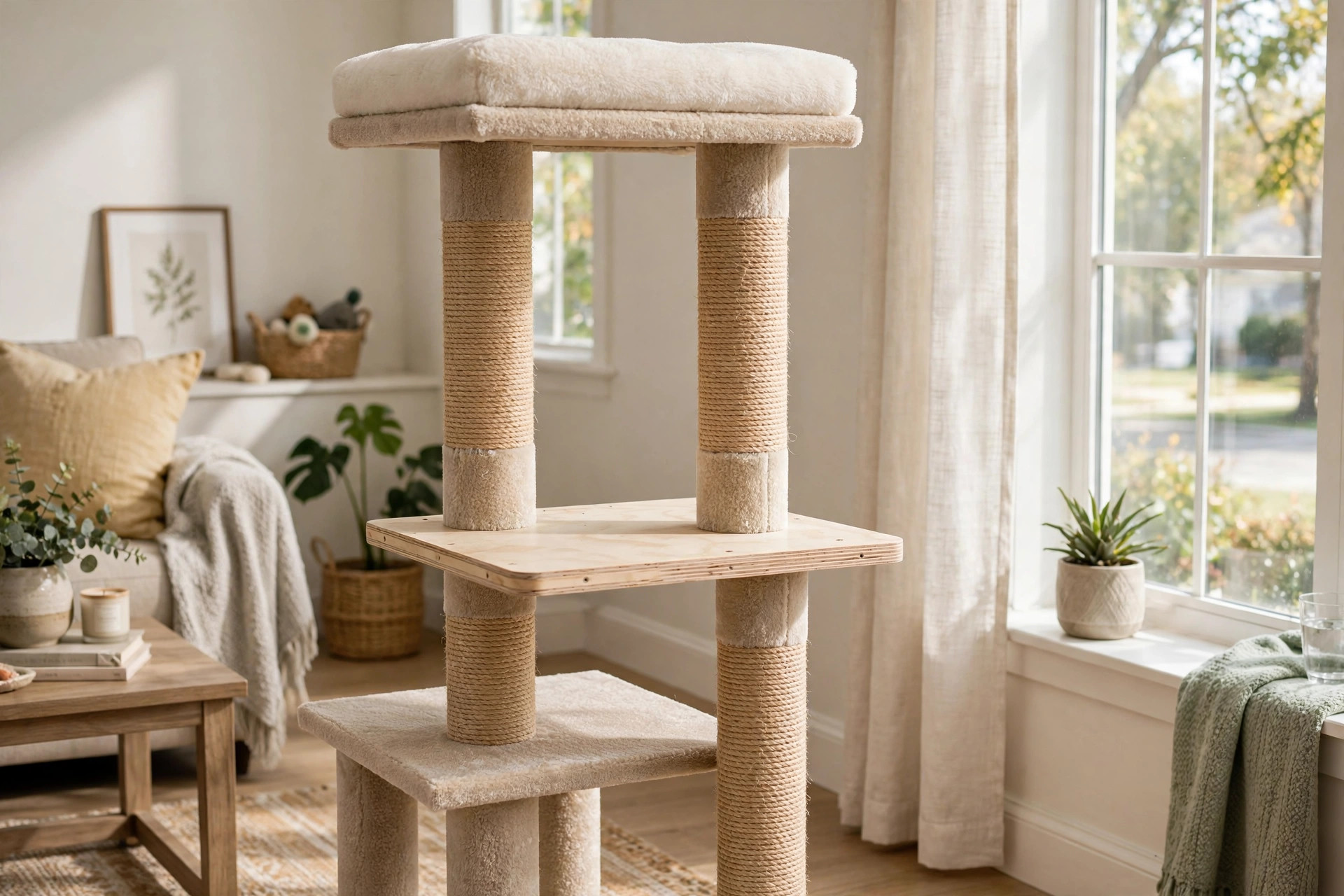

Every cat owner knows the day arrives when a beloved cat tree starts to look tired. The sisal rope frays. A perch cushion sags. One corner post wobbles. The best cat tree replacement parts and perches give the tower a second life. You do not need to buy a whole new tree. A few spare parts and a free afternoon can make an old favorite look and feel new again.
Cats are creatures of habit. They trust a tower that smells like home. When you replace the whole tree, the new one smells like a factory. Some cats refuse it for weeks.
Why Replacement Parts Matter
Cats Trust What They Know
A cat tree holds your cat’s scent. The platforms, the hideouts, and the scratching posts all smell like territory. When you replace the whole tree, the new one smells like a factory. Some cats refuse it for weeks. New tall cat trees for large cats take time to break in. A repaired tree has no break-in period. Your cat keeps its favorite spot without missing a beat.
Wear Points Show First
Sisal rope is the first thing to wear. Cats claw it daily. Carpet-covered perches wear next. Cushions flatten. Bolts loosen. The frame itself often stays strong for years. Engineers build frames from solid wood or strong particle board. Soft parts fail long before the frame. Replacing soft parts keeps the good frame in use.
The Cost Case
A full-size cat tree can run from sixty to several hundred dollars. A set of replacement sisal posts often costs under twenty dollars. A new perch platform can cost less than thirty. Replacement cushions cost even less. The math is simple. Repair wins. The planet wins too. Less furniture in the landfill is a good thing.
What to Look for When Choosing Parts: Best Cat Tree Replacement Parts and Perches
Match the Size
Measure before you buy. Cat trees are not standard. A perch from one brand may not fit another. Measure the platform where the perch bolts down. Write down the length, the width, and the bolt spacing. Posts come in common heights, but check yours. A post that is one inch too tall will not bolt on straight.
Check the Bolt Pattern
Most perches attach with one or two bolts from below. Look under your platform. Note the hole size and the distance between holes. Common sizes include M6 and M8 bolts. Take a photo of the underside before you shop. A photo helps you match parts with confidence.
Pick Safe Materials
Sisal is the best scratching surface. It is tough and natural. Jute is softer and wears faster. Carpet feels good to cats but hides dirt. Faux fur is soft but thin. Choose parts made with no sharp staples on the surface. Run your hand across the part. It should feel smooth where a cat rests.
Weight Rating
Large cats need strong perches. A replacement perch should hold at least the weight of your cat, and more is better. For a Maine Coon or a big tabby, look for perches rated for twenty pounds or more. Heavy cats bend thin plywood platforms. Plywood at least one half inch thick is a safe choice. Reviews on retail sites like Chewy often note whether a perch holds big cats. Owner photos can be more useful than the product text.
Types of Replacement Parts and Perches
Replacement Perch Platforms
The perch is the flat platform where your cat sleeps. Square perches are common. Round and triangular shapes also exist. Some perches have a raised rim. A rim keeps a sleeping cat from rolling off. Others are flat and open. Cats that like to sprawl prefer flat perches. Shy cats like a rim for a sense of shelter.
When you shop for a perch, match the bolt holes first, then the size. A perch that is too small leaves a gap. A perch that is too large overhangs the post and tips. Measure twice.
Replacement Sisal Scratching Posts
Posts take the worst beating. Claws dig in daily. Replacement posts come in two forms. Some are full posts wrapped in sisal rope. Others are sisal sleeves that slide over an old post. Sleeves cost less and install in minutes. Full posts last longer.
Look for tight, even sisal winding. Loose rope unravels fast. The post core should be solid cardboard or wood. Quality posts are discussed on pet care sites like PetMD, which note that good scratching surfaces protect furniture by giving cats a proper outlet.
Replacement Cushions and Pads
Cushions make perches inviting. They flatten over months of naps. Replacement pads come in faux fur, plush, and washable fleece. Washable pads are the smart pick. Cat trees gather fur and dust. A pad you can toss in the wash stays fresh. Check the pad backing. Non-slip backs keep the pad on the perch. Elastic edges help too.
Rope and Carpet Refill Kits
Some owners prefer to rewrap posts themselves. Sisal rope kits let you rewind a bare post. A roll of sisal, a staple gun or hot glue, and some patience do the job. This is the cheapest fix of all. It takes about an hour per post. Guides on home project sites like Bob Vila cover the basics of safe adhesive use on furniture projects.
Hardware: Bolts, Caps, and Connectors
Do not reuse rusty bolts. A hardware kit with fresh bolts and washers costs a few dollars. Nylon lock nuts hold better than plain nuts.
Hammocks and Hiding Boxes
Many trees include a hammock or a condo box. Hammocks stretch and tear. Boxes lose their shape. Replacement hammocks are easy to find. Match the hook spacing to your frame. Condo boxes need the right hole pattern. A fresh box with new carpet feels like a new room to a cat.
How to Choose the Best Parts for Your Tree
Start With the Brand
First check if the maker sells parts. Many brands offer spare perches and posts for their own models. Brand parts fit with no guesswork. Search the brand name plus your model. If the brand is gone, third-party parts can still work. You just need good measurements.
Read Reviews From Multi-Cat Homes
Homes with three or four cats test parts hard. Reviews from these owners tell the truth. They report how long a perch lasts. They report wobble. They report whether the cat took to the new pad. Look for reviews that mention your cat’s size. Advice from cat care groups, including resources from the ASPCA, reminds owners that stable furniture matters for safety with big or senior cats.
Think About Your Cat’s Habits
Watch your cat for a week. Does it scratch the posts or the carpet? Does it sleep on the top perch or hide in the box? Buy parts for the spots your cat uses. A cat that sleeps only on the top perch deserves the best new pad there.
Compare With Window Perches
Some cats prefer a window view over a tower perch. A window perch for sunny lounging is a cheap add-on. It can take pressure off a tired cat tree. If your tree’s top perch is worn, a window perch may be the better buy. Many cats split their time between both.
Cost and Price Guide
Typical Prices
Replacement sisal posts run from ten to thirty dollars. Perch platforms run from fifteen to forty dollars. Cushions and pads run from eight to twenty dollars. Rope refill kits cost ten to twenty dollars. Full hardware kits cost under ten dollars. A complete refresh of one tree often totals forty to eighty dollars. That is far below the price of a new tower.
Where to Shop
Pet supply stores carry common parts. Online pet retailers carry the widest range. Big home improvement stores like Home Depot stock sisal rope and hardware for do-it-yourself repairs. General review sites such as Consumer Reports sometimes test pet furniture durability. Compare prices across two or three sellers. Prices shift with sales.
When Repair Costs Too Much
Sometimes the frame is the problem. If the base board is cracked, or if a load-bearing post is split, the tree may be done. A wobbly frame is a safety risk. Cats fall. Heavy cats fall harder. If two or more frame parts fail, buy a new tree. A tall scratching post for large cats can be a good bridge buy while you shop. Safety comes before savings.
Step-by-Step: Installing Replacement Parts
Tools You Need
Gather an Allen wrench set, a screwdriver, a tape measure, and fresh bolts. You will work faster if the tree is on its side. Ask someone to hold it steady. Most jobs take thirty to sixty minutes.
Removing the Old Perch
Tip the tree gently. Find the bolts under the old perch. Hold the perch with one hand while you turn the bolt with the other. Save the old bolts as a size reference. Pull the perch free. Check the platform beneath it. Brush off dust and fur.
Mounting the New Perch
Line up the new perch with the holes. Drop the bolts through. Add a washer under each bolt head. Snug the nuts by hand first, then tighten with the wrench. Set the tree upright. Press the perch hard with your hands. It should not flex.
Rewrapping a Sisal Post
Strip the old rope. Pull every staple with pliers. Sand rough spots smooth. Start the new rope at the top of the post. Glue or staple the first wrap. Wind tight, with each wrap touching the last. Work down the post in an even spiral. Secure the final wrap at the bottom. Let glue cure for a full day before the cat uses it.
Tightening the Whole Frame
Once parts are on, check every joint. Cats shake trees when they leap. Tighten each bolt one quarter turn past snug. Do not strip the wood. Rock the tree gently. A stable tree moves very little. The top should not sway more than an inch.
Care and Upkeep
Weekly Checks
Once a week, run your hands over the tree. Feel for loose bolts. Look for unraveling rope. Press each perch. A creak means a loose joint. Five minutes a week prevents big repairs.
Cleaning
Vacuum the tree with an upholstery tool. This pulls fur from carpet and rope. Wipe hard surfaces with a damp cloth. Wash removable pads in cold water. Air dry them fully. Damp pads grow mildew. Keep the tree away from heat vents. Heat dries rope and glue.
When to Replace Again
Sisal posts last six to eighteen months with daily use. Cushions last one to two years. Perch platforms last years if they stay dry. Keep a note of when you installed parts. A small sticker on the base with the date works well. Replace rope at the first sign of bare core. Cats scratch bare cores and ingest fibers. Health sites like The Spruce Pets note that worn scratching surfaces can push cats back to the sofa.
Safety Notes
Stability First
A cat tree must stand firm. Tall trees can tip. This is the main hazard. The U.S. Consumer Product Safety Commission tracks tip-over injuries from furniture, and cat trees are no exception. Place the tree against a wall. For tall models, use a wall anchor strap. Check the strap twice a year. A ten-pound cat jumping from the top adds real force.
No Small Loose Parts
Check for loose staples and tacks. Cats chew what sticks out. Pull loose staples with pliers. Trim frayed rope before a cat eats it. Ingested fibers can cause stomach trouble. Breed care sites like the AKC remind owners that safe furniture is part of safe pet care, even for cats.
Materials to Avoid
Skip parts with strong chemical smells. Air new parts for a day before mounting. Avoid sharp metal edges on cheap perches. Cats lick surfaces. Choose parts with pet-safe finishes. Home guides from The Spruce give the same rule for all pet furniture: skip anything you would not let a child chew on.
Senior Cats
Old cats jump less well. Put the best perch low for a senior cat. Add a step or ramp. A tall tree is fine if the cat uses only the low levels. Watch for hesitation. A cat that pauses before a jump may need the top perch removed. Comfort matters more than height.
Frequently Asked Questions
Can I mix brands of replacement parts?
Yes, if the sizes match. Bolt spacing and post diameter are what count. Measure your tree. Compare with the part’s listed size. Brand parts fit best. Third-party parts work fine with good measurements.
How long do replacement sisal posts last?
With one cat, a good post lasts a year or more. With three cats, six to nine months is normal. Heavy scratchers wear rope faster. Replace rope when the core starts to show. Do not wait for it to tear.
Is it cheaper to buy a new tree?
Almost never. A full refresh costs forty to eighty dollars. A new tower costs sixty to several hundred. Repair also keeps your cat’s scent on the tree. The only exception is a broken frame. A cracked base or split load-bearing post means a new tree.
Do cats use repaired trees right away?
Yes, in most cases. The tree still smells like home. Some cats sniff a new perch for a day. A sprinkle of catnip on the new pad helps. Most cats return within hours.
Can I replace parts on a cheap particle board tree?
Yes, with care. Particle board strips easily. Use the old bolt holes. Do not drill new ones near old ones. Tighten gently. If the board crumbles around a bolt, move that part or retire the tree.
Where do I find parts for a discontinued model?
Search the brand and model name online. Check pet marketplaces and auction sites. Many sellers stock parts for old models. If nothing matches, a local woodworker can cut a perch to your measurements for a small fee.
A Final Word
The best cat tree replacement parts and perches keep a good tower in service for years. Start with measurements. Buy quality sisal and sturdy perches. Install with fresh hardware. Check the frame each week. Your cat keeps its favorite spot. Your wallet stays full. And one less tree goes to the dump. That is a win for everyone in the house, including the cat.
References
American Kennel Club. (n.d.). Dog care and training resources. https://www.akc.org ASPCA. (n.d.). Pet care and animal welfare resources. https://www.aspca.org Bob Vila. (n.d.). Home improvement advice. https://www.bobvila.com Chewy. (n.d.). Pet supplies. https://www.chewy.com Consumer Reports. (n.d.). Product reviews and ratings. https://www.consumerreports.org PetMD. (n.d.). Pet health information. https://www.petmd.com The Home Depot. (n.d.). Home improvement products. https://www.homedepot.com The Spruce. (n.d.). Home and garden advice. https://www.thespruce.com The Spruce Pets. (n.d.). Pet care guides and product reviews. https://www.thesprucepets.com U.S. Consumer Product Safety Commission. (n.d.). Product safety information. https://www.cpsc.gov
Was this guide helpful?

About Lisa Anderson
The My Garden US editorial team writes practical, in-depth home and garden guides for American homeowners — tested advice, no fluff.
You May Also Like

Dog Car Barrier for SUV Cargo Area Safety
July 26, 2026 0 views
Outdoor Cat Shelter for Stray Cats Winter USA: A Complete Guide
August 31, 2026 0 views
Pet Fence Indoor Freestanding for Living Room: A Complete Guide
September 18, 2026 0 views